
Even when we know what needs to be done, our minds can run ahead to things that have not happened yet. The same worry may return when we sit down to pray. Philippians 4:6–7 shows us how to come to God with such a heart: to make our requests known to him with thanksgiving and to trust the peace of God that guards our hearts and thoughts in Christ Jesus.

The direct Scripture quotations in this article are from the World English Bible (WEB). We will read the two central verses together, reflect on their surrounding context, and then put them into practice through memorization and prayer.
Philippians 4:6–7: Reading the Two Verses Together
In nothing be anxious, but in everything, by prayer and petition with thanksgiving, let your requests be made known to God.
Philippians 4:6, World English Bible (WEB)
And the peace of God, which surpasses all understanding, will guard your hearts and your thoughts in Christ Jesus.
Philippians 4:7, World English Bible (WEB)
The first verse teaches us whom to tell and what to bring; the second shows us who guards our hearts. Remembering them together helps us see that prayer is not a way of hiding worry but a way of bringing our specific concerns to God. Our attention moves from our ability to pray well to the God who receives our prayers and guards us.
Context: Trusting the Lord in Relationships and Daily Life
Before these verses, Paul urges Euodia and Syntyche to be of the same mind in the Lord and asks a fellow worker to help them (Philippians 4:2–3). He then calls believers to rejoice in the Lord and let their gentleness be known to everyone (Philippians 4:4–5). The words about peace do not come in a setting where relationships or responsibilities have disappeared. They are addressed to a community learning to help one another and live together.
What to think about and how to put what one has learned into practice follow immediately afterward (Philippians 4:8–9). Trusting God’s peace to guard our hearts is therefore connected to thinking about what is good and putting it into practice today. Prayer is no excuse to postpone a needed conversation or responsibility. As we depend on God, it can lead us back to what we ought to do.
This context also directs our reflection. We need not reduce peace to a private feeling; we can ask how our relationships, thoughts, and actions should change before the Lord. If a strained relationship comes to mind today, we can ask for the other person to change while also asking God for the gentleness and honesty we ourselves need.
Reflection: Turning the Content of Worry into Prayer
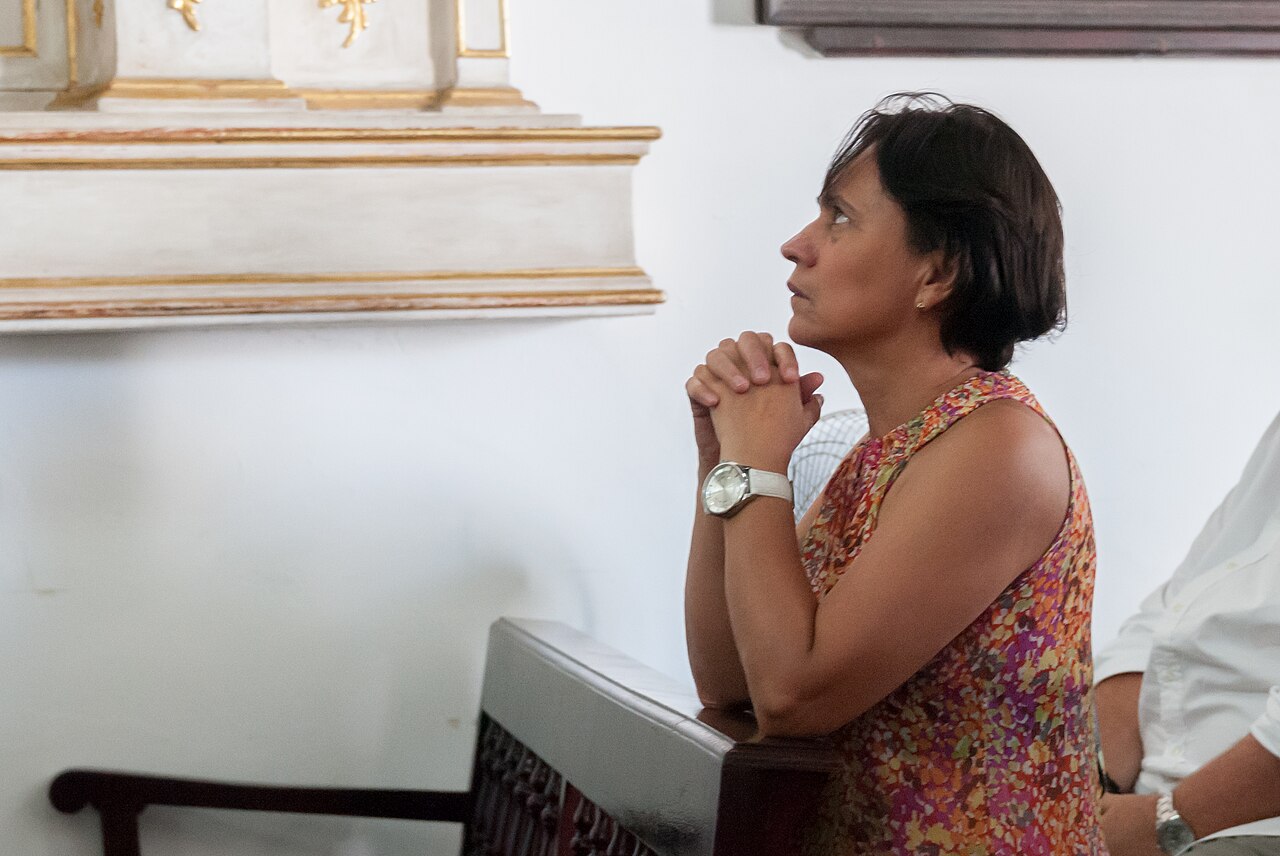
The instruction in Philippians 4:6 does not end with a command against anxiety. It leads us to pray, make petitions, and tell God what we need in everything. It does not mean that only someone who has already sorted out every feeling can pray. We can bring before God what frightens us, what we lack, and the help we seek.
If tomorrow fills you with vague worry, write down one specific concern within it. Start with an upcoming conversation, an assigned task, or a family situation that is actually on your mind. Instead of trying to control everything alone, turn that concern into a request to God. This is a way to practice the passage, not a prescribed procedure for receiving an answer.
1 Peter 5:6–7 also calls us to humble ourselves under God’s mighty hand and cast our anxieties on him. We entrust them to him because he cares for us, not because our situation is easy. A concern need not be small before we can pray about it, and prayer is not reserved for major crises. Telling God about a burden we struggle to carry today is itself a step of dependence on him.
Thanksgiving Helps Us Remember God without Hiding Hardship
In this passage thanksgiving accompanies petition. We can give thanks even while we still have needs to bring before God. We need not wait until every problem is solved. We can speak honestly about what we need and remember the grace God has already given, including the opportunity to come to him today.
Writing down reasons to give thanks does not require us to pretend a hard situation is good. Think first of something you can actually recognize: a person who helped you, strength to get through a day, or a passage of Scripture you returned to. If words of thanks do not come easily right now, do not press yourself. Read the passage slowly again and tell God what is on your heart.
In Matthew 6:25–34, Jesus points disciples who worry about food and clothing to the birds and the flowers of the field, teaching them that their heavenly Father knows what they need. He does not say that they have no needs. He calls them to look to the Father who knows them. Thanksgiving moves in the same direction: we remember the God who cares for us instead of boasting about how much we have.


The Promise: Peace That Guards Hearts and Thoughts in Christ Jesus
Philippians 4:7 promises that God’s peace will guard our hearts and thoughts. It does not say that what we request will necessarily happen in the way or at the time we want. Making a request known to God is different from deciding its outcome for him. If we read the promise as a way to control results, our attention can settle on what we want instead of on the God to whom the passage directs us.
This peace is also given in Christ Jesus. We cannot describe it as a state we produce simply by emptying our minds or exerting our will. In John 14:27, Jesus tells his disciples that he gives them his peace and that it is different from what the world gives. Both passages lead us to find the ground of peace in the Lord rather than in our circumstances or our own ability.
The same worry may return after we pray. Instead of using this passage to condemn ourselves or someone else, we can remember it as a call to come to God again. Trusting his promise of peace, we can ask for needed help and carry out today’s responsibilities. Because God is the one who guards our hearts, we can learn to loosen our grip on every outcome.

Memorization: Following the Movement from Command to Promise
First, read Philippians 4:6–7 aloud while looking at the text. In Philippians 4:6, notice the movement from the instruction about anxiety to prayer and petition, thanksgiving, and requests made known to God. In Philippians 4:7, remember who gives peace, the relationship expressed by in Christ Jesus, and the promise that our hearts and thoughts will be guarded.
Then cover the text for a moment and say one verse at a time before checking it again. If you omit a word, take your time and reread the whole sentence that contains it. As you say the two verses together, learn the words as they appear in the text rather than replacing them with your own explanation. This practice lets reflection on the meaning and accurate memorization support each other.
Finally, connect the passage to one prayer concern you have today. You might make a specific request about what worries you, remember a grace you have actually received and give thanks, and ask for help with what you need to do today. The number of times you recite the passage or a change in how you feel is not a score for the size of your faith. Let each return to these words help you depend on God.
Questions for Today and a Prayer
- What worry is taking up the most space in my heart right now, and what help do I want to ask God for?
- What real grace can I remember even while a problem remains unresolved?
- As I entrust the outcome to God, what conversation or action do I need to undertake today?
The following is an example of a prayer in response to the passage. It is not a direct Scripture quotation.
Father God, I bring you the worries that remain in my heart rather than hiding them. I ask for the help I need, and I ask you to help me remember the grace you have given until now. Teach me to trust you, who guard hearts and thoughts in Christ Jesus, instead of clinging to an outcome I have chosen. Help me carry out what I need to do today with love and faithfulness. Amen.
References
- Philippians 4, Korean Revised Version (KRV): central passage and context
- Philippians 4:6 in parallel translations: World English Bible quotation
- Philippians 4:7 in parallel translations: World English Bible quotation
- 1 Peter 5, Korean Revised Version (KRV): humility and entrusting anxiety to God
- Matthew 6, Korean Revised Version (KRV): the heavenly Father knows our needs
- John 14, Korean Revised Version (KRV): the peace Jesus gives