
If Genesis 7 was the climax of judgment, Genesis 8 is the turning point that opens in the very midst of that judgment. The waters that had covered the whole earth slowly begin to recede, and the tightly shut door of the ark is finally opened. But the true turning point of this chapter does not begin with the movement of water — it begins with a single sentence.
The English Scripture quotations here are from the King James Version and the World English Bible (both public domain).
And God remembered Noah, and every living thing, and all the cattle that was with him in the ark: and God made a wind to pass over the earth, and the waters asswaged; (Genesis 8:1, KJV)
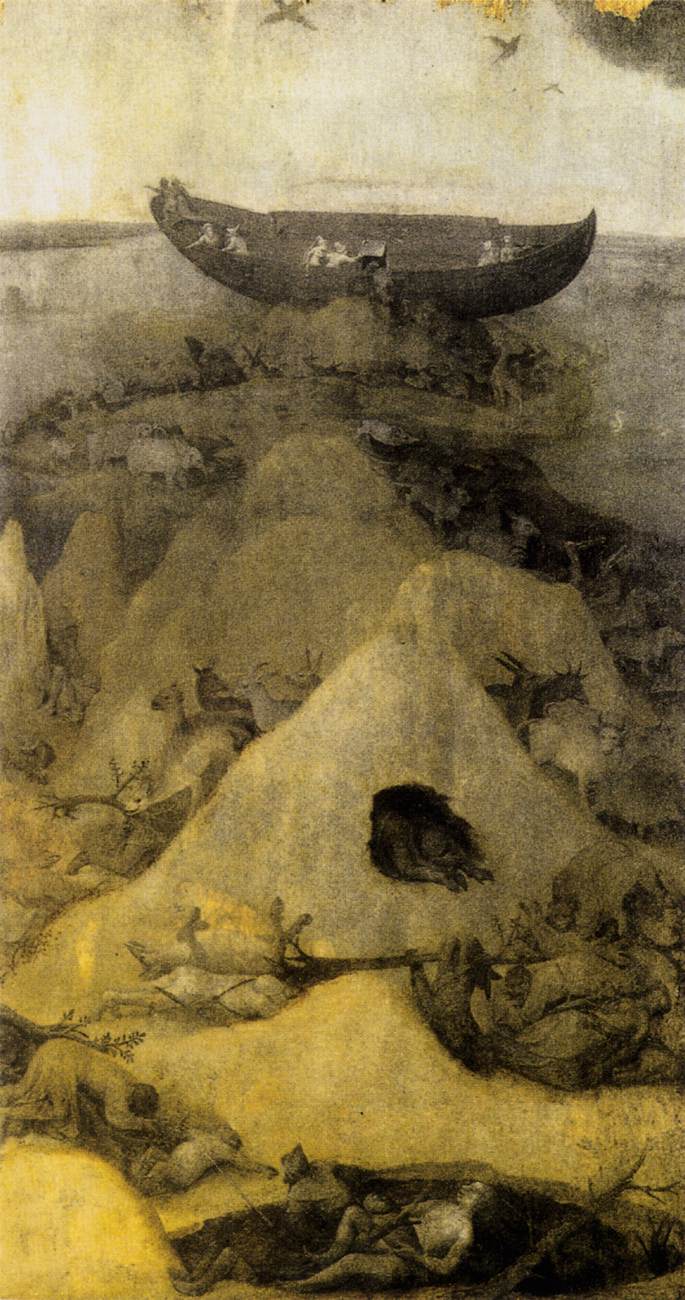
“And God Remembered Noah” — The God Who Remembers
Looking at the whole flood narrative of Genesis 6–9, it is precisely Genesis 8:1 where the tide that had been rising turns into a tide that recedes. The waters that had done nothing but rise for 150 days begin to go down after this single sentence (8:3). Yet Scripture locates the cause of that turn not in a natural phenomenon but in the heart of God — “And God remembered Noah.” When Scripture says that God “remembered” someone, it does not mean he belatedly recalled something he had forgotten; it means that, within the covenant, the time of salvation has come and he himself steps in to act.
God remembered Rachel, and God listened to her, and opened her womb. (Genesis 30:22, WEB)
Just as God “remembered” Rachel, who had ached over her childlessness, and opened her womb, so too when Israel groaned in Egypt, God remembered the covenant he had made with Abraham, Isaac, and Jacob (Exodus 2:24) and sent Moses. When Hannah wept and prayed over her childlessness, the answer likewise follows: “Yahweh remembered her” (1 Samuel 1:19, WEB). The same pattern repeats inside Noah’s ark. God’s remembering always issues in an act of salvation. The first cause of the waters going down is not the wind, but the faithfulness of the God who holds fast to his covenant.
The Waters Recede and the Ark Comes to Rest on a Mountain (8:2–5)
As the wind blew, the waters began to recede — slowly, but unmistakably.
The deep’s fountains and the sky’s windows were also stopped, and the rain from the sky was restrained. The waters continually receded from the earth. After the end of one hundred fifty days the waters decreased. The ship rested in the seventh month, on the seventeenth day of the month, on Ararat’s mountains. The waters receded continually until the tenth month. In the tenth month, on the first day of the month, the tops of the mountains were visible. (Genesis 8:2–5, WEB)
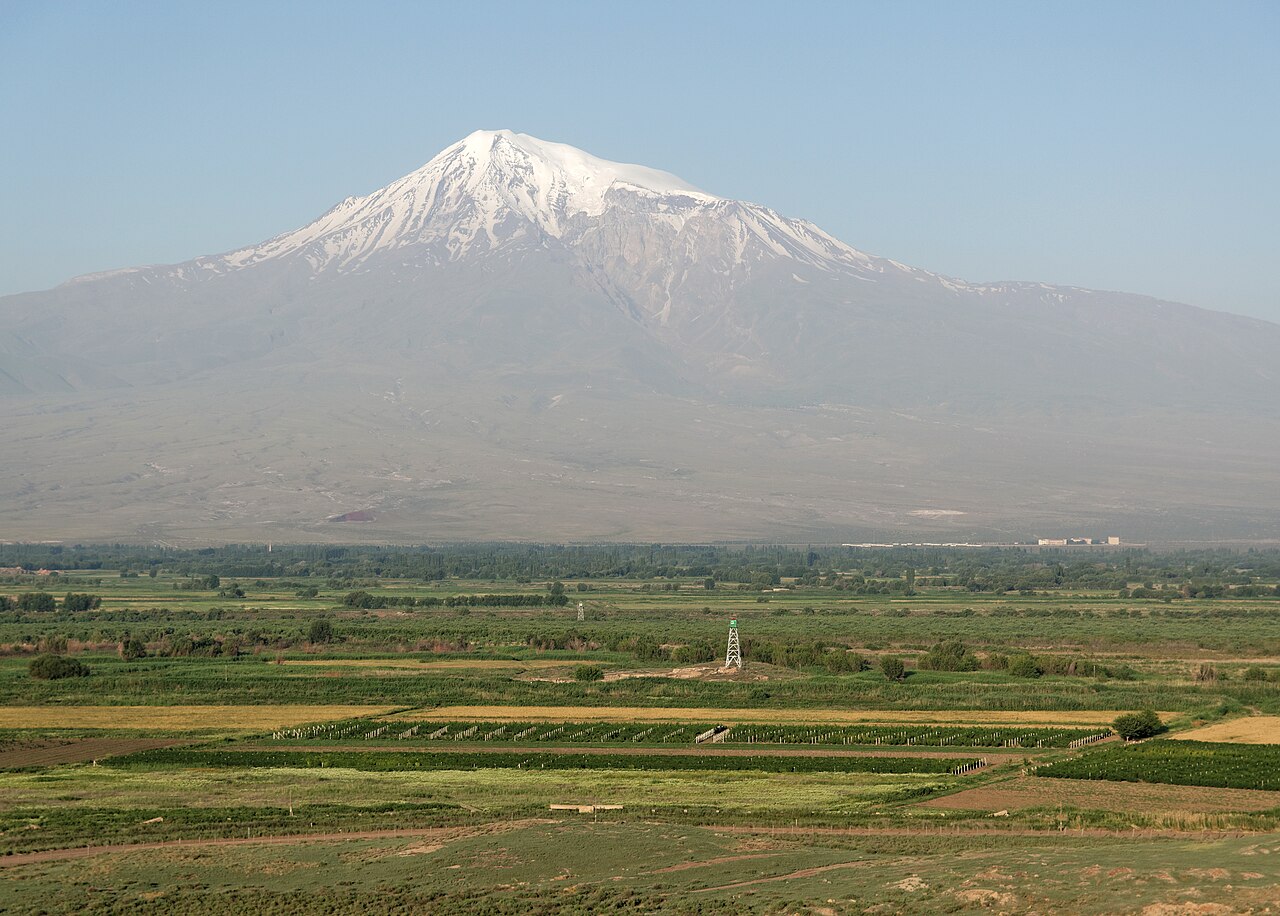
The place the ark first touched down was the Ararat mountain range, rising in what is now eastern Turkey, near the borders of Iran and Armenia (roughly 5,100 meters above sea level; sources vary from 5,137 to 5,165 meters). As the waters of judgment withdrew, the first thing to be revealed was not anything built by human hands, but a mountain peak made by God. Even in the very place where the whole world had been submerged, the mountain established at creation stood unshaken, exactly as it had been.
The Raven and the Dove — Waiting for New Ground (8:6–12)
After waiting forty more days, Noah opened the window and sent out birds to see how the land stood.
and he sent out a raven. It went back and forth, until the waters were dried up from the earth. (Genesis 8:7, WEB)
And the dove came in to him in the evening; and, lo, in her mouth was an olive leaf pluckt off: so Noah knew that the waters were abated from off the earth. (Genesis 8:11, KJV)
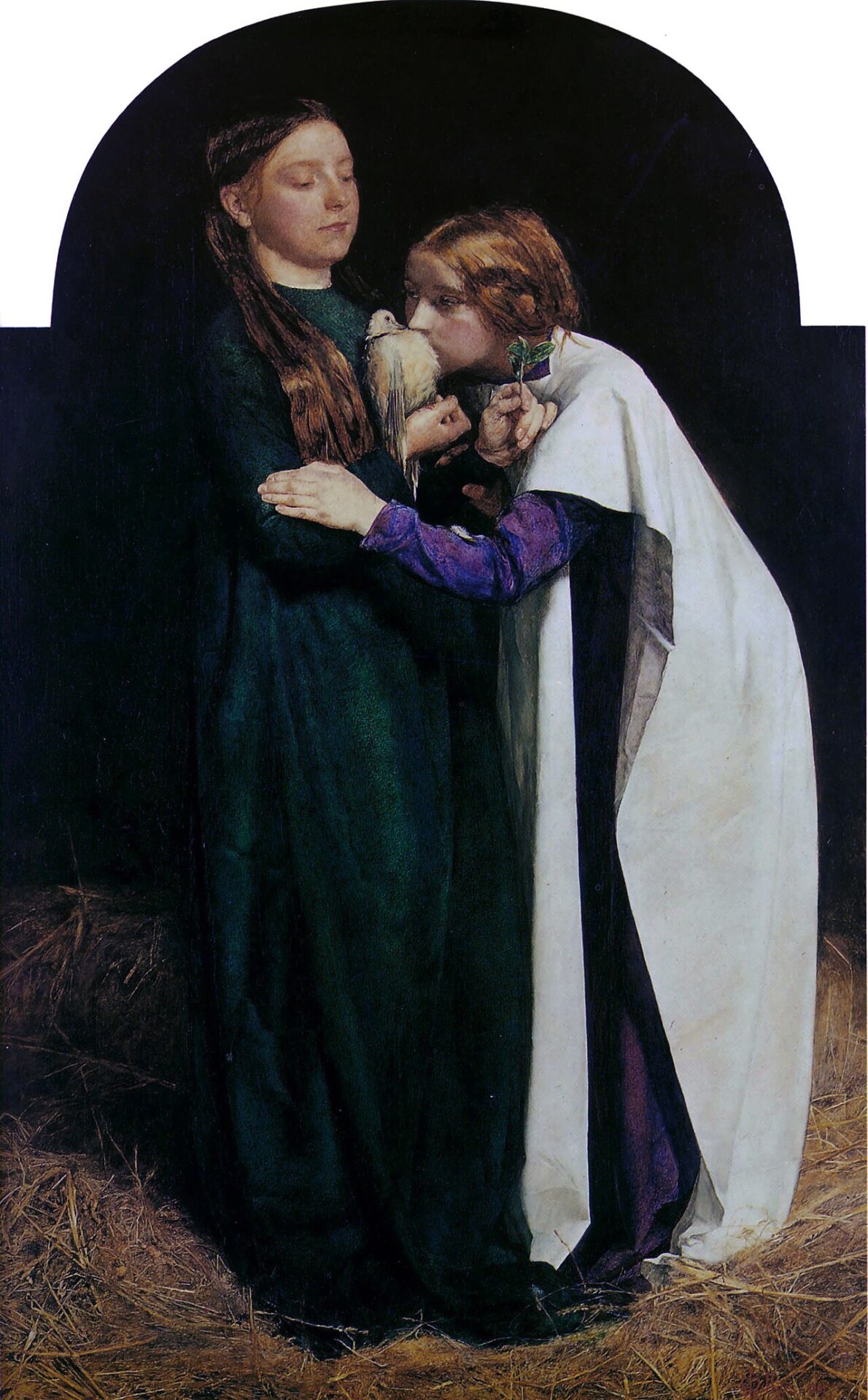
The raven wandered aimlessly back and forth between the ark and the water, but the dove returns on the third attempt with an olive leaf in her mouth. This moment — when the whole earth still lay covered in water, like the chaos before creation — recalls the scene at the very beginning, when “the Spirit of God moved upon the face of the waters” (Genesis 1:2, KJV). Just as the Spirit of God once moved over the waters to prepare a world for life, so now a single dove moves back and forth over the waters to announce that the new earth has been made ready to live in. From that one small leaf, Noah knew that “the waters were abated from off the earth” (Genesis 8:11, KJV). God gives his people the assurance they need not through a dramatic sign, but through a single olive leaf.
“In the Second Month, on the Twenty-Seventh Day of the Month, the Earth Was Dry” — Going Out as Commanded (8:13–19)
Even after the waters had withdrawn, Noah did not open the door of the ark on his own judgment. He waited for the word of God.
God spoke to Noah, saying, Go out of the ship, you, your wife, your sons, and your sons’ wives with you. (Genesis 8:15–16, WEB)
The earth was dry on the twenty-seventh day of the second month (8:14), yet Noah came out of the ark only after God “spoke, saying” (Genesis 8:15, WEB) and commanded him to. The same pattern of obedience seen in Genesis 6–7 — “Noah did everything that Yahweh commanded him” (Genesis 7:5, WEB) — carries straight through into chapter 8. And in the command to come out of the ark, the language of creation itself echoes back.
Bring out with you every living thing that is with you of all flesh, including birds, livestock, and every creeping thing that creeps on the earth, that they may breed abundantly in the earth, and be fruitful, and multiply on the earth. (Genesis 8:17, WEB)
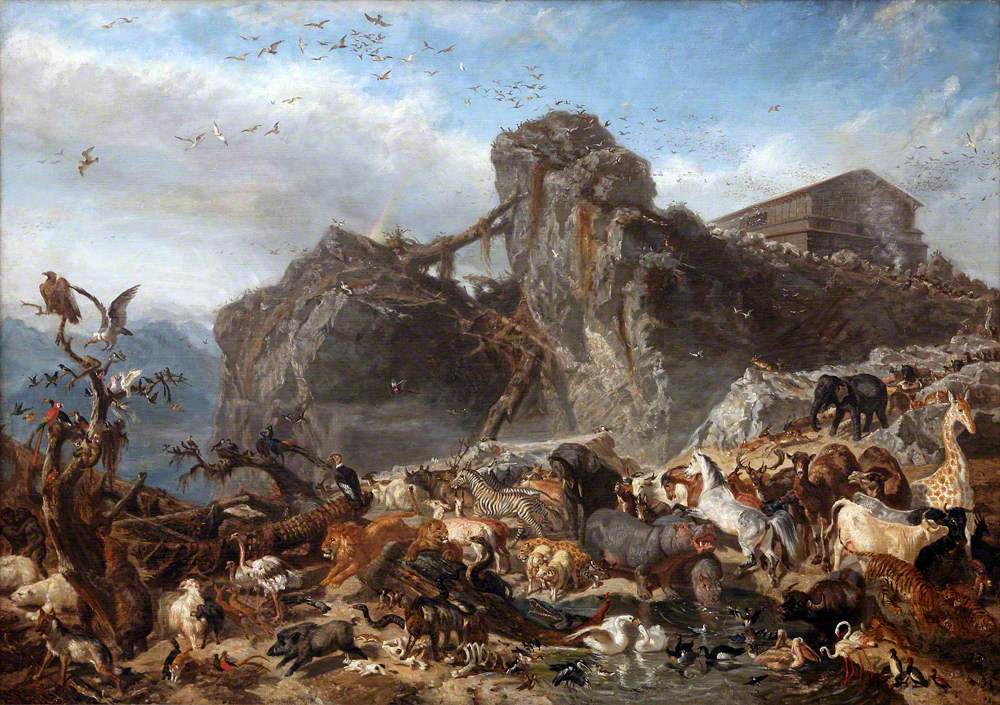
The words “be fruitful, and multiply on the earth” (Genesis 8:17, WEB) echo the very blessing God gave to living creatures and to humankind on the fifth and sixth days of creation (Genesis 1:22, 1:28). This echo is repeated almost word for word in the very next chapter — God tells Noah and his sons again, “Be fruitful, multiply, and replenish the earth” (Genesis 9:1, WEB), the same expression as the command in Genesis 1:28. The flood did not do away with the world; it became a new starting point from which the blessing of creation is proclaimed once more. Noah and the living creatures inside the ark are heirs of a creation beginning again at the very place the old creation had ended.
Noah Built an Altar and Offered Burnt Offerings — The First Worship After Salvation (8:20)
The first thing Noah did once his feet touched the ground was not to settle down or secure a livelihood.
Noah built an altar to Yahweh, and took of every clean animal, and of every clean bird, and offered burnt offerings on the altar. (Genesis 8:20, WEB)
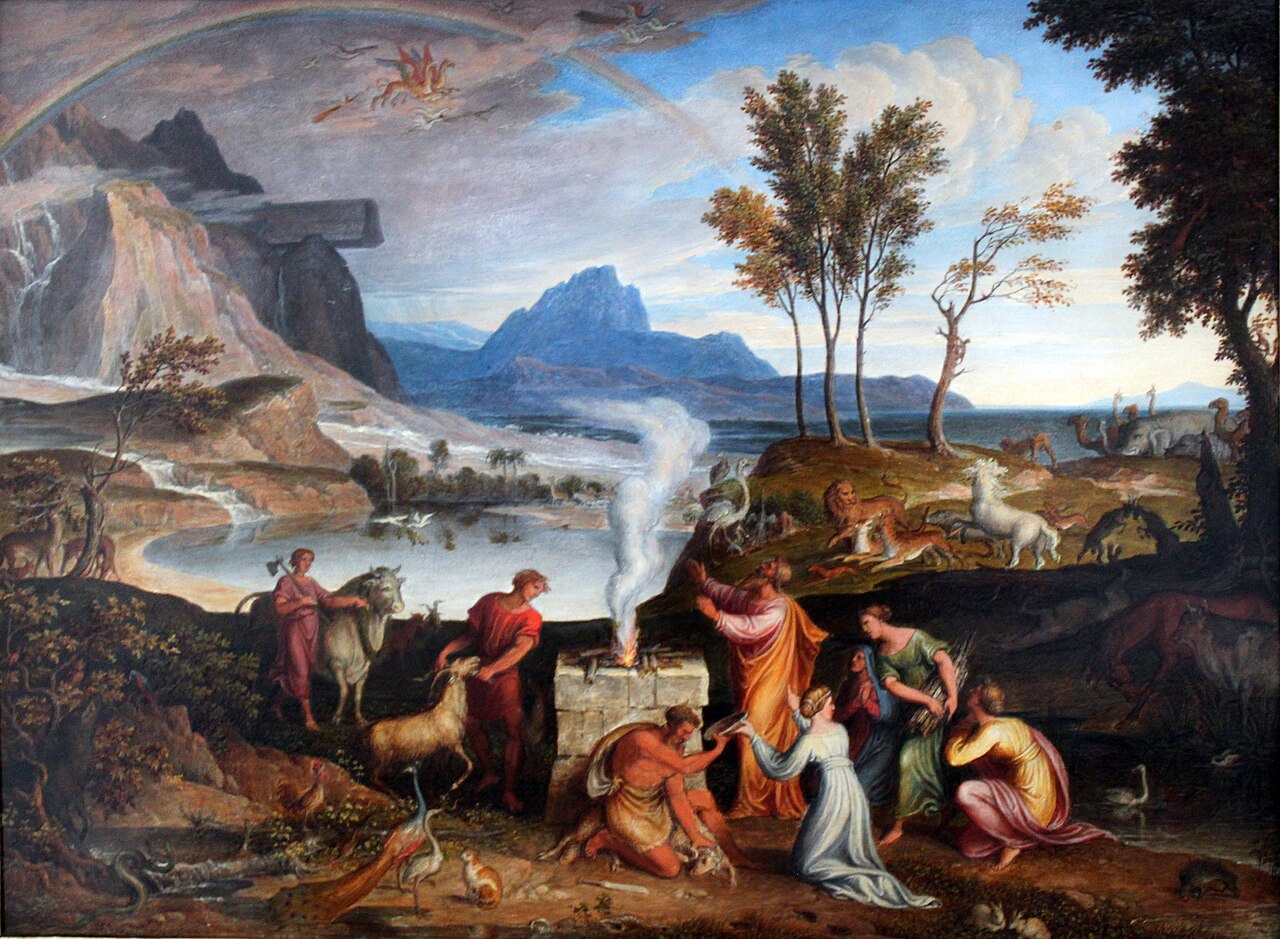
This is the very first place the word “altar” appears anywhere in Scripture. No altar appears anywhere from Genesis 1 through Genesis 7. The fact that the first thing the saved Noah built on the new earth was, of all things, a place of worship is significant in itself. The fitting response to salvation is not possession, but worship.
“I Will Not Again Curse the Ground” — Unchanged Humanity, Unchanging Grace (8:21–22)
God’s response to Noah’s sacrifice is the most striking passage in this chapter.
Yahweh smelled the pleasant aroma. Yahweh said in his heart, “I will not again curse the ground any more for man’s sake because the imagination of man’s heart is evil from his youth. I will never again strike every living thing, as I have done.” (Genesis 8:21, WEB)
What deserves our attention here is the basis God gives. It is not that the human heart has now become good. On the contrary, the very same diagnosis given as the reason for judgment before the flood is repeated word for word — “the imagination of man’s heart is evil from his youth.” Before the flood, this diagnosis was the reason for judgment — “that every imagination of the thoughts of man’s heart was continually only evil” (Genesis 6:5, WEB); after the flood, the very same diagnosis becomes the basis for the grace of never destroying again. The flood did not fix the human heart. If that is so, then the world is preserved not because people have improved, but purely because of the grace and patience God himself has determined to show. This points to a deeper problem still to be solved — that the human heart itself must be made new by some other means — just as the promise of the new covenant given later through Jeremiah declares.
“But this is the covenant that I will make with the house of Israel after those days,” says Yahweh: “I will put my law in their inward parts, and I will write it in their heart. I will be their God, and they shall be my people.” (Jeremiah 31:33, WEB)
Along with his promise never again to destroy the world by water, God also newly affirms the regularity of the created order.
While the earth remaineth, seedtime and harvest, and cold and heat, and summer and winter, and day and night shall not cease. (Genesis 8:22, KJV)
The weight of this promise is confirmed again later in Jeremiah. God speaks of his own faithfulness by comparing it to the regularity of day and night.
Yahweh says: “If my covenant of day and night fails, if I have not appointed the ordinances of heaven and earth…” (Jeremiah 33:25, WEB)
The sun that rises and sets every day, and the seasons that change without fail, are themselves evidence that the promise God made to Noah remains unbroken to this very day.
The Weight of This Promise Across All of Scripture — Isaiah’s Confirmation
This promise from Genesis 8 is later cited again explicitly through the prophet Isaiah.
For this is like the waters of Noah to me; for as I have sworn that the waters of Noah will no more go over the earth, so I have sworn that I will not be angry with you, nor rebuke you. (Isaiah 54:9, WEB)
Isaiah brings back the oath God swore to Noah as the basis for his later steadfast love toward Israel. The promise of Genesis 8 does not end there; it runs through the whole of Scripture and becomes the prototype of the covenantal faithfulness God shows to his people. A promise God has once established does not change, however much time passes.
For Us Today — A Heart Still Evil, Yet Grace That Lets Us Begin Again
Genesis 8 lets us see ourselves as we truly are. Even after passing through the extreme judgment of the flood, the human heart did not change. The same is true of us. Self-improvement or remorse alone cannot fix the fundamental problem of the heart. But it is precisely at this point that the gospel goes further than Genesis 8. The new covenant that Jeremiah foretold — the one “written on the heart” (Jeremiah 31:33) — is fulfilled in Christ, and it makes the human heart itself new.
Therefore if any man be in Christ, he is a new creature: old things are passed away; behold, all things are become new. (2 Corinthians 5:17, KJV)
Just as the first thing Noah did upon setting foot on dry ground was the worship of building an altar, the fitting first response of those of us saved by grace is likewise worship. And just as the promise God made to Noah has not been broken no matter how much time has passed, the promise given to us today — that we have become new creatures in Christ, and that he will come again — will never be shaken either. In this world where seedtime and harvest, day and night, continue without fail, we are responsible to trust the faithful God and to carry that news to those who do not yet know this grace (Matthew 28:19–20).
Scripture quotations in the original Korean version of this article follow the public-domain 개역한글 (1961) translation.
References
- “Genesis 8: The Ark Rests on Ararat”, Bible Hub
- “Mount Ararat”, Wikipedia
- “Why did Noah release a raven? Why did he later release a dove?”, GotQuestions
- “What is an altar?”, GotQuestions
- “Genesis 8 — Resources”, Ligonier Ministries
- “What is the new covenant?”, GotQuestions
- “Copyright Guidelines,” Korean Bible Society, bskorea.or.kr