
What does it mean for us to have been baptized? Does it remain a memory of a ceremony with water, or does it lead into a life of faith in Jesus Christ and dependence on the Holy Spirit? The second part of the Great Commission we will consider is baptizing in the name of the Father and of the Son and of the Holy Spirit. This article takes Matthew 3:11 as its main passage for understanding water baptism and the baptism with the Holy Spirit and fire. It also reads what happened to the disciples in Ephesus in Acts 19:1-7.
This command belongs within Matthew 28:18-20. Jesus, who has all authority in heaven and on earth, told his followers to make disciples of all nations, baptize them, and teach them to observe what he commanded. Within the work of making disciples, baptism connects a confession of faith in the gospel with a life of obedience to his Word. His promise to be with us to the end of the age accompanies that work.
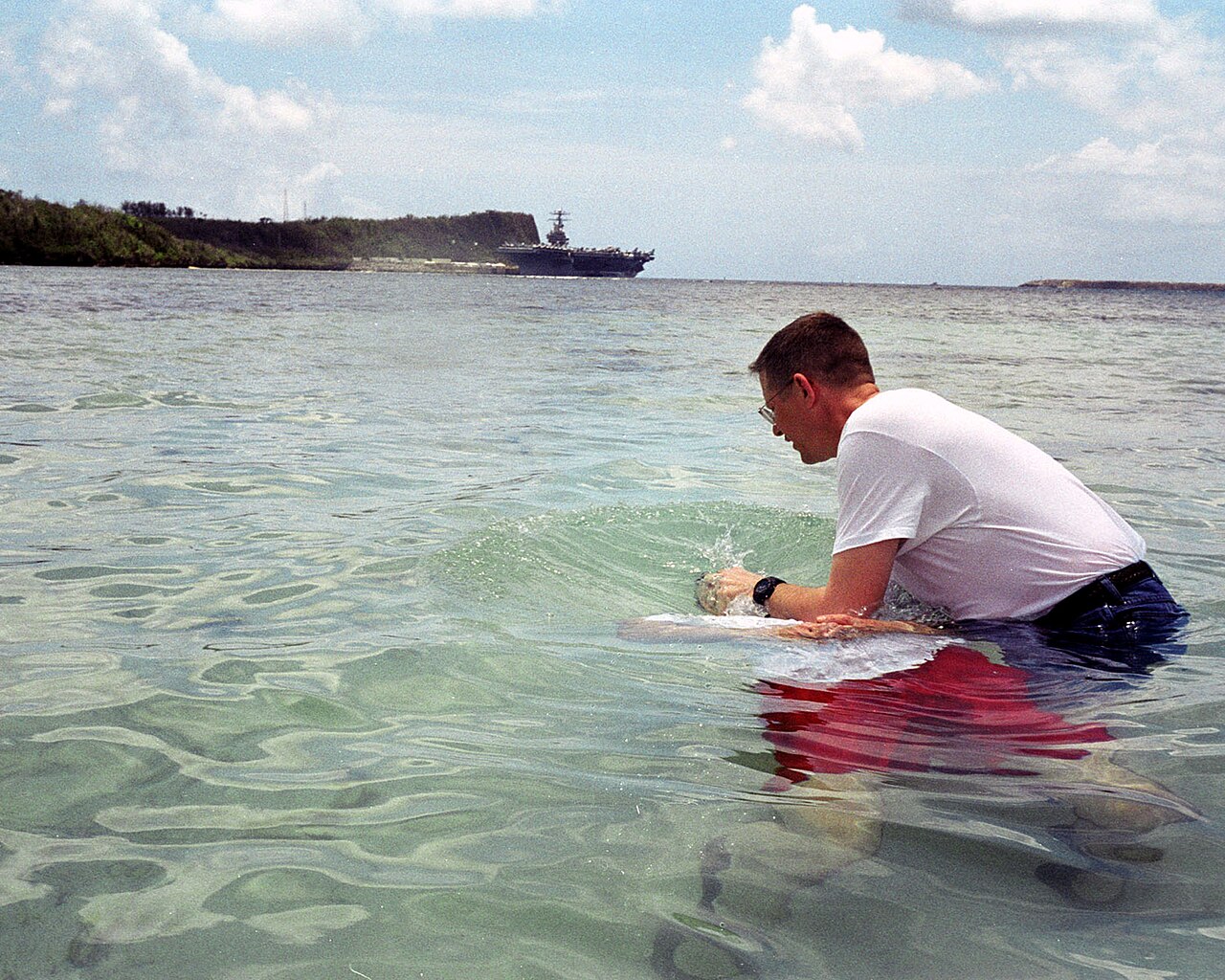
Baptize in the Name of the Father and of the Son and of the Holy Spirit
Direct Scripture quotations in this article use only the King James Version (KJV). The explanations and applications are distinct from those quotations. The KJV uses Holy Ghost for the Holy Spirit.
… baptizing them in the name of the Father, and of the Son, and of the Holy Ghost:
Matthew 28:19, KJV
A community that baptizes does not bind a person to the minister or to the name of an organization. It clearly names the Father, the Son, and the Holy Spirit, helping people turn their attention to God. Someone preparing for baptism needs more than a lesson in the order of a ceremony. They need to learn who the Jesus they believe in is and whose Word they will follow.
That is why instruction before baptism begins with the gospel. We tell people of Jesus’ death and resurrection, urge them to repent of sin and trust the Lord, and continue helping them learn and obey his Word afterward. Celebrating the day of baptism and walking alongside someone from the following day onward belong to the same work of discipleship.
John, Who Baptized with Water, Pointed People to Jesus
… he shall baptize you with the Holy Ghost, and with fire:
Matthew 3:11, KJV
In Matthew 3:11, John says that he baptizes with water for repentance and testifies that the one coming after him is mightier than he is. John’s water baptism is set beside the baptism with the Holy Spirit and fire that Jesus gives. John’s ministry was meant to direct people toward the coming Christ, rather than keep them gathered around himself.
We need to distinguish two things here. John’s baptism was a baptism of repentance pointing people toward Jesus. Christian water baptism, received in faith in Jesus, cannot simply be treated as identical to John’s baptism. If we make the two the same merely because both use water, we miss the sequence in Acts 19.
Jesus is also the one who baptizes with the Holy Spirit. Ministers can proclaim the gospel, baptize, and pray, but they cannot give or control the Holy Spirit by their own power. As we long for the Spirit’s baptism, our trust should be directed to the Lord who promised it, rather than to the ability of any particular person.
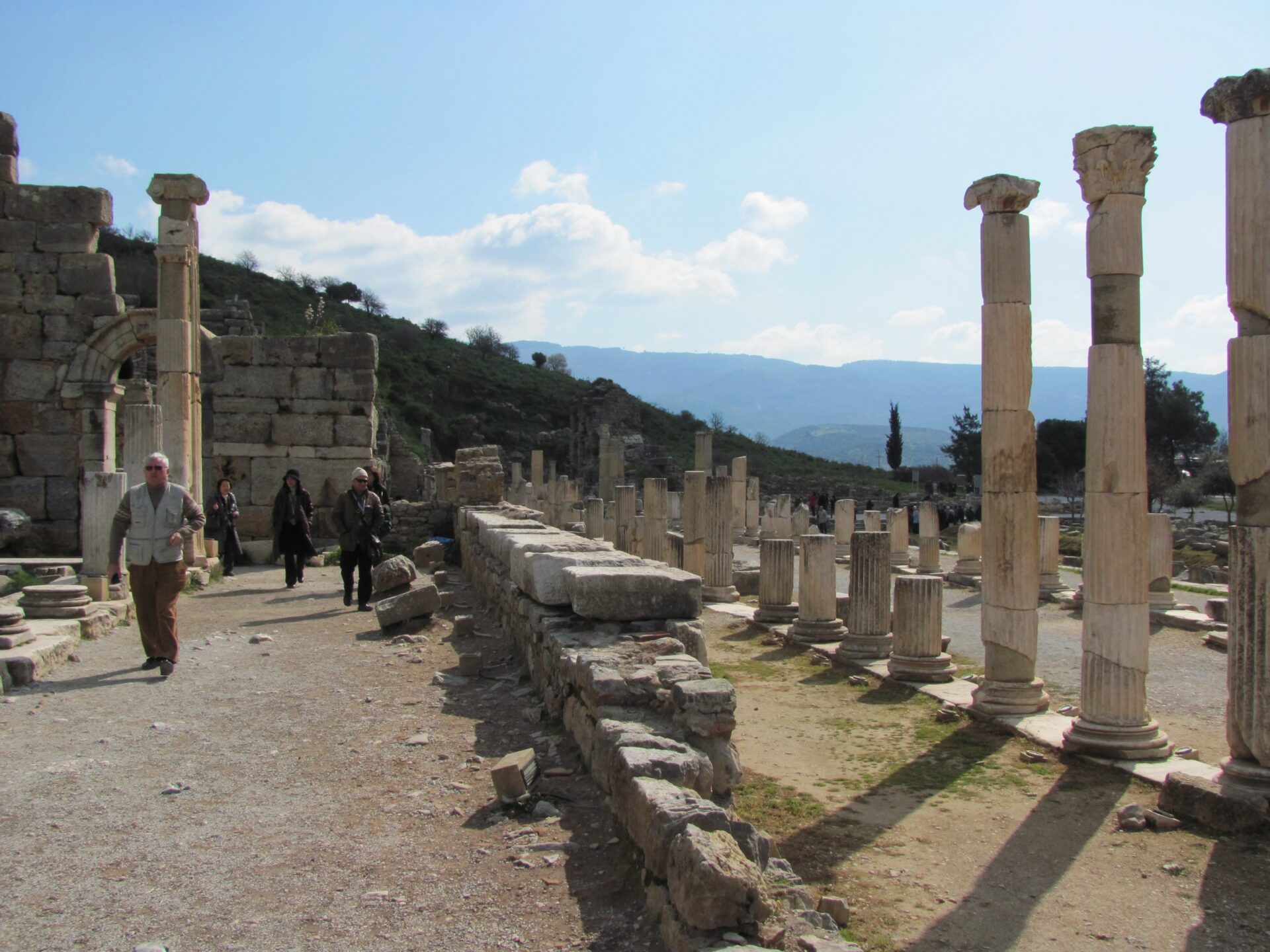
The Disciples in Ephesus Heard the Gospel and Experienced the Holy Spirit’s Coming
In Acts 19:1-7, Paul meets some disciples in Ephesus and asks whether they received the Holy Spirit. They had received John’s baptism. Paul explains that John baptized with the baptism of repentance and told people to believe in the one coming after him: Jesus.
Reading the passage in order, we find the following sequence.
- They said they had received John’s baptism.
- Paul taught them that Jesus was the one John had pointed toward.
- When they heard this, they were baptized in the name of the Lord Jesus.
- When Paul laid hands on them, the Holy Spirit came upon them.
- They spoke in tongues and prophesied.
And when Paul had laid his hands upon them, the Holy Ghost came on them; and they spake with tongues, and prophesied.
Acts 19:6, KJV
There were about twelve men in all. This account tells us that the Holy Spirit’s coming upon them was manifest and was accompanied by tongues and prophecy. It reminds us not to confine the Spirit’s work to knowledge or an abstract explanation.
At the same time, we should not overlook the baptism in Acts 19:5. This is not a story in which Paul merely added a spiritual experience to people who had received John’s baptism. They heard about Jesus, were baptized in the name of the Lord Jesus, and experienced the Holy Spirit’s coming. Acts’ emphasis on Jesus’ name shows whom they had come to believe. It need not be used to set aside the command in Matthew 28:19 to baptize in the name of the Father and of the Son and of the Holy Spirit.
Obey in Water Baptism and Long for the Holy Spirit’s Grace
The events in Ephesus teach us that the Holy Spirit’s work matters for people who have received water baptism too. While cherishing the memory of baptism, we can ask the Spirit to help us understand and obey the Word today. We need to rely on the living Lord rather than confine our faith to outward form.
The order is different in Acts 10:44-48. In Cornelius’s household, the Holy Spirit came upon people while they were listening to the Word, and they spoke in tongues and praised God. Peter then commanded them to be baptized with water. Receiving the Spirit did not make water baptism unnecessary. Read alongside the events in Ephesus, this passage helps us value both water baptism and the Spirit’s work without insisting that everyone experience them in a single order.
We should also respect the biblical account of tongues and prophecy. 1 Corinthians 12:7-11 teaches that gifts are given for the community’s good and that the Spirit distributes them as he wills. 1 Corinthians 12:29-30 asks whether everyone has the same gifts. We can therefore acknowledge the tongues and prophecy in Ephesus without using one particular experience to judge another person’s salvation or the whole of their faith.
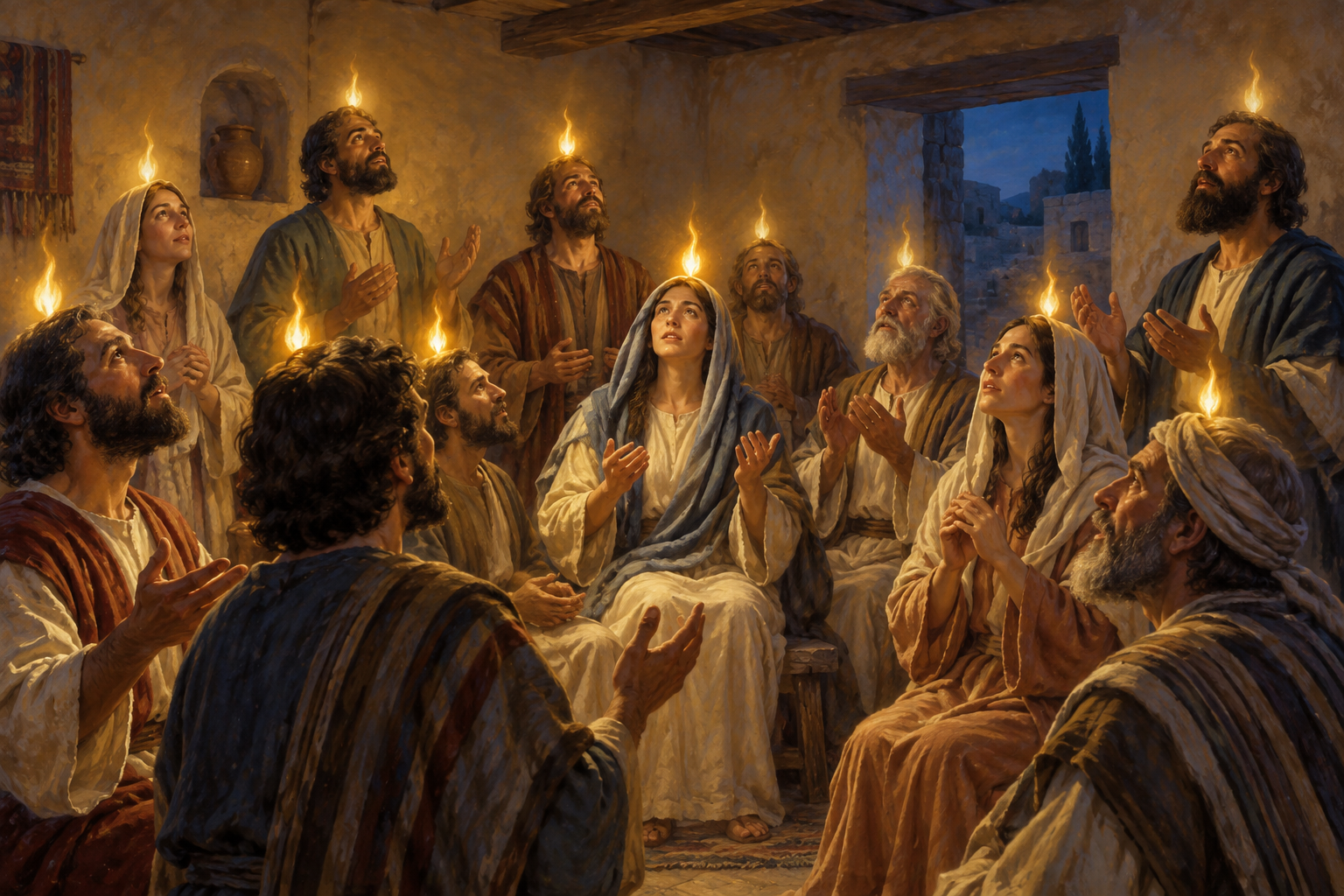
The Holy Spirit, Who Came Like Fire, Turns Our Whole Lives to the Lord
Let us read the Holy Spirit and fire in Matthew 3:11 alongside the events of Pentecost in Acts 2:1-4. As the disciples gathered, what appeared to be divided tongues of fire came to rest on each of them. All were filled with the Holy Spirit and began to speak in other languages as the Spirit enabled them. Luke describes a presence appearing like fire and a filling with the Spirit, not a scene in which actual flames burned people.
Reading these passages together, we can reflect on baptism with fire as the powerful work of the Holy Spirit that turns us wholly to the Lord. Instead of dividing the Holy Spirit and fire into a list of separate experiences, we can attend to the Spirit’s work of renewing us and leading us to offer ourselves to God. To long for the Spirit’s grace coming like fire is to pray that we would give the Lord our whole lives, not just a portion of our hearts.
The story of Pentecost does not end with a remarkable event. In Acts 2:37-42, those who hear the Word are cut to the heart, respond to the call to repent and be baptized, and become a community devoted to the apostles’ teaching, fellowship, and prayer. 1 Corinthians 6:11 also speaks of being washed and made holy in the name of Jesus Christ and by the Spirit of God. The Spirit’s power draws us nearer to the Lord and changes the direction of our lives.
So a prayer for baptism with fire goes beyond a brief surge of emotion. It means recognizing sin and turning from it, letting go of the self we have clung to, and entrusting ourselves to the Holy Spirit so that we may obey the Lord’s will. Letting go of an old resentment, admitting a wrong we have hidden, or beginning a reconciliation we have put off can be part of that response. Let us ask the Spirit to renew our hearts, our words, and our choices.
How Can We Follow the Command to Baptize Today?
If you are preparing for baptism, learn the gospel and bring your questions to your church community. Understand the meaning of baptism in the name of the Father and of the Son and of the Holy Spirit, and respond in faith. As you prepare for the ceremony, begin praying in dependence on the Lord.
If you have already been baptized, look beyond the date of your baptism and consider your obedience today. Ask for the Holy Spirit’s grace and help, and put one thing you have learned from the Word into practice. Desire the Spirit’s gifts with a heart set on serving the community, rather than comparison or a sense of superiority.
If you teach others, listen carefully, as Paul did, to what they know and believe. Do not mock gaps in their understanding; tell them more clearly about Jesus. Pray with them, help them prepare for baptism, and continue caring for their life of learning and obeying the Word afterward.
Baptism, the second part of the Great Commission, is bound up with making disciples. We obey the command to baptize with water in the name of the Father and of the Son and of the Holy Spirit, and we depend on Jesus, who baptizes with the Holy Spirit and fire. As we confess our faith through water baptism, let us long for the Spirit’s power to turn us wholly to the Lord and help us live by his Word. May we treasure baptism and the Spirit’s work as we walk in the promise of the Lord who is with us.

A Prayer We Can Offer Together
Lord Jesus, thank you for calling us to be disciples and commanding us to baptize. Help us honor the name of the Father and of the Son and of the Holy Spirit. Renew us with the Holy Spirit and fire so that we may give you our whole hearts and lives. Lead us to repent before your Word and bear fruit, and to serve one another with the gifts we have received. Help us care for new believers to the end and obey together everything you have commanded. We depend on you, Lord, who are with us to the end of the age. Amen.
References
- Matthew 28 — The full context of the Great Commission, Korean Revised Version
- Matthew 3 — Water baptism, the Holy Spirit and fire, and the fruit of repentance, Korean Revised Version
- Acts 19 — The baptism of the disciples in Ephesus and the Holy Spirit’s coming, Korean Revised Version
- Acts 10 — The Holy Spirit and water baptism in Cornelius’s household, Korean Revised Version
- 1 Corinthians 12 — Spiritual gifts and the community’s good, Korean Revised Version
- Acts 2 — The Spirit’s filling at Pentecost and repentance, Korean Revised Version
- 1 Corinthians 6 — Washing and holiness by the Spirit, Korean Revised Version
- English quotation comparison: Matthew 28:19, Matthew 3:11, Acts 19:6 — KJV