
In the genealogy of faith, Isaac is the quietest name. His father Abraham is remembered for the dramatic call that took him out of Ur of the Chaldeans, and his son Jacob for the turbulent drama of seizing his brother’s birthright. Isaac, standing between them, is relatively uneventful. Yet if you follow Genesis slowly, the core principles of discipleship emerge quietly but unmistakably throughout Isaac’s life. Obedience learned on Mount Moriah, trust learned in the field, patience learned at the wellside, and a blessing handed down to the next generation — Isaac was not flamboyant, but he was the first person to receive his father’s faith and pass it on to the generation after him.
On Mount Moriah — Obedience Without an Answer
Genesis 22 is often read as Abraham’s test. But Abraham was not the only one who climbed that mountain. It was Isaac who carried the wood for the burnt offering. On the way up the mountain, the son asked his father a question.
The English Scripture quotations here are from the King James Version and the World English Bible (both public domain).
And Isaac spake unto Abraham his father, and said, My father: and he said, Here am I, my son. And he said, Behold the fire and the wood: but where is the lamb for a burnt offering?
And Abraham said, My son, God will provide himself a lamb for a burnt offering: so they went both of them together.
(Genesis 22:7-8, KJV)
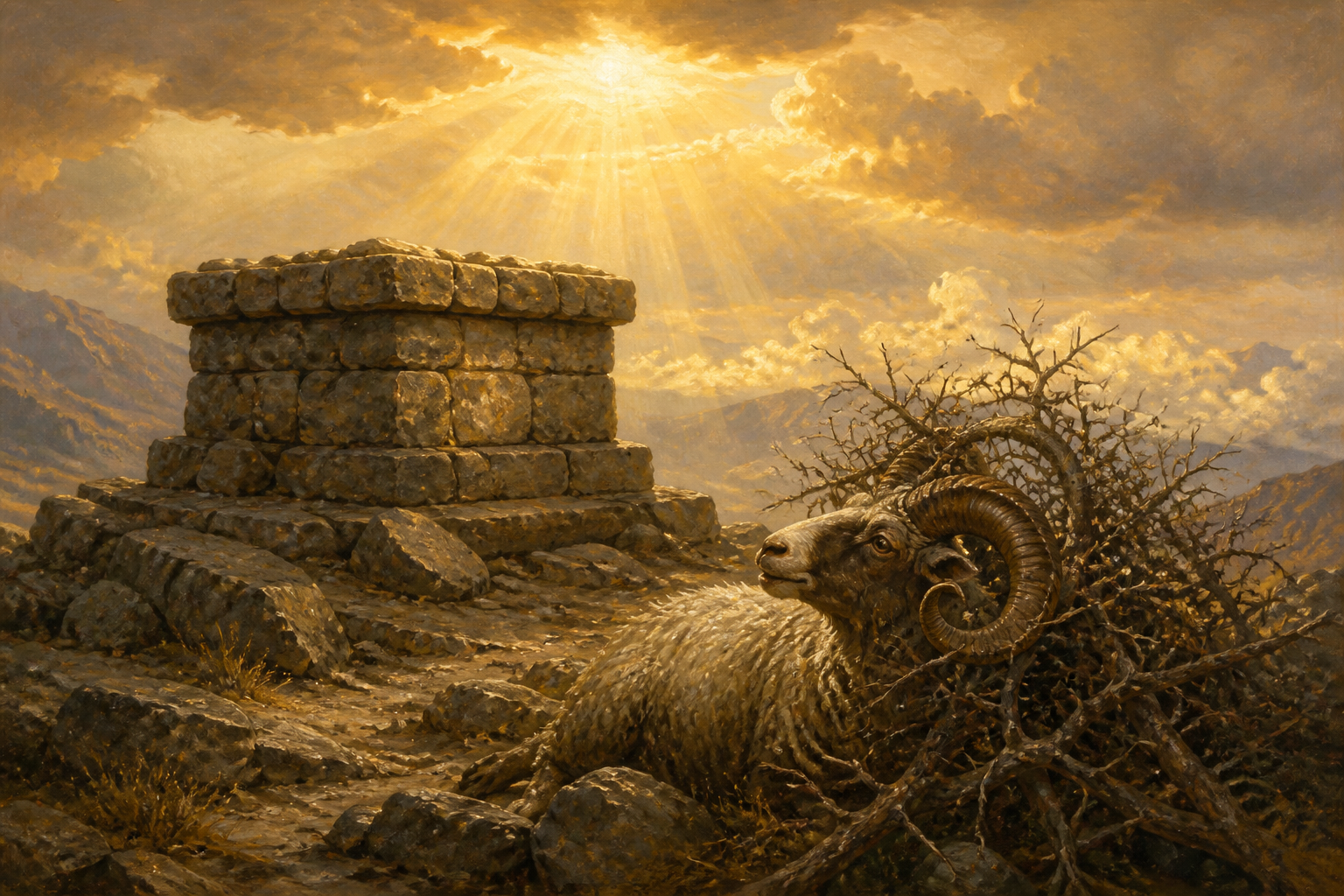
Scripture does not record Isaac’s age. But the simple fact that he was able to carry the wood for the burnt offering up the mountain himself makes it hard to picture him as a small child (some Jewish tradition, the Midrash, imagines Isaac as already a grown young man, but this is a tradition outside the text, not something Scripture states outright). If so, Isaac’s obedience was likely not a passive sacrifice dragged along in ignorance, but a willing obedience given at an age old enough to sense what was happening to him. Even up to the moment his father bound him and laid him on the wood of the altar, the text records no resistance from Isaac. After the angel of heaven stopped Abraham’s hand, a ram had already been prepared to take Isaac’s place.
Abraham lifted up his eyes, and looked, and saw that behind him was a ram caught in the thicket by his horns. Abraham went and took the ram, and offered him up for a burnt offering instead of his son.
Abraham called the name of that place Yahweh Will Provide. As it is said to this day, ‘On Yahweh’s mountain, it will be provided.’
(Genesis 22:13-14, WEB)
What Isaac went through was not merely his father’s test — it was an event in which he himself experienced death and substitution at the same time. The New Testament later revisits this event as a foreshadowing of resurrection faith. Of Abraham, who offered up Isaac by faith, Hebrews records: “concluding that God is able to raise up even from the dead. Figuratively speaking, he also did receive him back from the dead” (Hebrews 11:19, WEB). Scripture testifies that this mountain, named “Yahweh Will Provide” over the ram of substitution, is the very same place as Mount Moriah in Jerusalem where Solomon later built the temple (2 Chronicles 3:1). The temple was built on the site where nothing was withheld for God’s sake, and where God himself provided. Romans borrows the very language of this event to describe the heart of God the Father: “He that spared not his own Son, but delivered him up for us all, how shall he not with him also freely give us all things?” (Romans 8:32, KJV). The place where Isaac obeyed without an answer on the altar was, in advance, pointing to the place where God would later actually give up his own Son.
Trusting and Waiting in the Field — Genesis 24
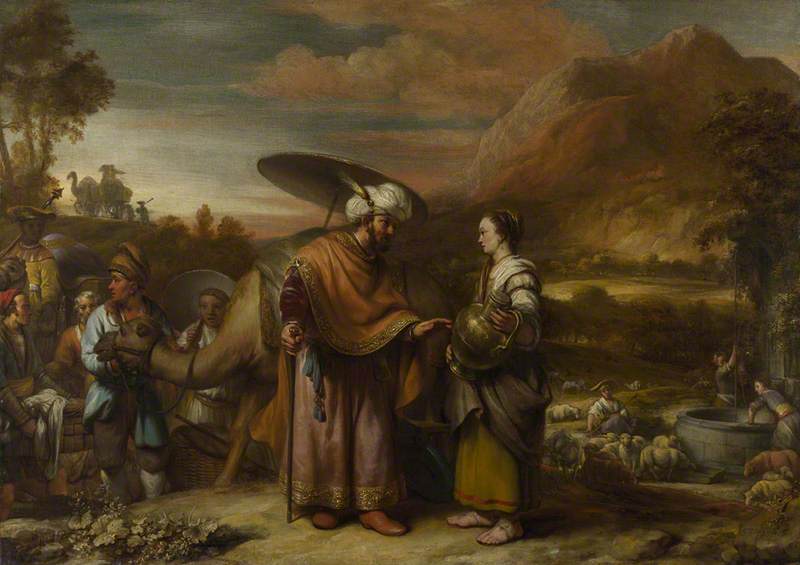
The most striking thing about Isaac’s marriage story is that Isaac himself is barely present in it. His father Abraham sent his elderly servant back to his homeland to find a bride for his son, and that servant prayed at a well for a sign. The sign was answered when Rebekah volunteered to water even the camels, and Rebekah herself agreed, saying, “I will go” (Genesis 24:58, WEB). Through this entire process, Isaac never went out to seek a bride himself. He simply waited.
Isaac went out to meditate in the field at the evening. He lifted up his eyes and looked. Behold, there were camels coming.
(Genesis 24:63, WEB)
The text does not explain in detail what Isaac was doing in the field. But it is clear that he was quietly holding his ground, not rushing the outcome. A person who trusts a father’s guidance and God’s providence becomes someone who knows how to wait, rather than someone who tries to control the situation themselves. And at the end of that waiting, Isaac found comfort.
Isaac brought her into his mother Sarah’s tent, and took Rebekah, and she became his wife. He loved her. Isaac was comforted after his mother’s death.
(Genesis 24:67, WEB)
This comfort that came after the loss of his mother Sarah shows that at every decisive moment in his life, Isaac was someone who received rather than seized things by his own strength. Just as he entrusted his own life into his father’s hands on Mount Moriah, Isaac also entrusted the search for his life’s companion to his father’s guidance and God’s providence.
Wells Redug Without a Fight — Genesis 26
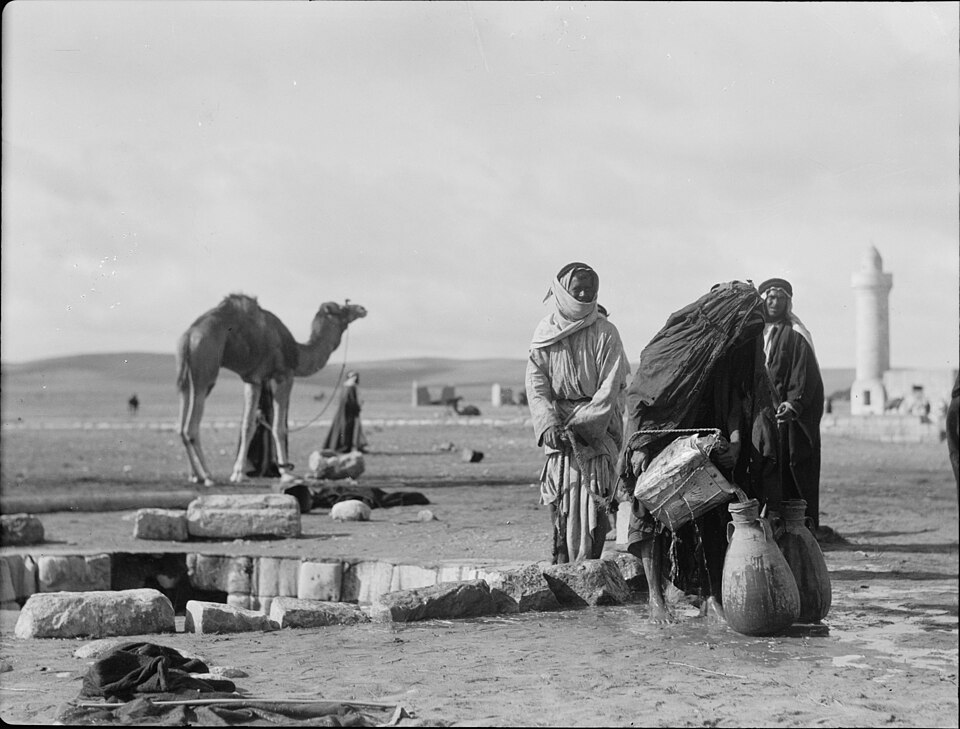
In Genesis 26, Isaac appears staying in Gerar to escape a famine, and there he re-digs the wells his father Abraham had dug long before.
Isaac dug again the wells of water, which they had dug in the days of Abraham his father, for the Philistines had stopped them after the death of Abraham. He called their names after the names by which his father had called them.
(Genesis 26:18, WEB)
Re-digging the very wells his father left behind, and calling them again by the very names his father had given them — this was how Isaac understood the succession of faith. It was not about making something new to leave his own name behind, but about keeping and carrying forward what the previous generation had established. Yet that path was not smooth. Every time Isaac dug a new well, the herdsmen of Gerar picked a fight over it.
The herdsmen of Gerar argued with Isaac’s herdsmen, saying, ‘The water is ours.’ He called the name of the well Esek, because they contended with him.
They dug another well, and they argued over that, also. He called its name Sitnah.
He left that place, and dug another well. They didn’t argue over that one. He called it Rehoboth. He said, ‘For now Yahweh has made room for us, and we will be fruitful in the land.’
(Genesis 26:20-22, WEB)
Even after Esek (dispute) and Sitnah (opposition) — twice over — Isaac did not fight back. He yielded the ground and dug yet another well. It was not for lack of strength. Earlier in chapter 26 it is recorded that he reaped a hundredfold in that land and grew exceedingly prosperous, becoming very wealthy (26:12-13). He had ample strength, yet he did not contend. Only at the third well did the strife finally stop, and that place was named Rehoboth — “he has made room for us.” From there Isaac went back up to Beersheba (Genesis 26:23), and that night God appeared to him and spoke again.
Yahweh appeared to him the same night, and said, ‘I am the God of Abraham your father. Don’t be afraid, for I am with you, and will bless you, and multiply your offspring for my servant Abraham’s sake.’
He built an altar there, and called on Yahweh’s name, and pitched his tent there. There Isaac’s servants dug a well.
(Genesis 26:24-25, WEB)
What stands out is how God introduces himself: “I am the God of Abraham your father,” “for my servant Abraham’s sake” — the covenant given to Isaac was not something newly begun, but the very same covenant already given to his father, simply carried forward. In the place of not contending, of yielding and re-digging wells, Isaac had it reconfirmed to him that the covenant was still in force.
A Blessing That Continued Despite Imperfection — Genesis 25, 27, 28
Isaac too had a long season of waiting. When Rebekah could not conceive, Isaac pleaded with God on his wife’s behalf.
Isaac entreated Yahweh for his wife, because she was barren. Yahweh was entreated by him, and Rebekah his wife conceived.
(Genesis 25:21, WEB)
Before the twins who struggled with each other even in the womb were born as an answer to that prayer, God had already made the outcome known.
Yahweh said to her, ‘Two nations are in your womb. Two peoples will be separated from your body. The one people will be stronger than the other people. The elder will serve the younger.’
(Genesis 25:23, WEB)
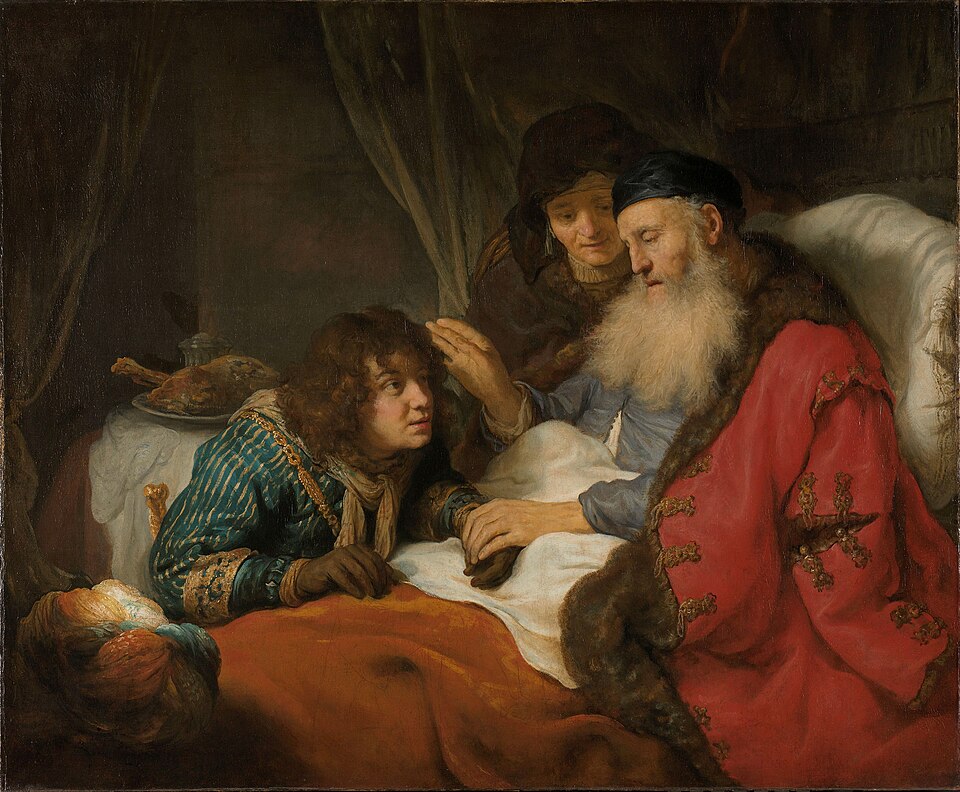
Even before Jacob was born grasping his brother’s heel, the heir of the covenant had already been determined within God’s sovereignty. But as the years passed, Isaac loved Esau because he ate what he hunted, while Rebekah loved Jacob (Genesis 25:28). That favoritism later led into the painful story of chapter 27. Isaac, now old and dim of eye, intended to bless his firstborn Esau, but through Rebekah and Jacob’s scheme, he ended up pronouncing the words of blessing over Jacob instead.
He came near, and kissed him. He smelled the smell of his clothing, and blessed him, and said, ‘Behold, the smell of my son is as the smell of a field which Yahweh has blessed.
God give you of the dew of the sky, of the fatness of the earth, and plenty of grain and new wine.
Let peoples serve you, and nations bow down to you. Be lord over your brothers. Let your mother’s sons bow down to you. Cursed be everyone who curses you. Blessed be everyone who blesses you.’
(Genesis 27:27-29, WEB)
This scene displays, without embellishment, the very human weakness that Scripture never glosses over. A favoritism-showing father, a deceiving wife and son — neither side can be called a model to follow. Yet remarkably, even after Isaac belatedly realized he had been deceived, he did not take back the blessing. The words he had already pronounced were not revoked, and the blessing remained in force. The New Testament reinterprets this very event as Isaac’s “faith.”
By faith, Isaac blessed Jacob and Esau, even concerning things to come.
(Hebrews 11:20, WEB)
Hebrews does not focus on the fact that Isaac was deceived, but on the fact that Isaac blessed him believing that God’s promise would surely be fulfilled toward a future he himself could not see. And Isaac did not stop there. Afterward, he formally called Jacob to himself once more, and this time, not through deception but through a deliberate decision, he explicitly handed down Abraham’s covenant.
May God Almighty bless you, and make you fruitful, and multiply you, that you may be a company of peoples,
and give you the blessing of Abraham, to you and to your offspring with you, that you may inherit the land where you travel, which God gave to Abraham.
(Genesis 28:3-4, WEB)
The tainted blessing of chapter 27 and the wholehearted re-blessing of chapter 28 — set these two scenes side by side, and the real message of Isaac’s life comes into view. The covenant is not carried forward only through flawless people. Even amid the tangled story of a favoritism-showing father and deceiving children, God’s promise did not collapse but flowed on into the next generation. Paul later builds on this very lineage to declare to believers today as well: “Now we, brothers, as Isaac was, are children of promise” (Galatians 4:28, WEB).
For Us Today — Discipleship Lessons from Isaac
- Can you obey without an answer? Isaac did not demand an explanation on Mount Moriah. Even when what God asks does not make sense, taking a step forward without knowing where that obedience leads is where discipleship begins.
- Do not rush. Wait. Faced with the most important decision of his life, Isaac did not step forward on his own but waited, meditating in the field. A person who trusts God’s guidance does not grasp anxiously for control.
- Yield, even when you have the strength to fight. Only after retreating twice, at Esek and Sitnah, did Isaac arrive at the wide place of Rehoboth. Patience that refuses to fight in the face of conflict is not weakness — it is the strength of trusting the place God will open up.
- Pass on the legacy of faith, even imperfectly. Isaac’s blessing was not given under perfect circumstances. Handing down our faith does not need to wait for a flawless moment either. Right where you are now, pass God’s promise on to the next generation.
References
- Genesis 22 (KRV, bible.com)
- Genesis 24 (KRV, bible.com)
- Genesis 25 (KRV, bible.com)
- Genesis 26 (KRV, bible.com)
- Genesis 27 (KRV, bible.com)
- Genesis 28 (KRV, bible.com)
- Hebrews 11 (KRV, bible.com)
- Romans 8 (KRV, bible.com)
- Galatians 4 (KRV, bible.com)
- 2 Chronicles 3 (KRV, bible.com)
- Wikisource — Original text of Genesis (Korean Revised Version)