
Genesis 11 ends with people joining forces to build a tower reaching to heaven, crying out, “Come, let’s build ourselves a city, and a tower whose top reaches to the sky, and let’s make a name for ourselves, lest we be scattered abroad on the surface of the whole earth” (Genesis 11:4, WEB). But the outcome was the very opposite. “So Yahweh scattered them abroad from there on the surface of all the earth. They stopped building the city” (Genesis 11:8, WEB). Genesis 12 begins right at the site of that scattering. This time, it is not people trying to make a name for themselves. God calls one man, Abram, and promises to make his name great. Where humanity failed, God begins again. This chapter shows both Abram’s first step of obedience to that call, and — soon after — the weakness that made him crumble before fear.
Scripture — Genesis 12 (WEB)
The English Scripture quotations here are from the King James Version and the World English Bible (both public domain).
1 Now Yahweh said to Abram, “Leave your country, and your relatives, and your father’s house, and go to the land that I will show you.
2 I will make of you a great nation. I will bless you and make your name great. You will be a blessing.
3 I will bless those who bless you, and I will curse him who treats you with contempt. All the families of the earth will be blessed through you.”
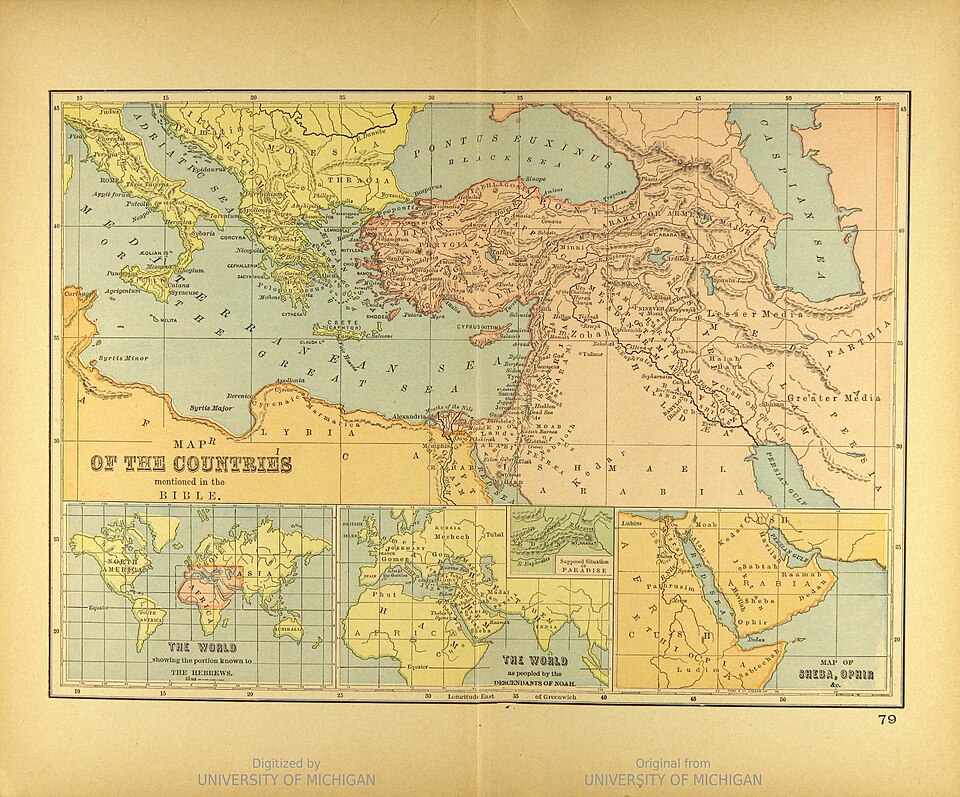
4 So Abram went, as Yahweh had told him. Lot went with him. Abram was seventy-five years old when he departed from Haran.
5 Abram took Sarai his wife, Lot his brother’s son, all their possessions that they had gathered, and the people whom they had acquired in Haran, and they went to go into the land of Canaan. They entered into the land of Canaan.
6 Abram passed through the land to the place of Shechem, to the oak of Moreh. At that time, Canaanites were in the land.
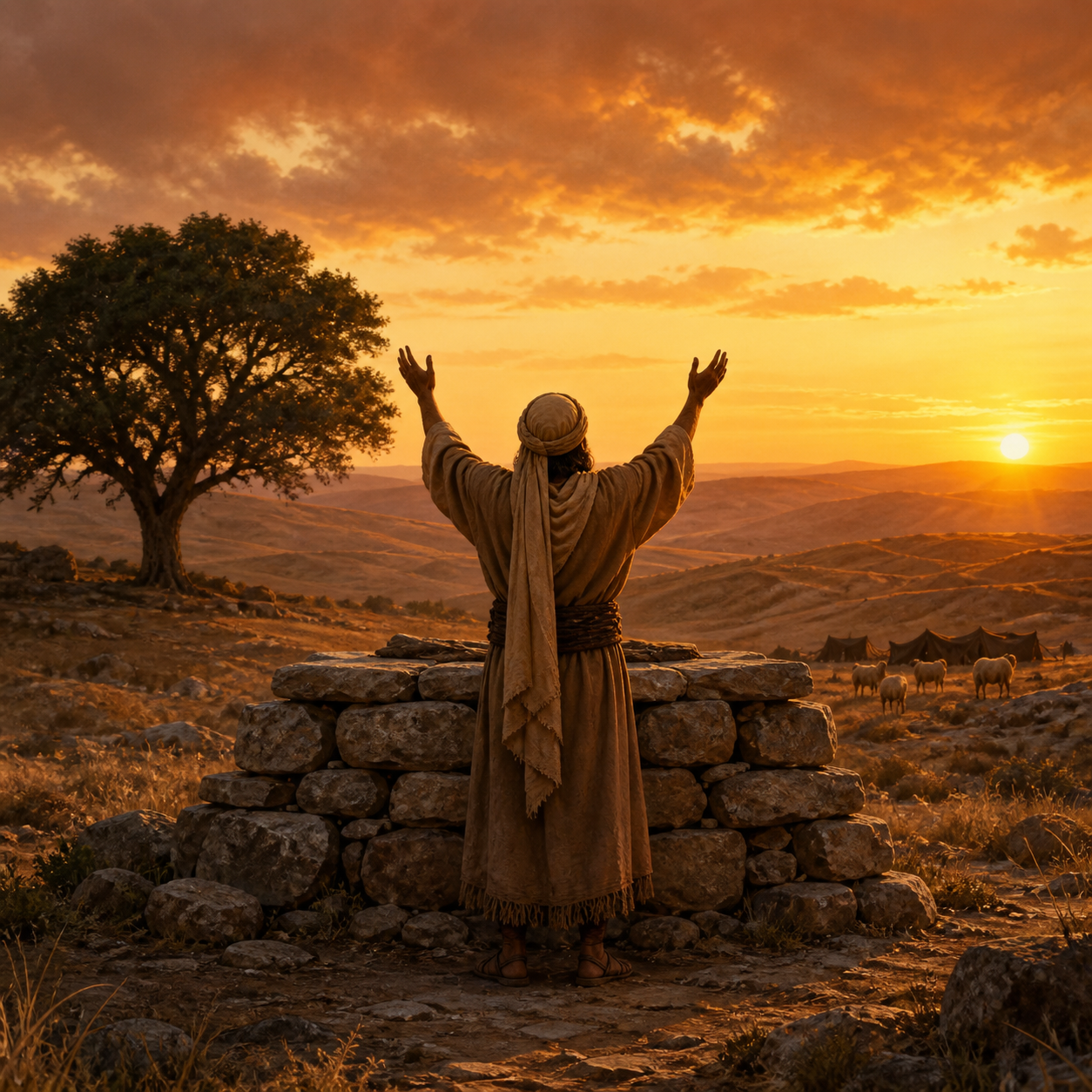
7 Yahweh appeared to Abram and said, “I will give this land to your offspring.” He built an altar there to Yahweh, who had appeared to him.
8 He left from there to go to the mountain on the east of Bethel and pitched his tent, having Bethel on the west, and Ai on the east. There he built an altar to Yahweh and called on Yahweh’s name.
9 Abram traveled, still going on toward the South.
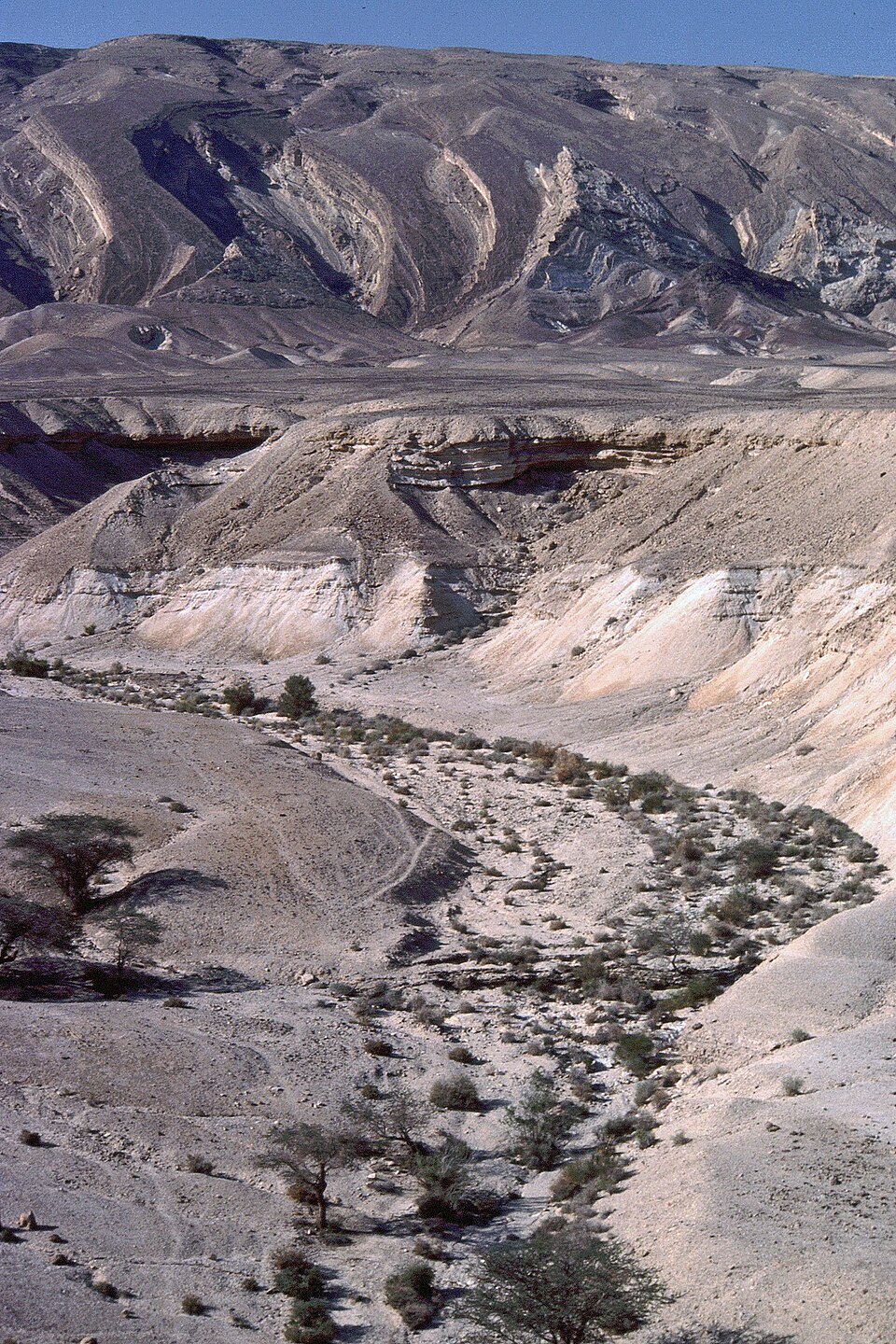
10 There was a famine in the land. Abram went down into Egypt to live as a foreigner there, for the famine was severe in the land.
11 When he had come near to enter Egypt, he said to Sarai his wife, “See now, I know that you are a beautiful woman to look at.
12 It will happen, when the Egyptians see you, that they will say, ‘This is his wife.’ They will kill me, but they will save you alive.
13 Please say that you are my sister, that it may be well with me for your sake, and that my soul may live because of you.”
14 When Abram had come into Egypt, Egyptians saw that the woman was very beautiful.
15 The princes of Pharaoh saw her, and praised her to Pharaoh; and the woman was taken into Pharaoh’s house.
16 He dealt well with Abram for her sake. He had sheep, cattle, male donkeys, male servants, female servants, female donkeys, and camels.
17 Yahweh afflicted Pharaoh and his house with great plagues because of Sarai, Abram’s wife.
18 Pharaoh called Abram and said, “What is this that you have done to me? Why didn’t you tell me that she was your wife?
19 Why did you say, ‘She is my sister,’ so that I took her to be my wife? Now therefore, see your wife, take her, and go your way.”
20 Pharaoh commanded men concerning him, and they escorted him away with his wife and all that he had.
(Genesis 12:1-20, WEB)
Context — A Call After the Scattering
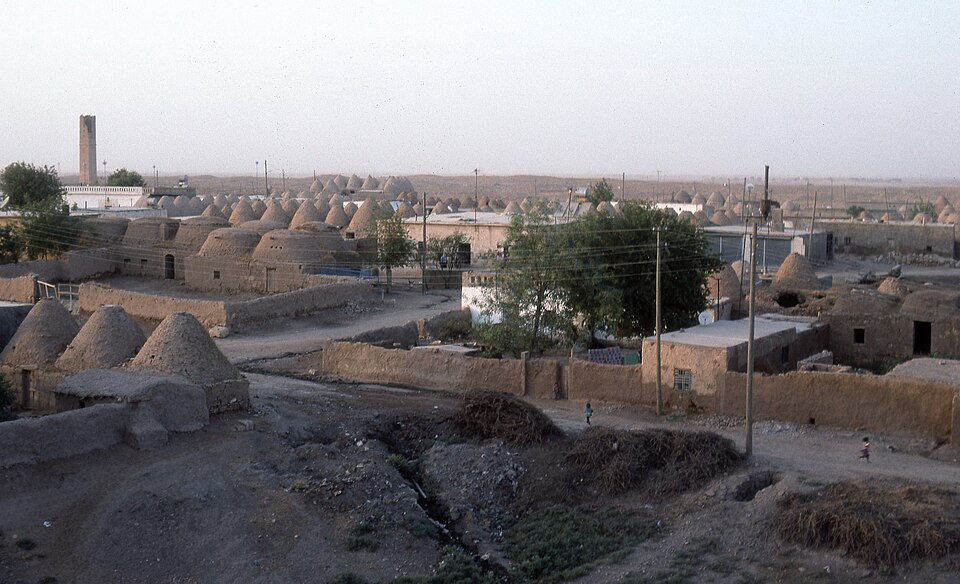
Abram’s story is already foreshadowed in the genealogy at the end of Genesis 11. “Terah took Abram his son, Lot the son of Haran, his son’s son, and Sarai his daughter-in-law, his son Abram’s wife. They went from Ur of the Chaldees, to go into the land of Canaan. They came to Haran and lived there” (Genesis 11:31, WEB) — Terah never reached Canaan; he died in Haran (Genesis 11:32). It was in this very Haran that Abram heard God’s voice (12:1, 4). In his speech in Acts, Stephen testifies that this call actually began earlier, while Abram was still in Mesopotamia, before he reached Haran — “The God of glory appeared to our father Abraham, when he was in Mesopotamia, before he lived in Haran, and said to him, ‘Get out of your land, and from your relatives, and come into a land which I will show you'” (Acts 7:2-3, WEB). God had already called Abram in Ur, and in Haran he confirmed that call again, so that Abram finally took his first step.
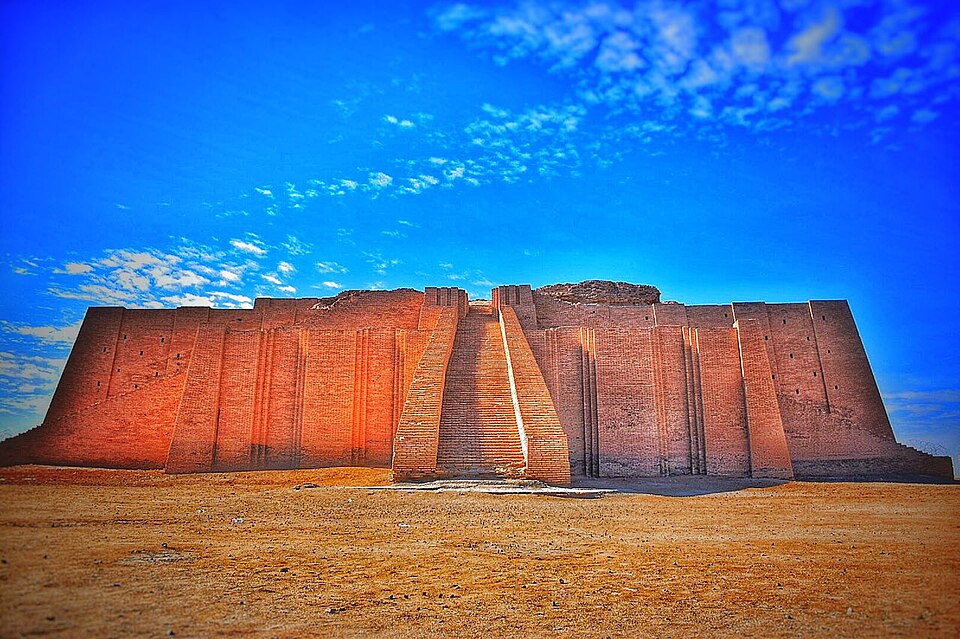
The contrast becomes clear only when Genesis 11 and 12 are set side by side. The people of Babel tried to make a name for themselves, but God scattered them (11:4, 8-9). To Abram, by contrast, comes the very opposite word — “Get thee out of thy country, and from thy kindred, and from thy father’s house … And I will make of thee a great nation … and make thy name great” (Genesis 12:1-2, KJV). At the very site where people scattered while trying to make a name for themselves by their own strength, God sends one man out, makes his name great instead, and promises that through him blessing will flow to all the families of the earth (12:3). Babel’s failure is overturned by Abram’s calling.
Exposition
1. The Call and the Covenant of Blessing (12:1-3)
God’s command tells him to leave in three layers — country, relatives, father’s house (12:1). The writer of Hebrews makes this obedience the very definition of faith. “By faith, Abraham, when he was called, obeyed to go out to the place which he was to receive for an inheritance. He went out, not knowing where he went” (Hebrews 11:8, WEB). Abram did not know his destination. What he held onto was not a map, but a word.
That word is followed by a promise — a great nation, blessing, a great name, and a source of blessing (12:2). This promise does not stop at chapter 12. In Genesis 15, God formalizes this promise into a covenant — “a smoking furnace, and a flaming torch passed between these pieces” (Genesis 15:17, WEB) — and says, “In that day Yahweh made a covenant with Abram, saying, … ‘I have given this land … to your offspring …'” (Genesis 15:18, WEB). In Genesis 17, he gives circumcision as the sign of that covenant and seals it: “I will establish my covenant between me and you and your offspring after you throughout their generations for an everlasting covenant” (Genesis 17:7, WEB). Far from fading with time, the promise is reaffirmed more specifically and more firmly as the story goes on.
The most astonishing verse is verse 3. “In thee shall all families of the earth be blessed” (Genesis 12:3, KJV). Paul did not read this verse as merely an old story. He called it the gospel — “The Scripture, foreseeing that God would justify the Gentiles by faith, preached the Good News beforehand to Abraham, saying, ‘In you all the nations will be blessed'” (Galatians 3:8, WEB). The promise given to one man became the seed of the gospel for all nations.
2. A Step of Obedience, and an Altar (12:4-9)
Verse 4 is short but weighty. “So Abram went, as Yahweh had told him … Abram was seventy-five years old when he departed from Haran” (Genesis 12:4, WEB). It was a late age to expect a fresh start in life. Yet he went. Leading his wife Sarai, his nephew Lot, and the possessions and people gathered in Haran, he entered the land of Canaan (12:5).
The first place Abram stopped after entering Canaan was “the place of Shechem, to the oak of Moreh” (Genesis 12:6, WEB). There Yahweh appeared to him and said, “I will give this land to your offspring” (Genesis 12:7, WEB), and Abram built an altar on that very spot.
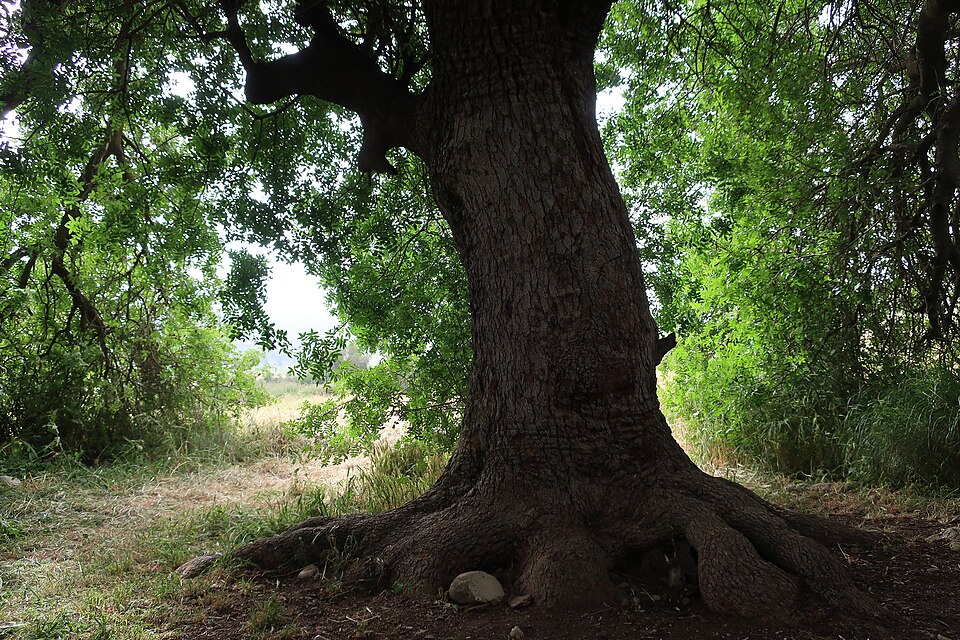
The altar was Abram’s first response — at the very place he heard the word, he offered worship before he settled. He did not stop there; he moved on to the mountain east of Bethel, built another altar, and “called on Yahweh’s name” (Genesis 12:8, WEB), and continued on toward the South (12:9).
These two place names, Shechem and Bethel, appear again later in Genesis. When Jacob later fell asleep at Bethel and saw the vision of the ladder, God gave him almost the same word — “The land whereon you lie, to you will I give it, and to your offspring … In you and in your offspring will all the families of the earth be blessed” (Genesis 28:13-14, WEB). And when Jacob returned to Bethel and “built an altar there, and called the place El Beth El” (Genesis 35:7, WEB), the place where he had buried the foreign idols was also “under the oak which was by Shechem” (Genesis 35:4, WEB). The grandson walks again on the very ground where his grandfather first built an altar — the covenant is not a one-generation event but a promise carried across generations.
3. Famine and Fear — Abram’s Fall in Egypt (12:10-20)
But after verse 9, the story suddenly changes direction. “There was a famine in the land. Abram went down into Egypt to live as a foreigner there” (Genesis 12:10, WEB). The man who had been building altars is now gripped by fear. He asks his wife Sarai, “See now, I know that you are a beautiful woman to look at … Please say that you are my sister” (Genesis 12:11-13, WEB). It was not the fear of losing Sarai, but a calculation to save his own life.
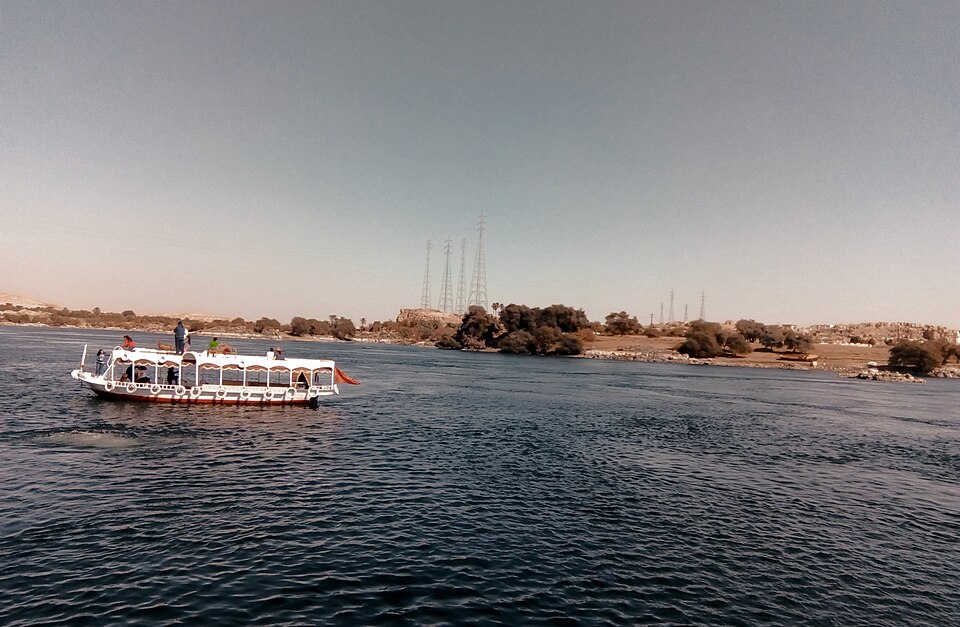
In the end, Sarai was taken into Pharaoh’s house, and Abram gained sheep, cattle, servants, and camels in return (12:14-16). But “Yahweh afflicted Pharaoh and his house with great plagues because of Sarai, Abram’s wife” (Genesis 12:17, WEB), and when the truth came out, Pharaoh rebuked Abram instead and sent them away (12:18-20). It is the pagan king, not the covenant people, who stands in the right.
This scene is not unfamiliar. In Genesis 20, Abraham repeats the same lie to Abimelech, king of Gerar, and explains it himself — “When God caused me to wander from my father’s house, I said to her, ‘This is your kindness which you shall show to me. Everywhere that we go, say of me, “He is my brother”‘” (Genesis 20:13, WEB). In other words, this was not a one-time slip but a habit set in place from the moment he left home. A generation later, his son Isaac likewise deceives Gerar by calling Rebekah his sister (Genesis 26:7). The threefold repetition shows how deeply this fear was rooted in Abraham and his son.
What is even more striking is that the incident in Genesis 20 happened after “He believed in Yahweh, who credited it to him for righteousness” (Genesis 15:6, WEB) — even after he had received the covenant of circumcision. A man justified by faith can still fall. Yet Paul later writes of this very man — “Without being weakened in faith, he didn’t consider his own body, already having been worn out … and the deadness of Sarah’s womb … but grew strong through faith, giving glory to God” (Romans 4:19-20, WEB). Abram’s faith was not perfected in chapter 12; it was a faith that grew through failure and restoration.
Theme — The Place of Genesis 12 in the Whole Bible
Genesis 12 testifies to two things at once. One is the faithfulness of God. Even when Abram lied and was afraid, the covenant did not waver, because it was grounded not in human weakness but in God’s word — Yahweh himself intervened to protect Sarai (12:17). The other is the direction that covenant is heading. The promise to all the families of the earth (12:3) was a story that Jesus himself confirmed — “Your father Abraham rejoiced to see my day. He saw it, and was glad” (John 8:56, WEB). The promise of blessing given to Abram was a story moving toward its fulfillment in Christ.
The language of this promise carries through to the very end of the New Testament. The risen Jesus commands his disciples — “Go and make disciples of all nations, baptizing them in the name of the Father and of the Son and of the Holy Spirit” (Matthew 28:19, WEB). The promise that “all families of the earth be blessed” (Genesis 12:3, KJV) and the command in Matthew 28 to reach all nations are the language of the same biblical story’s beginning and climax — the God who called one man in the end reaches all nations.
Application
First, obeying a call does not require knowing the whole destination in advance. Abram “went out, not knowing where he went” (Hebrews 11:8, WEB). We, too, experience God’s guidance not after everything becomes certain, but when we hold onto his word and take the first step.
Second, the first thing to do upon entering unfamiliar ground is not to settle in, but to worship. As soon as Abram reached Shechem, and as soon as he reached Bethel, he built an altar first (12:7-8). In every new place we enter, what must be built first is a place of worship.
Third, even a person of faith can fall before fear. But God’s faithfulness is greater than our weakness. Even Abram’s lie could not break the covenant. When we fail, we must not remain in self-condemnation, but turn back to faith again, as Abram did.
Fourth, the blessing intended for all the families of the earth continues today in the Great Commission. Just as the call that came to one man, Abram, ultimately expanded into the command to make disciples of all nations, we too are called to be those who let that blessing flow onward.
References
- bible.com — Genesis 12, Korean Revised Version (KRV, Korean Bible Society)
- Korean Wikisource — Genesis, Korean Revised Version
- Wikipedia — Ur of the Chaldees
- Wikipedia — Harran (biblical place)
- Wikipedia — Tell Balata (Shechem)
- Wikipedia — Wife–sister narratives in the Book of Genesis
- Korean Bible Society