
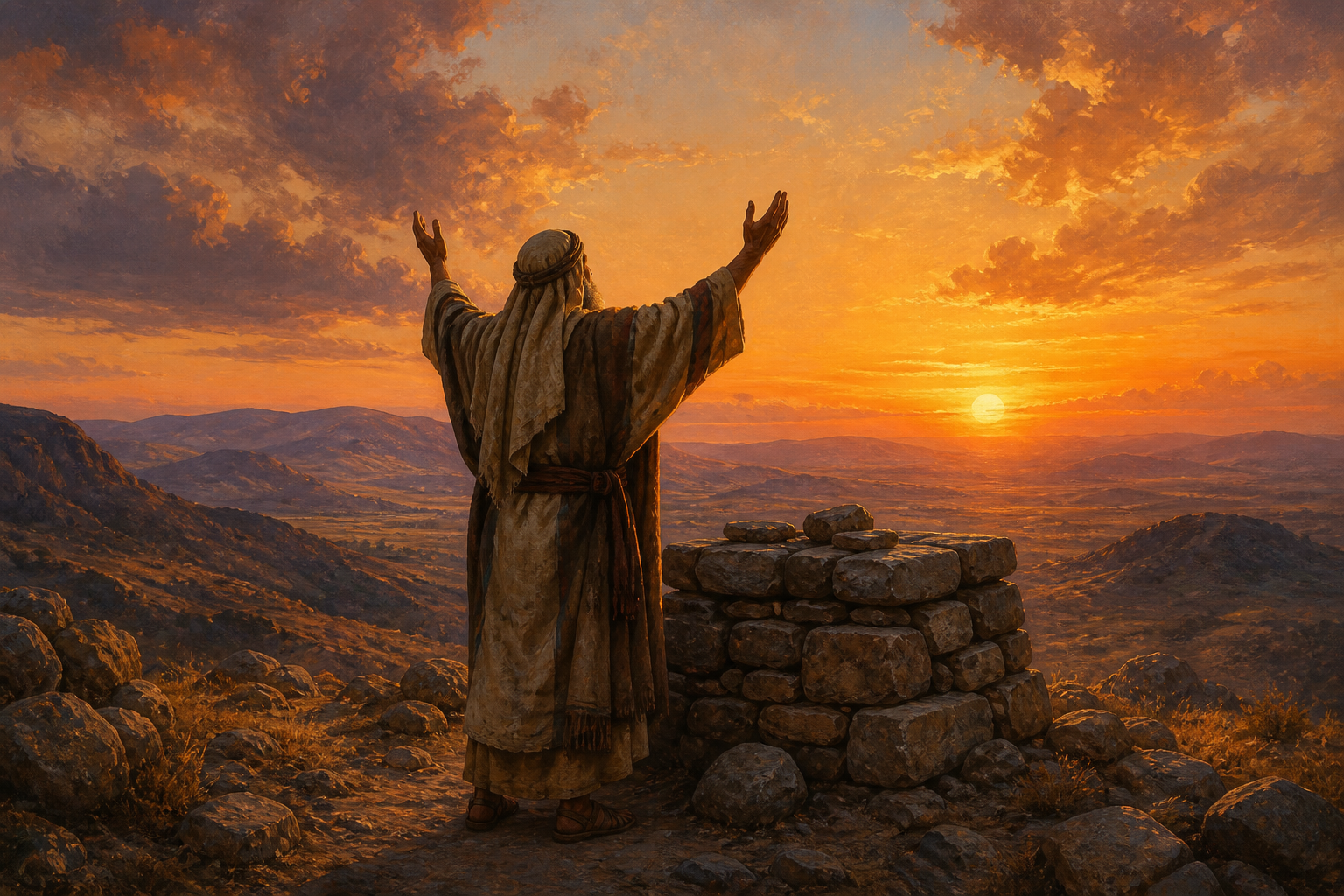
Genesis 12 ends with Abram — who had left for Canaan in obedience to God’s call — going down to Egypt because of a famine, telling his wife Sarai to say she was his sister, and finally being sent away by Pharaoh in disgrace (Genesis 12:10-20). A walk that began in faith had collapsed before fear. Genesis 13 begins again, remarkably matter-of-factly, from that very place of failure. “Abram went up out of Egypt” (Genesis 13:1, WEB) — the text does not narrate Abram’s repentance directly. Instead, it shows where his feet carry him. He returns to the place where he first worshiped God: the altar at Bethel.
Scripture — Genesis 13 (WEB)
The English Scripture quotations here are from the King James Version and the World English Bible (both public domain).
1 Abram went up out of Egypt—he, his wife, all that he had, and Lot with him—into the South.
2 Abram was very rich in livestock, in silver, and in gold.
3 He went on his journeys from the South even to Bethel, to the place where his tent had been at the beginning, between Bethel and Ai,
4 to the place of the altar, which he had made there at the first. There Abram called on Yahweh’s name.
5 Lot also, who went with Abram, had flocks, herds, and tents.
6 The land was not able to bear them, that they might live together; for their substance was great, so that they could not live together.
7 There was strife between the herdsmen of Abram’s livestock and the herdsmen of Lot’s livestock. The Canaanites and the Perizzites lived in the land at that time.
8 Abram said to Lot, “Please, let there be no strife between you and me, and between your herdsmen and my herdsmen; for we are relatives.
9 Isn’t the whole land before you? Please separate yourself from me. If you go to the left hand, then I will go to the right. Or if you go to the right hand, then I will go to the left.”
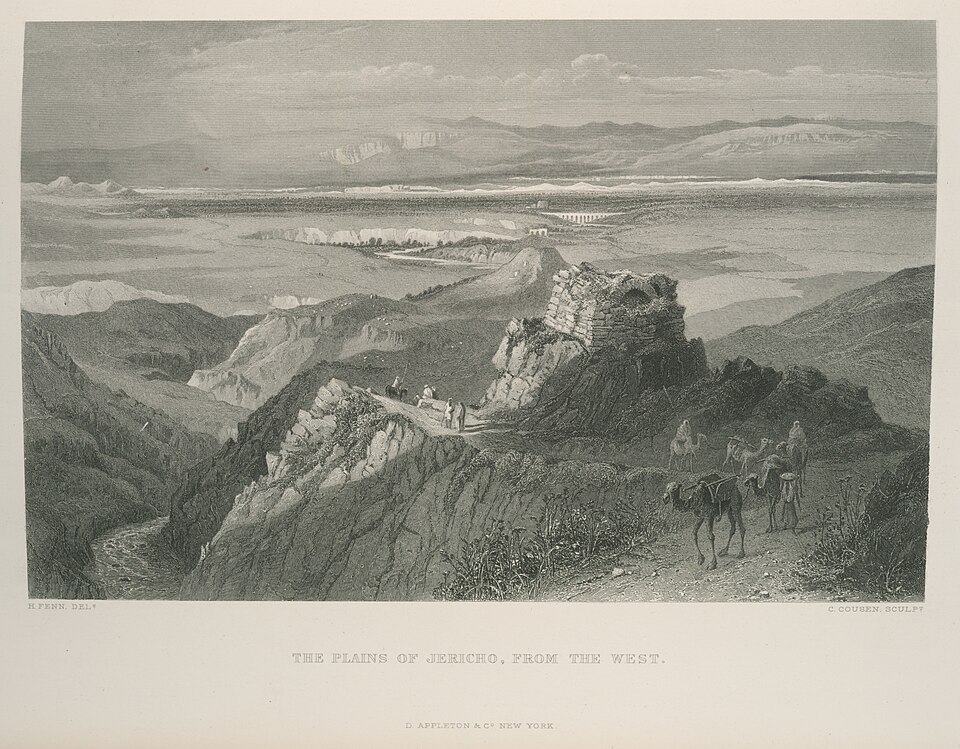
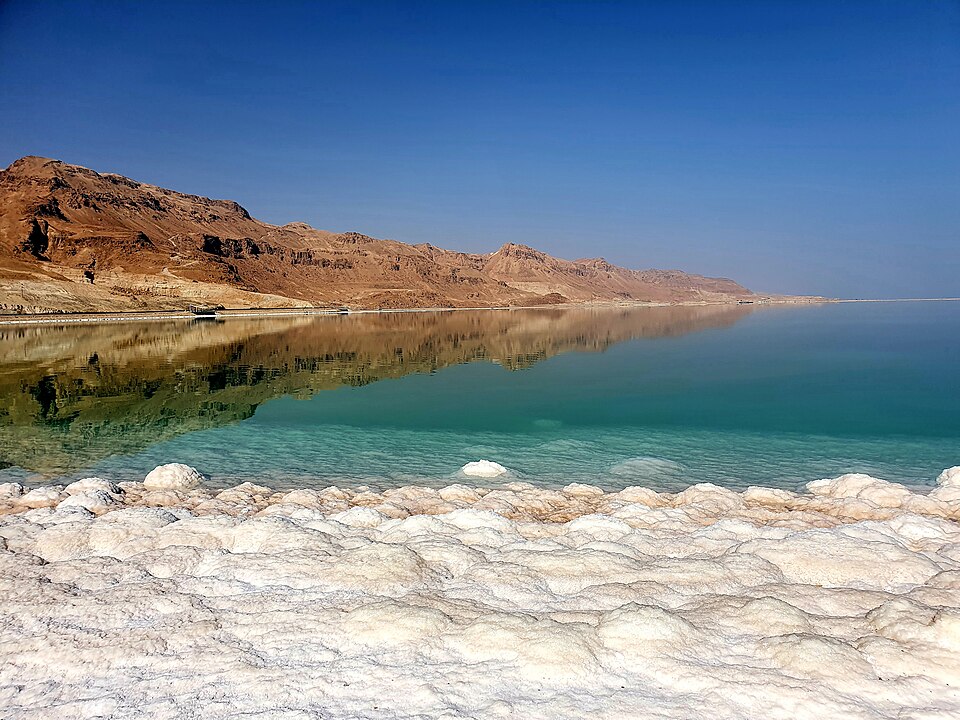
10 Lot lifted up his eyes, and saw all the plain of the Jordan, that it was well-watered everywhere, before Yahweh destroyed Sodom and Gomorrah, like the garden of Yahweh, like the land of Egypt, as you go to Zoar.
11 So Lot chose the Plain of the Jordan for himself. Lot traveled east, and they separated themselves the one from the other.
12 Abram lived in the land of Canaan, and Lot lived in the cities of the plain, and moved his tent as far as Sodom.
13 Now the men of Sodom were exceedingly wicked and sinners against Yahweh.
14 Yahweh said to Abram, after Lot was separated from him, “Now, lift up your eyes, and look from the place where you are, northward and southward and eastward and westward,
15 for all the land which you see, I will give to you, and to your offspring forever.
16 I will make your offspring as the dust of the earth, so that if a man can count the dust of the earth, then your offspring may also be counted.
17 Arise, walk through the land in its length and in its width; for I will give it to you.”
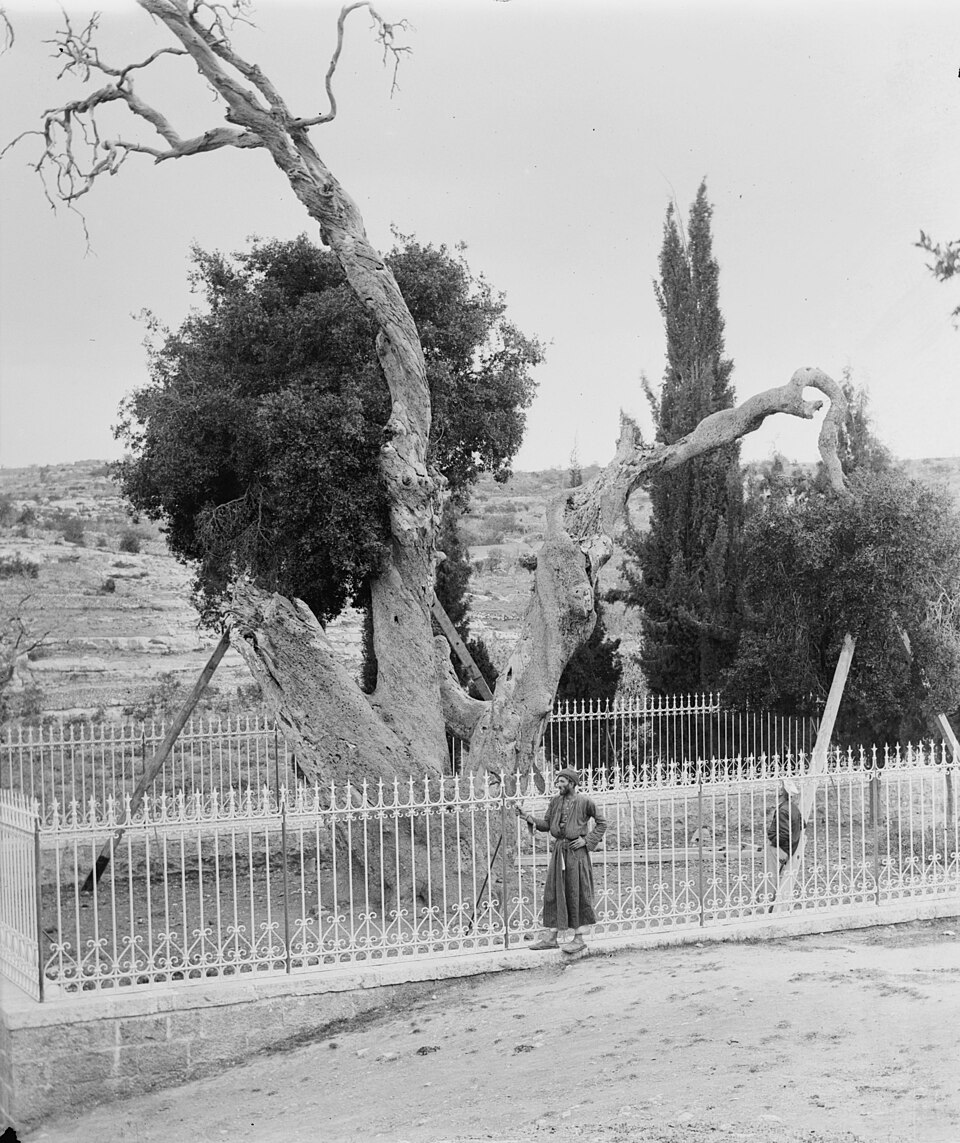
18 Abram moved his tent, and came and lived by the oaks of Mamre, which are in Hebron, and built an altar there to Yahweh.
(Genesis 13:1-18, WEB)
Context — From the Place of Failure to the Place of the Altar
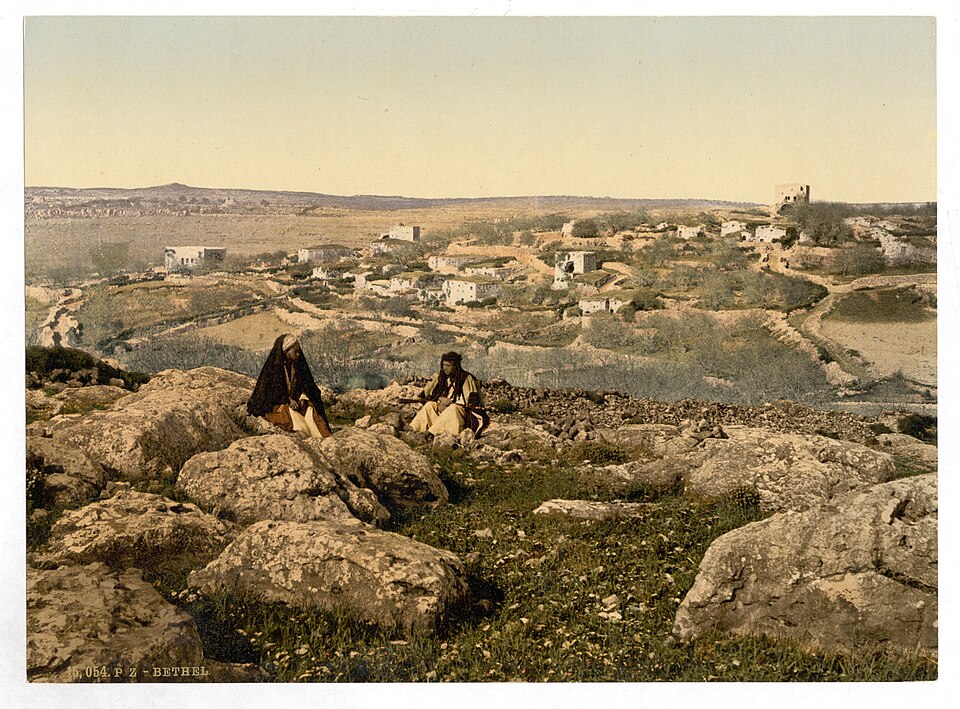
The opening words of Genesis 13 are “out of Egypt.” Abram had gone down to Egypt on his own to escape a famine, and now he leaves it sent away by Pharaoh in disgrace (12:10, 20). But where he returns to is not simply “Canaan” as a geographic point. The text is precise: “the place where his tent had been at the beginning,” “the place of the altar, which he had made there at the first” (13:3-4). This is the very place already named in chapter 12 — “He left from there to go to the mountain on the east of Bethel and pitched his tent, having Bethel on the west, and Ai on the east. There he built an altar to Yahweh and called on Yahweh’s name” (Genesis 12:8, WEB). Abram did not go looking for a new place after his failure. He went back to the place where he first worshiped, and called again on the name of the LORD.
This return is the key to the whole of Genesis 13. A man who had fallen into fear, told a lie, and put his own wife at risk simply comes back to the altar and worships again — without a single word of judgment or condemnation. And it is in this very chapter that God gives Abram a promise even more specific and expansive than before (13:14-17). Abram’s failure did not cancel God’s covenant. “If we are faithless, he remains faithful. For he can’t deny himself” (2 Timothy 2:13, WEB) — this word is already foreshadowed in Abram’s story. This chapter also becomes the springboard for what follows: in chapter 14, Lot is taken captive in war and rescued by Abram, and in chapters 18-19, Sodom is judged exactly as this chapter has already foretold.
Exposition
1. Back to the Altar — Restoration Begins with a Walk (13:1-4)
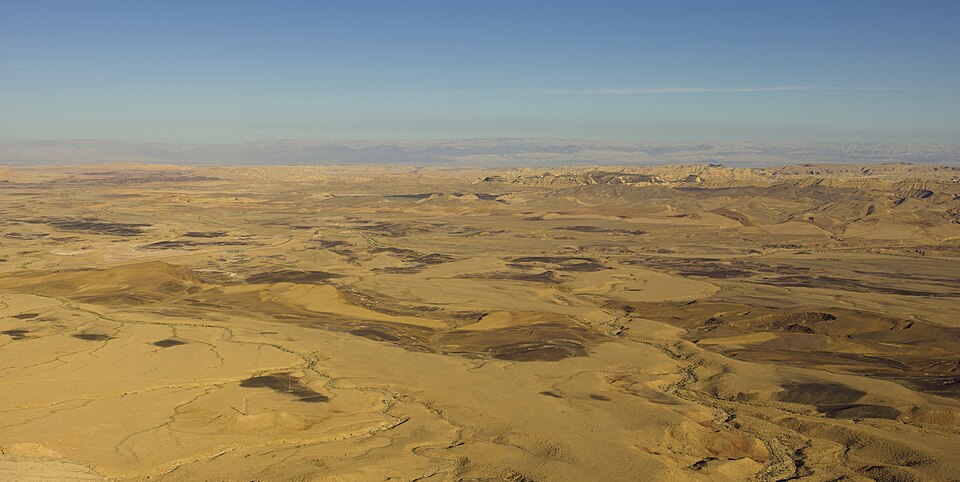
The text first mentions Abram’s wealth — “Abram was very rich in livestock, in silver, and in gold” (Genesis 13:2, WEB). Ironically, this wealth had come from his lie in Egypt (Genesis 12:16). God does not undo even Abram’s weakness; instead, he leads his steps back to the place where he began. His journey from the South (the Negev) up to Bethel (13:1, 3) is a geographic move that doubles as a picture of spiritual restoration. The man who had left the place of worship returns to it and calls again on the name of the LORD (13:4). Scripture does not dress up this restoration in dramatic emotional language. It simply says that he began again “there” — in the very place where he had once stood.
2. Lifting Up Eyes to Choose — Abram and Lot Part Ways (13:5-13)
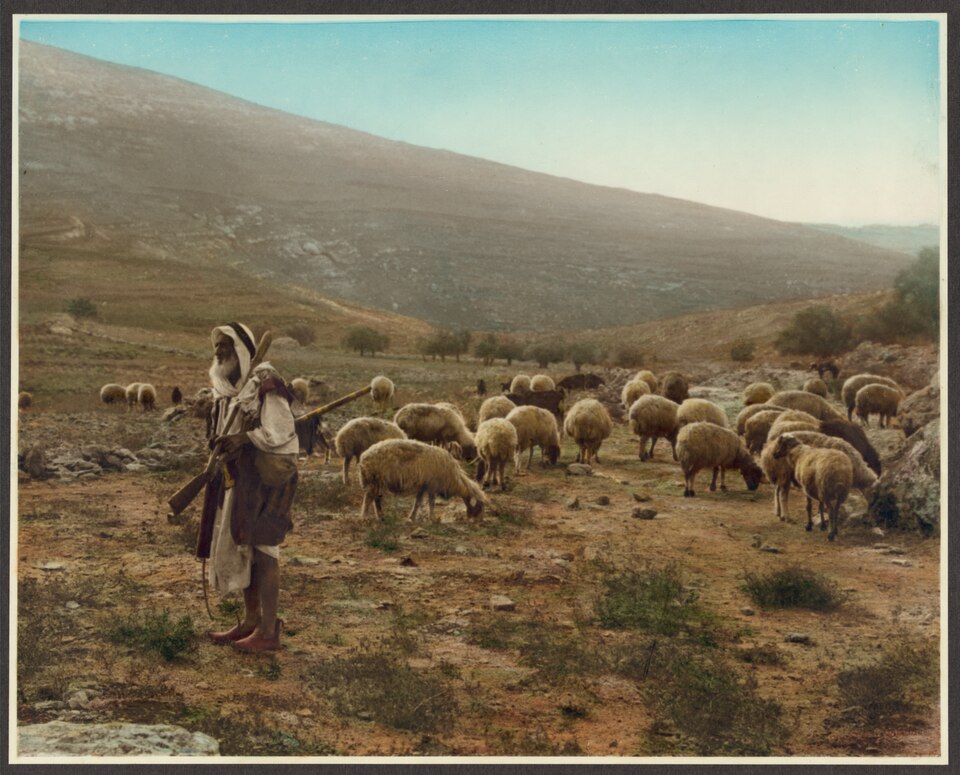
As the possessions of the two men grow too great for them to remain together, strife breaks out between their herdsmen (13:5-7). Abram’s response is striking. As the elder and the heir of the covenant, he had every right to choose first — yet instead he lets Lot choose. “Isn’t the whole land before you? Please separate yourself from me. If you go to the left hand, then I will go to the right. Or if you go to the right hand, then I will go to the left” (Genesis 13:9, WEB). This anticipates a principle the New Testament will later teach: “doing nothing through rivalry or through conceit, but in humility, each counting others better than himself; each of you not just looking to his own things, but each of you also to the things of others” (Philippians 2:3-4, WEB). Abram could afford to take the loss because he was already holding on to God’s promise (12:2-3, 7). A man who has something to hold onto in God does not need to grasp at a piece of land.
Lot’s choice, by contrast, moves by a different logic. “And Lot lifted up his eyes, and beheld all the plain of Jordan, that it was well watered every where, before the LORD destroyed Sodom and Gomorrah, even as the garden of the LORD, like the land of Egypt, as thou comest unto Zoar” (Genesis 13:10, KJV). This sentence quietly recalls another scene in Genesis — “it was pleasant to the eyes, and a tree to be desired to make one wise” (Genesis 3:6, KJV). Both texts move from “seeing” to “taking.” A choice made by following what looks good to the eyes always cuts a dangerous path in Genesis. Lot saw a well-watered land — but he did not see the shadow already gathering over it. The text immediately unveils that shadow: “Now the men of Sodom were exceedingly wicked and sinners against Yahweh” (Genesis 13:13, WEB). Lot moved his tent toward Sodom, following visible abundance (13:12), and that choice would later become the judgment in which he barely escaped with his life, losing everything else (Genesis 19:24-25). Paul’s words sum up this fork in the road exactly: “for we walk by faith, not by sight” (2 Corinthians 5:7, WEB).
3. The Land God Opened to His Eyes, the Covenant Renewed (13:14-18)
Only after Lot has left does God speak to Abram. And what he says deliberately echoes Lot’s own “lifted up his eyes” (13:10) — “And the LORD said unto Abram, after that Lot was separated from him, Lift up now thine eyes, and look from the place where thou art northward, and southward, and eastward, and westward” (Genesis 13:14, KJV). Same motion, opposite source. Lot lifted up his own eyes and chose the one piece that looked good to him; Abram lifts up his eyes at God’s command and receives the whole land as a gift. “For all the land which you see, I will give to you, and to your offspring forever… I will make your offspring as the dust of the earth” (Genesis 13:15-16, WEB). This language of promise — east and west, north and south; the dust of the earth — does not stand alone in Genesis. God later repeats this very language, this very promise, to Jacob asleep at Bethel: “The land whereon you lie, to you will I give it, and to your offspring. Your offspring will be as the dust of the earth, and you will spread abroad to the west, and to the east, and to the north, and to the south. In you and in your offspring will all the families of the earth be blessed” (Genesis 28:13-14, WEB). Scripture itself shows the covenant given to one man, Abram, flowing on through Isaac to Jacob, and on again to his offspring. God commands Abram, “Arise, walk through the land in its length and in its width; for I will give it to you” (Genesis 13:17, WEB) — a promise not merely to be seen, but to be walked out and lived.
Yet Hebrews reminds us that even after receiving this promise of land, Abram never settled down to make it his own possession — “By faith, he lived as an alien in the land of promise, as in a land not his own, dwelling in tents, with Isaac and Jacob, the heirs with him of the same promise. For he looked for the city which has the foundations, whose builder and maker is God” (Hebrews 11:9-10, WEB). Abram was promised a visible land, but his true hope reached beyond what could be seen, toward the city God himself would build. So he never grasped the land as property, but lived as a stranger, still in tents — a precise contrast to Lot, who moved his tent toward the fortified city of Sodom (13:12).
The chapter closes with Abram moving to the oaks of Mamre at Hebron and building another altar (13:18). Beginning at Bethel (13:4) and ending at Hebron (13:18), the whole chapter is in fact framed front and back by two acts of worship. Abram’s pilgrimage always moves from altar to altar.
Theme — The Place of Genesis 13 in the Whole Bible
Genesis 13 sets the question that runs through the whole of Scripture — “Will you live by what you see, or by faith?” — in sharp focus through two men, Abram and Lot. Lot followed visible abundance toward Sodom, and that choice led to a judgment he did not see coming (13:13, 19:24-25). Abram lifted up his eyes at what God opened to him, and that promise flowed on through Isaac and Jacob (Genesis 28:13-14), until at last, as it was said, “All the families of the earth will be blessed through you” (Genesis 12:3, WEB), it reaches toward every nation. Jesus later distills the same principle: “Seek first God’s Kingdom, and his righteousness; and all these things will be given to you as well” (Matthew 6:33, WEB). A life that decides for itself what to hold onto (Lot), and a life that stands on the promise God already holds (Abram) — Genesis 13 is the first place Scripture etches that fork in the road so clearly. And at the end of this chapter, the altar Abram builds again shows exactly what the fitting response to that promise looks like.
Application
-
If you have failed, go back to the place where you first worshiped. Abram did not devise a new strategy after his failure in Egypt. He went back to Bethel, to the place where he had first called on the name of the LORD. Our own restoration usually begins the same way — not in some special new place, but in returning to the place of worship and prayer we already know.
-
Do not be afraid to lose out in conflict. Abram gave up his right to choose first. A person who holds God’s promise does not need to insist on winning every dispute with others. “Each of you not just looking to his own things, but each of you also to the things of others” (Philippians 2:4, WEB) is a principle to actually practice in our relationships.
-
Do not set the direction of your life by what looks good to your eyes. Lot’s criterion was simply “is the water plentiful?” Missing from that criterion was the question, “who lives in that land?” Before we decide based only on the abundance or convenience in front of us, we need to ask where that choice will actually take us.
-
God is faithful regardless of our failure. Neither Abram’s lie nor the conflict between the two men could shake God’s covenant. The greatest comfort Genesis 13 offers is this: even when we fail today, that failure does not void God’s promise.