


Romans 8:31-39 is the summit of the gospel argument that Paul builds from Romans 1 through 8, and one of the most majestic declarations of victory in all Scripture. Paul asks five questions in rapid succession, shows that none of them has an answer capable of shaking the gospel, and closes the chapter with the assurance that “… nor any other created thing, will be able to separate us from the love of God” (Romans 8:39, WEB). This article is a verse-by-verse exposition of Romans 8:31-39, the passage at the heart of Love That Cannot Be Severed, a sermon Pastor Moonsoo Son preached at a Sunday worship service in 2024.

The Text — Romans 8:31-39 (WEB)
The English Scripture quotations in this article are from the World English Bible (WEB, public domain). The Korean original quotes the Korean Revised Version (KRV).
31 What then shall we say about these things? If God is for us, who can be against us?
32 He who didn’t spare his own Son, but delivered him up for us all, how would he not also with him freely give us all things?
33 Who could bring a charge against God’s chosen ones? It is God who justifies.
34 Who is he who condemns? It is Christ who died, yes rather, who was raised from the dead, who is at the right hand of God, who also makes intercession for us.
35 Who shall separate us from the love of Christ? Could oppression, or anguish, or persecution, or famine, or nakedness, or peril, or sword?
36 Even as it is written, For your sake we are killed all day long. We were accounted as sheep for the slaughter.
37 No, in all these things, we are more than conquerors through him who loved us.
38 For I am persuaded, that neither death, nor life, nor angels, nor principalities, nor things present, nor things to come, nor powers,
39 nor height, nor depth, nor any other created thing, will be able to separate us from the love of God, which is in Christ Jesus our Lord.
(Romans 8:31-39, WEB)
Context — Assurance Built on the Chain of Salvation
The phrase “about these things” (Romans 8:31, WEB) that opens Romans 8:31 points back to the words just before it. “We know that all things work together for good for those who love God, to those who are called according to his purpose.” (Romans 8:28, WEB). Romans 8:29-30 then lays out God’s saving plan in a single line. “Whom he predestined, those he also called. Whom he called, those he also justified. Whom he justified, those he also glorified.” (Romans 8:30, WEB). What deserves notice in this sequence, often called the golden chain of salvation, is that even glorification, which has not yet come, is spoken of as though it were already accomplished. From foreknowing to glorifying, God is the one acting at every step, and no human merit is inserted into any link of that chain. Every assurance in Romans 8:31-39 flows from the strength of that chain.
The structure of Romans 8 as a whole points in the same direction. The chapter opens with “… no condemnation to those who are in Christ Jesus …” (Romans 8:1, WEB) and closes with the declaration of no separation in Romans 8:39. Beginning with no condemnation and ending with no separation: that is the map of life for the one who lives in the Spirit.
After asking in Romans 8:31 what we should say to these things, Paul asks five questions one after another.
- Opposition: “If God is for us, who can be against us?” (Romans 8:31, WEB)
- Provision: “… how would he not also with him freely give us all things?” (Romans 8:32, WEB)
- Accusation: “Who could bring a charge against God’s chosen ones?” (Romans 8:33, WEB)
- Condemnation: “Who is he who condemns?” (Romans 8:34, WEB)
- Separation: “Who shall separate us from the love of Christ?” (Romans 8:35, WEB)
Each answer comes not from our side but from God’s side. The exposition below follows these five questions.
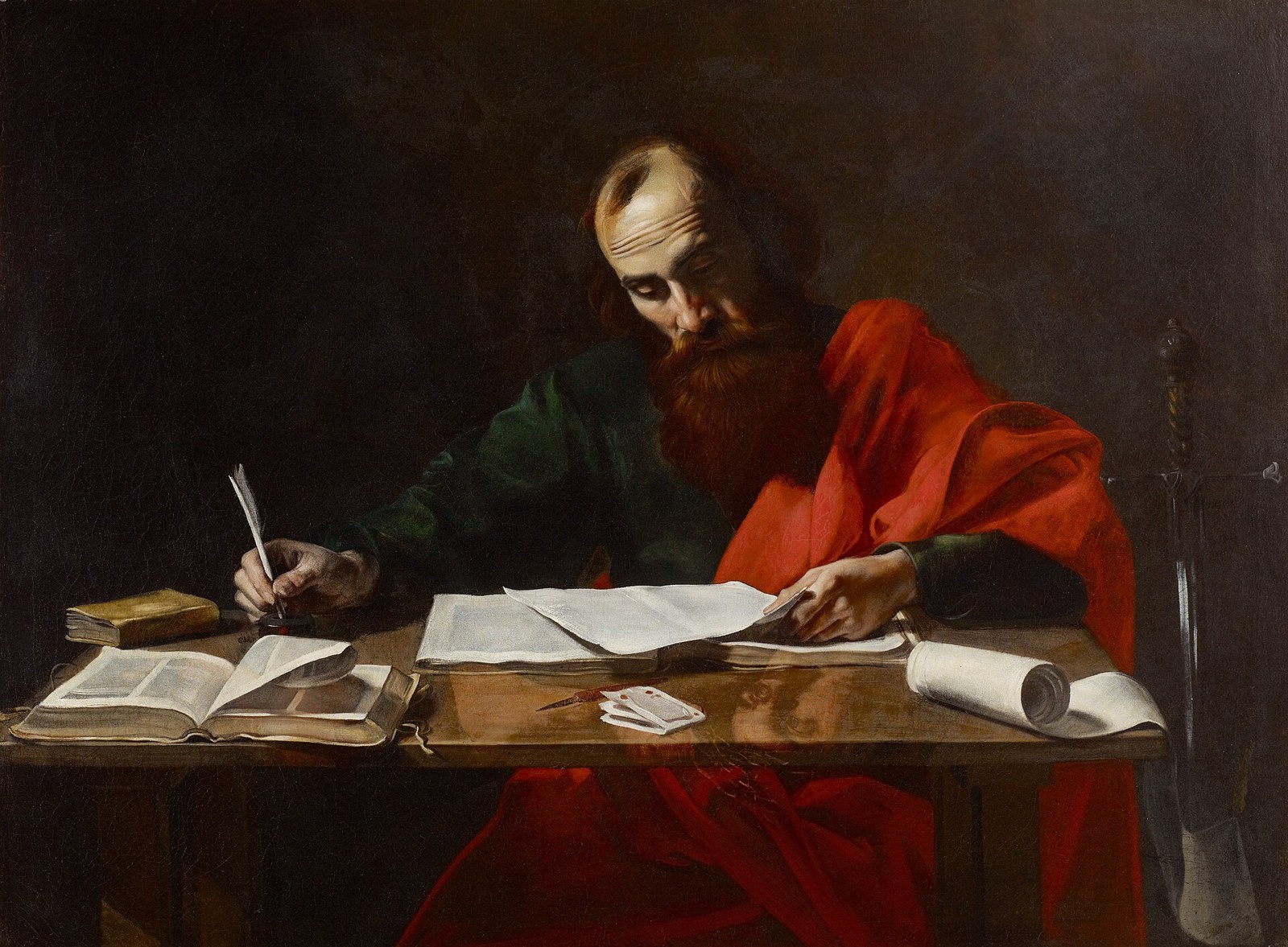
Exposition 1 — If God Is for Us (Romans 8:31-32)
The first question concerns opposition. “If God is for us, who can be against us?” (Romans 8:31, WEB). Paul is not saying that there are no enemies. He is saying that no enemy, however many, can be greater than the God who is for us.
Romans 8:32 gives the evidence of that commitment. “He who didn’t spare his own Son, but delivered him up for us all, …” (Romans 8:32, WEB). This language calls Abraham on Mount Moriah to mind. “… because you have done this thing, and have not withheld your son, your only son” (Genesis 22:16, WEB). Abraham’s son Isaac lived because the ram God provided was offered in his place (Genesis 22:8, 13), but God’s Son truly was given over. Paul’s logic moves from the greater to the lesser: if God has already given the greatest gift, his Son, will he withhold anything lesser? At the cross, every argument about the love of God reaches its conclusion.

Exposition 2 — Who Will Accuse, Who Will Condemn? (Romans 8:33-34)
The next two questions are courtroom language. “Who could bring a charge against God’s chosen ones? It is God who justifies.” (Romans 8:33, WEB). This scene echoes Isaiah’s confession. “He is near who justifies me; who will bring charges against me? … Behold, the Lord Yahweh will help me; who is he who shall condemn me?” (Isaiah 50:8-9, WEB). If God, the Judge of the final court, has already pronounced the verdict of justification, then no accusation can stand in that court.
Romans 8:34 lays down a fourfold foundation. “Who is he who condemns? It is Christ who died, yes rather, who was raised from the dead, who is at the right hand of God, who also makes intercession for us.” (Romans 8:34, WEB). Christ died, Christ was raised, Christ is at the right hand of God, and Christ intercedes for us. The risen Lord is still at work as our High Priest. “… he lives forever to make intercession for them.” (Hebrews 7:25, WEB).
Scripture does not hide the fact that someone accuses us. “… for the accuser of our brothers has been thrown down, who accuses them before our God day and night.” (Revelation 12:10, WEB). But ahead of the accuser stands the one who speaks in our defense. “… If anyone sins, we have a Counselor with the Father, Jesus Christ, the righteous.” (1 John 2:1, WEB). Even if the accusations go on day and night, we have a Counselor who always lives to intercede for us.
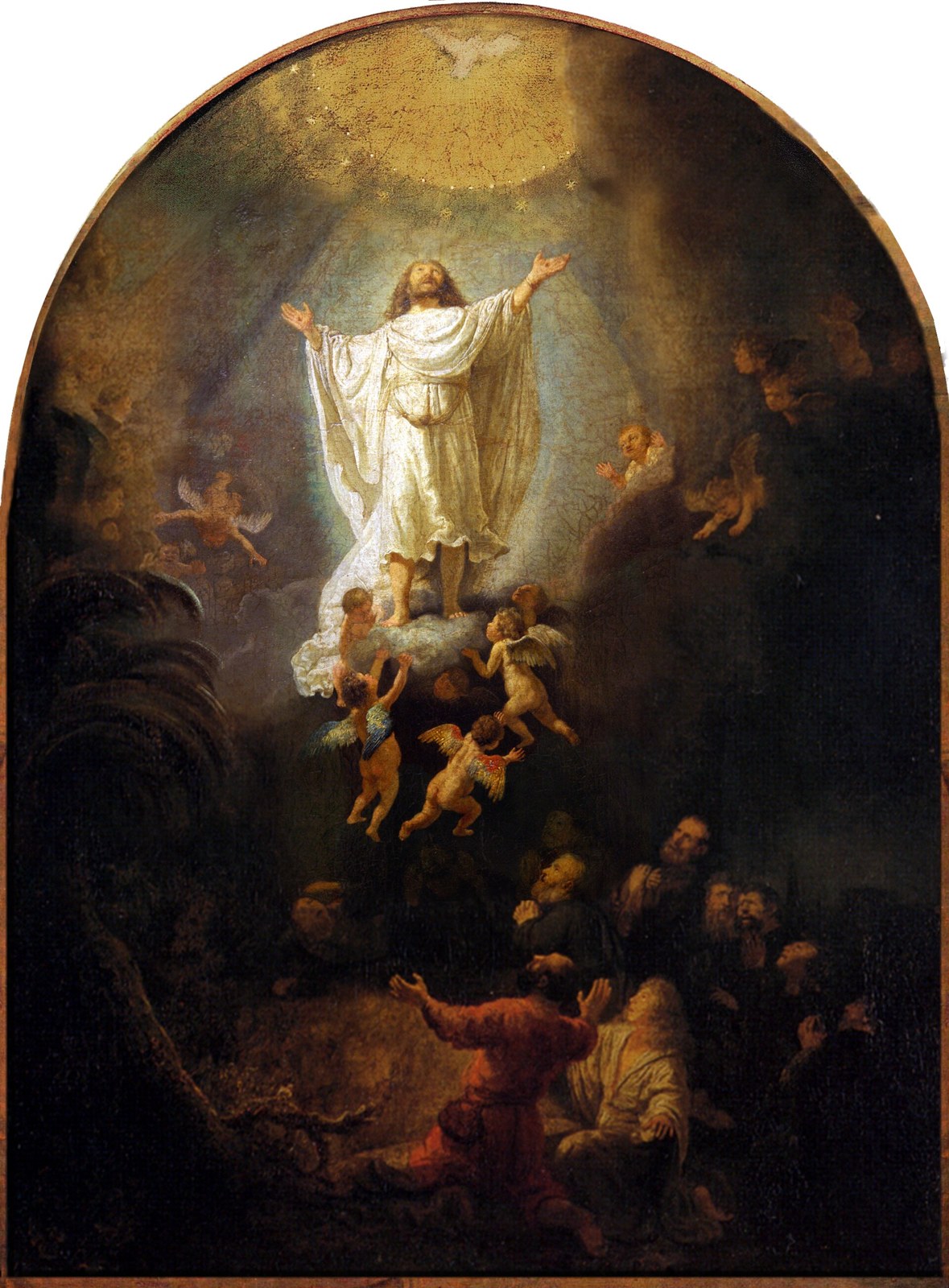
Exposition 3 — Who Shall Separate Us from the Love of Christ? (Romans 8:35-37)
The fifth question is the high point of the paragraph. “Who shall separate us from the love of Christ? Could oppression, or anguish, or persecution, or famine, or nakedness, or peril, or sword?” (Romans 8:35, WEB). The seven things Paul lists are not a theoretical catalogue. Imprisonment and beatings, dangers from rivers, sea, and wilderness, hunger and nakedness: they overlap with what Paul himself actually endured (2 Corinthians 11:23-27).
Then Paul quotes Psalm 44:22. “… For your sake we are killed all day long. We were accounted as sheep for the slaughter.” (Romans 8:36, WEB). Suffering was nothing new for God’s people. Jesus did not promise to exempt his disciples from oppression either; he said this instead: “… In the world you have oppression; but cheer up! I have overcome the world.” (John 16:33, WEB). The promise is not that there will be no suffering, but that suffering cannot cut us off from the love of Christ.
That is why the declaration of Romans 8:37 is so striking. “No, in all these things, we are more than conquerors through him who loved us.” (Romans 8:37, WEB). The Greek word behind more than conquerors, hypernikaō (ὑπερνικάω), appears only once in the entire New Testament, in this verse, and means to win and have victory to spare. The triumph comes not by escaping suffering but in the midst of it, and not by our own strength but through him who loved us.
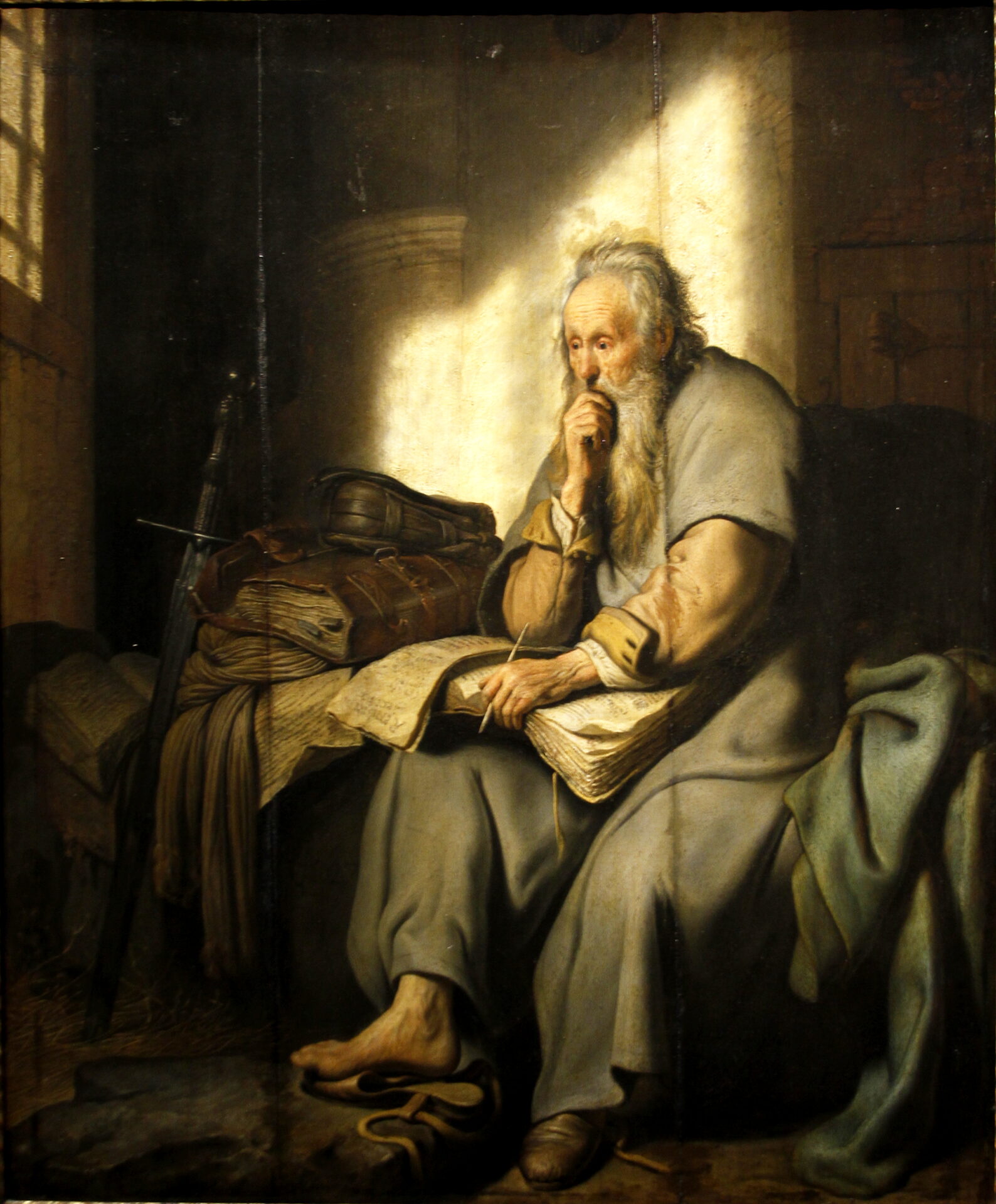
Exposition 4 — Nothing Will Be Able to Separate Us (Romans 8:38-39)
Paul closes the chapter with a catalogue of certainty. Death and life, angels and principalities, things present and things to come, powers, height and depth: he sweeps up every dimension of existence and then seals it all by saying that no other created thing can separate us. The word created is the key. Everything other than God is created, and no created thing can overcome the Creator’s love. Jesus gave the same assurance. “I give eternal life to them. They will never perish, and no one will snatch them out of my hand.” (John 10:28, WEB).
Notice the address of this love. Paul calls it the love of God “which is in Christ Jesus our Lord” (Romans 8:39, WEB). This is not a vague love, but love confirmed and guaranteed in Christ Jesus. For the one who is in him, there is no separation.

Theme — Assurance Stands Not on Feeling but on the Cross
“For I am persuaded” (Romans 8:38, WEB) is not Paul’s temperament but the conclusion of his argument. God gave up his Son (Romans 8:32), God justifies (Romans 8:33), Christ intercedes (Romans 8:34), and the one who loves us makes us conquer (Romans 8:37). Every ground of assurance lies on God’s side. The assurance of salvation usually wavers when we look for its basis on our side, in the strength of our faith or the report card of our obedience. The assurance of Romans 8 stands on the cross, and the cross does not move.
Application — Living in Love That Cannot Be Severed
- What opposition am I facing right now? Have I placed it on the same scale as the God who is for us?(Romans 8:31)
- When old guilt or the memory of failure accuses me, do I remember the Christ who was raised and now intercedes for me?(Romans 8:34)
- Which item in the list of oppression, anguish, and persecution is mine right now? Do I believe that this suffering is not proof that I have been cut off from love, but a path I walk through within that love?(Romans 8:35)
- If I were to bring this assurance to one person in despair right now, who would that person be, and what would I say?
References
- Korean Revised Version (KRV), Romans 8 — bible.com
- Korean Revised Version (KRV), Genesis 22 — bible.com
- Korean Revised Version (KRV), Isaiah 50 — bible.com
- Korean Revised Version (KRV), Hebrews 7 — bible.com
- Korean Revised Version (KRV), 2 Corinthians 11 — bible.com
- BibleHub Parallel — Romans 8:35 (translation comparison)
- BibleHub Interlinear — Romans 8:37
- BibleHub Greek 5245 — ὑπερνικάω (hupernikaó), New Testament usage