
The Great Commission (Matthew 28:18-20) is not just a brief slogan. Making disciples of all nations and teaching them to observe all that Christ commanded requires a concrete method. Robert E. Coleman’s The Master Plan of Evangelism asks exactly this question of method. Rather than starting from theological theory, the author observes how Jesus actually carried out his ministry as recorded in the four Gospels, drawing out eight principles by which Jesus formed and trained his twelve disciples. This review traces the book’s central argument through Scripture and considers what it leaves for believers today who want to live out the Great Commission.
The English Scripture quotations here are from the King James Version and the World English Bible (both public domain).

About the Author and This Book
Robert Coleman was born in 1928 in Dallas, Texas, and served as the first McCreless Professor of Evangelism at Asbury Theological Seminary from 1955 to 1983. He later led the world mission and evangelism department at Trinity Evangelical Divinity School, and also directed the Institute of Evangelism at Wheaton College’s Billy Graham Center. He remains Distinguished Professor Emeritus at Gordon-Conwell Theological Seminary. The original The Master Plan of Evangelism was first published in 1963 by F. H. Revell, and the Korean edition, translated by Prof. Hong Sung-chul, was published by Life Book Publishers in 2007 under the Korean title Jjunimui Jeondo Gyehoek (“The Lord’s Plan of Evangelism”).
The book’s method is simple: it asks, “How would Jesus himself have done evangelism and discipleship?” and reads the Gospels again with that question in mind. What follows are the eight principles that emerge from that reading.
Eight Principles Jesus Demonstrated
1. Selection
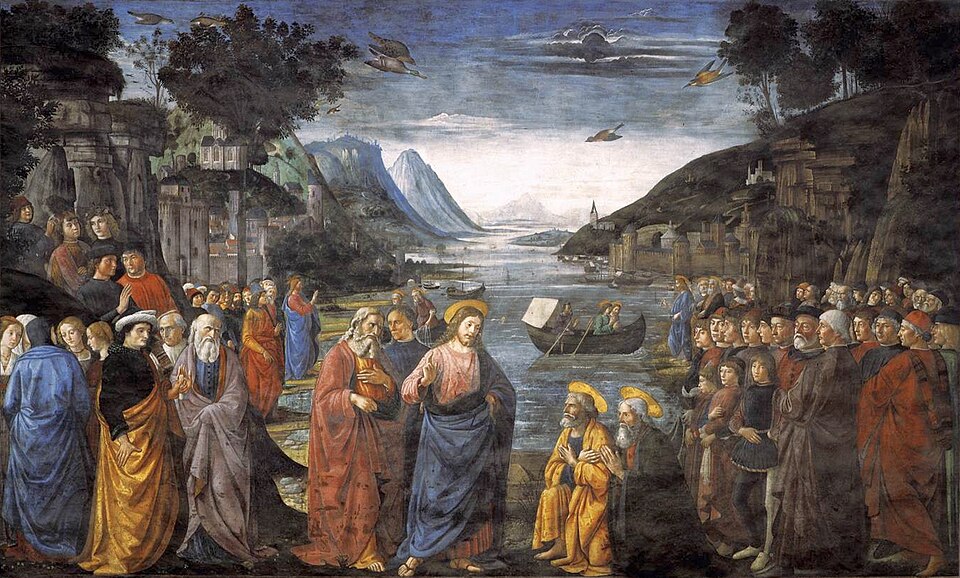
Jesus did not train the whole crowd that gathered around him at once. After a night of prayer, he called a few. “In these days, he went out to the mountain to pray, and he continued all night in prayer to God. When it was day, he called his disciples, and from them he chose twelve, whom he also named apostles” (Luke 6:12-13, WEB). The calling of ordinary fishermen by the shore of Galilee shows the same principle. “Follow me, and I will make you fishers of men” (Matthew 4:19, KJV). Discipleship begins not with a program, but with a person.
2. Association
After selecting them, the next thing Jesus did was simply “be with” them. “He appointed twelve, that they might be with him, and that he might send them out to preach, and to have authority to heal sicknesses and to cast out demons” (Mark 3:14-15, WEB). The disciples learned not in a classroom but on the road, alongside Jesus in real life. This is also where their later boldness to testify came from: “You will also testify, because you have been with me from the beginning” (John 15:27, WEB).
3. Consecration
Jesus asked for obedience before he asked for ability. “If anyone comes to me, and doesn’t disregard his own father, mother, wife, children, brothers, and sisters, yes, and his own life also, he can’t be my disciple. Whoever doesn’t bear his own cross, and come after me, can’t be my disciple” (Luke 14:26-27, WEB). “So therefore whoever of you who doesn’t renounce all that he has, he can’t be my disciple” (Luke 14:33, WEB). Within Coleman’s framework, discipleship without obedience does not stand.
4. Impartation
Jesus did not give his disciples knowledge alone. He gave them what he himself had received from the Father, and the relationship itself. “No longer do I call you servants, for the servant doesn’t know what his lord does. But I have called you friends, for everything that I heard from my Father, I have made known to you” (John 15:15, WEB). Discipleship is not information transfer; it is a shared life.
5. Demonstration
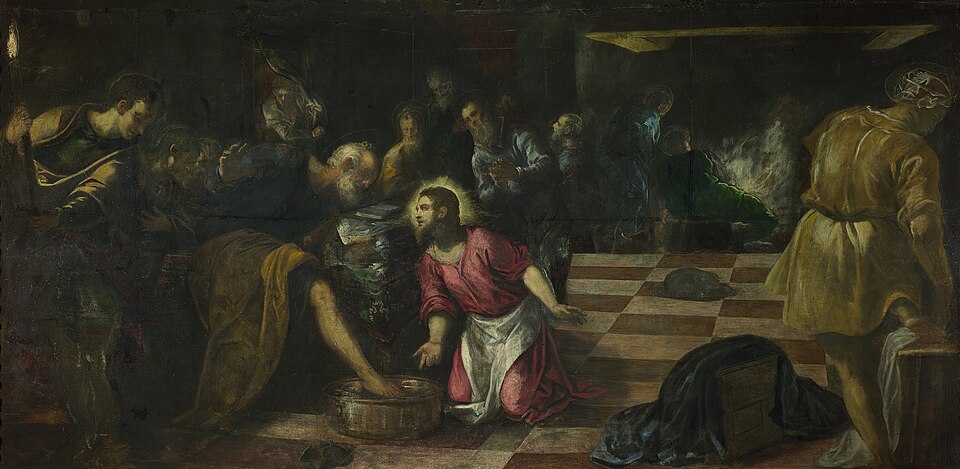
Jesus showed in his own body what he taught in words. The washing of the disciples’ feet is the clearest example. “If I then, the Lord and the Teacher, have washed your feet, you also ought to wash one another’s feet… For I have given you an example, that you also should do as I have done to you” (John 13:14-15, WEB). Teaching becomes an example only when life matches the words.
6. Delegation
Jesus did not leave his disciples as mere observers; he sent them out to act. “He called to himself the twelve, and began to send them out two by two; and he gave them authority over the unclean spirits” (Mark 6:7, WEB). “He called the twelve together, and gave them power and authority over all demons, and to cure diseases. He sent them out to preach God’s Kingdom and to heal the sick” (Luke 9:1-2, WEB). Later he widened the circle further, sending out seventy as well: “Now after these things, the Lord also appointed seventy others, and sent them two by two ahead of him into every city and place, where he was about to come” (Luke 10:1, WEB).
7. Supervision
Being sent out was not the end. Reporting back and reflection followed. “The apostles gathered themselves together to Jesus, and they told him all things, whatever they had done, and whatever they had taught” (Mark 6:30, WEB). Reviewing real ministry experience together with Jesus was itself part of the training.
8. Reproduction
The goal of all eight principles is that disciples would go on to make more disciples. “You didn’t choose me, but I chose you, and appointed you, that you should go and bear fruit, and that your fruit should remain” (John 15:16, WEB). Paul’s instruction to Timothy carries the same principle: “The things which you have heard from me among many witnesses, commit the same to faithful men, who will be able to teach others also” (2 Timothy 2:2, WEB). From Paul to Timothy, to faithful people, to others still — at least four generations are compressed into this single verse.

The Great Commission Completes the Eight Principles
In the end, Coleman’s eight principles converge on a single passage. “And Jesus came and spake unto them, saying, All power is given unto me in heaven and in earth. Go ye therefore, and teach all nations, baptizing them in the name of the Father, and of the Son, and of the Holy Ghost: Teaching them to observe all things whatsoever I have commanded you: and, lo, I am with you alway, even unto the end of the world. Amen” (Matthew 28:18-20, KJV). The “power” in verse 18 is the basis for Delegation; the “all nations” of verse 19 is the breadth toward which Selection and Association must reach; “teach them to observe” is the fruit produced by Impartation, Demonstration, and Supervision; and “I am with you always” shows that Association continues forever. The eight principles are not a new theory Coleman invented — they read more like what was already compressed into this one verse of the Great Commission, unfolded across the whole Gospel record.

A Critical Assessment
The book’s greatest strength is that it returns discipleship to a relationship between people, rather than a program. Its emphasis on deep investment in a few, rather than organization or curriculum, still offers a real challenge to ministries that have grown large and program-driven today. Because it follows the Gospel text itself rather than theological speculation, it is also an easy read for anyone who wants Scripture to interpret Scripture.
Its limits are just as clear. First published in 1963, the book does not directly address the digital environment or today’s urbanized mission fields. Readers should also resist the temptation to apply the eight principles mechanically, as if they were a formula. As Coleman himself emphasizes, the root of these principles is not method but a personal relationship with Jesus — and Scripture must always come before method.
Who Should Read This Book
This book is recommended for discipleship workers, small-group leaders, believers wrestling with a call to missions, and any Christian who feels they “should evangelize but don’t know how.” For those who feel burdened by the work of deeply investing in just a few people, it is a great comfort and clear direction to remember that Jesus himself began by focusing on twelve. The Great Commission does not begin as a slogan shouted at a crowd — it begins with a call to one person at a time.

References
- Kyobo Book Centre — Korean edition book details
- Kyobo eBook — Korean edition eBook details (table of contents confirmation)
- Google Books — Korean edition
- Evangelism Resources — Robert E. Coleman, The Master Plan of Evangelism
- C.S. Lewis Institute — Robert Coleman biography
- Matthew 28:18-20 (Bible.com KJV)
- 2 Timothy 2:2 (Bible.com WEB)