
The English Scripture quotations here are from the King James Version and the World English Bible (both public domain).
In the middle of Israel’s wilderness tabernacle, behind the curtain, in a room with no ornament at all, stood a small wooden chest. No one could touch it carelessly, and no one could simply look inside. Yet it was there, above that very chest, that God said He would meet with His people.
“And there I will meet with thee, and I will commune with thee from above the mercy seat, from between the two cherubims which are upon the ark of the testimony, of all things which I will give thee in commandment unto the children of Israel.” (Exodus 25:22, KJV)
The Ark of the Covenant was not merely an artifact. It was God’s own blueprint for how a sinner could meet the holy God. Today we trace its design and its journey through Scripture — and the Christ to whom it points.
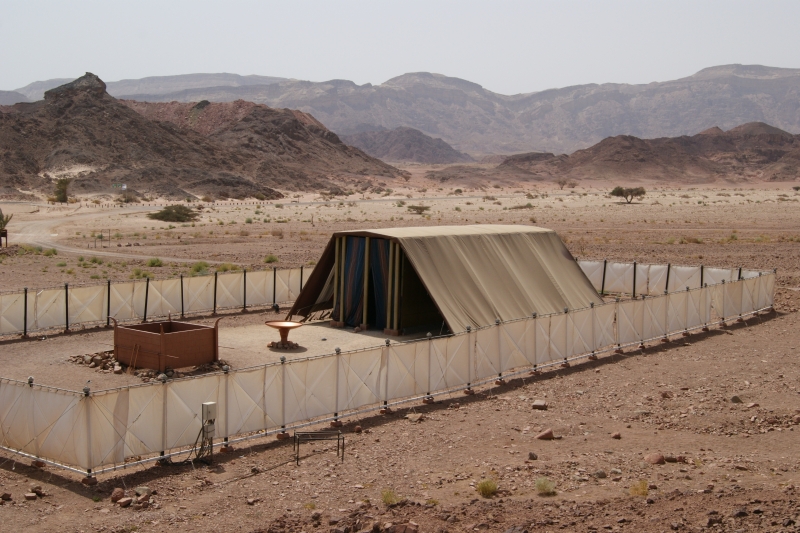
Scripture — The Design God Commanded (Exodus 25:10-22)
The Ark’s design was not a human invention. God gave the instructions Himself, directly to Moses on Mount Sinai.
“They shall make an ark of acacia wood. Its length shall be two and a half cubits, its width a cubit and a half, and a cubit and a half its height. You shall overlay it with pure gold. You shall overlay it inside and outside, and you shall make a gold molding around it… The poles shall be in the rings of the ark. They shall not be taken from it. You shall put the testimony which I shall give you into the ark. You shall make a mercy seat of pure gold. Two and a half cubits shall be its length, and a cubit and a half its width. You shall make two cherubim of hammered gold. You shall make them at the two ends of the mercy seat… The cherubim shall spread out their wings upward, covering the mercy seat with their wings, with their faces toward one another. The faces of the cherubim shall be toward the mercy seat. You shall put the mercy seat on top of the ark, and in the ark you shall put the testimony that I will give you.” (Exodus 25:10-11, 15-18, 20-21, WEB)
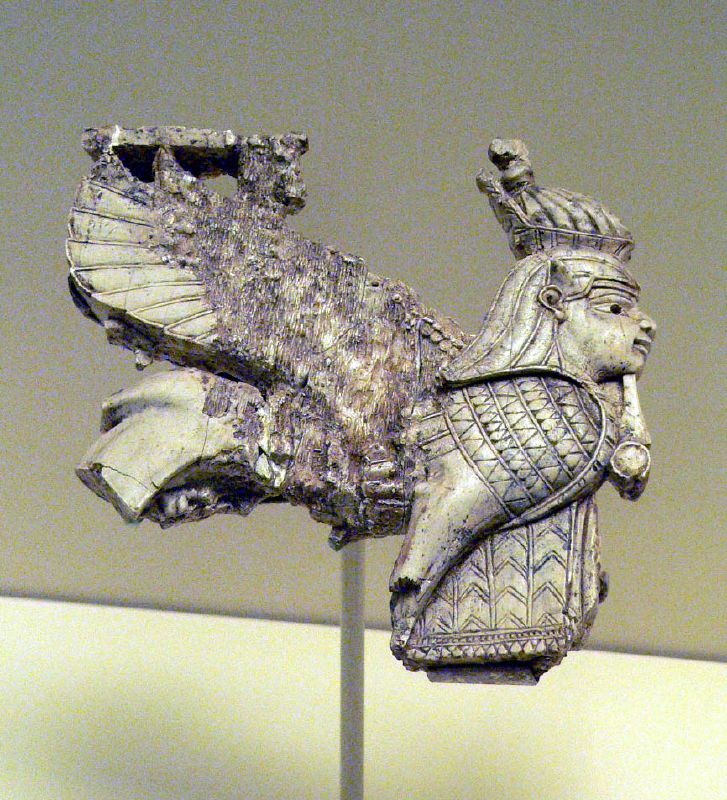
This chest of acacia wood overlaid with pure gold was no ordinary container. On its lid, the mercy seat, two cherubim stood facing one another with wings outstretched — and the empty space between them was the very place where God said, “I will meet with thee… all things which I will give thee in commandment” (Exodus 25:22, KJV). Bezalel later built the Ark exactly to this pattern (Exodus 37:1-9).
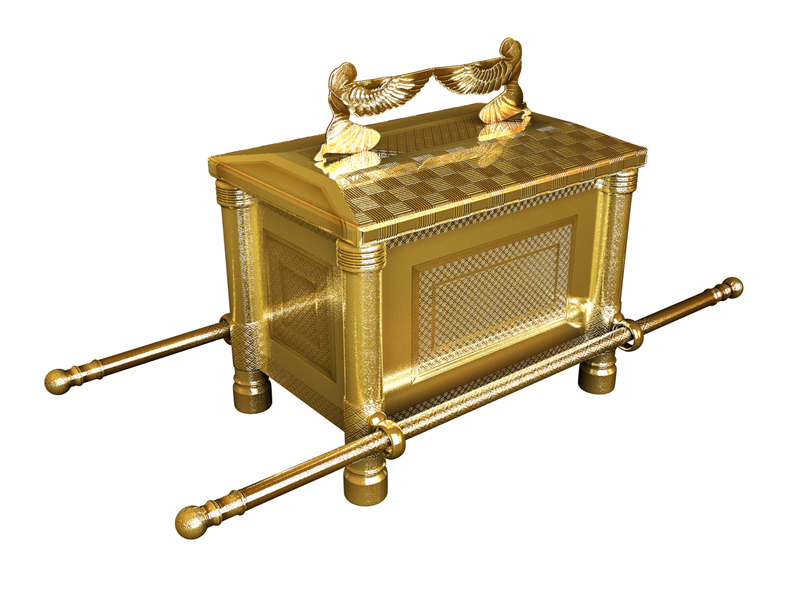
The Ark’s Journey — From Wilderness to Temple
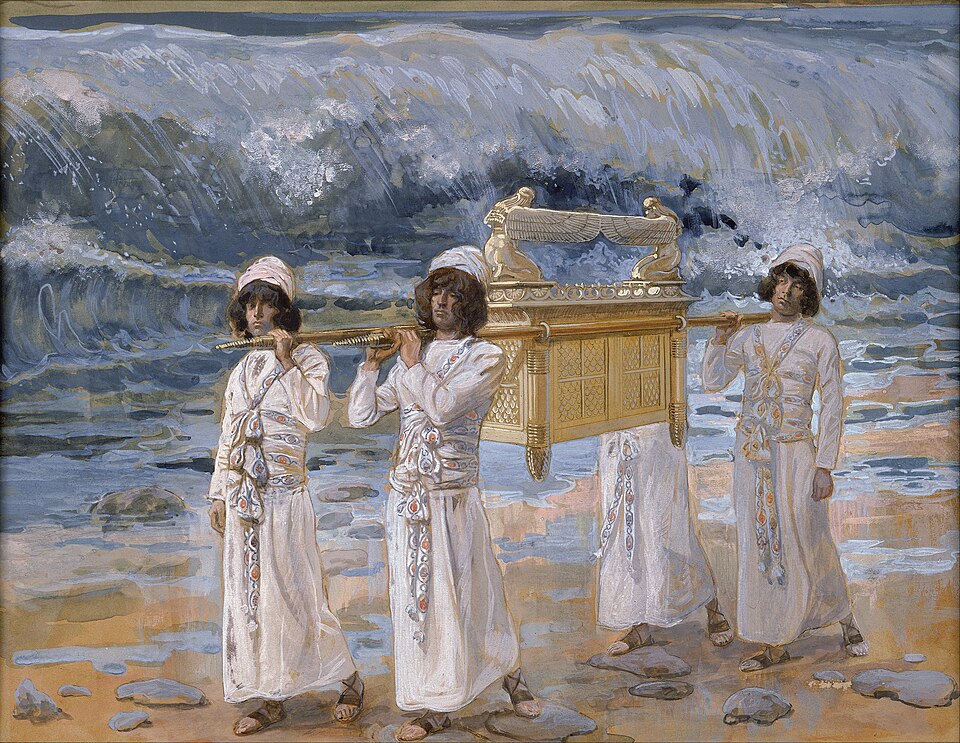
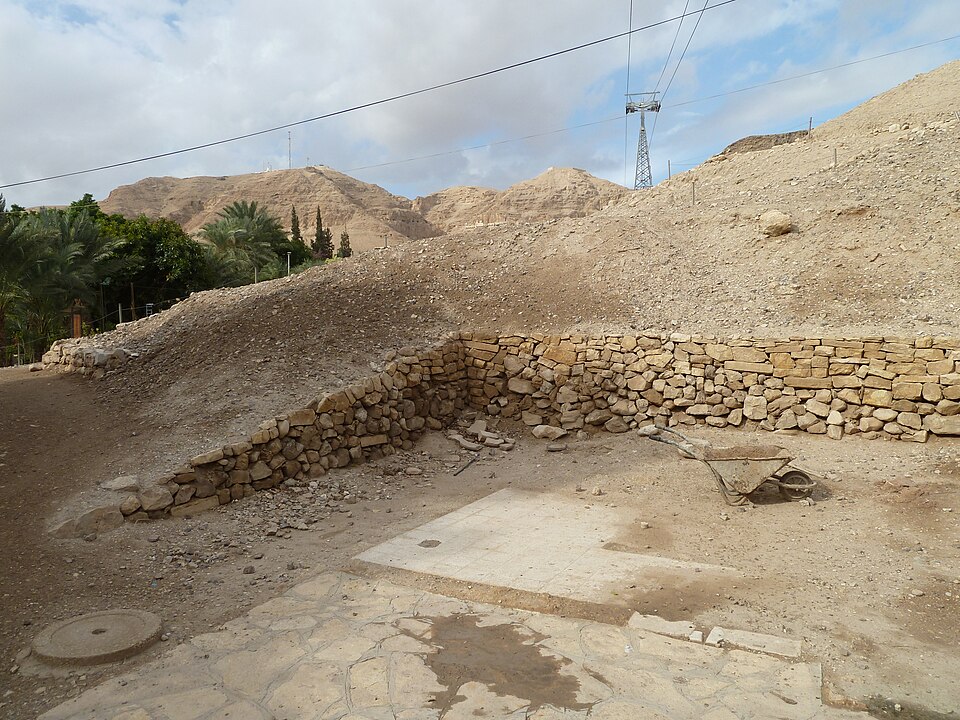
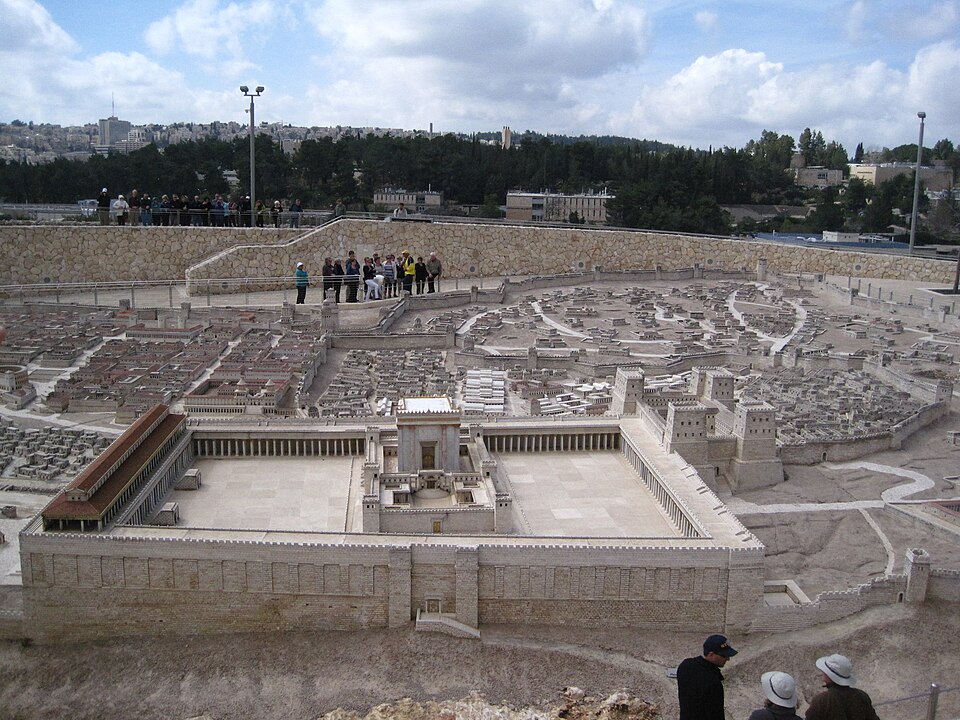
The Ark stood at the center of Israel’s camp throughout the wilderness march. The Kohathite clan of the tribe of Levi carried it, but only after it was covered in several layers — no one was permitted to touch the holy object directly (Numbers 4:5-6, 15). When Israel crossed the Jordan, the priests carried the Ark ahead of the people into the river, and the water was cut off so that Israel crossed on dry ground (Joshua 3:14-17; 4:7). At the fall of Jericho, the Ark was at the center of the procession as well — carried around the city once a day for six days, then seven times on the seventh day, until the trumpets and the shout brought the walls down (Joshua 6:6-16).
But in the days of the judges, Israel dragged the Ark into battle almost like a good-luck charm, was badly defeated by the Philistines, and lost the Ark itself — and when the priest Eli heard the news, he fell backward from his seat and died (1 Samuel 4:3-11, 18). The Philistines set the Ark beside their god Dagon, but the idol fell face-down before it twice, and the second time its head and hands were broken off (1 Samuel 5:1-4). After seven months, the Philistines finally sent the Ark back to Israel (1 Samuel 6:1-2, 10-15).
In David’s day, Uzzah reached out to steady the swaying Ark and was struck dead by God (2 Samuel 6:6-7), yet when the Ark finally came up to the City of David, David himself danced before it with all his might (2 Samuel 6:14). Later, Solomon built the temple and placed the Ark beneath the wings of the cherubim in the Most Holy Place, and as the priests came out of the sanctuary, a cloud filled the temple with the glory of the LORD (1 Kings 8:1-11). Still later, King Josiah commanded the Levites, “Put the holy ark in the house which Solomon the son of David king of Israel built. It will no longer be a burden on your shoulders. Now serve Yahweh your God, and his people Israel.” (2 Chronicles 35:3, WEB). But after this, the Ark vanishes from the biblical record. Jeremiah prophesied, “It will come to pass, when you are multiplied and increased in the land, in those days… they will no longer say, ‘the ark of Yahweh’s covenant!’ It will not come to mind. They won’t remember it. They won’t miss it, nor will another be made.” (Jeremiah 3:16, WEB). And the apostle John records that in the last days, “God’s temple that is in heaven was opened, and the ark of the Lord’s covenant was seen in his temple. Lightnings, sounds, thunders, an earthquake, and great hail followed.” (Revelation 11:19, WEB). The earthly ark disappeared — but a true Ark was in heaven all along.
The Mercy Seat, a Shadow of Christ
Scripture calls the Ark nothing less than God’s own presence. “Yahweh reigns! Let the peoples tremble. He sits enthroned among the cherubim. Let the earth be moved.” (Psalm 99:1, WEB). When Israel carried the Ark into battle, they called it “the ark of the covenant of Yahweh of Armies, who sits above the cherubim” (1 Samuel 4:4, WEB), and David likewise speaks of “God Yahweh’s ark that sits above the cherubim, that is called by the Name” (1 Chronicles 13:6, WEB). It is no accident that all three texts say, in effect, “the LORD who sits between the cherubim.” The mercy seat was the very throne where God was enthroned.
Remarkably, the New Testament Greek translates the “mercy seat” of Hebrews 9:5 and the “propitiation” of Romans 3:25 with the very same word: hilastērion (ἱλαστήριον). “Whom God hath set forth to be a propitiation through faith in his blood, to declare his righteousness for the remission of sins that are past, through the forbearance of God” (Romans 3:25, KJV) — describes the cross of Christ in the very same word that named the place where God once met Israel above the mercy seat.
Three Things in the Ark, and Christ
Hebrews tells us exactly what was kept inside the Ark:
“Which had the golden censer, and the ark of the covenant overlaid round about with gold, wherein was the golden pot that had manna, and Aaron’s rod that budded, and the tables of the covenant; and over it the cherubims of glory shadowing the mercyseat; of which we cannot now speak particularly.” (Hebrews 9:4-5, KJV)
Each of these three objects is unfolded elsewhere in Scripture. The golden pot of manna recalled the bread God rained down daily in the wilderness — and Jesus Himself declared, “I am the bread of life: he that cometh to me shall never hunger; and he that believeth on me shall never thirst” (John 6:35, KJV). Aaron’s budding rod was the sign of the high priest God Himself had appointed (Numbers 17:8), and Hebrews calls Christ “a high priest of the coming good things” (Hebrews 9:11, WEB). The tablets of the covenant were the covenant itself, which God commanded be placed inside the ark (Deuteronomy 10:2). Manna, rod, and tablets were kept together in the same chest — not by accident, but as a foreshadowing of the bread, the priesthood, and the covenant that would all meet as one in Christ.
The Once-for-All Atonement
Under the old covenant, the high priest could enter the Most Holy Place before the Ark only once a year, and never without blood — not his own, but an animal’s (Hebrews 9:7). Hebrews declares plainly what that whole system was waiting for:
“But Christ having come as a high priest of the coming good things, through the greater and more perfect tabernacle, not made with hands, that is to say, not of this creation, nor yet through the blood of goats and calves, but through his own blood, entered in once for all into the Holy Place, having obtained eternal redemption.” (Hebrews 9:11-12, WEB)
And Hebrews tells us precisely where this was accomplished: “For Christ hasn’t entered into holy places made with hands, which are representations of the true, but into heaven itself, now to appear in the presence of God for us” (Hebrews 9:24, WEB). The earthly Most Holy Place, where the Ark once stood, was the “representation” — the heaven Christ entered was “the true.” What the high priest had to repeat every year, Christ accomplished “once for all” (Hebrews 9:26, 28, WEB).
Points to Ponder
- The Ark was not a work of art — it was God’s own blueprint for how a sinner could meet the holy God (Exodus 25:22).
- The mercy seat (hilastērion) and Christ’s propitiation (hilastērion, Romans 3:25) are named with the very same word — the cross is the fulfillment of the meeting place the Ark once pointed to.
- The manna, Aaron’s rod, and the tablets of the covenant all meet in Christ — the bread of life, the priest God Himself appointed, and the covenant fulfilled (John 6:35; Hebrews 9:11; Deuteronomy 10:2).
- The earthly Ark disappeared (Jeremiah 3:16), but a true Ark stands in heaven (Revelation 11:19), and Christ has already entered that true heavenly sanctuary (Hebrews 9:24).
Questions for Today
- Do I think of God as someone to be watched only from a cautious distance? How fully am I actually living in the meeting place that is already open in Christ?
- The old high priest had to return every year with the blood of animals, but Christ accomplished atonement “once for all” (Hebrews 9:12). Do I rest today in that finished work — or am I still driving myself to do something more?
- Like the manna, the rod, and the tablets, what small signs in my own life point to Christ — and how closely am I paying attention to them?
References
- Exodus 25 (KJV, Bible.com)
- Hebrews 9 (KJV, Bible.com)
- 1 Samuel 4 (KJV, Bible.com)
- 2 Samuel 6 (KJV, Bible.com)
- 1 Kings 8 (KJV, Bible.com)
- Revelation 11 (KJV, Bible.com)
- Hilastērion (ἱλαστήριον, Strong’s 2435) — BibleHub Greek Lexicon
- The Korean Bible Society — official notice on licensed Korean translations