
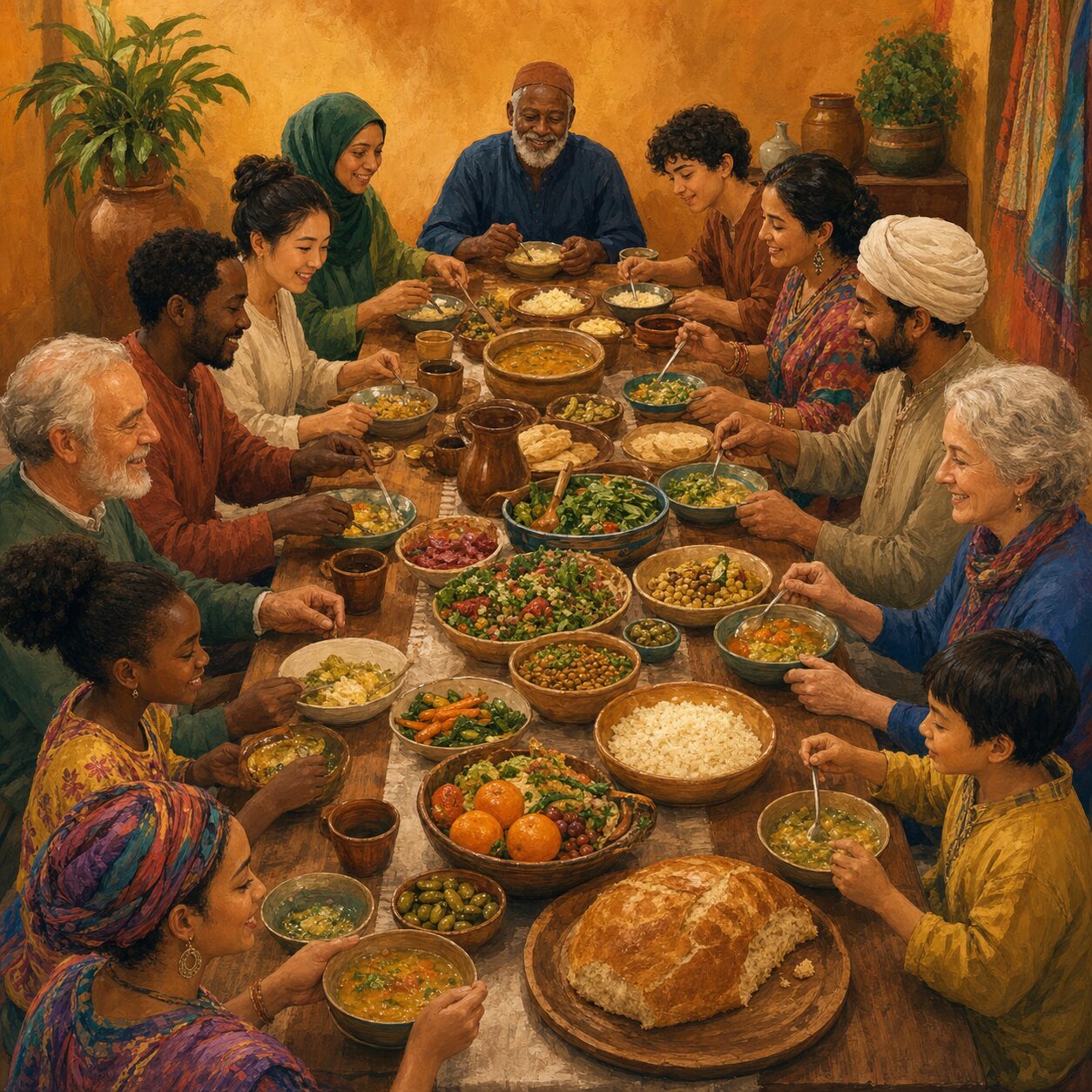
The deepest wounds in the church often do not come from outside. They come when brother judges brother, and one member treats another with contempt. Romans 14:1-13 addresses this problem head-on. Paul teaches how believers whose convictions differ are to stand together at one table, in one community. The conclusion is clear: do not judge one another; accept one another. The ground for this is not social tact but the gospel itself: God has already accepted that brother.
The Text — Romans 14:1-13 (WEB)
The English Scripture quotations in this article are from the World English Bible (public domain).
1 Now accept one who is weak in faith, but not for disputes over opinions.
2 One man has faith to eat all things, but he who is weak eats only vegetables.
3 Don’t let him who eats despise him who doesn’t eat. Don’t let him who doesn’t eat judge him who eats, for God has accepted him.
4 Who are you who judge another’s servant? To his own lord he stands or falls. Yes, he will be made to stand, for God has power to make him stand.
5 One man esteems one day as more important. Another esteems every day alike. Let each man be fully assured in his own mind.
6 He who observes the day, observes it to the Lord; and he who does not observe the day, to the Lord he does not observe it. He who eats, eats to the Lord, for he gives God thanks. He who doesn’t eat, to the Lord he doesn’t eat, and gives God thanks.
7 For none of us lives to himself, and none dies to himself.
8 For if we live, we live to the Lord. Or if we die, we die to the Lord. If therefore we live or die, we are the Lord’s.
9 For to this end Christ died, rose, and lived again, that he might be Lord of both the dead and the living.
10 But you, why do you judge your brother? Or you again, why do you despise your brother? For we will all stand before the judgment seat of Christ.
11 For it is written, As I live, says the Lord, to me every knee will bow. Every tongue will confess to God.
12 So then each one of us will give account of himself to God.
13 Therefore let’s not judge one another any more, but judge this rather, that no man put a stumbling block in his brother’s way, or an occasion for falling.
(Romans 14:1-13, WEB)
Context — From Doctrine to the Table
Romans builds the doctrine of the gospel from chapters 1 through 11 and then turns to practice in chapter 12. That turn begins: “Therefore I urge you, brothers, by the mercies of God” (Romans 12:1, WEB). Within that practical section, the issue Paul treats at greatest length is the matter of the weak in faith and the strong, running from Romans 14:1 through 15:13. In the chapter just before, Paul had declared, “Love doesn’t harm a neighbor. Love therefore is the fulfillment of the law” (Romans 13:10, WEB). The ban on judging in chapter 14 is that command of love set down concretely on the community’s table.
Scripture itself shows us who made up the Roman church. In the letter Paul addresses Gentile believers directly: “For I speak to you who are Gentiles” (Romans 11:13, WEB). Yet in chapter 16 he also greets Prisca and Aquila (Romans 16:3). Aquila was “a certain Jew named Aquila, a man of Pontus by race” (Acts 18:2, WEB), who had left Rome when Claudius ordered all the Jews to depart. Jewish and Gentile believers were worshiping together and eating together in one church.

At that table a problem arose. As the text says, “One man has faith to eat all things, but he who is weak eats only vegetables” (Romans 14:2, WEB); believers held different standards about food. Paul does not spell out exactly which foods were in question. But a word he uses later gives us a clue: “nothing is unclean of itself; except that to him who considers anything to be unclean, to him it is unclean” (Romans 14:14, WEB). The word translated unclean here (Greek koinos) is the very language of ritual purity Peter used in his vision: “I have never eaten anything that is common or unclean” (Acts 10:14, WEB). Since the observance of days is treated alongside it (Romans 14:5-6), the reading that stays closest to the text is that differences of conscience over the law’s purity rules and its holy days were colliding within the community.
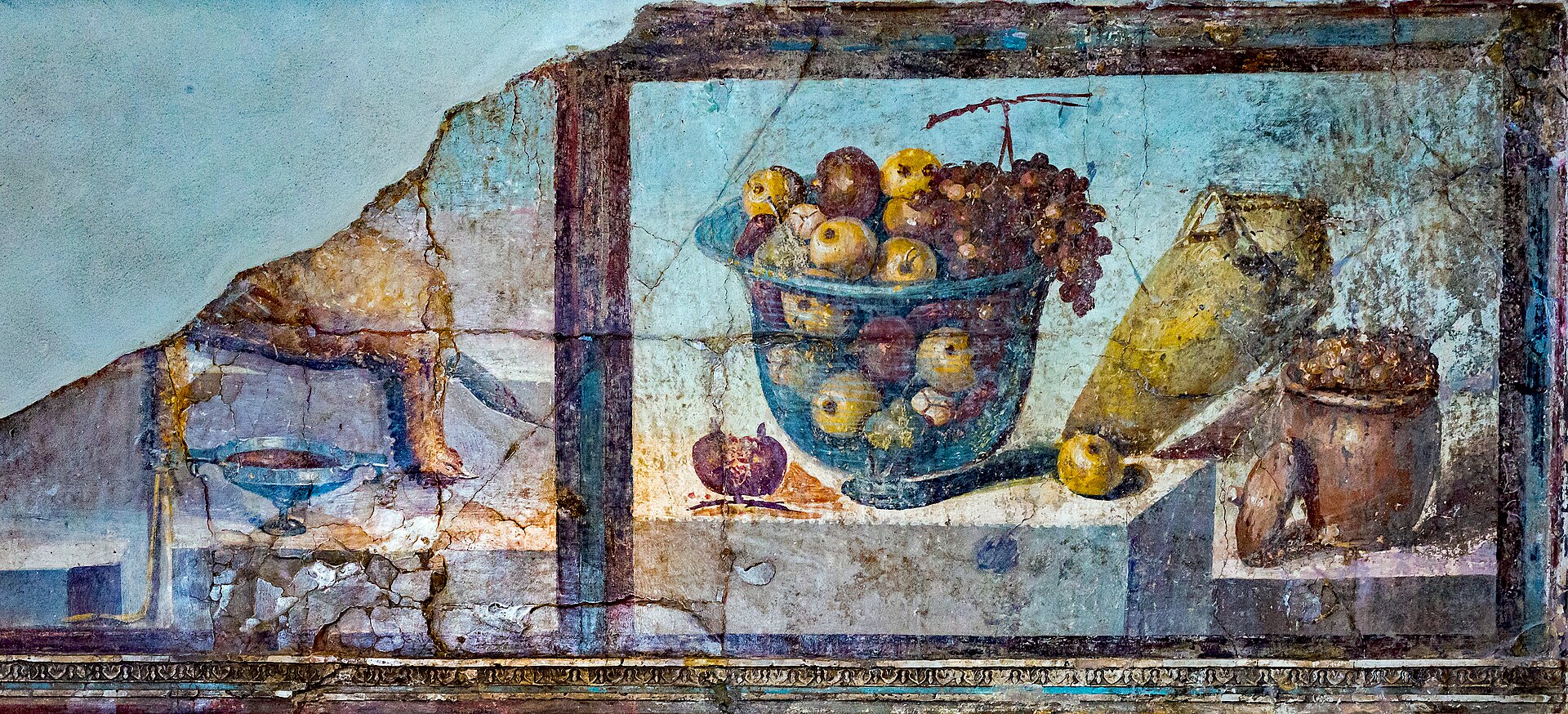
The problem was not the differing convictions themselves but the attitude with which the differences were handled. Paul addresses both sides: “Don’t let him who eats despise him who doesn’t eat. Don’t let him who doesn’t eat judge him who eats” (Romans 14:3, WEB). The free are prone to despise; the cautious are prone to judge. Whichever side I stand on, this word is aimed at me.
Exposition 1 — God Has Accepted Him (Romans 14:1-4)
The paragraph’s first command is “Now accept one who is weak in faith, but not for disputes over opinions” (Romans 14:1, WEB). The word for accept (Greek proslambanō) does not mean merely to tolerate; it means to take someone to one’s side, to welcome him in. In Romans 14:3 the same word is used of God: “for God has accepted him” (Romans 14:3, WEB). The very brother I find displeasing is one God has already received. If so, my judgment of him is more than an assessment of a brother; it becomes an objection to the decision of the God who received him.
Romans 14:4 puts this logic in a picture: “Who are you who judge another’s servant?” (Romans 14:4, WEB). That brother is not my servant but the Lord’s. Whether he stands or falls belongs to his own master, and Paul immediately adds a word of hope: “Yes, he will be made to stand, for God has power to make him stand” (Romans 14:4, WEB). The brother who looks unsteady in my eyes is one the Lord is able to uphold.
The paragraph is completed in chapter 15 with the same verb: “Therefore accept one another, even as Christ also accepted you, to the glory of God” (Romans 15:7, WEB). The final ground for accepting one another is that Christ accepted us first. I too was received when I had no claim to be received.

Exposition 2 — Whether We Live or Die, We Are the Lord’s (Romans 14:5-9)
The question of days is the same. “One man esteems one day as more important. Another esteems every day alike. Let each man be fully assured in his own mind” (Romans 14:5, WEB). Instead of ruling which side is right, Paul gives a remarkable diagnosis. The one who observes the day, the one who eats, and the one who does not eat all do it to the Lord, and all give thanks to God: “He who eats, eats to the Lord, for he gives God thanks. He who doesn’t eat, to the Lord he doesn’t eat, and gives God thanks” (Romans 14:6, WEB). When convictions differ in content but share the same direction, both belong to one family seated at the Lord’s table.
Then in Romans 14:7-9 Paul carries the discussion to the heart of the gospel. “For if we live, we live to the Lord. Or if we die, we die to the Lord. If therefore we live or die, we are the Lord’s” (Romans 14:8, WEB). The purpose of Christ’s death and rising is just as clear: “that he might be Lord of both the dead and the living” (Romans 14:9, WEB). If this paragraph asks who my brother’s master is, the answer has already been settled by the cross and the resurrection. In another letter Paul writes, “for you were bought with a price” (1 Corinthians 6:20, WEB). That brother belongs to Christ, who paid the price to buy him.
Exposition 3 — We Will All Stand Before the Judgment Seat (Romans 14:10-13)
In Romans 14:10 Paul puts one question to each side: “But you, why do you judge your brother? Or you again, why do you despise your brother?” (Romans 14:10, WEB). Then he reminds them of the decisive fact: “For we will all stand before the judgment seat of Christ” (Romans 14:10, WEB). The seat of judgment over my brother is not my seat. Someone is already appointed to sit there, and I am one of those who will stand before Him.
Paul confirms this from Isaiah: “to me every knee will bow. Every tongue will confess to God” (Romans 14:11, WEB). In Isaiah 45:23 God swears by Himself, saying “that to me every knee shall bow, every tongue shall take an oath” (Isaiah 45:23, WEB). And Philippians reveals whose name it is before which those knees will bow: “that at the name of Jesus every knee should bow” (Philippians 2:10, WEB). Before the One to whom every person will bow, I am not the judge; I am one of those who kneel.
The word translated judgment seat (Greek bēma) refers to a raised platform where judgment was given. The same word appears when, in Corinth, the Jews “brought him before the judgment seat” (Acts 18:12, WEB), and in the words “For we must all be revealed before the judgment seat of Christ that each one may receive the things in the body according to what he has done, whether good or bad” (2 Corinthians 5:10, WEB). So Paul concludes: “So then each one of us will give account of himself to God” (Romans 14:12, WEB). Each will give account not of a brother’s life but of his own.

This is exactly what Jesus taught: “Don’t judge, so that you won’t be judged” (Matthew 7:1, WEB). And He goes on to ask, “Why do you see the speck that is in your brother’s eye, but don’t consider the beam that is in your own eye?” (Matthew 7:3, WEB). James sounds the same note: “Don’t speak against one another, brothers … Only one is the lawgiver, who is able to save and to destroy. But who are you to judge another?” (James 4:11-12, WEB). Judging and slander are grave sins because they invade the seat that belongs to the one Lawgiver and Judge alone.
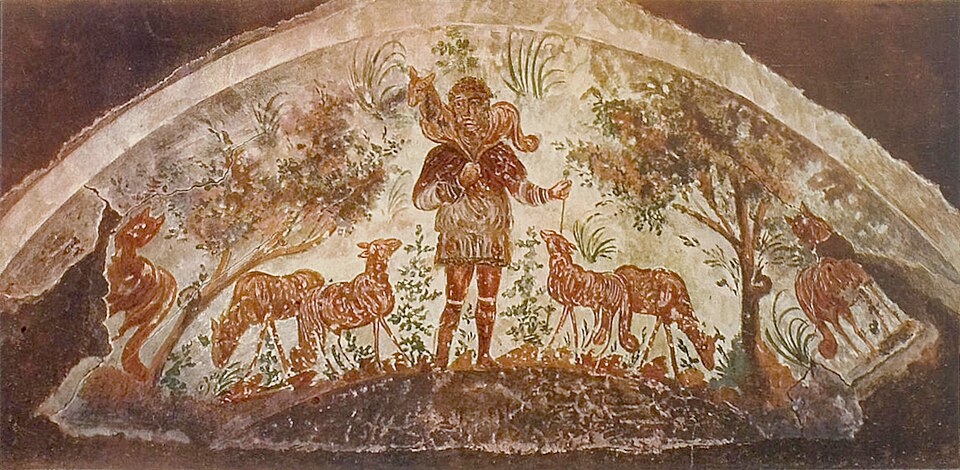
Romans 14:13 is both the paragraph’s conclusion and its turning point: “Therefore let’s not judge one another any more, but judge this rather, that no man put a stumbling block in his brother’s way, or an occasion for falling” (Romans 14:13, WEB). Paul does not stop at laying judgment down. He turns that same power of judging back on ourselves and tells us to examine whether we are placing a stumbling block in a brother’s path. Here the eye that judged becomes an eye that cares.
The Word That Follows — Love Where Judgment Used to Stand (Romans 14:14-23)
The turn of Romans 14:13 carries through to the end of the chapter. On food itself, Paul agrees with the conviction of the strong. But he immediately raises the question of love: “Yet if because of food your brother is grieved, you walk no longer in love. Don’t destroy with your food him for whom Christ died” (Romans 14:15, WEB). He makes the same argument in his first letter to the Corinthians, where the weak one is “the brother for whose sake Christ died” (1 Corinthians 8:11, WEB). Being right does not give me permission to make my brother fall.
At this point the word slander appears in Romans 14 itself: “Then don’t let your good be slandered” (Romans 14:16, WEB). Even a good thing like freedom, used without love, becomes a cause for slander inside and outside the community. So Paul sets the direction the community should pursue: “So then, let’s follow after things which make for peace, and things by which we may build one another up” (Romans 14:19, WEB).
The chapter’s last verse protects the conscience of the weaker side as well: “whatever is not of faith is sin” (Romans 14:23, WEB). Eating without conviction, pushed along by the eyes of others, is not freedom but acting against one’s conscience. So the strong do not force their freedom on the weak, and the weak do not condemn the strong. That conclusion flows into the first verse of chapter 15: “Now we who are strong ought to bear the weaknesses of the weak, and not to please ourselves” (Romans 15:1, WEB).
Theme — The Kingdom of God Is Bigger Than Our Table Disputes
Paul sums up the principle of the whole discussion in one sentence: “for God’s Kingdom is not eating and drinking, but righteousness, peace, and joy in the Holy Spirit” (Romans 14:17, WEB). To lose a brother over non-essentials is to shrink the kingdom of God to the size of a table dispute. The church is not a gathering of people with identical convictions but a gathering of people received by the same Lord.
That is why Paul’s prayer aims not at uniformity of opinion but at unity in worship: “that with one accord you may with one mouth glorify the God and Father of our Lord Jesus Christ” (Romans 15:6, WEB). Ephesians speaks of the same calling: “being eager to keep the unity of the Spirit in the bond of peace” (Ephesians 4:3, WEB). Unity is not something we manufacture; it is keeping what the Spirit has already made.
Application — Stepping Down from the Judge’s Seat
- Which brother or sister am I despising or judging? In light of the fact that God has already accepted them (Romans 14:3), does my judgment have any ground to stand on?
- When I look at a member whose convictions differ from mine (forms of worship, holy days, food, cultural choices), do I see the direction of one who does it to the Lord (Romans 14:6), or only the way they differ from me?
- “So then each one of us will give account of himself to God” (Romans 14:12, WEB). What account of my own life will I bring before God today?
- Are my words or my freedom becoming a stumbling block (Romans 14:13) for someone? What is one thing I will lay down this week for a brother’s sake?
References
- YouVersion — Romans 14 (Korean Revised Version, in Korean)
- YouVersion — Romans 15 (Korean Revised Version, in Korean)
- BibleHub — Romans 14 (World English Bible)
- BibleHub — Romans 14 Interlinear
- BibleHub — Strong’s Greek 4355 (proslambanō, to accept)
- BibleHub — Strong’s Greek 2839 (koinos, common/unclean)
- BibleHub — Strong’s Greek 968 (bēma, judgment seat)