
The English Scripture quotations here are from the King James Version and the World English Bible (both public domain).
A journey of faith always begins with one person’s obedience. Follow Abraham’s footsteps from Genesis 12 through Genesis 22 — from Ur to Haran, from Haran to Canaan, down to Egypt and back to Bethel, from Hebron to Beersheba, and finally to Mount Moriah — and each stretch of ground maps onto the road of discipleship we still walk today. Obedience to a call. Recovery after failure. Faith that begins as pure gift. And obedience that makes that faith complete. Abraham’s journey is, in a very real sense, a map of discipleship.
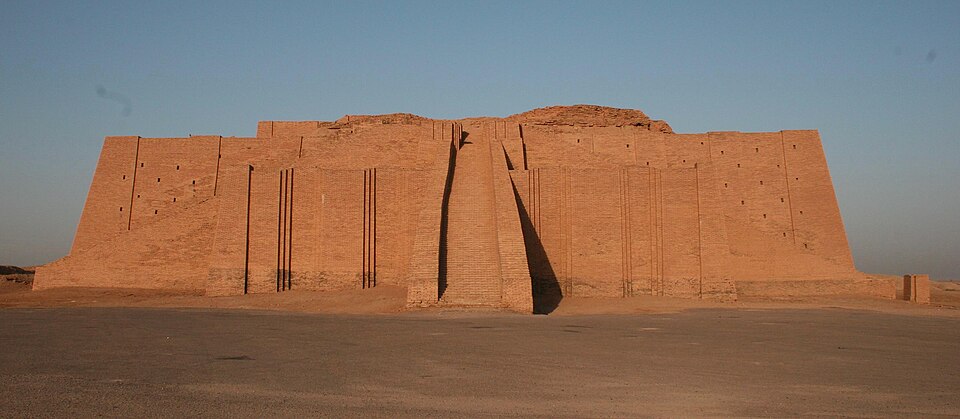
Obedient to the Call — The First Step of Discipleship
1 Now the LORD had said unto Abram, Get thee out of thy country, and from thy kindred, and from thy father’s house, unto a land that I will shew thee:
2 And I will make of thee a great nation, and I will bless thee, and make thy name great; and thou shalt be a blessing:
3 And I will bless them that bless thee, and curse him that curseth thee: and in thee shall all families of the earth be blessed.
4 So Abram departed, as the LORD had spoken unto him; and Lot went with him: and Abram was seventy and five years old when he departed out of Haran.
(Genesis 12:1-4, KJV)
God’s command came with no destination attached. Only “unto a land that I will shew thee” — not which land, not where it was. Yet verse four sums up Abram’s response in a single sentence: “Abram departed, as the LORD had spoken unto him.” No explanation. No record of hesitation. The New Testament reaches back to this scene to define what faith is.
8 By faith, Abraham, when he was called, obeyed to go out to the place which he was to receive for an inheritance. He went out, not knowing where he went.
9 By faith, he lived as an alien in the land of promise, as in a land not his own, dwelling in tents, with Isaac and Jacob, the heirs with him of the same promise.
10 For he looked for the city which has the foundations, whose builder and maker is God.
(Hebrews 11:8-10, WEB)
Hebrews defines Abraham’s faith in a single line: he “went out, not knowing where he went.” The first step of discipleship is no different. It is not obedience after seeing the whole destination — it is trusting the One who called, and obeying with only as much as you currently know. When Abram left Haran, he had no idea where his journey would end. But he walked.

Recovering in the Midst of Wavering — Returning to Bethel
Abram’s journey was never an unbroken straight line. When famine struck Canaan, he went down to Egypt without asking God.
10 There was a famine in the land. Abram went down into Egypt to live as a foreigner there, for the famine was severe in the land.
(Genesis 12:10, WEB)
In Egypt, Abram even committed the failure of telling Sarai to pass herself off as his sister (Genesis 12:11-13). But the journey did not end there. When he came up out of Egypt, he did not head toward some new land — he returned to the very place where he had first built an altar.
1 Abram went up out of Egypt—he, his wife, all that he had, and Lot with him—into the South.
2 Abram was very rich in livestock, in silver, and in gold.
3 He went on his journeys from the South even to Bethel, to the place where his tent had been at the beginning, between Bethel and Ai,
4 to the place of the altar, which he had made there at the first. There Abram called on Yahweh’s name.
(Genesis 13:1-4, WEB)
“The place of the altar, which he had made there at the first” — that phrase captures the meaning of the return to Bethel. Abram did not treat the failure in Egypt as a reason to search for a fresh starting point; he returned to the place of his first worship and called on the name of the LORD again. A disciple’s journey is not a flawless upward line either. Wavering and failing, and then returning to the place we first met God, is the pattern of recovery. Abram then moved his tent to Hebron and built yet another altar.
18 Abram moved his tent, and came and lived by the oaks of Mamre, which are in Hebron, and built an altar there to Yahweh.
(Genesis 13:18, WEB)
The first altar at Shechem (Genesis 12:7), the restored altar at Bethel (Genesis 13:4), the altar at Hebron (Genesis 13:18) — on the map of Abram’s journey, an altar rises with every new tent. Every time his feet moved, his place of worship moved with him.
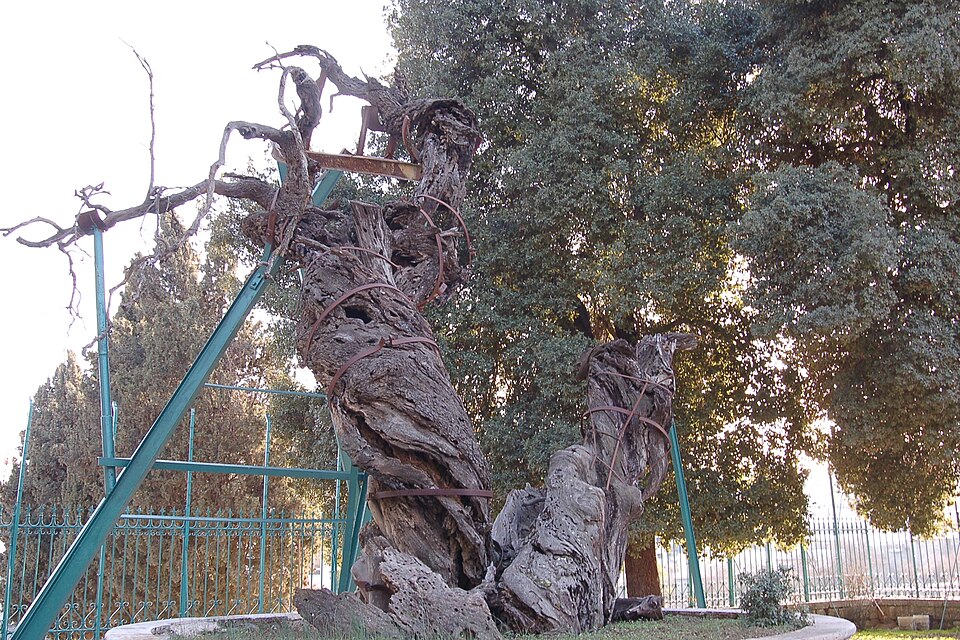
Faith Counted as Righteousness — The Grace That Begins Discipleship
Abram still had no child. God led him outside and showed him the night sky.
5 And he brought him forth abroad, and said, Look now toward heaven, and tell the stars, if thou be able to number them: and he said unto him, So shall thy seed be.
6 And he believed in the LORD; and he counted it to him for righteousness.
(Genesis 15:5-6, KJV)
Abram was counted righteous not because of any deed or achievement. It was simply because he believed. Paul builds the very heart of the gospel on this one verse.
3 For what does the Scripture say? “Abraham believed God, and it was accounted to him for righteousness.”
(Romans 4:3, WEB)
18 Besides hope, Abraham in hope believed, to the end that he might become a father of many nations, according to that which had been spoken, “So will your offspring be.”
19 Without being weakened in faith, he didn’t consider his own body, already having been worn out, (he being about a hundred years old), and the deadness of Sarah’s womb.
20 Yet, looking to the promise of God, he didn’t waver through unbelief, but grew strong through faith, giving glory to God,
21 and being fully assured that what he had promised, he was also able to perform.
22 Therefore it also was “credited to him for righteousness.”
(Romans 4:18-22, WEB)
Galatians extends this same principle all the way to believers today.
6 Even as Abraham “believed God, and it was counted to him for righteousness.”
7 Know therefore that those who are of faith, the same are children of Abraham.
8 The Scripture, foreseeing that God would justify the Gentiles by faith, preached the Good News beforehand to Abraham, saying, “In you all the nations will be blessed.”
9 So then, those who are of faith are blessed with the faithful Abraham.
(Galatians 3:6-9, WEB)
This is the ground on which discipleship is built. Discipleship is not a qualification to be earned; it begins with grace already received by faith. Just as Abram could not count the stars, we cannot calculate the full shape of the journey laid out before us. We can only believe the One who has promised.

Faith Made Complete by Obedience — The Test on Mount Moriah
A journey that begins in faith proves its worth in obedience. The steepest point in Abraham’s journey was Mount Moriah.
1 And it came to pass after these things, that God did tempt Abraham, and said unto him, Abraham: and he said, Behold, here I am.
2 And he said, Take now thy son, thine only son Isaac, whom thou lovest, and get thee into the land of Moriah; and offer him there for a burnt offering upon one of the mountains which I will tell thee of.
(Genesis 22:1-2, KJV)
Abraham walked three days to reach that mountain, and at the very moment he raised his hand to take his son, a voice called out from heaven.
11 And the angel of the LORD called unto him out of heaven, and said, Abraham, Abraham: and he said, Here am I.
12 And he said, Lay not thine hand upon the lad, neither do thou any thing unto him: for now I know that thou fearest God, seeing thou hast not withheld thy son, thine only son from me.
(Genesis 22:11-12, KJV)
Hebrews explains the ground of this obedience through resurrection faith.
17 By faith, Abraham, being tested, offered up Isaac. Yes, he who had gladly received the promises was offering up his one and only son,
18 to whom it was said, “your offspring will be accounted as from Isaac”;
19 concluding that God is able to raise up even from the dead. Figuratively speaking, he also did receive him back from the dead.
(Hebrews 11:17-19, WEB)
James sheds light on the same event from a different angle.
21 Wasn’t Abraham our father justified by works, in that he offered up Isaac his son on the altar?
22 You see that faith worked with his works, and by works faith was perfected;
23 and the Scripture was fulfilled which says, “Abraham believed God, and it was accounted to him as righteousness”; and he was called the friend of God.
(James 2:21-23, WEB)
Hebrews says faith was the power behind the obedience; James says obedience is what made the faith complete. These are not two different truths but one truth seen from two directions. The faith of Genesis 15 and the obedience of Genesis 22 are not separate events — they are one faith that matured across the span of a single life’s journey. Discipleship, too, is not complete at the point of believing and stopping there; it is made whole when that faith carries through into steps of obedience. Abraham named that mountain “Jehovah-jireh” — the LORD will provide (Genesis 22:14).

A Journey Walked Together — Discipleship Today
Abram’s journey was never meant to be walked alone from the start. As the brief phrase “and Lot went with him” (Genesis 12:4, KJV) shows, this journey of faith was one walked alongside someone else. Paul makes the same appeal to Timothy.
2 The things which you have heard from me among many witnesses, commit the same to faithful men, who will be able to teach others also.
(2 Timothy 2:2, WEB)
From Paul to Timothy, from Timothy to faithful people, and from them to others still — four generations of reproduction are packed into this one verse. Within the Korean church, this same principle has taken concrete shape in ministry. Onnuri Church, through Duranno Press, developed and distributed a “one-on-one discipleship” Bible study curriculum grounded in Matthew 28:19-20, in which one Christian meets personally with another to share the faith through the Word. In the United States, The Navigators — founded in the 1930s by Dawson Trotman — took 2 Timothy 2:2 as their guiding verse, spreading person-to-person Bible teaching and “spiritual multiplication” first among sailors in the U.S. Navy. The methods differ across eras and cultures, but the principle is the same: a disciple is not completed alone, but is carried forward to the next person through someone who walks alongside.
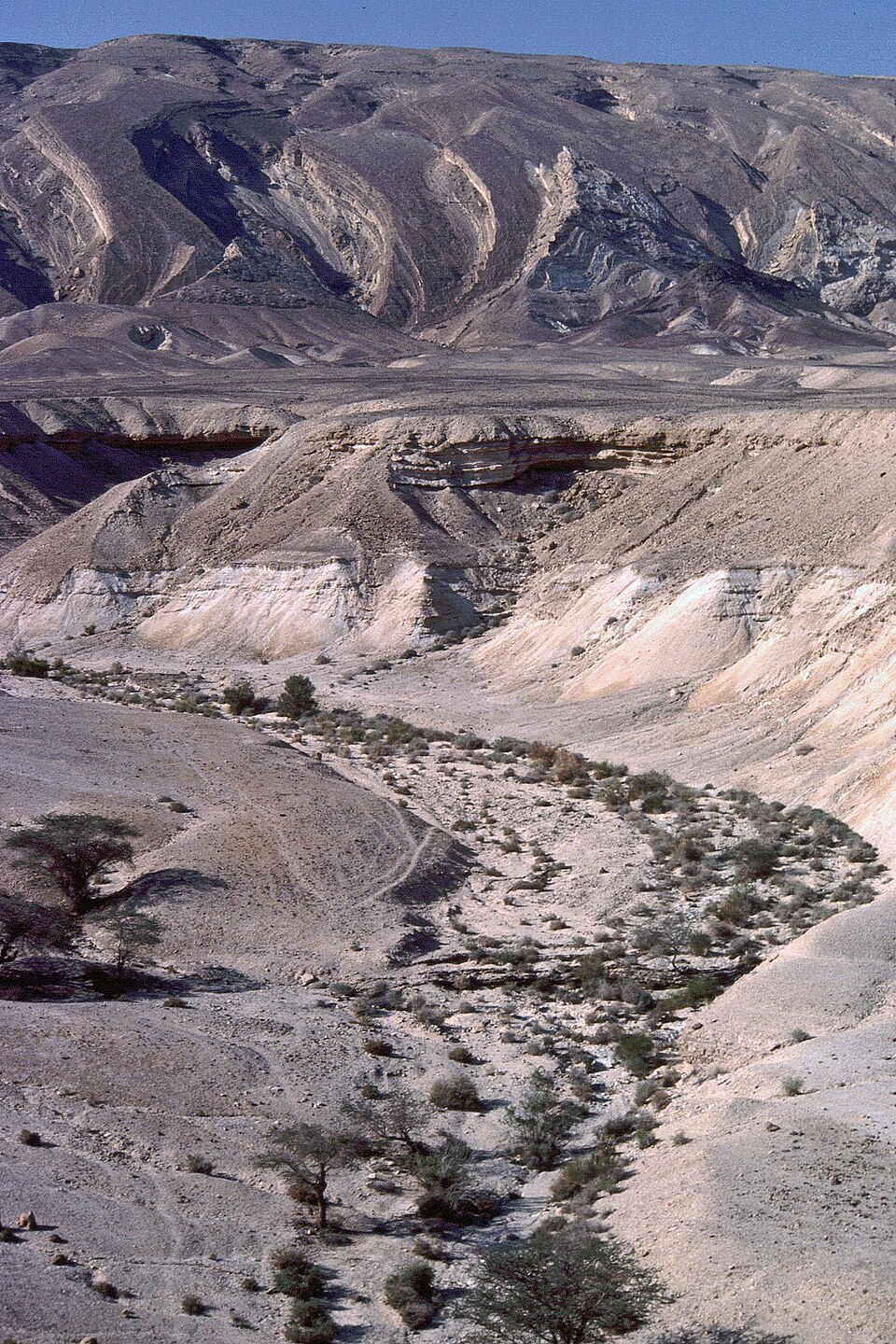
My Journey Today — Practical Application
- Resolve to leave your own “Ur.” Like Abram, you may not know the full destination — but trusting the One who calls and taking the one step of obedience available to you right now is where discipleship begins.
- Return to “Bethel” regularly. If you have failed and wavered, don’t rush to find a new method before returning to the place of worship and the Word where you first met God, and calling on his name again.
- Take hold of one person and walk with them. As in the principle of 2 Timothy 2:2, it doesn’t need to be a large program. Discipleship begins with sharing the Word with one person on a regular basis.
- Trust “Jehovah-jireh.” When you reach a point on the road of obedience that frightens you, remember that God has already prepared that place.
References
- Genesis 12 (Korean Revised Version, bible.com)
- Genesis 13 (Korean Revised Version, bible.com)
- Genesis 15 (Korean Revised Version, bible.com)
- Genesis 22 (Korean Revised Version, bible.com)
- Hebrews 11 (Korean Revised Version, bible.com)
- Romans 4 (Korean Revised Version, bible.com)
- Galatians 3 (Korean Revised Version, bible.com)
- James 2 (Korean Revised Version, bible.com)
- 2 Timothy 2 (Korean Revised Version, bible.com)
- Ur (Wikipedia) — the location of Ur of the Chaldees
- The Navigators — History
- Duranno’s “One-on-One Discipleship” curriculum (Onnuri Church)