
Many people confess faith in Jesus. John 8:30 tells us, “As he spake these words, many believed on him” (John 8:30, KJV). Yet Jesus turned to those very “Jews which believed on him” and spoke a word that presses one step deeper than a confession. The single mark that separates a true disciple from a crowd that admires and then scatters was this: do you abide in his word?
The English Scripture quotations here are from the King James Version (KJV) and the World English Bible (WEB), both in the public domain.

The Text: John 8:31-32 (KJV)
“Then said Jesus to those Jews which believed on him, If ye continue in my word, then are ye my disciples indeed; and ye shall know the truth, and the truth shall make you free.” (John 8:31-32, KJV)
The Lord did not say “if you believe” but “if ye continue in my word, then are ye my disciples indeed.” He set the test of true discipleship not at the moment of belief but in the continuance of remaining in his word. Verse 32 then promises its fruit: the one who abides in the word knows the truth, and that truth sets him free.
Context: Spoken to “the Jews Which Believed Him”
These hearers were not outside opponents but people who had just “believed” Jesus. Even so, Jesus did not immediately grant their faith the standing of true discipleship; he attached a condition: “If ye continue in my word.” The verb rendered “continue” (and “abide” in John 15) is the Greek menō (μένω), “to remain, stay, continue” — throughout John’s Gospel the key term for the ongoing, enduring relationship between Jesus and the believer. It speaks not of a single decision but of a life that keeps remaining in his word.
In fact, how superficial their faith was becomes clear in the very next exchange. When Jesus said the truth would set them free (v. 32), they objected: “We be Abraham’s seed, and were never in bondage to any man: how sayest thou, Ye shall be made free?” (John 8:33, KJV). They assumed that bloodline and heritage guaranteed their freedom. Jesus went to the root of the problem: “Whosoever committeth sin is the servant of sin” (John 8:34, KJV). True freedom comes not from lineage but from the Son alone: “If the Son therefore shall make you free, ye shall be free indeed” (John 8:36, KJV). Where one does not abide in the word, even a professed faith soon scatters, just like this dispute.

Principle 1: The Mark of a True Disciple Is Abiding in the Word
Scripture explains this principle — “if ye continue in my word, then are ye my disciples indeed” — more sharply through another passage, for Scripture interprets Scripture. The vine imagery of John 15 pictures the same truth.
“Abide in me, and I in you. As the branch cannot bear fruit of itself, except it abide in the vine; no more can ye, except ye abide in me.” (John 15:4, KJV)
The branch’s “abiding” in the vine is the very thing. Only while it remains does life flow and fruit form. Jesus makes it absolute: “for without me ye can do nothing” (John 15:5, KJV). And notice how this “abiding” becomes concrete as abiding in the word: “If ye abide in me, and my words abide in you, ye shall ask what ye will, and it shall be done unto you” (John 15:7, KJV). The life that abides in Christ is no abstract mysticism; it is the concrete life of his word remaining in us.
Paul uses the same language: “Let the word of Christ dwell in you richly” (Colossians 3:16, WEB). John 15:7’s “my words abide in you” and Colossians 3:16’s “the word of Christ dwell in you richly” answer to each other exactly. A true disciple is one in whom the word amply dwells.
Principle 2: Abiding in the Word, We Know the Truth and Are Set Free
Verse 32 promises two fruits of the abiding life: “And ye shall know the truth, and the truth shall make you free” (John 8:32, KJV). To “know the truth” here is not the piling up of information but a relational knowing of Christ, who is the truth (John 14:6). And this knowing does not stay in the mind; it issues in the concrete result of freedom.
What freedom? The context answers. As verses 33-36 show, it is freedom from bondage to sin. However free a person may deem himself, whoever commits sin is sin’s servant (v. 34). Only when the Son sets free is one free indeed (v. 36). So abiding in the word is not merely a discipline for increasing knowledge; it is the road of liberation — released from sin’s bondage to live within the truth of Christ.

Method: Five Ways of Taking in the Word
So how can we abide in the word? Scripture itself shows several channels for “holding fast the word.” The mission organization The Navigators arranged these as a diagram called “The Word Hand,” likening them to the five fingers — hearing, reading, studying, memorizing, and meditating. This is only an aid to remember training that Scripture already commands; the basis of each method is the biblical text itself.
- Hearing — “So faith comes by hearing, and hearing by the word of God” (Romans 10:17, WEB). The word ignites faith when it is proclaimed and enters the ear.
- Reading — Revelation 1:3 calls blessed the one who “reads” and those who “hear” the words of this prophecy (Revelation 1:3, WEB). Regular reading is the groundwork of intake.
- Studying — The Bereans were commended for “examining the Scriptures daily to see whether these things were so” (Acts 17:11, WEB). Questioning, searching study deepens the word.
- Memorizing — “I have hidden your word in my heart, that I might not sin against you” (Psalm 119:11, WEB). The word engraved on the heart guards us in the moment of temptation.
- Meditating — “This book of the law shall not depart from your mouth, but you shall meditate on it day and night, that you may observe to do according to all that is written in it” (Joshua 1:8, WEB). Meditation that turns the word over is the bridge from word to life.

Of these five, meditation always accompanies the other four. The Psalm sings: “but his delight is in Yahweh’s law. On his law he meditates day and night… He will be like a tree planted by the streams of water, that produces its fruit in its season, whose leaf also does not wither” (Psalm 1:2-3, WEB). Meditation makes the word a lamp for our path: “Thy word is a lamp unto my feet, and a light unto my path” (Psalm 119:105, KJV).

The reason to take in the word this way is plain: “Every Scripture is God-breathed and profitable for teaching, for reproof, for correction, and for instruction in righteousness, that each person who belongs to God may be complete, thoroughly equipped for every good work” (2 Timothy 3:16-17, WEB). For man does not live by bread alone, “but man lives by every word that proceeds out of Yahweh’s mouth” (Deuteronomy 8:3, WEB).
Practice: Abiding Completed in Obedience
But taking in the word is not an end in itself. Remember that Joshua 1:8, right after “meditate on it day and night,” immediately adds, “that you may observe to do according to all that is written in it.” Abiding in the word is completed in obedience. Jesus closed the Sermon on the Mount this way:
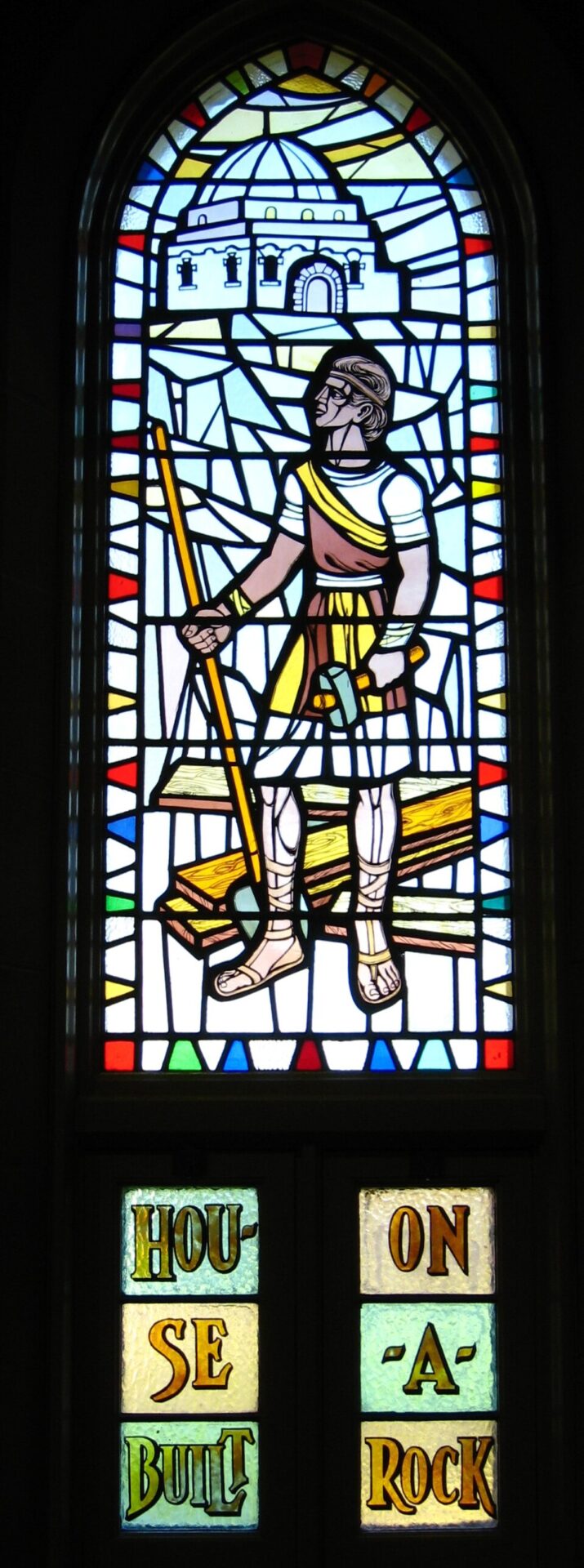
“Everyone therefore who hears these words of mine and does them, I will liken him to a wise man who built his house on a rock. The rain came down, the floods came, and the winds blew and beat on that house; and it didn’t fall, for it was founded on the rock.” (Matthew 7:24-25, WEB)
Only the one who hears and “does” builds on the rock. James repeats the same warning: “But be doers of the word, and not only hearers, deluding your own selves” (James 1:22, WEB). The one who only hears and does not act is like a man who looks at his face in a mirror and at once forgets; but the one who “looks into the perfect law of freedom” and does it is blessed in what he does (James 1:23-25, WEB). Here too, freedom (John 8:32) reappears as the fruit given to those who do the word.
Where Disciples Make Disciples
The mission of tgc.kr is the Great Commission — to make disciples of all nations (Matthew 28:19-20). But where does the power to make disciples come from? One who does not abide in the word cannot establish another in it. Only a branch abiding in the vine bears fruit (John 15:5), and by that fruit the Father is glorified and we are shown to be disciples (John 15:8). A disciple who abides in the word gives birth to another disciple.
Begin today with three steps.
- A set time — Fix a place to sit before the word each day at the same time, reading and meditating on one passage. Continuance itself is “abiding.”
- One verse — Engrave one verse on your heart this week (memorizing). As in Psalm 119:11, the word set in the heart guards us in the moment of sin.
- One act of obedience — From the word you meditated on, choose one act of obedience to carry out today. Without obedience, intake does not grow into maturity.
As far as we abide in the word, we are becoming true disciples, knowing the truth, and free within that truth. This is the invitation John 8:31-32 extends to us today.

References
- Korean Revised Version (KRV) — Gospel of John (Wikisource), John 8 & 15
- Korean Bible Society — KRV (HAN) text of John 8:31-32
- Korean Bible Society — Scripture copyright guidance
- Biblehub — John 8:31 (Greek μένω analysis and commentary)
- GotQuestions — “Abide in My Word” (John 8:31)
- GotQuestions — “The Truth Will Set You Free” (John 8:32)
- The Navigators — The Word Hand: Five Ways of Scripture Intake
- The Navigators — Topical Memory System