


Many people confess faith in Jesus. A scene in John 8 begins that way too: As he spoke these things, many believed in him
(John 8:30, WEB). Yet Jesus turns to those very people who had believed and speaks a word that goes one step deeper than their confession. What is the mark that separates a true disciple from a crowd that admires for a moment and then scatters? Jesus’ answer was this: do you abide in his word?

The Text: John 8:31-32 (KJV)
Then said Jesus to those Jews which believed on him, If ye continue in my word, then are ye my disciples indeed; And ye shall know the truth, and the truth shall make you free. (John 8:31-32, KJV)
The Lord did not call them disciples simply because they had believed. He attached a condition: If ye continue in my word, then are ye my disciples indeed
(John 8:31, KJV). He placed the test of discipleship not in a single moment of confession but in continuing in his word. The words of John 8:32 that follow promise its fruit. The one who abides in the word knows the truth, and that truth sets him free.
Context: A Word Spoken to Those Who Had Believed
The people who heard these words were not opponents standing outside but people who had just believed in Jesus. Even so, Jesus did not immediately recognize that faith as true discipleship. The Greek verb behind continue here, rendered abide or remain elsewhere, is menō (μένω), meaning to remain, to stay, to keep dwelling. More than half of this verb’s uses in the New Testament appear in John’s writings (Bible Hub, Strong’s 3306), and John uses the word to portray the enduring relationship between Jesus and his disciples. It describes not a single decision but a life of abiding in the word.
How shallow that faith was becomes clear in the conversation that follows. When Jesus promises freedom, his listeners push back: We are Abraham’s offspring, and have never been in bondage to anyone. How do you say, ‘You will be made free’?
(John 8:33, WEB). They assumed that bloodline and heritage guaranteed their freedom. Jesus puts his finger on the root of the problem: everyone who commits sin is the bondservant of sin
(John 8:34, WEB). As the conversation deepens, Jesus diagnoses what is inside his hearers: you seek to kill me, because my word finds no place in you
(John 8:37, WEB). In the end the crowd in whom the word had no place picks up stones to throw at Jesus (John 8:59). If ye continue in my word in John 8:31 and my word finds no place in you in John 8:37 are the two diverging roads of this chapter.

Principle ① The Mark of a True Disciple Is Abiding in the Word
Scripture unfolds the principle of John 8:31 more vividly through other passages. The parable of the vine in John 15 pictures the same truth.
Remain in me, and I in you. As the branch can’t bear fruit by itself unless it remains in the vine, so neither can you, unless you remain in me. (John 15:4, WEB)
A branch staying joined to the vine is what abiding is. Only while it stays joined does life flow and fruit form. Jesus makes it plain: apart from me you can do nothing
(John 15:5, WEB). And this abiding takes concrete shape as abiding in his word: If you remain in me, and my words remain in you, you will ask whatever you desire, and it will be done for you
(John 15:7, WEB). A life that abides in Christ is not a vague mystical experience but a concrete life in which his word remains in us.
Paul speaks in the same vein: Let the word of Christ dwell in you richly
(Colossians 3:16, WEB). In his letter John repeats the same principle: If that which you heard from the beginning remains in you, you also will remain in the Son, and in the Father
(1 John 2:24, WEB). A true disciple is a person in whom the word dwells richly.
Principle ② Abiding in the Word, We Know the Truth and Enjoy Freedom
The words of John 8:32 promise two fruits of a life that abides in the word: ye shall know the truth, and the truth shall make you free
(John 8:32, KJV). To know the truth here is more than piling up information. Jesus said, I am the way, the truth, and the life
(John 14:6, WEB). To know the truth is to know Christ personally, for he is the truth, and knowing him truly sets us free.
What kind of freedom? The context answers. As John 8:33-36 shows, it is freedom from being a slave of sin. Even if people consider themselves free, whoever commits sin is a slave of sin (John 8:34). Jesus goes on: A bondservant doesn’t live in the house forever. A son remains forever
(John 8:35, WEB). Here too the same verb menō is used, which the WEB renders live and remains. The slave cannot stay in the house forever, but the son stays forever. And then: If therefore the Son makes you free, you will be free indeed
(John 8:36, WEB). Abiding in the word is not merely a discipline for increasing knowledge; it is the way to be released from the bondage of sin and to remain in the Son.

Method: Five Ways of Taking In the Word
How, then, can we abide in the word? Scripture itself shows several channels through which we hold on to the word. The mission organization The Navigators gathered these into a picture called The Word Hand. It is a tool that helps us remember five ways of taking in the Word, placing hearing, reading, study and memorization on the four fingers and meditation on the thumb. This diagram is an aid that bundles practices rooted in the biblical text so they are easy to remember. Among the verses below are commands, as well as declarations of blessing and confessions, but all of them point to the way of drawing near to the word.
- Hearing —
So faith comes by hearing, and hearing by the word of God
(Romans 10:17, WEB). Faith grows as we hear the word proclaimed. - Reading —
Blessed is he who reads and those who hear the words of the prophecy, and keep the things that are written in it
(Revelation 1:3, WEB). The blessing is promised to those who do not stop at reading and hearing but keep it. - Study — The Bereans were commended because
they received the word with all readiness of mind, examining the Scriptures daily to see whether these things were so
(Acts 17:11, WEB). Study that asks and examines deepens the word in us. - Memorization —
I have hidden your word in my heart, that I might not sin against you
(Psalm 119:11, WEB). The word engraved on the heart guards us in the moment of temptation. - Meditation —
This book of the law shall not depart from your mouth, but you shall meditate on it day and night
(Joshua 1:8, WEB). Meditation that turns the word over again and again is the bridge that carries the word into life.

The Navigators put meditation on the thumb because only the thumb can touch all four of the other fingers. Meditation always goes together with hearing, reading, study and memorization. The Psalm portrays such a person this way.
but his delight is in Yahweh’s law. On his law he meditates day and night. He will be like a tree planted by the streams of water, that produces its fruit in its season, whose leaf also does not wither. Whatever he does shall prosper. (Psalm 1:2-3, WEB)
The word we meditate on lights the road we walk: Your word is a lamp to my feet, and a light for my path
(Psalm 119:105, WEB).

Scripture also tells us why we must keep receiving the word like this: Every Scripture is God-breathed and profitable for teaching, for reproof, for correction, and for instruction in righteousness, that each person who belongs to God may be complete, thoroughly equipped for every good work
(2 Timothy 3:16-17, WEB). We are people of whom it is written that man does not live by bread only, but man lives by every word that proceeds out of Yahweh’s mouth
(Deuteronomy 8:3, WEB). When Jesus was tempted in the wilderness, he too answered with this word (Matthew 4:4).
Practice: Abiding in the Word Is Completed in Obedience
Yet taking in the word is not the goal in itself. Right after the call to meditate day and night, Joshua 1:8 adds that you may observe to do according to all that is written in it
(Joshua 1:8, WEB). Abiding in the word is completed in obedience. Jesus closed the Sermon on the Mount this way.
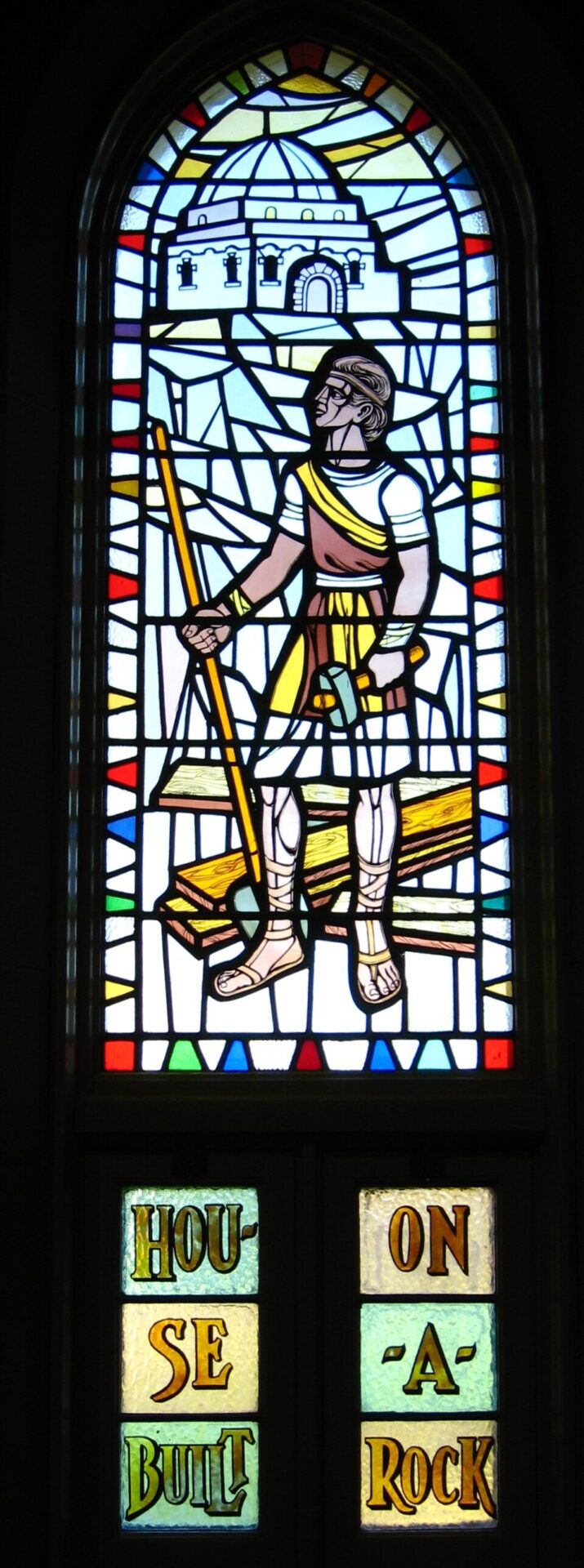
Everyone therefore who hears these words of mine and does them, I will liken him to a wise man who built his house on a rock. The rain came down, the floods came, and the winds blew and beat on that house; and it didn’t fall, for it was founded on the rock. (Matthew 7:24-25, WEB)
Only the one who hears and does builds on the rock. James says the same: But be doers of the word, and not only hearers, deluding your own selves
(James 1:22, WEB). The one who only hears is like a man who looks at his face in a mirror, goes away, and immediately forgets (James 1:23-24). By contrast, he who looks into the perfect law of freedom and continues, not being a hearer who forgets but a doer of the work, this man will be blessed in what he does
(James 1:25, WEB). James calls the word the perfect law of freedom and says that the one who keeps looking into it and puts it into practice will be blessed. Jesus also said, If a man loves me, he will keep my word
(John 14:23, WEB). In the end, a life that abides in the word is a life that loves the Lord and keeps his word.
Where Disciples Make Disciples
The mission of tgc.kr is the Great Commission. The Lord commanded us to make disciples of all nations
(Matthew 28:19, WEB), teaching them to observe all things that I commanded you
(Matthew 28:20, WEB). To teach others to observe, I must first remain in that word myself. Someone who does not abide in the word will find it hard to establish others in it. Paul urged Timothy this way: The things which you have heard from me among many witnesses, commit the same things to faithful men who will be able to teach others also
(2 Timothy 2:2, WEB). The word flows from Paul to Timothy, to faithful men, and on again to others. When branches joined to the vine bear much fruit, the Father is glorified and we are shown to be the Lord’s disciples (John 15:8).
Begin today with three steps. Together with one ministry partner or a small group rather than alone, you can keep going longer.
- A set time — Sit before the word at the same time every day, read one passage and meditate on it. That time kept day after day helps you live a life that abides in the word.
- One verse — Choose one verse this week and memorize it. As in the confession of Psalm 119:11, the word kept in the heart guards us in the moment of temptation.
- One act of obedience — From the word you meditated on, decide on one thing to do today, put it into practice, and share it with someone walking with you. Without obedience, taking in the word does not lead to maturity.
As we abide in the word, we grow into true disciples, we know the truth, and we are free in that truth. And that word flows through us to yet another disciple. This is the invitation the words of John 8:31-32 extend to us today.

References
- bible.com — John 8, Korean Revised Version (KRV) (in Korean)
- bible.com — John 15, Korean Revised Version (KRV) (in Korean)
- Bible Hub — John 8:31, original text and parallel translations
- Bible Hub — Strong’s Greek 3306 μένω (menō)
- GotQuestions — What did Jesus mean when He said, if you abide in my word (John 8:31)?
- GotQuestions — What does it mean that the truth will set you free (John 8:32)?
- The Navigators — The Word Hand Illustration