


Every June, Koreans remember a war, though what each of us remembers it as differs from person to person. The 6·25 War That Kim Il-sung Started (by Kang Kyu-hyung and 4 co-authors, Guiparang) is a popular history that sets out to point clearly to how that war began and who bears responsibility for it. (Koreans name the Korean War by the date on which it broke out.) This essay does not try to judge the book by a political yardstick. Instead, taking the war’s documentary record as its base, it reads alongside that record another story the Korean church lived through in the same years: the gospel of martyrdom and forgiveness.
What kind of book is The 6·25 War That Kim Il-sung Started?
The book is a joint work by five writers: Kang Kyu-hyung (a professor at Myongji University), Kim Yong-sam, Nam Jeong-wook, Jeong Kyung-hee and Ju Ik-jong. It was published by Guiparang on June 25, 2019. Its 136 pages hold 26 short sections, each told concisely in about five pages with archival photographs, documents and charts. The authors say they wrote it with students and young readers in mind. It is a popular history designed to let readers grasp the main line of 6·25 quickly.
One point needs to be clear from the start. The book was written by researchers and writers of modern Korean history with a conservative outlook, and a particular reading of history runs through it, beginning in the preface, which sharply criticizes how history textbooks treat 6·25 and how they assess President Syngman Rhee. The honest way for a Christian reader to approach it, then, is to read it while distinguishing widely established facts from the authors’ interpretation. This essay, too, tries to keep that posture of discernment.
The book’s central claim: 6·25 was a planned invasion
The book’s boldest claim is its title. The 6·25 War was not an accidental clash. It was an invasion of the South that North Korea’s Kim Il-sung planned and plotted in advance with Joseph Stalin of the Soviet Union and Mao Zedong of China. The book opens this story with section 1, Why Did Kim Il-sung and Pak Hon-yong Go to Moscow?, and section 2, A War Planned by Kim Il-sung, Stalin and Mao Zedong!
This core fact, who planned and started the war, is not the claim of one camp; it is the settled view of scholarship today. In June 1994, Russian President Boris Yeltsin handed President Kim Young-sam former Soviet secret documents showing that Kim Il-sung had repeatedly proposed an invasion of the South through Terentii Shtykov, the Soviet ambassador to North Korea, that Stalin had agreed, and that Mao Zedong in China had also been consulted. Professor Kim Hak-joon, who explained the documents at the time, judged that a debate over the war’s origins that had run for more than 40 years had at last come to an end. Research continues on the war’s long background and on each country’s calculations, but on the question of who planned and approved the invasion there is hardly any room left for disagreement. In the spring of 1950 Kim Il-sung finally won Stalin’s backing in Moscow, and the Soviet Union supplied weapons and military advisers.
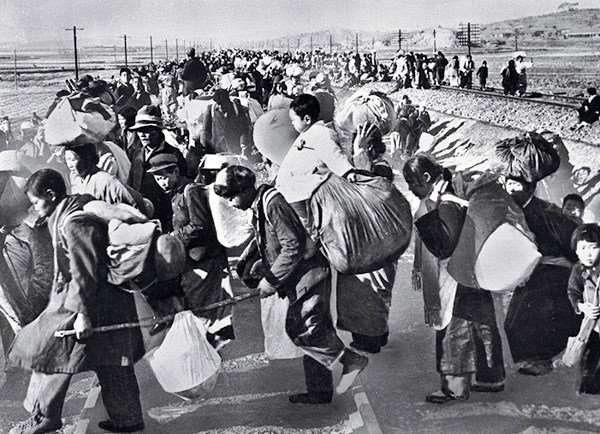
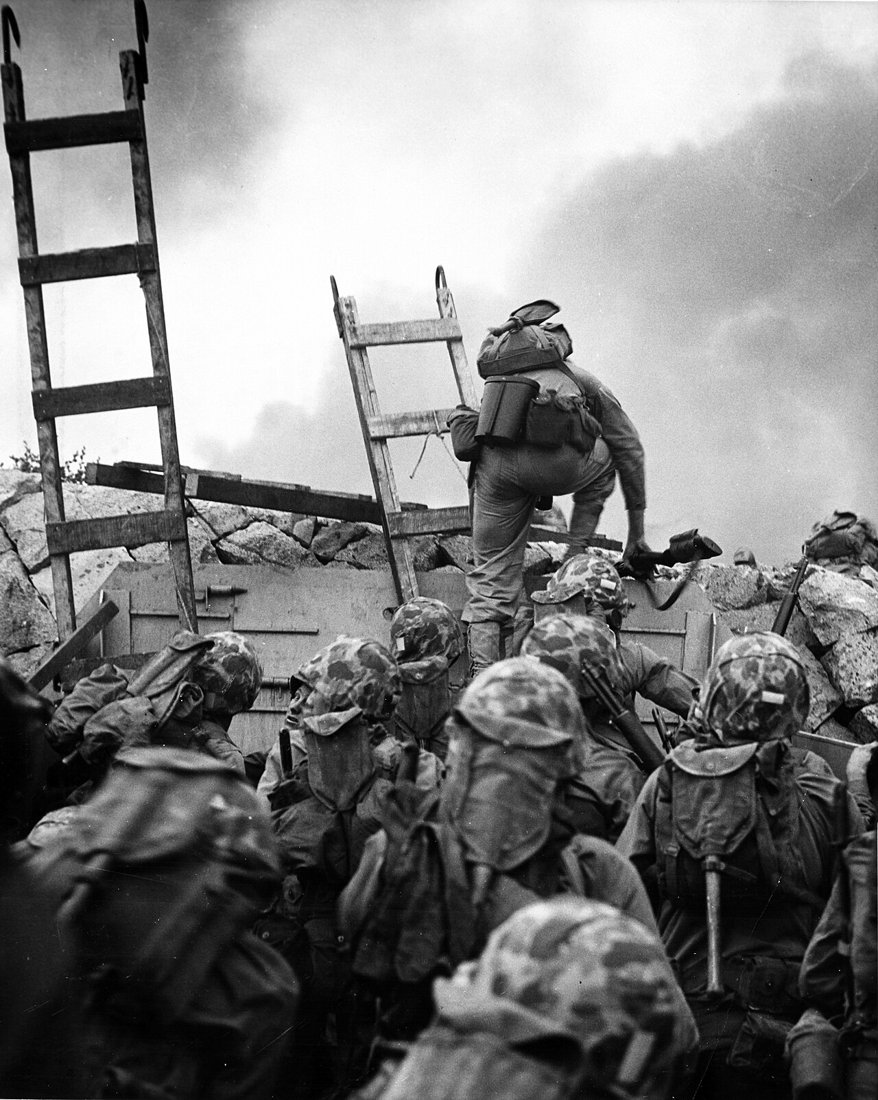
After the opening invasion, the war passed through the desperate fight on the Nakdong River perimeter, the Incheon landing of September 15, 1950, the advance toward the Yalu River, the entry of Chinese forces in the autumn of 1950 and the January 4 retreat of 1951, before it came to a halt with the armistice of July 27, 1953. Estimates of the human toll vary widely from count to count. The book’s preface says that more than 1.49 million soldiers and civilians were killed and that more than 1 million were wounded, and some estimates put civilian deaths alone at 2 million to 3 million.
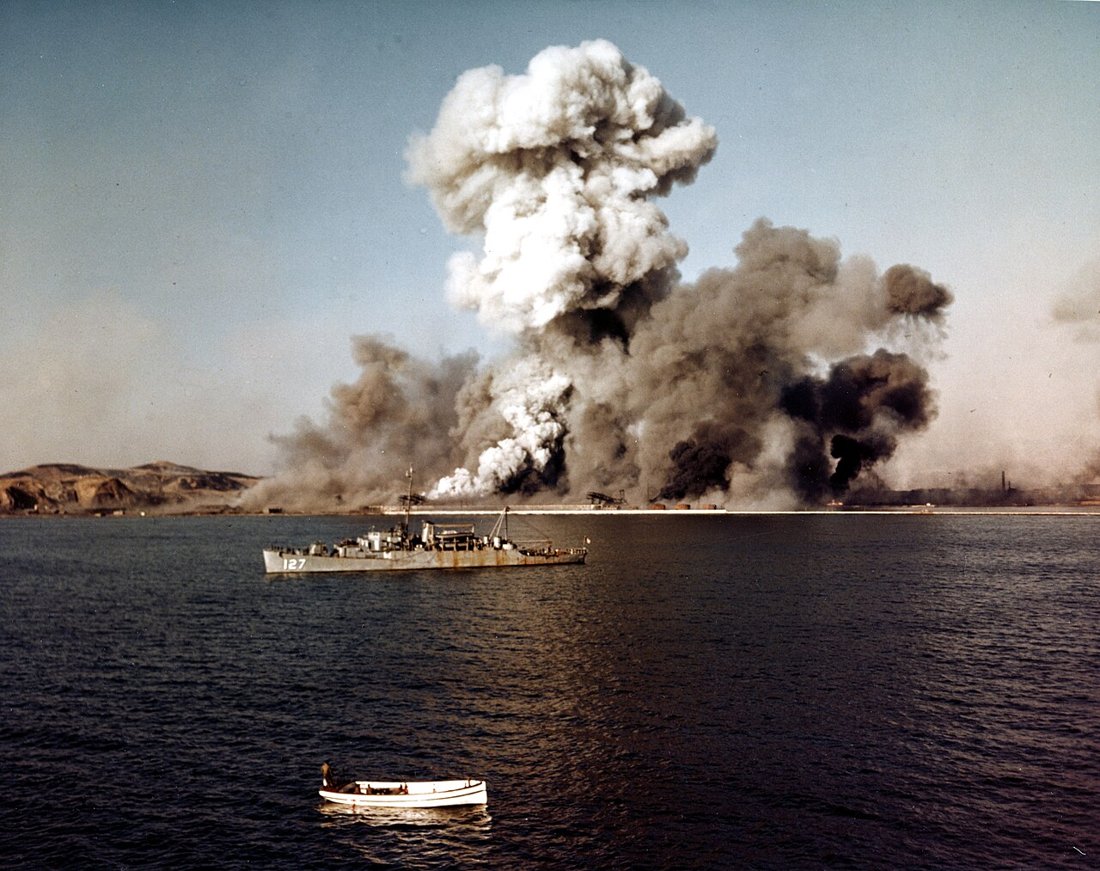
The book moves through the United Nations’ decision to enter the war (section 3), the evacuation from the Hungnam docks (section 17, Geumsun of the Hungnam Docks, and section 18, The Christmas Miracle) and the Korea–U.S. Mutual Defense Treaty (section 24), and in its final section, 26, it takes as its lesson the words inscribed on the Korean War Veterans Memorial in Washington: Freedom Is Not Free. That message about the price of freedom is by no means a light one for people of faith to receive.
Where the history book stops: a church persecuted in the middle of the war
There is, however, another front that this book does not place at its center: the suffering of the Korean church. The North Korean regime held to state atheism on the Marxist ground that religion is the opium of the people, and under it the church became a target of repression. So in the middle of 6·25, a military and political event, there was also persecution aimed at believers.
On April 15, 2025, as it concluded its own-initiative investigation into cases in which religious believers fell victim, Korea’s Truth and Reconciliation Commission announced that it had confirmed as victims 600 people who fell victim to hostile forces during the 6·25 War: 533 Protestants (classified by the commission as Christians), 64 Catholics and 3 followers of Daejonggyo. Most of the victims were killed by local leftist forces after September 1950, as the North Korean People’s Army was retreating, and of the 92 Christian victims in the Seoul, Gyeonggi and Gangwon region, 82 were abducted to the North. The commission explained that they were targeted not only for their faith but also because they were intellectuals, community leaders and independence activists in their localities. Faith was clearly one of the reasons they became targets.
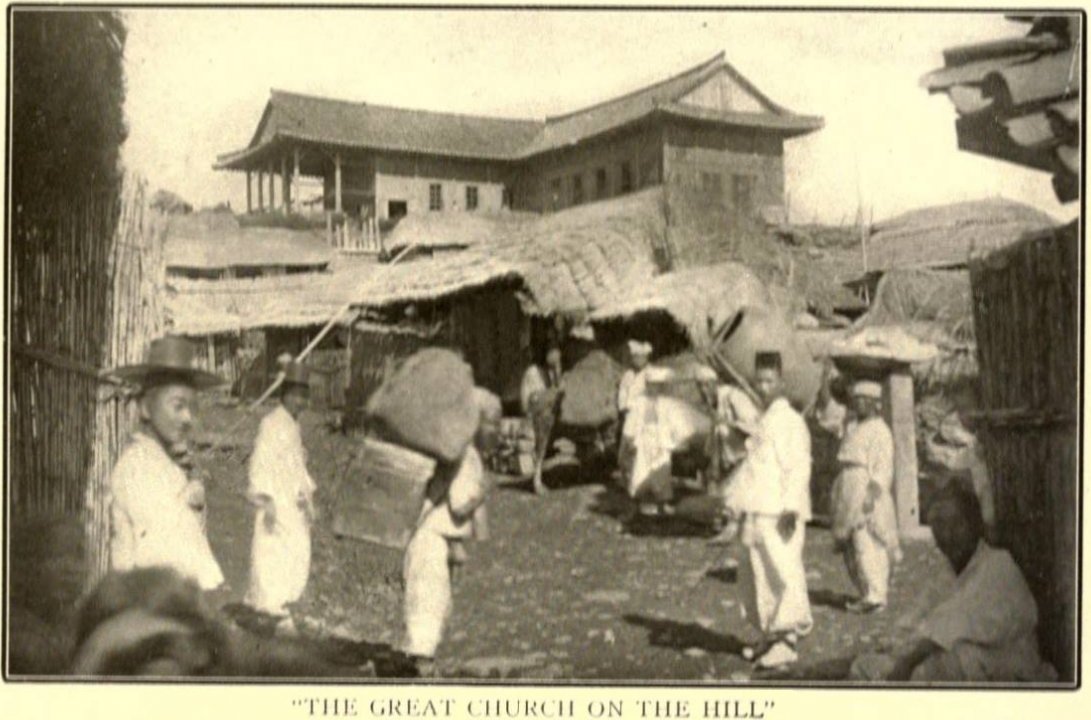
Especially painful is the loss of churches. Through the Pyongyang Great Revival of 1907, Pyongyang became the heart of Korean Christianity, so much so that it was called the Jerusalem of the East. Korean leaders such as Elder Gil Seon-ju joined the Bible conferences led by missionaries and led the revival meetings, and that fire spread across the country. But through liberation, division and 6·25, churches that could worship freely in the North all but disappeared. Sanjeonghyeon Church in Pyongyang, the church of Pastor Ju Ki-cheol, who refused Shinto shrine worship and died a martyr in a Japanese prison in 1944, remains a symbol of the suffering of the Pyongyang churches that continued before and after.
Martyrdom and forgiveness: the gospel Pastor Son Yang-won showed
There is one man who shows most clearly how this war passed through the church: Pastor Son Yang-won (1902~1950). From 1938 he served in the church at Aeyangwon, a sanatorium for Hansen’s disease patients in Yeosu, South Jeolla Province, where he embraced and cared for the patients with his own hands. Because he refused Shinto shrine worship, he was also imprisoned from 1940 until Korea’s liberation.
His story begins with deep grief. During the Yeosu–Suncheon incident of October 1948, his two sons, Dong-in and Dong-sin, were killed by leftist students (this was before 6·25 broke out). Yet when Ahn Jae-seon, who had taken part in killing the two sons, was caught and faced execution, Pastor Son campaigned to have his life spared, saved him, and in the end took him in as his own adopted son. That is why he later came to be called the atomic bomb of love. That love toward an enemy was not a feeling he produced on his own; it was obedience to a word that had taken hold of him.
But I tell you, love your enemies, bless those who curse you, do good to those who hate you, and pray for those who mistreat you and persecute you (Matthew 5:44, WEB)
Then, 2 years later, when 6·25 broke out, people around him urged him to flee, but he would not leave, saying he would stay beside the Hansen’s disease patients. Arrested by Communist Party members in September 1950, he was shot and martyred at Mipyeong in Yeosu on the night of September 28, on the road as he was being taken toward Suncheon. He lost his two sons, embraced their enemy as a son, and in the end walked the same road himself. His life shows, like a single painting, how the gospel cuts off the vicious circle of hatred.
Don’t be overcome by evil, but overcome evil with good (Romans 12:21, WEB)
Reading the cross over the record of war: a critical assessment
What, then, is this book worth? The 6·25 War That Kim Il-sung Started lays out one fact clearly: how the war began and who bears responsibility for it. Thanks to its many archival photographs and its short, brisk sections, it is a good introduction for a younger generation unfamiliar with 6·25 to grasp the main line of the war. Its message that freedom is not handed out for nothing honestly wakes up those of us who easily take peace for granted.
There are, however, points that call for discernment. As noted above, in areas still under debate, such as the assessment of Syngman Rhee or the criticism of history textbooks, the authors’ particular viewpoint shows strongly. The book is also, after all, a work of politics and history, so the spiritual dimension of the war, namely the martyrdom of the church, forgiveness toward enemies and reconciliation across the division, is not a subject it sets out to treat. Those are the themes this essay adds, reading the book with the eyes of faith. People of faith should therefore read this book gratefully receiving the established facts while weighing its political verdicts with discernment. Where a history book stops at the question of who started the war, the gospel sets before us a deeper question: with what will we overcome that hatred?
Blessed are those who have been persecuted for righteousness’ sake, for theirs is the Kingdom of Heaven (Matthew 5:10, WEB)
Scripture does not romanticize suffering. But the word that all who desire to live godly in Christ Jesus will suffer persecution
(2 Timothy 3:12, WEB) tells us that persecution is nothing strange for those who seek to live godly lives. We believe that the road the martyrs of 6·25 walked also lay upon that word.
Through the eyes of the Great Commission: across the division, toward the gospel of reconciliation
6·25 is not a war that ended but a war that stopped. More than 70 years after the armistice, the division remains and the churches of the North are still closed. It is right there that the book’s theme of freedom comes to Christians as a deeper calling. For the freedom we enjoy is not only a system to be defended; it also places on us a debt: to carry the gospel to our compatriots in the North who have not yet heard it.
Go and make disciples of all nations, baptizing them in the name of the Father and of the Son and of the Holy Spirit, teaching them to observe all things that I commanded you. Behold, I am with you always, even to the end of the age (Matthew 28:19-20, WEB)
The Great Commission does not stop at the Military Demarcation Line. Just as Pastor Son Yang-won embraced his enemy as a son, our calling, too, is not to hate but to overcome with love. The most Christian way to remember the history of 6·25 is to not forget the persecuted church and to pray for it, to ask that the gospel may flow across the division, and to live out, here and now where I stand, a faith that is faithful unto death.
… be thou faithful unto death, and I will give thee a crown of life (Revelation 2:10, KJV)
Who should read this book?
I recommend this book to believers who want to set the historical facts of 6·25 in proper order, to parents and teachers who want to teach the meaning of war and freedom to the generation of their children and teenagers, and to Christians who want to remember together the season of suffering the Korean church passed through. At the same time, I recommend reading the political interpretations in the book with discernment and laying the gospel of martyrdom and forgiveness over that history. For history teaches facts, but it is the Word that teaches how to embrace those facts and how to live.
References
- Aladin — The 6·25 War That Kim Il-sung Started (Kang Kyu-hyung et al., Guiparang, 2019), bibliographic data (Korean)
- New Daily — The Truth of 6·25 at a Glance… The 6.25 War Kim Il-sung Started (2019), publication notice and section titles (Korean)
- Korea Policy Briefing — what the acquisition of former Soviet documents on the Korean War means (1994, Korean)
- Wilson Center — Korean War primary-source collections (Soviet and Chinese documents)
- Korean Wikipedia — the 6·25 War (course of the war and casualties)
- Jayu Ilbo — Truth and Reconciliation Commission officially confirms 600 victims of the 6·25 War, including 533 Christians (2025, Korean)
- Encyclopedia of Korean Culture — Son Yang-won (Korean)
- Korean Wikipedia — the Pyongyang Great Revival (1907)
- Korean text of the passages quoted (Korean Revised Version, bible.com; the English quotations follow the WEB and, for Revelation 2:10, the KJV): Matthew 5 · Matthew 28 · Romans 12 · 2 Timothy 3 · Revelation 2