
What does it mean to be a disciple? Jesus answered this question not with a program or a technique, but with a single sentence — and he did so in the very place where he first foretold his own death. Luke 9:23 is short, yet within this one verse stand the three pillars of discipleship: self-denial, a cross taken up daily, and a life of following him. And this charter stands at the very beginning of every effort in which a disciple raises up another disciple.
The English Scripture quotations here are from the King James Version (KJV) and the World English Bible (WEB), both in the public domain.
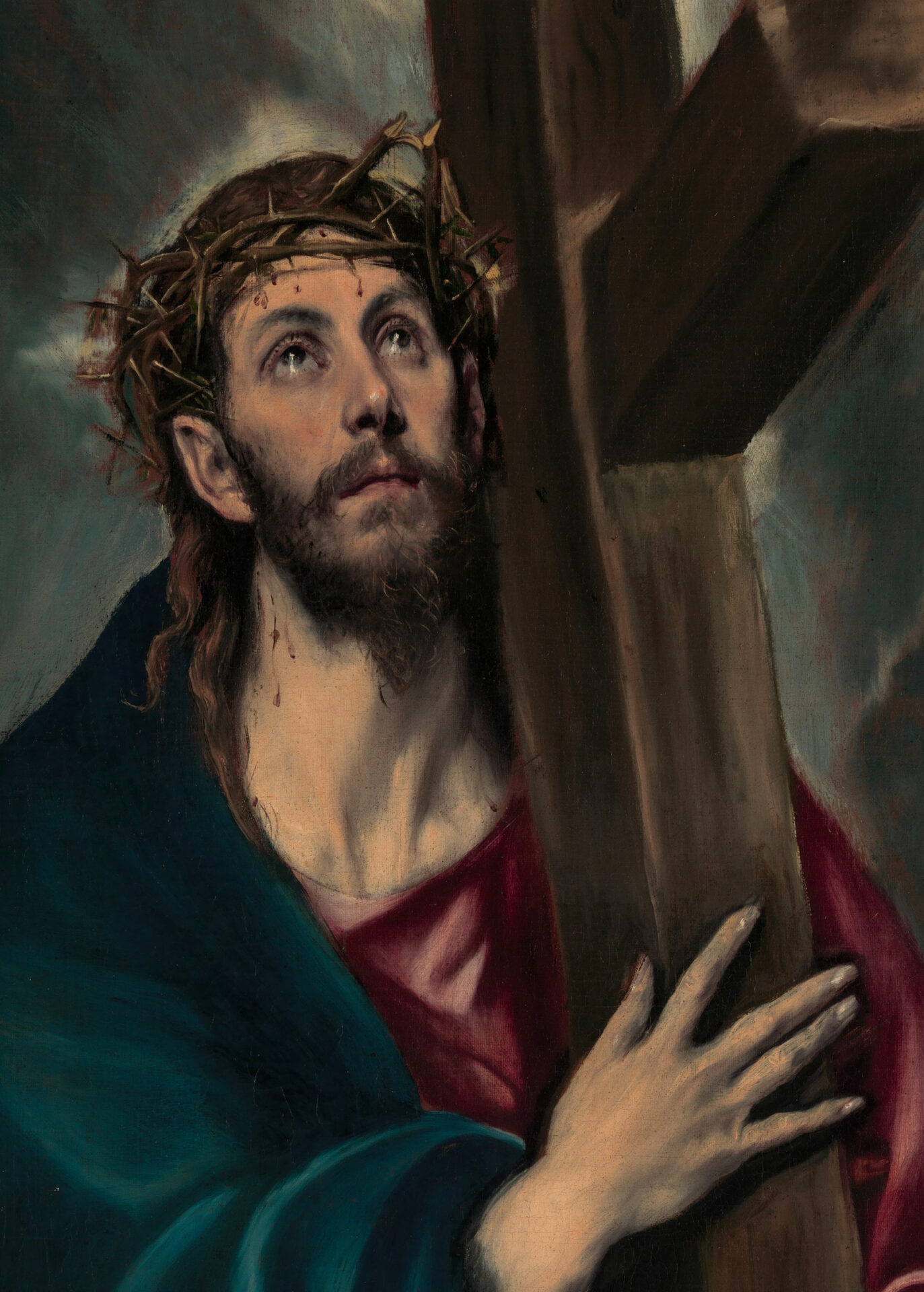
“And he said to them all, If any man will come after me, let him deny himself, and take up his cross daily, and follow me.” (Luke 9:23, KJV)

The Call Given Right After the Passion Prediction
This word was not spoken in a vacuum. In the immediate context, it comes right after Peter confessed Jesus as “the Christ of God” (Luke 9:20). Following that confession, Jesus for the first time foretells his own death.
“The Son of Man must suffer many things, and be rejected by the elders, chief priests, and scribes, and be killed, and the third day be raised up.” (Luke 9:22, WEB)
The order matters. Jesus first says that he himself will bear the cross, and then he calls, “You too, take up your cross and follow me.” Discipleship, in other words, is the road of walking after a suffering Messiah. The way the Teacher goes and the way the disciple goes are not different. The verses that follow, 24-25, explain the ground of this call through the paradox of one’s life.
“For whoever desires to save his life will lose it, but whoever will lose his life for my sake will save it.” (Luke 9:24, WEB)
“For what does it profit a man if he gains the whole world, and loses or forfeits his own self?” (Luke 9:25, WEB)
Cling to yourself and you lose; lay yourself down for Christ and you gain — this paradox is the logic that upholds the self-denial of verse 23.

“Deny Himself” — Handing Over the Right to Define Ourselves
The first command is “let him deny himself.” The Greek verb here belongs to the arneomai (ἀρνέομαι) family — strikingly, the same root as the word used when Peter denied Jesus three times (Luke 22:34, 61) (Peter’s denial and the parallel accounts in Matthew 16:24 and Mark 8:34 use the intensified form aparneomai). Peter denied Jesus; the disciple, by contrast, is called to deny himself. This is not self-abuse or asceticism for its own sake, but handing over to Christ the reins of one’s life — the authority that once decided for oneself what is right and how to live.
Scripture itself explains the substance of this self-denial more deeply through another text. Paul puts it this way:
“I am crucified with Christ: nevertheless I live; yet not I, but Christ liveth in me” (Galatians 2:20, KJV)
To deny oneself is for the old self to be crucified with Christ and die, so that now one lives by the life of Christ. Self-denial does not leave an empty space; it lets Christ live in that place.

“Take Up His Cross Daily” — Not Once, but Every Day
To the second command a word is attached that is unique to Luke — “daily.” The parallel accounts of the same scene in Matthew 16:24 and Mark 8:34 do not have it. Only Luke wrote “take up his cross daily” (kath’ hēmeran, καθ’ ἡμέραν). He nailed down that taking up the cross is not a single dramatic decision that is over and done, but a way of life repeated every day.
To a first-century audience, “to take up a cross” was no metaphorical ornament. The cross (stauros, σταυρός) was a Roman instrument of execution, and the condemned were forced to carry their own crossbeam to the place of execution (Jesus himself walked that road, John 19:17). So “take up his cross” meant an obedience that reckoned with death — a life of handing oneself over to death every day. Scripture also frames this daily death in the language of worship.
“…present your bodies a living sacrifice, holy, acceptable to God, which is your spiritual service.” (Romans 12:1, WEB)
The phrase “living sacrifice” is itself a paradox. A sacrifice is something that dies, yet we are told to offer it alive. To lay oneself on the altar day after day — that is the cross taken up daily.

“Follow Me” — Walking After the Suffering Lord
The third command is “follow me.” The Greek verb translated “follow” (akoloutheō, ἀκολουθέω) means not merely walking behind, but the ongoing companionship and obedience of a disciple who shares the life and direction of his teacher. Self-denial and the cross are not ends in themselves; they are the door for following him. Luke nails down this condition once more later on.
“Whoever doesn’t bear his own cross and come after me, can’t be my disciple.” (Luke 14:27, WEB)
Being a disciple is inseparable from taking up the cross and following. It is not a special track reserved for a devoted few, but — as the words “If any man will come after me” declare — a call given to everyone who would follow him.

Self-Denial Is the Door to Reproducing Disciples
Here we arrive at the core principle of discipleship training. The focus of tgc.kr’s discipleship is always reproduction — “a disciple raising up another disciple.” And Scripture says this reproduction happens only by passing through the death of self-denial. Jesus taught:
“Most certainly I tell you, unless a grain of wheat falls into the earth and dies, it remains by itself alone. But if it dies, it bears much fruit.” (John 12:24, WEB)
A grain of wheat that does not die remains a single grain. A disciple who only guards himself can never reproduce. Only the grain that falls to the earth and dies — the one who denies himself and takes up the cross daily — bears much fruit, that is, another disciple. If the self remains alive, the result is not reproduction but self-expansion. Only the servant who has emptied himself can bear other disciples through service that builds up others rather than one’s own interest.
The chain of reproduction that Paul urged upon Timothy — to entrust what he had heard to faithful people so that they in turn could teach others (2 Timothy 2:2) — rests on this same principle of death. Self-denial (Luke 9:23) → fruit through death (John 12:24) → reproduction into yet another disciple (2 Timothy 2:2). This is the skeleton of discipleship as Scripture draws it.

Living It Today — From the Daily Cross to Reproduction
So how can we live out this word today? Four steps are offered.
First, make daily self-denial a concrete decision. As the word “daily” insists, self-denial is not finished with a single dedication service. The small decision each morning to confess, “Today I hand my sovereignty over to the Lord,” is the starting point of a cross-bearing life.
Second, train yourself to trust Christ more than your own judgment. Self-denial means seeking Christ’s will first, before the word and in prayer, even when your own thoughts and feelings insist they are right. Standing on the hope of resurrection, we can receive the laying down of ourselves not as loss but as an expression of trust.
Third, be ready for the suffering that obedience may bring. Scripture says that “through many afflictions we must enter into God’s Kingdom” (Acts 14:22, WEB). To take up the cross is to lay down comfort and choose uncomfortable obedience. Yet at the end of that road is the true life gained by losing one’s life (Luke 9:24).
Fourth, share your self-emptied life to raise up another disciple. Self-denial does not end in private devotion. Just as the grain dies to bear fruit, a self-emptied life reproduces when it flows out into the service of sharing time and life with one other person. To keep one person beside you, to share the word together, and to show them a life of self-denial — that is the way a disciple raises up a disciple.
An Invitation to Prayer and Devotion
Luke 9:23 invites us not to fear but to hope, for the cross is not the end but the door to resurrection, and the death of the grain is not lack but the promise of much fruit. Today let us quietly pray: “Lord, today I lay down my sovereignty. Let me take up my cross daily and follow you, and through my self-emptied life let one more disciple be raised up.” This short prayer becomes the first step of a day lived as a disciple. The Teacher walked that road first, and he walks it with us still.
References
- Korean Revised Version of Luke — Wikisource (public-domain Bible text)
- Korean Bible Society — Bible text and translation guide
- BibleRef, Luke 9:23 commentary
- Crossway, “What Does Luke 9:23 Mean?” (C. D. Agan III)
- Ligonier Ministries, “What Does It Mean to Take Up My Cross Daily?”
- Bible Hub, Greek ἀπαρνέομαι (aparneomai, G533) — to deny (Peter’s denial; Matthew 16:24, Mark 8:34)
- Bible Hub, Greek σταυρός (stauros, G4716) — cross
- Bible Hub, Luke 9:23 Greek interlinear (καθ’ ἡμέραν “daily”)