
The English Scripture quotations here are from the King James Version (KJV) and the World English Bible (WEB), both public domain. Each quotation is labeled with its translation.
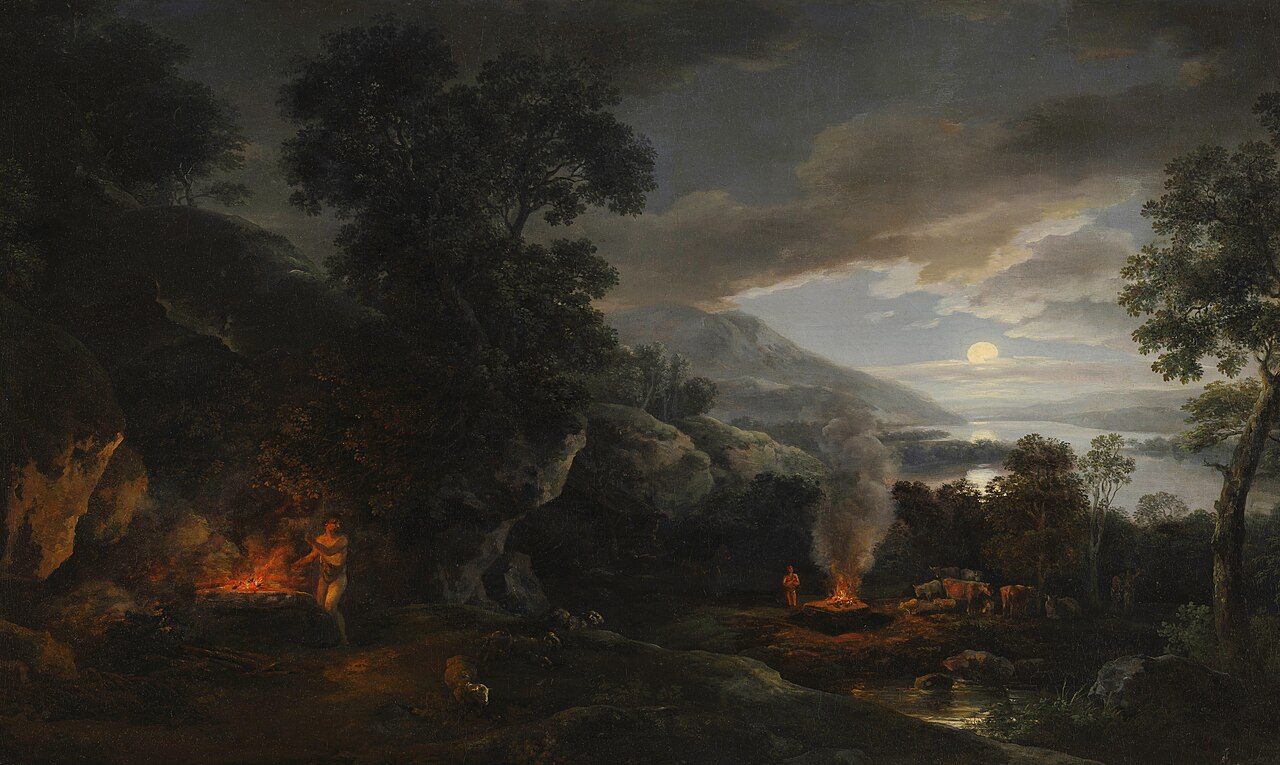
Genesis 3 closed with humanity driven out of Eden. Genesis 4 begins outside that shut gate, in the cursed ground, with the first generation of the human race. Yet the first story outside Eden is not one of marriage, or labor, or worship—it is a brother killing his brother. If chapter 3 broke the bond between humanity and God, chapter 4 breaks the bond between one human and another. Sin spreads within a single generation, from rebellion against God to murder of a brother. And still there is light in this dark chapter. God still asks, still seeks, and at the end gives “another seed.” Genesis 4 shows how sin grows, and at the same time how God, in the midst of it, keeps carrying forward his promise (Genesis 3:15).
Two Men, Two Offerings (Genesis 4:1-5)
The text records the birth and vocations of the first brothers:
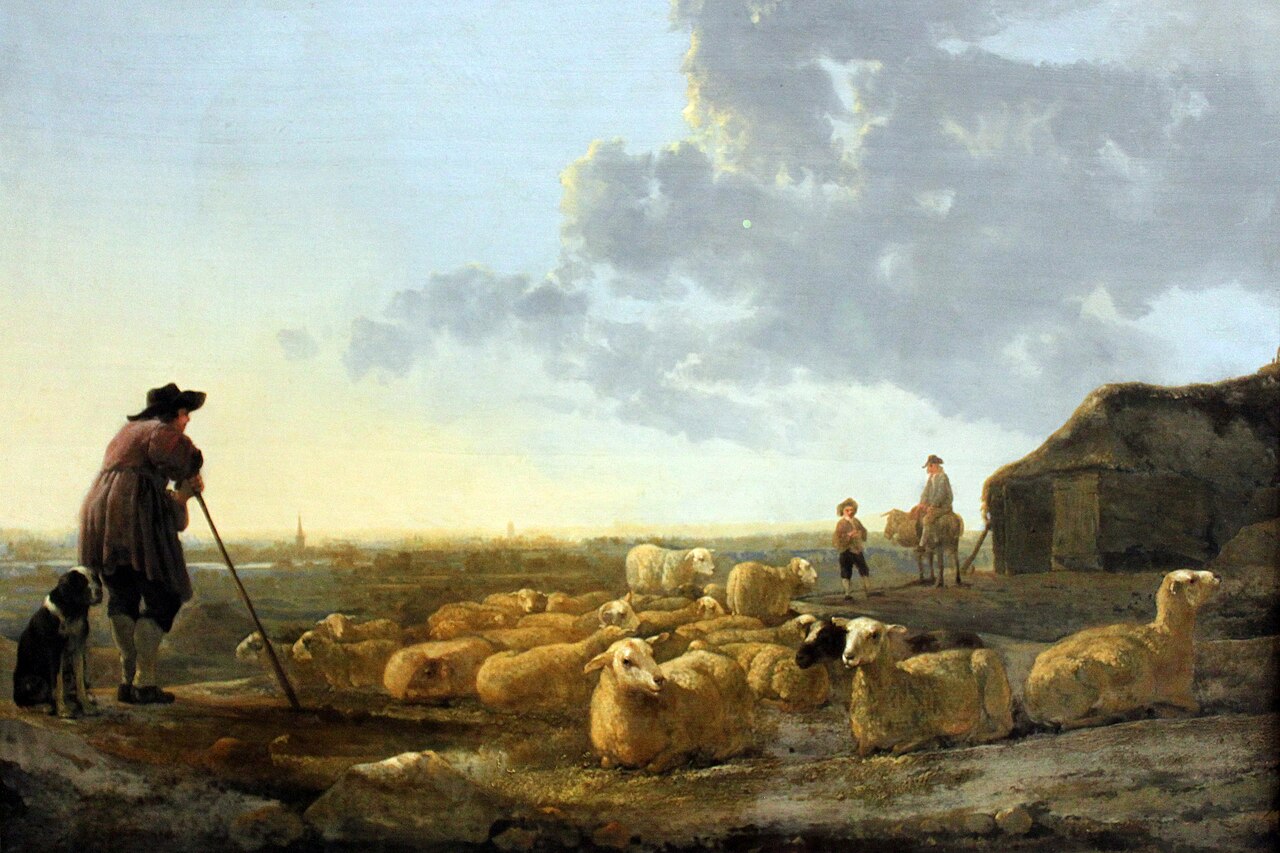
The man knew Eve his wife. She conceived, and gave birth to Cain, and said, “I have gotten a man with Yahweh’s help.” Again she gave birth, to Cain’s brother Abel. Abel was a keeper of sheep, but Cain was a tiller of the ground. (Genesis 4:1-2, WEB)
Holding her firstborn, Eve confesses, “I have gotten a man with Yahweh’s help.” Even in the cursed ground, she knows that life is God’s gift. Soon the two brothers bring their offerings to God, each according to his vocation.
As time passed, Cain brought an offering to Yahweh from the fruit of the ground. Abel also brought some of the firstborn of his flock and of its fat. Yahweh respected Abel and his offering, but he didn’t respect Cain and his offering. Cain was very angry, and the expression on his face fell. (Genesis 4:3-5, WEB)
Why did God accept Abel’s offering but not Cain’s? A clue lies in the text itself. What God accepted was first “Abel and his offering” (4:4); what he refused was “Cain and his offering” (4:5). Scripture names the worshiper before the gift. A grain offering is not wrong in itself—later the Law would prescribe grain offerings too. The problem was not the kind of gift but the heart behind it.
The passage that most clearly interprets this text is another passage of Scripture—Hebrews.
By faith, Abel offered to God a more excellent sacrifice than Cain, through which he had testimony given to him that he was righteous, God testifying with respect to his gifts; and through it he, being dead, still speaks. (Hebrews 11:4, WEB)
Hebrews calls Abel’s sacrifice “a more excellent sacrifice by faith.” Abel brought “the firstborn of his flock and of its fat”—the very best. His offering carried a faith that trusted God and gave its finest. Cain’s offering showed no such heart, and so, when God did not accept it, Cain responded not with repentance but with anger (4:5). Whether worship is true or false is revealed by the attitude that surfaces when worship is refused. Abel offered by faith; Cain offered by form.
Sin Lieth at the Door (Genesis 4:6-7)
To the angry Cain, God does not first bring judgment but a warning. The murder has not yet happened.
And the LORD said unto Cain, Why art thou wroth? and why is thy countenance fallen? If thou doest well, shalt thou not be accepted? and if thou doest not well, sin lieth at the door. And unto thee shall be his desire, and thou shalt rule over him. (Genesis 4:6-7, KJV)
God pictures sin as a beast “lieth at the door.” Sin crouches at the door of Cain’s heart, waiting to devour him. Strikingly, “unto thee shall be his desire, and thou shalt rule over him” has the same shape as a verse in the previous chapter. God had told Eve, “Your desire will be for your husband, and he will rule over you” (Genesis 3:16, WEB). The Hebrew words for “desire” and “rule” in 4:7 are the same as in 3:16 (though the older Korean version renders the one word two different ways). Sin lunges to possess a person, but the person must rule that sin.
Here the chapter’s tension appears. God commanded, “thou shalt rule over him,” but Cain, far from ruling sin, is swallowed by it. Genesis 4 testifies, through Cain’s failure, that a person cannot in his own strength overcome the sin at the door. Until the “seed of the woman” (Genesis 3:15) comes to truly rule sin, the command to rule sin remains a heavy burden on humanity. So the New Testament finds this command fulfilled in Christ—“sin will not have dominion over you” (Romans 6:14, WEB) is the gospel that accomplishes by grace the “rule over sin” that Cain could not.
Where Is Abel Thy Brother? (Genesis 4:8-10)
Warned, Cain still does not turn. At last the first murder in human history takes place.
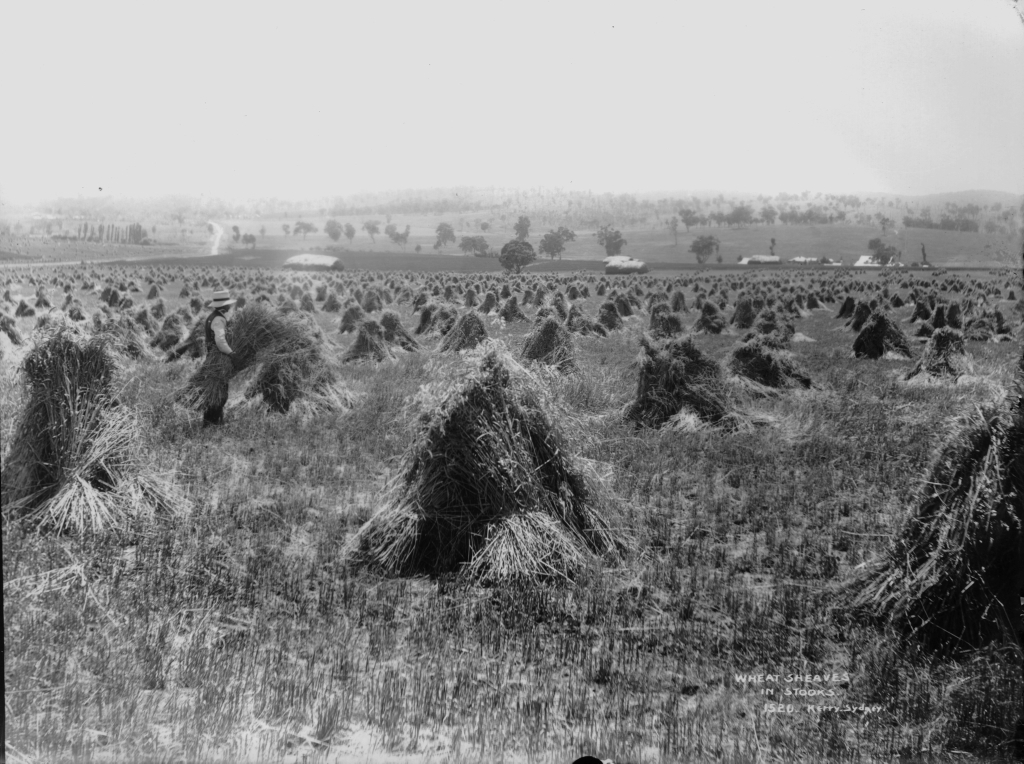
And Cain talked with Abel his brother: and it came to pass, when they were in the field, that Cain rose up against Abel his brother, and slew him. (Genesis 4:8, KJV)
The text does not record what Cain said to Abel; it simply reports, “talked with… rose up… and slew him.” Anger born in worship toward God moved into a hand raised against a brother. John names the root of this first murder precisely:
unlike Cain, who was of the evil one, and killed his brother. Why did he kill him? Because his deeds were evil, and his brother’s righteous. (1 John 3:12, WEB)
Cain killed Abel because “his deeds were evil, and his brother’s righteous.” Righteous worship pierced an evil heart, and that wound grew into hatred, and hatred into murder. John goes further and equates hatred itself with murder: “Whoever hates his brother is a murderer” (1 John 3:15, WEB). Before Cain’s hand struck Abel, his heart had already killed him.
Right after the murder God asks again. And that question pairs with one already heard in chapter 3.
And the LORD said unto Cain, Where is Abel thy brother? And he said, I know not: Am I my brother’s keeper? (Genesis 4:9, KJV)
In chapter 3 God asked the hiding Adam, “Where art thou?” (Genesis 3:9); now in chapter 4 he asks Cain, who has killed his brother, “Where is Abel thy brother?” Neither question is asked out of ignorance; both are the gracious call that summons a sinner to face himself. But just as Adam shifted the blame to his wife, Cain flatly denies—“I know not.” More than that, with “Am I my brother’s keeper?” he denies the very responsibility of one brother for another. Sin not only breaks relationships; it paralyzes even the sense of responsibility within them.
The Blood That Cries from the Ground (Genesis 4:10-15)
Cain tried to keep silent, but the ground would not.
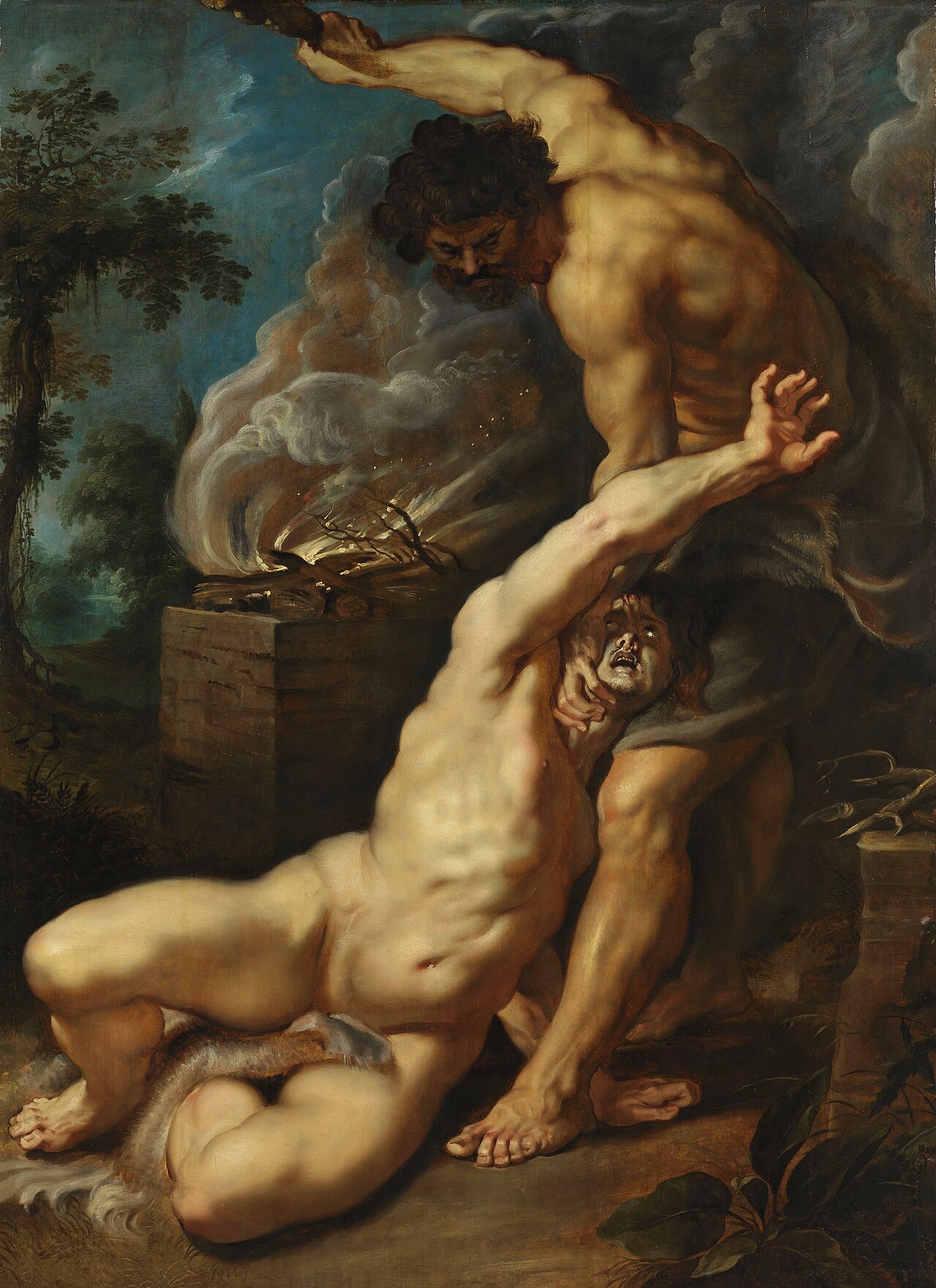
Yahweh said, “What have you done? The voice of your brother’s blood cries to me from the ground. (Genesis 4:10, WEB)
Abel is dead and speechless, yet his blood cries out to God from the ground. This is what Hebrews meant: “being dead, still speaks” (Hebrews 11:4). This “crying blood” runs through all of Scripture until at last it is set beside another blood.
to Jesus, the mediator of a new covenant, and to the blood of sprinkling that speaks better than that of Abel. (Hebrews 12:24, WEB)
Abel’s blood “cries” from the ground for judgment and requital. But the blood of Jesus speaks “better than that of Abel”—it cries not for vengeance but for forgiveness, not for condemnation but for pardon. The blood Cain shed was the blood of a murdered brother; the blood Jesus shed is blood that gives life to those who were enemies. Where the first blood of Genesis 4 cried out, the blood of Calvary answers. Jesus too remembered “the blood of righteous Abel” (Matthew 23:35), placing Abel first among the martyrs.
God pronounces on Cain the curse of the ground and a life of wandering:
Now you are cursed because of the ground, which has opened its mouth to receive your brother’s blood from your hand. From now on, when you till the ground, it won’t yield its strength to you. You will be a fugitive and a wanderer in the earth.” (Genesis 4:11-12, WEB)
Yet even in the midst of judgment God does not withdraw his grace. When Cain fears, “anyone finding me will kill me” (4:14), God protects him.
Yahweh said to him, “Therefore whoever slays Cain, vengeance will be taken on him sevenfold.” Yahweh appointed a sign for Cain, so that anyone finding him would not strike him. (Genesis 4:15, WEB)
Even to a murderer God gives a protective “sign.” The judgment is just, but God’s long-suffering is greater than that judgment. The same hand that clothed the naked in chapter 3 marks a protecting sign on a murderer in chapter 4.
Cain’s Line and the Song of Lamech (Genesis 4:16-24)
Cain leaves the presence of God and goes his own way.
Cain left Yahweh’s presence, and lived in the land of Nod, east of Eden. Cain knew his wife. She conceived, and gave birth to Enoch. He built a city, and called the name of the city, after the name of his son, Enoch. (Genesis 4:16-17, WEB)
Cain’s descendants build a city and raise up herding, music, and metal-working civilization (4:20-22). This progress is itself a fruit of the ability God gave humanity. Yet at the summit of that civilization what rings out is not praise but a song of vengeance.
Lamech said to his wives, “Adah and Zillah, hear my voice. You wives of Lamech, listen to my speech, for I have slain a man for wounding me, a young man for bruising me. If Cain will be avenged seven times, truly Lamech seventy-seven times.” (Genesis 4:23-24, WEB)
Lamech kills a man who wounded him and then boasts, twisting the “sevenfold” protection God gave Cain (4:15) into his own “seventy-sevenfold” revenge. God’s language of grace has been corrupted into humanity’s language of violence. Sin does not fade from one generation to the next; it grows darker. From Cain’s murder to Lamech’s boast, the sin that lay at the door has finally swallowed a whole civilization. Jude calls such a life “the way of Cain”—“they went in the way of Cain… and perished in Korah’s rebellion” (Jude 1:11, WEB).
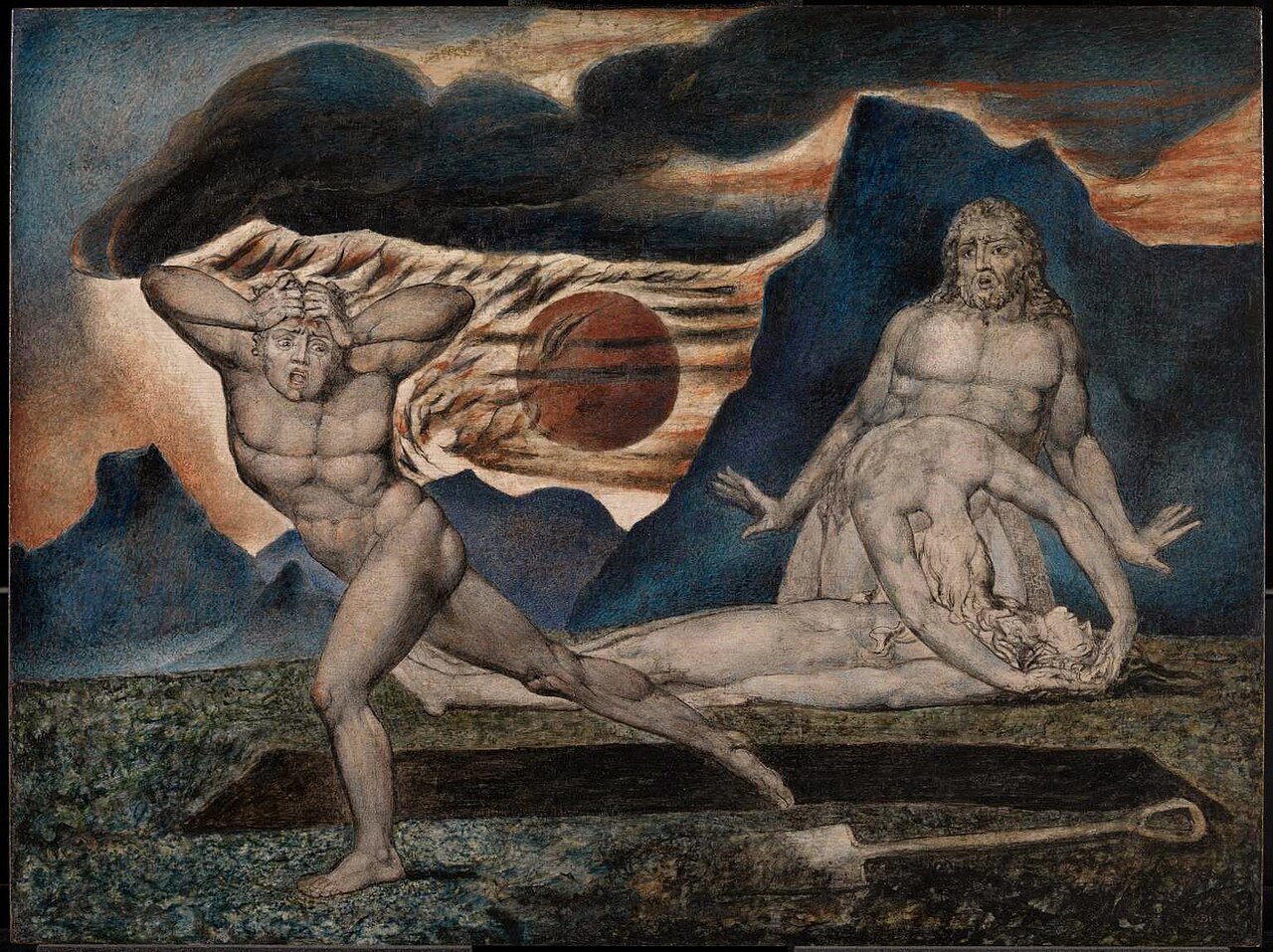
Another Seed, Seth—Calling on the Name of the LORD (Genesis 4:25-26)
Just as Cain’s line darkens into Lamech’s song of vengeance, the text turns our eyes to another line.
Adam knew his wife again. She gave birth to a son, and named him Seth, saying, “for God has given me another child instead of Abel, for Cain killed him.” (Genesis 4:25, WEB)
Eve calls Seth “another seed.” Abel is dead and Cain is gone, but God does not sever the channel of the promise. This word “seed” is no accident. God had already promised in chapter 3 that the “seed of the woman” would bruise the serpent’s head (Genesis 3:15). The line of promise, nearly cut off by Abel’s death, continues through Seth. Luke’s genealogy traces this line of Seth all the way back to Adam and to God (Luke 3:38), and at the end of that line stands Christ, the “seed of the woman.”
A son was also born to Seth, and he named him Enosh. At that time men began to call on Yahweh’s name. (Genesis 4:26, WEB)
While Cain’s line builds a “city” and exalts its own name (4:17), in Seth’s line the worship of “calling on the name of the LORD” begins. Two streams divide in human history—a city that calls on its own name, and a worshiping community that calls on the name of the LORD. And this “calling on the name of the LORD” runs to the very end of Scripture and becomes the gospel invitation.
For, “Whoever will call on the name of the Lord will be saved.” (Romans 10:13, WEB)
The calling that began “at that time” in the days of Enosh has flowed down to everyone today who hears the gospel and calls on the name of the Lord. Genesis 4 is a chapter darkened by the first murder, yet its final verse breaks open the first dawn of worship and salvation.
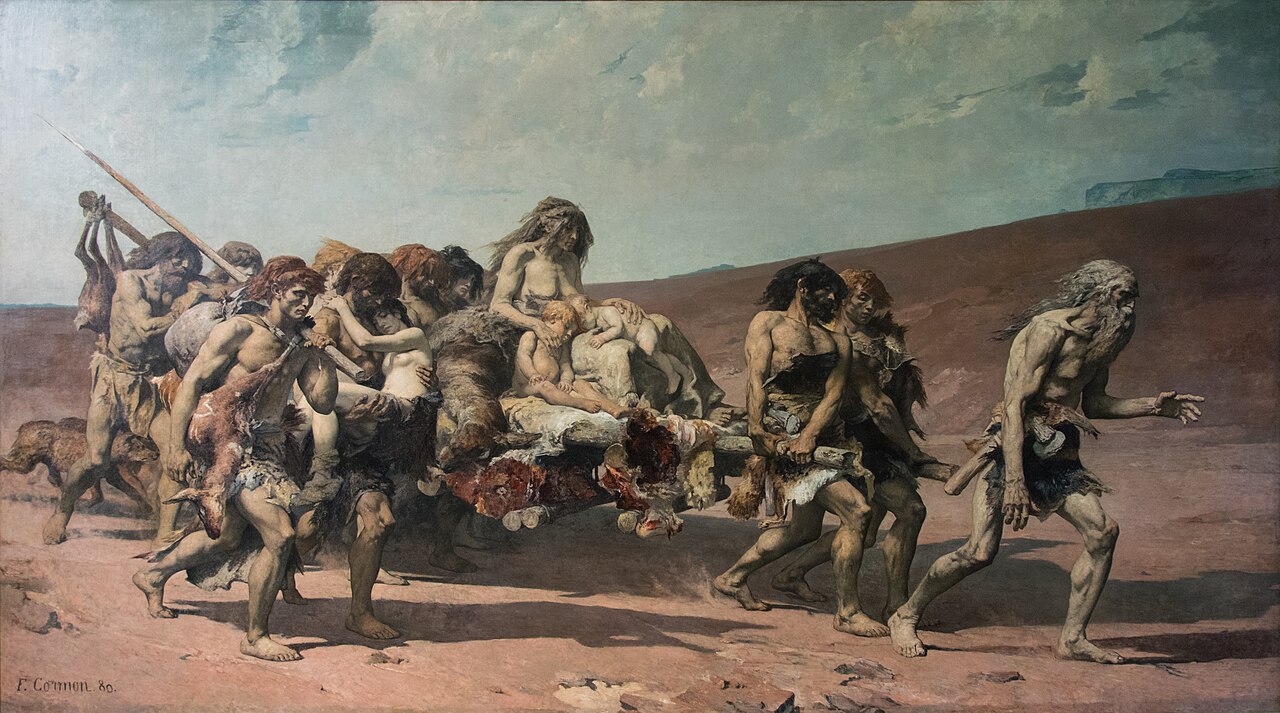
Two Ways: The Way of Cain and the Faith of Abel
Genesis 4 is, in the end, the story of two ways—beginning with two brothers and dividing into two lines. On one side are formal worship, unmastered sin, a heart that hates its brother, a civilization that exalts its own name, and a song of vengeance. Scripture calls this “the way of Cain” (Jude 1:11). On the other side are a sacrifice offered by faith, righteous blood that speaks even in death, a promise carried on through “another seed,” and worship that calls on the name of the LORD. This is the way of “the faith of Abel.”
These two ways do not stop in Genesis 4 but run through the whole of Scripture. Abel’s blood finds its answer in the blood of Jesus (Hebrews 12:24), and Abel’s faith, which speaks even in death, stands first among the people of faith in Hebrews 11 (Hebrews 11:4). Seth’s “another seed” leads at last to Christ, the “seed of the woman.” Genesis 4 records humanity’s first tragedy, yet it never loses the thread of grace running through it.
Disciples Who Offer by Faith Outside the Dust
Genesis 4 is a mirror that reflects us. Within us too there is a Cain and an Abel. To us who live outside Eden, this chapter teaches four things.
First, offer worship by faith, not by form. What God sees is the worshiper before the gift (4:4). True worship offers the very best, by faith, as Abel did (Hebrews 11:4).
Second, do not take lightly the sin at the door. Sin lies at the door of the heart, waiting to devour us (4:7). Anger and hatred left unchecked become the seed of murder (1 John 3:15). Yet we do not fight sin alone as Cain did—we rule over sin within the grace that promises, “sin will not have dominion over you” (Romans 6:14).
Third, be one who keeps his brother. Cain denied responsibility, asking, “Am I my brother’s keeper?” (4:9). But a disciple is one who keeps and builds up his brother. We are called not to the mutual hatred of “the way of Cain” but to the way of Christ, in which we love one another.
Fourth, call on the name of the LORD. Genesis 4 closes with “men began to call on the name of the LORD” (4:26). God’s final invitation to us is the same—“Whoever will call on the name of the Lord will be saved” (Romans 10:13). And the one who calls on that name, God sends out to every nation. To recover the brotherly love Cain lost, to carry on the faith Abel proclaimed even in death, and to cause the name of the LORD to be called upon over all the earth—that is the Great Commission entrusted to us (Matthew 28:18-20).
References
- Korean Revised Version (개역한글), Genesis — Wikisource (public-domain text)
- Korean Bible Society — Bible translations and copyright notice
- GotQuestions — Cain and Abel, why did God accept only Abel’s offering?
- BibleHub — Genesis 4:7 commentaries (sin lieth at the door; ruling over sin)
- BibleHub — Hebrews 11:4 commentaries (Abel’s sacrifice of faith)
- BibleRef — Hebrews 12:24 (the blood of Jesus that speaks better than Abel’s)
- GotQuestions — What is the way of Cain (Jude 1:11)?