
On the self-help shelf of every bookstore, one book has held its place for nearly ninety years: Dale Carnegie’s How to Win Friends and Influence People. Published in 1936 and sold more than 30 million copies worldwide, how should a Christian read this classic? Even the title gives us pause. “Win friends” and “influence people”—is this love, or a technique for handling people? This essay rereads Carnegie’s book through the eyes of faith, discerning together where its wisdom overlaps with Scripture and where it parts ways.
The Missouri Farm Boy Who Wrote the Century’s Handbook on People
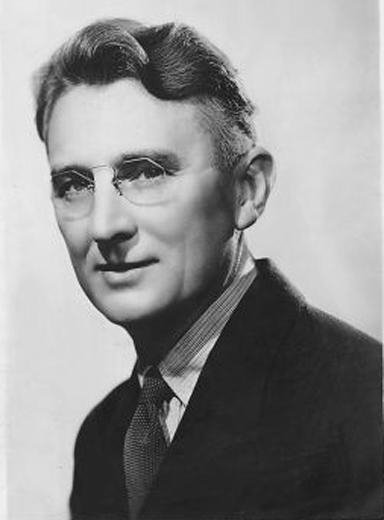
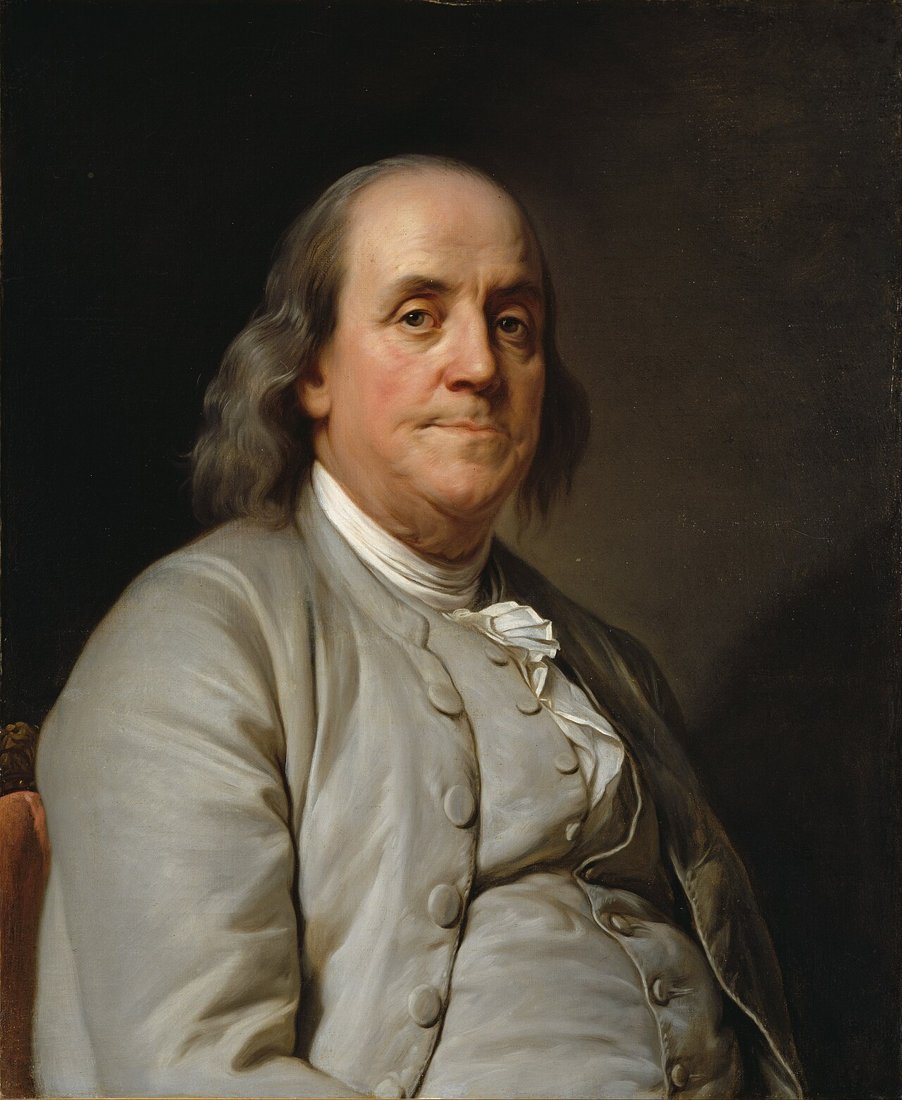
Dale Carnegie (1888–1955) was born on a poor farm in Maryville, Missouri. After working as a traveling salesman and then teaching public speaking at the YMCA, he gathered the principles of human relations he had refined in his courses into a single book, published in 1936 by Simon & Schuster as How to Win Friends and Influence People. The book began quietly but went through printing after printing in its first year, selling hundreds of thousands of copies within months, and remains to this day one of the best-selling books of all time. Several Korean translations are in circulation; among the unabridged complete editions, the Hyundae Jiseong edition (translated by Lim Sang-hoon, 2019) is widely read. Carnegie openly acknowledges throughout the book that he drew much of his method from Benjamin Franklin’s autobiography, quoting at length Franklin’s rule to “forbear all direct contradiction.”
At its core the book is built of four parts and thirty principles in all. Part 1, fundamental techniques in handling people (don’t criticize, condemn, or complain; give honest appreciation—three principles); Part 2, six ways to make people like you (become genuinely interested in others, smile, remember names, listen well, and so on); Part 3, twelve ways to win people to your way of thinking (avoid arguments, admit your faults quickly, see from the other’s point of view, and so on); Part 4, nine principles for becoming a leader (begin with praise, ask questions instead of giving orders, praise the slightest improvement, and so on). The message running through it is simple: people are moved not by logic but by emotion, and hearts open when we respect others and make them feel important.

When Carnegie Quotes Jesus — The Golden Rule, an Unexpected Meeting Point
Remarkably, the Bible and Jesus appear several times in Carnegie’s book. Closing his principle of “making the other person feel important,” he lists Zoroaster, Confucius, Lao-tzu, Buddha, and the Hindu scriptures in turn, and then introduces Jesus like this: “Jesus taught it nineteen centuries ago among the stony hills of Judea, and summed it up in one thought—probably the most important rule in the world.” That one thought is the Golden Rule. Carnegie then urges his readers to “obey the Golden Rule.”
(The English Scripture quotations here are from the King James Version, public domain.)
Therefore all things whatsoever ye would that men should do to you, do ye even so to them: for this is the law and the prophets. (Matthew 7:12, KJV)
What Carnegie quoted at the very peak of his book was this word Jesus gave in the Sermon on the Mount. Nor is that all. Where he urges us to avoid arguments, he grounds his counsel in Jesus, noting that Jesus had already said it—”Agree with thine adversary quickly” (Matthew 5:25, KJV)—and in his opening chapter on not criticizing others, he cites the line Lincoln loved to quote, “Judge not, that ye be not judged” (Matthew 7:1, KJV).
Read only this far, and Carnegie’s book looks like a secular summary of biblical wisdom. But we must not miss one decisive difference. Carnegie presents the Golden Rule not as “the truth unique to Jesus” but as “a single precept that many ancient traditions arrived at in common.” Jesus is placed merely as the one who “summed it up best,” not confessed as Creator and Saviour. Scripture’s Golden Rule is not accumulated human wisdom about getting along; it is, as the verse says—”the law and the prophets”—a commandment compressing the whole will of God. The same sentence takes root in an entirely different soil depending on whose authority it is set upon.
Overlapping Wisdom: The Relational Principles Scripture Spoke First
Once we discern this problem of relativizing, it becomes all the clearer that many of Carnegie’s principles resonate deeply with the relational wisdom Scripture spoke long ago. This is no coincidence. God has planted an order of relationship in the world, among believer and unbeliever alike (what we call common grace). Carnegie merely observed and organized that order.
His famous counsel that “the only way to get the best of an argument is to avoid it” meets the insight of Proverbs exactly.
A soft answer turneth away wrath: but grievous words stir up anger. (Proverbs 15:1, KJV)
Behind his principles “give honest appreciation” and “speak of the other’s good points” stands the word, “Pleasant words are as an honeycomb, sweet to the soul, and health to the bones” (Proverbs 16:24, KJV); and his counsel to “become genuinely interested in others” and to “let them talk and listen well” stands side by side with the command of Philippians.
Let nothing be done through strife or vainglory; but in lowliness of mind let each esteem other better than themselves. (Philippians 2:3, KJV)
Carnegie’s point that “technical knowledge accounts for about 15% of success, and the remaining 85% comes from the ability to deal with people” has even been cited approvingly within Korea’s discipleship circles as a virtue of “the leader who does not criticize.” Life-giving words, listening, humility—these are not inventions of secular success literature but the order of God’s kingdom that Scripture taught first.

Where It Parts Ways: Technique or Love — The Litmus Is “Whose Benefit?”
Yet it is precisely here that the eyes of faith grow most alert. The very same smile, the same listening, the same praise can become either love or manipulation depending on what it is done for. Smiling because you truly treasure the other person, and smiling to get what you want, may look identical on the surface, yet their roots are exact opposites.
Scripture states plainly the litmus that divides the two.
Charity suffereth long, and is kind; charity envieth not; charity vaunteth not itself, is not puffed up, doth not behave itself unseemly, seeketh not her own, is not easily provoked, thinketh no evil. (1 Corinthians 13:4–5, KJV)
“Seeketh not her own”—this one phrase divides technique from love. If Carnegie’s methods are made a means to push through my own advantage, then however polished they are, they are not love. Scripture is especially wary of flattery masquerading as sincerity: “A man that flattereth his neighbour spreadeth a net for his feet” (Proverbs 29:5, KJV). Interestingly, Carnegie himself knew this danger. Distinguishing flattery from genuine appreciation, he declared, “One is sincere and the other insincere. One comes from the heart out; the other from the teeth out.”
Even so, there are voices in the Christian world that press a more fundamental question. One pastoral commentary (Ron’s Insights, “Jesus Confronts Dale Carnegie”) observes: Jesus did not soften the truth to win approval; rather, because he boldly declared people to be sinners, he “offended someone almost daily.” Graded by Carnegie’s standards, Jesus might have failed the course. For his love was not a technique learned and practiced but his very nature, and his purpose was not “to win friends pleasantly” but “to save us from ourselves.” Here lies a dimension Carnegie’s book can never replace.

Rethinking “Influence People” — The One Who Moves the Heart
Let us return to the second half of the title, “influence people.” The world understands influence as power—the ability to move more people to my will. But Scripture places the mover of the human heart elsewhere.
The king’s heart is in the hand of the LORD, as the rivers of water: he turneth it whithersoever he will. (Proverbs 21:1, KJV)
Even a king’s heart lies in the hand of God. The Christian is not one who “influences” people, but one who loves and serves them before the God who moves hearts. As one Methodist outlet points out, people followed Jesus not because he won public debates but because he loved them. Consent won by persuasive technique is only outward consent; the One who renews the heart is the Holy Spirit. If Carnegie’s counsel has a useful place, it is not as “a weapon for winning people” but as “courtesy for loving one’s neighbor better.”

From the Place of the Great Commission: How We Treat People Is Itself a Testimony
The mission tgc.kr holds to is the Great Commission: “Go ye therefore, and teach all nations” (Matthew 28:19). And making disciples does not happen in a vacuum. How we treat people—whether we greet them first, remember their names, listen to the end, and refuse to condemn carelessly—determines the credibility of the gospel. The mission theologian Robert Munson, citing Carnegie’s insight that “a man convinced against his will is of the same opinion still,” holds that Carnegie’s counsel—that gentleness persuades more than coercion—accords with the wisdom of evangelism.
Only we must not reverse the order. Relational technique cannot replace the gospel. We are kind not in order to manage people as “targets of evangelism,” but because the love of Christ is within us. Technique is beautiful when it is the fruit of love, and hollow when it is a substitute for love. In the place of discipleship, Carnegie’s principles are useful not as a formula that says “do this and you will win people,” but when read as a mirror reflecting how rude and self-centered we have been.
How to Read It — With Discernment, Yet With Gratitude
How to Win Friends and Influence People is not a book of Christian faith. Yet read through the lens of Scripture, it becomes a practical mirror awakening us to how carelessly we have treated our neighbors. Most of the relational principles Carnegie observed are fragments of the order God planted in the world, and the whole picture of those fragments is found in Scripture.
I recommend the book this way: to the Christian who wants to examine his attitude toward people, to the one who often feels relational walls in evangelism and discipleship, and to the one who needs practice in reading secular self-help with the eyes of faith. Only read it remembering two things. First, ask after the root of the technique—”Am I seeking my own benefit, or loving my neighbor?” (1 Corinthians 13:5). Second, never forget that the One who finally moves the heart is God (Proverbs 21:1). Then Carnegie’s book can be put to use, leading us not to become masters of social technique, but disciples who know how to love their neighbors a little more.
References
- Wikipedia — How to Win Friends and Influence People (first published 1936, Simon & Schuster · sales and structure)
- Wikipedia — Dale Carnegie (life 1888–1955 · background)
- Aladin — Dale Carnegie, How to Win Friends and Influence People (unabridged complete edition), Hyundae Jiseong, tr. Lim Sang-hoon, 2019
- Dale Carnegie, How to Win Friends and Influence People, full English text (hosted by Duke University · source for the Golden Rule and Jesus quotations)
- Ron’s Insights, Jesus Confronts Dale Carnegie (contrasting Carnegie’s technique with Jesus’ way — a Christian critique)
- Robert Munson, Dale Carnegie and the Gospel (a positive assessment from mission theology)
- Catholic Revival Ministries, 5 Evangelization Tips from Dale Carnegie (reinterpreted as relational wisdom for evangelism)
- Disciple Making Ministries International, Leadership Magazine — The Leader Who Does Not Criticize (pastoral application of Carnegie’s “don’t criticize” principle)