


A book published in 1936 sold 250,000 copies in its first three months and went through 17 printings in its first year alone. It was Dale Carnegie’s How to Win Friends and Influence People. English Wikipedia describes it as having sold more than 30 million copies worldwide, making it one of the best-selling books in history. The title states its aim plainly: to win friends and influence people. A Christian pauses for a moment before that title. Is winning people over and influencing them a matter of loving our neighbor, or a technique for handling people?
This article first introduces the book and its author, looks at the book’s core principles and the Bible verses that appear in it, and then marks where it overlaps with Scripture and where it parts ways. The English Scripture quotations are from the public-domain World English Bible (WEB), except Matthew 7:1 and Matthew 5:25, which are given in the King James Version (KJV) wording that Carnegie himself quotes. The WEB prints the name of God as Yahweh. The Korean edition of this article quotes the Korean Revised Version (1961). Carnegie’s own words are quoted exactly as they appear in the English text of the revised edition.
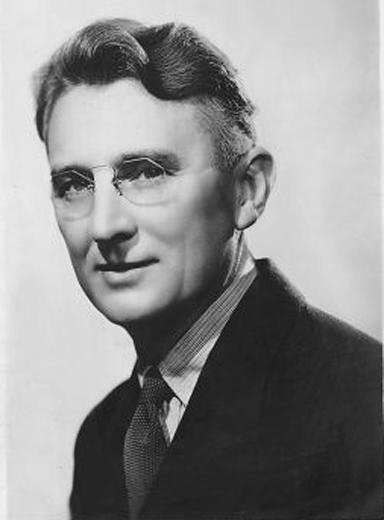
From a Missouri Farm to a New York Classroom — How the Book Came to Be
Dale Carnegie (1888–1955) was born on a poor farm in Maryville, Missouri. Until about 1922 he spelled his surname Carnagey. After finishing the state teachers college in Warrensburg, he sold correspondence courses to ranchers and then sold bacon and soap for the meatpacking company Armour, building up strong sales. In 1912 he began teaching a public speaking course at the YMCA on 125th Street in New York, the beginning of what later became the Dale Carnegie Course.
The book grew out of that course. In 1934 Leon Shimkin of the publisher Simon & Schuster took Carnegie’s 14-week course and urged him to write a book. Carnegie revised a manuscript that a stenographer had taken down from his lectures and published it in 1936. A revised edition with updated examples and wording appeared in 1981, and in 2022 a new revised edition supervised by Carnegie’s daughter, Donna Dale Carnegie, was released; the publisher says it restores some of the original 1936 text. There are several Korean translations, and the Hyundae Jisung edition (translated by Lim Sang-hoon, 2019) is a complete, unabridged translation of the 1936 first edition.
Six Parts and Thirty Principles — What the Book Teaches
The 1936 first edition has six parts. The first four contain thirty principles: three fundamental techniques in handling people (don’t criticize, condemn or complain; give honest, sincere appreciation; arouse in the other person an eager want), six ways to make people like you (become genuinely interested in other people, smile, remember names, be a good listener, and more), twelve ways to win people to your way of thinking (avoid arguments, show respect for the other person’s opinions, admit your own mistakes quickly, see things from the other person’s point of view, and more), and nine ways a leader can change people without giving offense (begin with praise, ask questions instead of giving direct orders, praise even the slightest improvement, and more). The fifth part is about writing letters, and the sixth gives seven rules for a happier home life; both parts were dropped from the 1981 revised edition.
The sentence that best shows the spirit of the book is the one Carnegie himself calls a law: “Always make the other person feel important.” Early in the book he cites research done under the auspices of the Carnegie Foundation for the Advancement of Teaching, reporting that even in technical fields such as engineering, about 15 percent of financial success comes from technical knowledge and about 85 percent from skill in dealing with people. From the start, the book held up the way we treat people as the key to success.
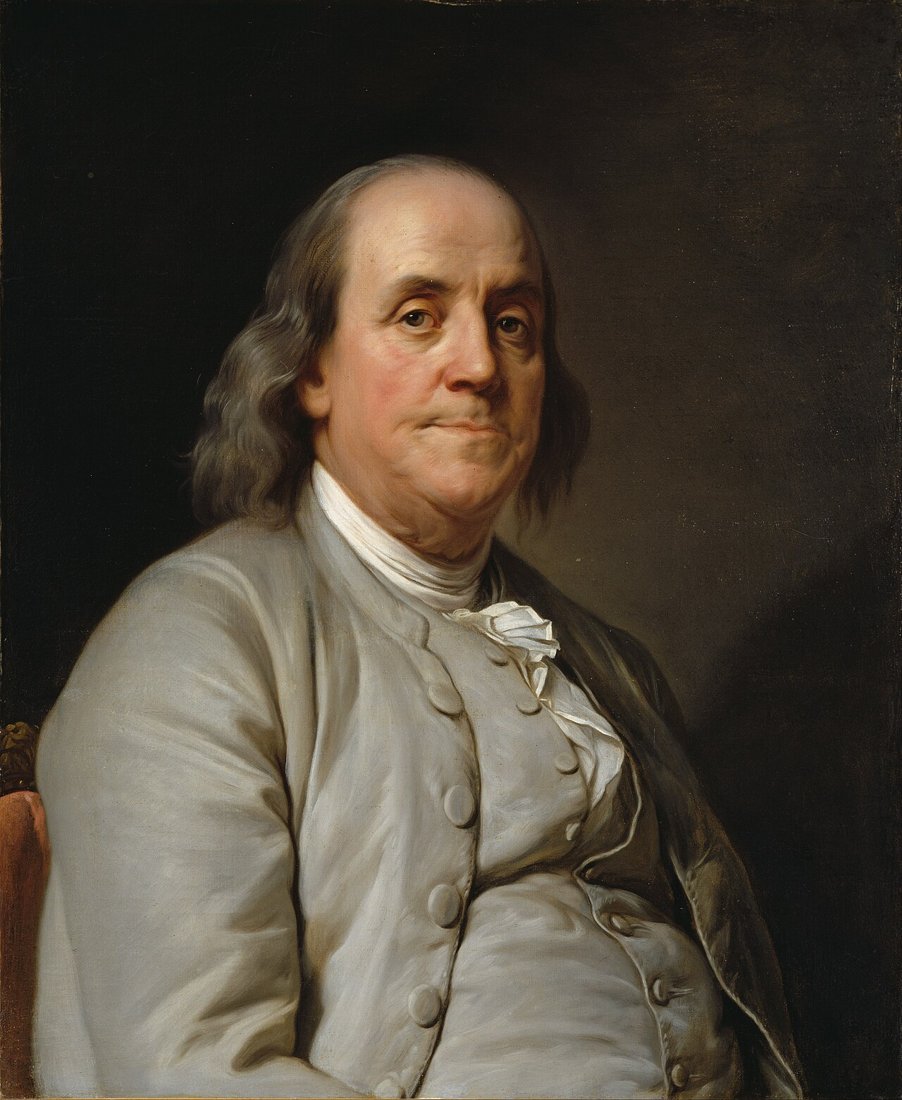
For each principle Carnegie adds the stories of real people. In the chapter on respecting the other person’s opinions, he quotes at length the rule that Benjamin Franklin, who as a young man was always contradicting others, set for himself. Franklin resolved “to forbear all direct contradiction to the sentiment of others.” Stories like this make the book easy to read and concrete even today.
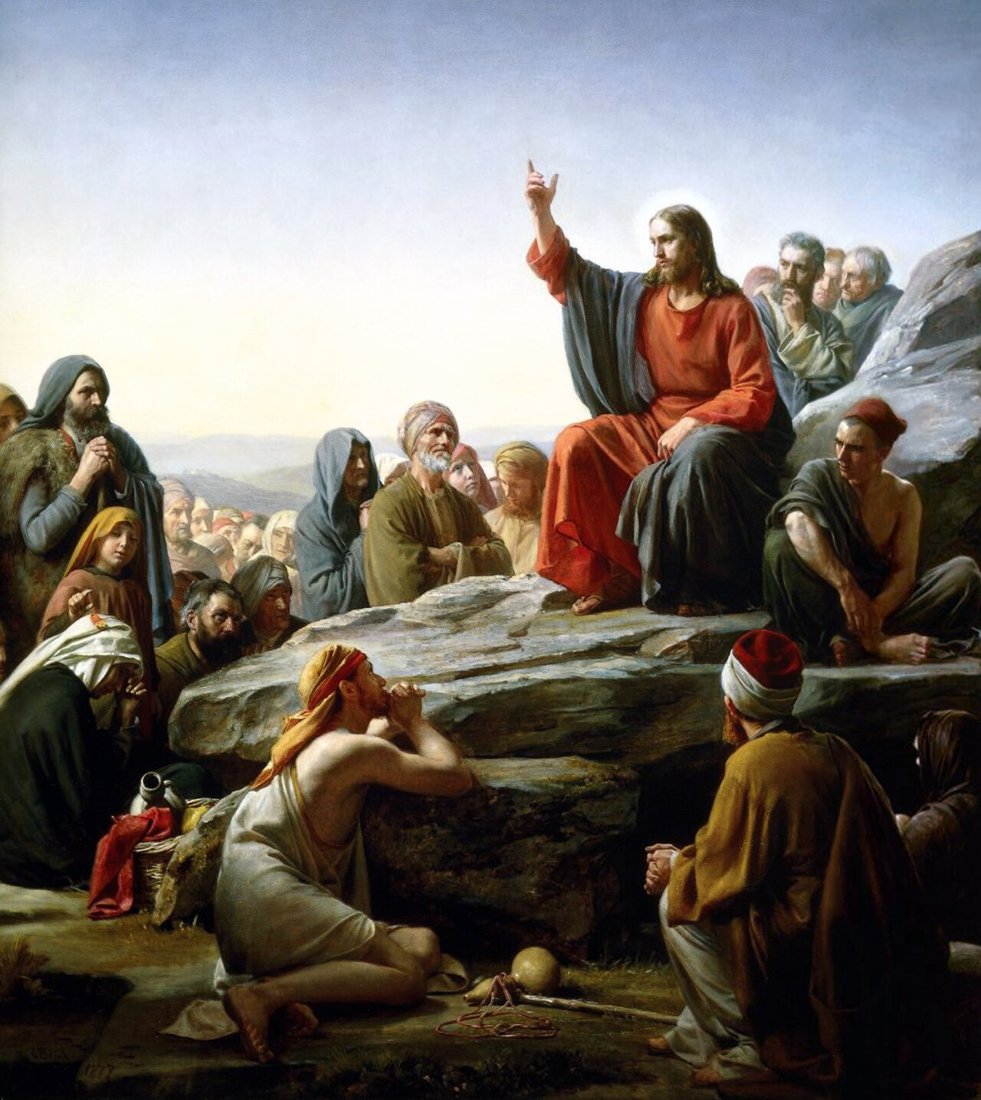
Scripture in the Book — Is the Golden Rule a Maxim Shared by Many Teachers?
Words of the Bible appear several times in Carnegie’s book. In the first chapter, on not criticizing others, he notes that one of Lincoln’s favorite quotations was Judge not, that ye be not judged
(Matthew 7:1, KJV). In the chapter on respecting the other person’s opinions, he says this is nothing new and cites the words of Jesus, Agree with thine adversary quickly
(Matthew 5:25, KJV).
The most striking passage comes in the chapter on making the other person feel important. Carnegie writes that long reflection on the rules of human relationships has produced one important precept: “It is not new. It is as old as history.” He then lists Zoroaster, Confucius, Lao-tse, Buddha and the sacred books of Hinduism as having taught it, says that Jesus summed it up in one thought, calls it “probably the most important rule in the world,” and quotes it: “Do unto others as you would have others do unto you.” Then he urges his readers, “So let’s obey the Golden Rule.”
Carnegie clearly valued these words. In the book, however, Jesus stands as one among several teachers of the same wisdom, and the Golden Rule serves as the conclusion of a chapter about meeting the other person’s desire for recognition. Reading where the Bible itself places these words brings out the difference.
Therefore, whatever you desire for men to do to you, you shall also do to them; for this is the law and the prophets. (Matthew 7:12, WEB)
Matthew 7:12 begins with Therefore. Just before it, Jesus said, how much more will your Father who is in heaven give good things to those who ask him!
(Matthew 7:11, WEB). The Golden Rule is the life of someone who knows the Father who gives good things first and who lets those good things flow on to a neighbor. Elsewhere Jesus summed up the law and the prophets this way. The first is the commandment to love God, and A second likewise is this, You shall love your neighbor as yourself
(Matthew 22:39, WEB). The whole law and the prophets depend on these two commandments
(Matthew 22:40, WEB). In the Bible the Golden Rule is not first a tip for getting along with people; it is the commandment to love our neighbor, rooted in love for God.
Shared Wisdom — Relational Principles the Bible Taught First
Once we have discerned the roots, we can receive with gratitude the fact that many of Carnegie’s principles overlap with the teaching of the Bible. His advice that the only way to get the best of an argument is to avoid it meets the warning of Proverbs that harsh words stir up anger.
A gentle answer turns away wrath, but a harsh word stirs up anger. (Proverbs 15:1, WEB)
Yet Proverbs does not tell us not to answer; it tells us to answer gently. Its weight falls less on a technique for avoiding conflict than on governing the temperature of our words.
Beside the principle of sincere appreciation stands the word Pleasant words are a honeycomb, sweet to the soul, and health to the bones
(Proverbs 16:24, WEB). The advice to be genuinely interested in others and to listen well stands side by side with the exhortation of Paul.
doing nothing through rivalry or through conceit, but in humility, each counting others better than himself; each of you not just looking to his own things, but each of you also to the things of others. (Philippians 2:3-4, WEB)
So there are people in the church who use this book’s principles. A leadership column from Disciple-Making Ministries International presented Carnegie’s principle of not criticizing as a virtue a community leader should keep. Robert Munson, on his blog of reflections from mission work, cites the old maxim Carnegie quotes in the book, “A man convinced against his will Is of the same opinion still,” to point out that evangelism is not a matter of defeating people with words. Jim Schuster of Catholic Revival Ministries also read the second part of the book as a guide to welcoming people warmly and applied it to evangelization. On the posture of listening, see also Listening Before Advice in Discipleship.

Where the Paths Part — For Whose Benefit?
The same smile, the same listening, the same praise can become love or manipulation depending on what it is for. Carnegie knew this danger. He describes the difference between appreciation and flattery this way: “One comes from the heart out; the other from the teeth out. One is unselfish; the other selfish.”
Yet when we look at the fruit the book promises, a question remains. At the very front of the 1936 first edition stood a list of twelve things the book would do for the reader, and among them were promises to increase your popularity, to help you win new clients and to increase your earning power. The book commends sincerity, yet it promises its fruit as results such as popularity, clients and income. There is a tension between principles that commend unselfish appreciation and a framework that promises benefits coming back to me. That is why readers easily take these principles as means to results. The Bible measures love by a different rule.
Love is patient and is kind. Love doesn’t envy. Love doesn’t brag, is not proud, doesn’t behave itself inappropriately, doesn’t seek its own way, is not provoked, takes no account of evil (1 Corinthians 13:4-5, WEB)
Love does not seek its own way, that is, its own advantage. If we use Carnegie’s techniques as a means to our own gain, they are not love, however polished they may be. Proverbs warns, A man who flatters his neighbor spreads a net for his feet
(Proverbs 29:5, WEB). Paul says that in preaching the gospel he did not seek to please people: For neither were we at any time found using words of flattery, as you know, nor a cloak of covetousness (God is witness)
(1 Thessalonians 2:5, WEB). And he puts it bluntly: if I were still pleasing men, I wouldn’t be a servant of Christ
(Galatians 1:10, WEB).
The way of Jesus was not always the same as the way of winning people’s favor. In John 6, when many disciples found his words hard and went away, Jesus did not soften his words but asked the twelve, You don’t also want to go away, do you?
(John 6:67, WEB). The love the Bible teaches is not a kindness that hides the truth. Paul urges that, speaking truth in love, we may grow up in all things into him who is the head, Christ
(Ephesians 4:15, WEB).

Who Turns People’s Hearts?
Let us return to the second half of the title, how to influence people. Influence is often thought of as the power to get more people to do what I want. Used that way, influence becomes control rather than love. The Bible places the sovereignty that turns human hearts with God.
The king’s heart is in Yahweh’s hand like the watercourses. He turns it wherever he desires. (Proverbs 21:1, WEB)
Even the heart of a nation’s king is in the hand of God. Jesus said, No one can come to me unless the Father who sent me draws him
(John 6:44, WEB). As Munson writes, salvation is not something we draw out of people with words; it is the work of the Holy Spirit. This does not mean that influencing our neighbors for good by our words and attitudes is useless. But we cannot take control, by technique, of changing a person’s heart and bringing about salvation. A Christian’s persuasion and service should be an expression of love that respects our neighbor before the God who turns hearts. Carnegie’s advice is useful in the same way: not as a weapon for winning people but as courtesy that respects our neighbor.

From the Standpoint of the Great Commission — Love for One Another Becomes a Witness
The mission TGC holds to is the Great Commission: Go and make disciples of all nations
(Matthew 28:19, WEB). Making disciples happens between people. Greeting first, remembering names, listening to the end and refusing to condemn rashly are attitudes that people who hear the gospel can actually see. Jesus commanded his disciples to love one another and said, By this everyone will know that you are my disciples, if you have love for one another
(John 13:35, WEB). Peter urges us to answer anyone who asks the reason for our hope with humility and fear
(1 Peter 3:15, WEB).
But we must not reverse the order. We are not kind in order to manage people as targets of evangelism; we are kind because Christ first loved us. Technique is beautiful when it is the fruit of love and empty when it takes the place of love. In discipleship, Carnegie’s principles are more useful when read as a mirror that shows how rude and self-centered we have been than as a formula for winning people.
Whom to Recommend It To, and How
How to Win Friends and Influence People is not a book of faith. But read with the Bible beside it, it becomes a practical mirror that reminds us how carelessly we have treated our neighbors. I recommend it to:
- Christians whose relationships at home, at church or at work often stall because of their tone and attitude
- those who lead small groups or share the gospel and want to learn concretely how to treat people
- those who need practice in reading self-help books with discernment through the eyes of Scripture
As you read, ask three questions.
- Does my heart, as I keep this principle, seek its own benefit, or does it love my neighbor (1 Corinthians 13:5)?
- Which words of the Bible overlap with this principle, and where do those words root it?
- Does my desire to pray for this person come before my desire to influence them (Proverbs 21:1)?
Read this way, Carnegie’s book can serve not to make us masters of getting ahead but to shape us into disciples who know how to love our neighbors a little more.
References
- How to Win Friends and Influence People — English Wikipedia (publication, sales, editions, structure of the first edition)
- Dale Carnegie — English Wikipedia (life)
- How to Win Friends and Influence People (unabridged translation of the first edition), translated by Lim Sang-hoon, Hyundae Jisung, 2019 — Aladin (in Korean)
- Dale Carnegie, How to Win Friends and Influence People, English text (revised edition) — Duke University course reading
- Robert Munson, Dale Carnegie and the Gospel — Missional Thoughts and Theology
- Jim Schuster, 5 Evangelization Tips from Dale Carnegie — Catholic Revival Ministries
- [Leadership] No. 843, The Leader Who Does Not Criticize — Disciple-Making Ministries International (in Korean)
- Matthew 7, Korean Revised Version text (quoted in the Korean edition) — YouVersion (bible.com)