
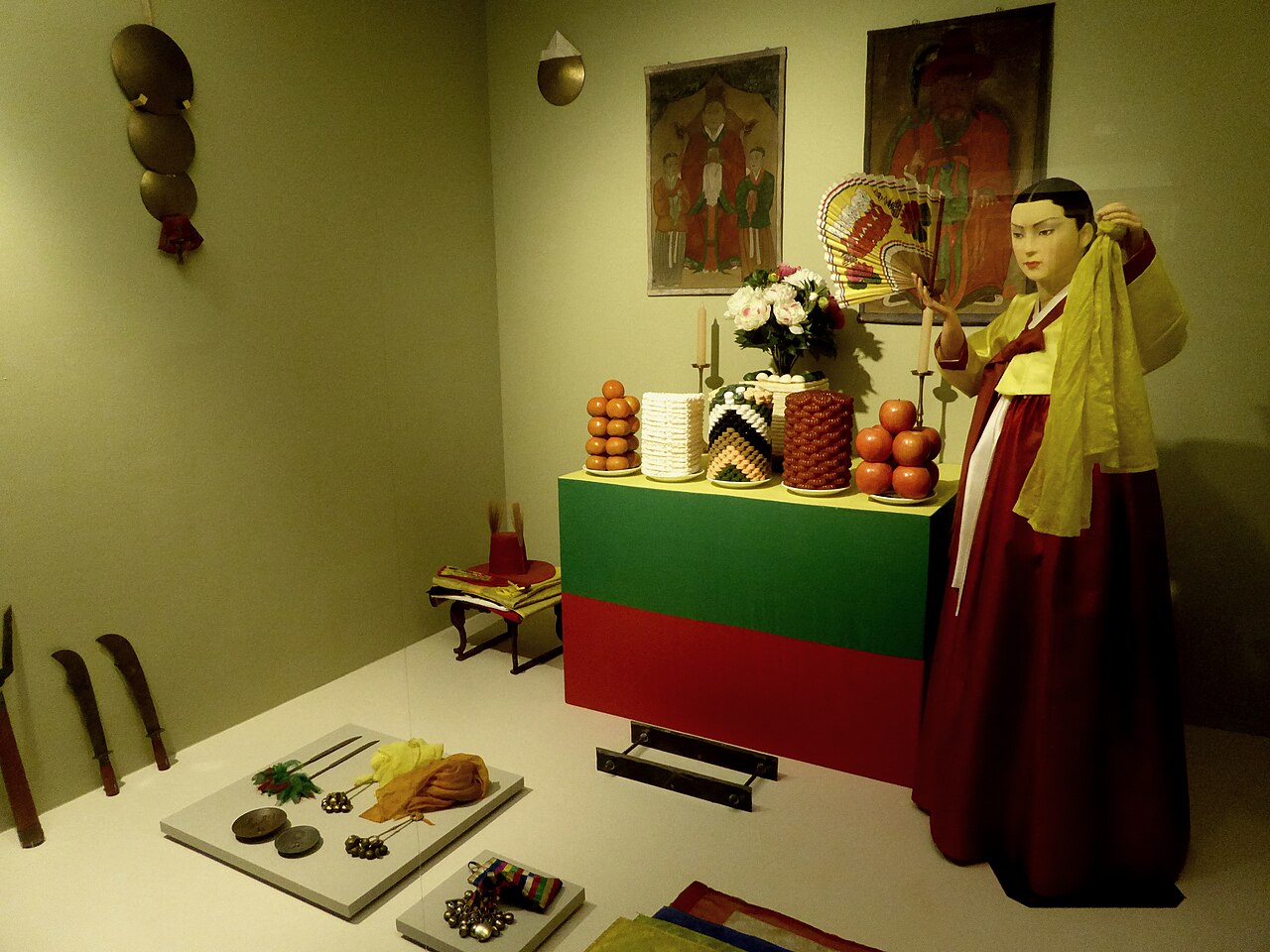
In March 2025, novelist Seong Hae-na’s short story collection Honmono (Changbi Publishers) was released. That summer, something unusual happened in Korean bookstores. Boosted by actor Park Jung-min’s recommendation and word of mouth, this collection with its unfamiliar title climbed the bestseller charts, and by September it had sold over 200,000 copies. That August it won the 43rd Sin Dong-yeop Literary Award, and the following April it was reissued in a hardcover limited edition to mark 400,000 copies sold. The word “honmono” (本物), borrowed from Japanese, means “the real thing, the genuine article.” Why did so many readers respond, right now, to a novel asking “what is real”? Let’s follow that question through the eyes of a Christian reader.
The Author and the Book
Seong Hae-na was born in 1994 and debuted in 2019 when her novella “Oz” won the Dong-a Ilbo New Year’s Literary Award. Honmono is her second story collection, containing seven stories including the title story “Honmono” and “Guilty Club: Touching the Tiger” (368 pages). For this collection, Seong received the 2024 Yi Hyo-seok Literary Award (Excellence Prize), the 2024–2025 Young Writer Award, and finally the 2025 Sin Dong-yeop Literary Award. The judging panel praised her “outstanding conception and distinctive energy in unfolding a panorama of diverse characters’ stories.”
The Story — Where the God Has Gone
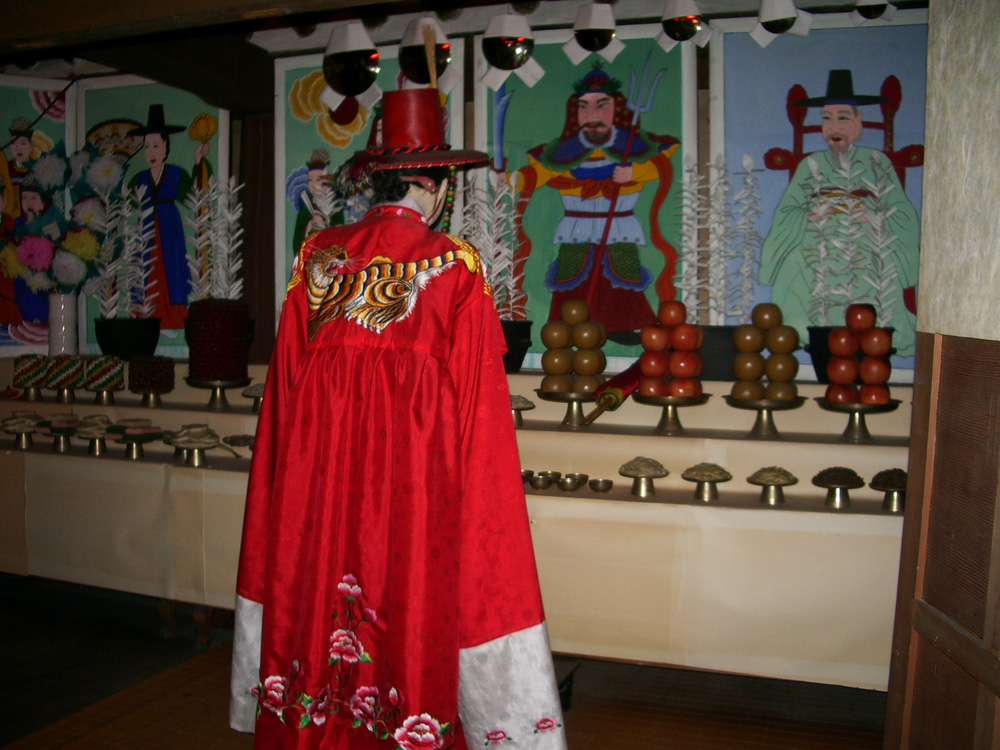
The narrator of the title story is Munsu, a male shaman (baksu) with thirty years of experience. One day he realizes that Jangsu Halmeom, the deity who has guided him all along, has left him. As if on cue, a woman in her twenties named Sinaegi moves in across the way, and claims that the deity came to her instead, saying Munsu had grown too old. For Munsu, who has believed his faith was “the real thing” for thirty years, this shakes the very ground he stands on. Then, to make matters worse, even the National Assembly member who had long been his steady client turns to Sinaegi. Munsu bursts into the ritual Sinaegi is now leading for that same client and, in a violent trance, overturns it. Yet the novel does not paint this as a satisfying victory. According to several reviews, Munsu ends up released from the very question of “who is real” — arriving at a strange sense of freedom in which honor, youth, and even the distinction between real and fake, no longer matter to him. A review in the Kyunghyang Shinmun described the story as wrestling with “a world that can be called neither real nor fake,” a concern that runs through all seven stories in the collection.
The Questions This Novel Raises
Honmono holds its readers by leaving questions unanswered rather than offering resolutions. Broadly, three stand out.
First, who decides what is real? What determines whether Munsu’s faith was real or fake is neither his thirty years nor the sincerity of his belief — it is simply the fact that the deity left him for a younger body. The ground of his identity rests entirely on the choice of an external, fickle spiritual being.
Second, the clash of generations and tradition. A review in the Maeil Shinmun noted that the collection also captures generational conflict and the clash between tradition and modernity. The confrontation between the aging shaman and the young Sinaegi is not merely a story about the world of shamanism — it is also a portrait of our own age, where the old and the new fight over who holds “authenticity.”
Third, ontological anxiety. Literary critic Shin Seung-min, writing in the Hankyung, analyzed Seong’s prose as using a technique of “defamiliarization” with meticulous description that unsettles the foundations of relationships and beliefs readers had taken for granted. Through the subject of shamanism, the novel touches a question every reader eventually faces: is what I believe, the ground I stand on, actually real?
Through Christian Eyes — A Different Scale
Honmono is a novel of clear literary achievement. Its prose probes character psychology with great care, and its construction lets the strangeness of its world remain strange while still holding the reader to the end — which makes it easy to understand why it reached so many readers. Still, a Christian reader needs to bring out a different scale when facing the subject matter itself: shamanism.
Scripture does not dismiss shamanistic practice as mere superstition to be waved away. It addresses it very specifically, and very firmly.
The English Scripture quotations below are from the World English Bible and the King James Version (both public domain).
“There shall not be found with you anyone who makes his son or his daughter to pass through the fire, one who uses divination, one who practices sorcery, or an enchanter, or a sorcerer, or a charmer, or a consulter with a familiar spirit, or a wizard, or a necromancer. For whoever does these things is an abomination to Yahweh…” (Deuteronomy 18:10-12, WEB)
What’s striking is that right after listing these practices, God offers an alternative (Deuteronomy 18:15-19) — not a foreign diviner, but a promise to raise up “a prophet” of His own for His people to listen to. In other words, the biblical logic is not “shamanism is bad, so believe in nothing” but rather “instead of a false medium, listen to the true word.” The line between real and fake is drawn not by the intensity or endurance of a spiritual experience, but by whether it was actually sent by God.
This standard continues in the New Testament. Jesus taught how to discern false prophets:
“Beware of false prophets, who come to you in sheep’s clothing, but inwardly are ravening wolves. By their fruits you will know them…” (Matthew 7:15-16, WEB)
Jesus goes further, warning that even those who claim to have “cast out demons and done many mighty works” in his name may not be true disciples (Matthew 7:21-23, WEB). Spiritual power or mystical experience, on its own, proves nothing about authenticity. First John likewise teaches, “don’t believe every spirit, but test the spirits, whether they are of God” (1 John 4:1, WEB). In Honmono, Munsu and Sinaegi fight over “who is real” based on which of them the deity possesses — but Scripture changes the scale of that question entirely. What makes something real is not whose side the spirit stands on, but whom that spirit points to.
Where Is the “Real Thing,” After All?
Jesus answered this question directly, without hedging:
“Jesus saith unto him, I am the way, the truth, and the life: no man cometh unto the Father, but by me.” (John 14:6, KJV)
In the world of Honmono, what counts as “real” is always shifting. Today’s real thing is denounced as fake tomorrow, and the standard hangs on a deity’s whim. But the truth Jesus spoke of is different. It is not a passing spiritual experience but an unchanging person — Christ himself is the way and the truth. This is the answer Scripture gives to the question the novel raises. There is no need to wrestle a lifetime over what is real and what is fake — it is enough to know the One who is, from the start, the truth.
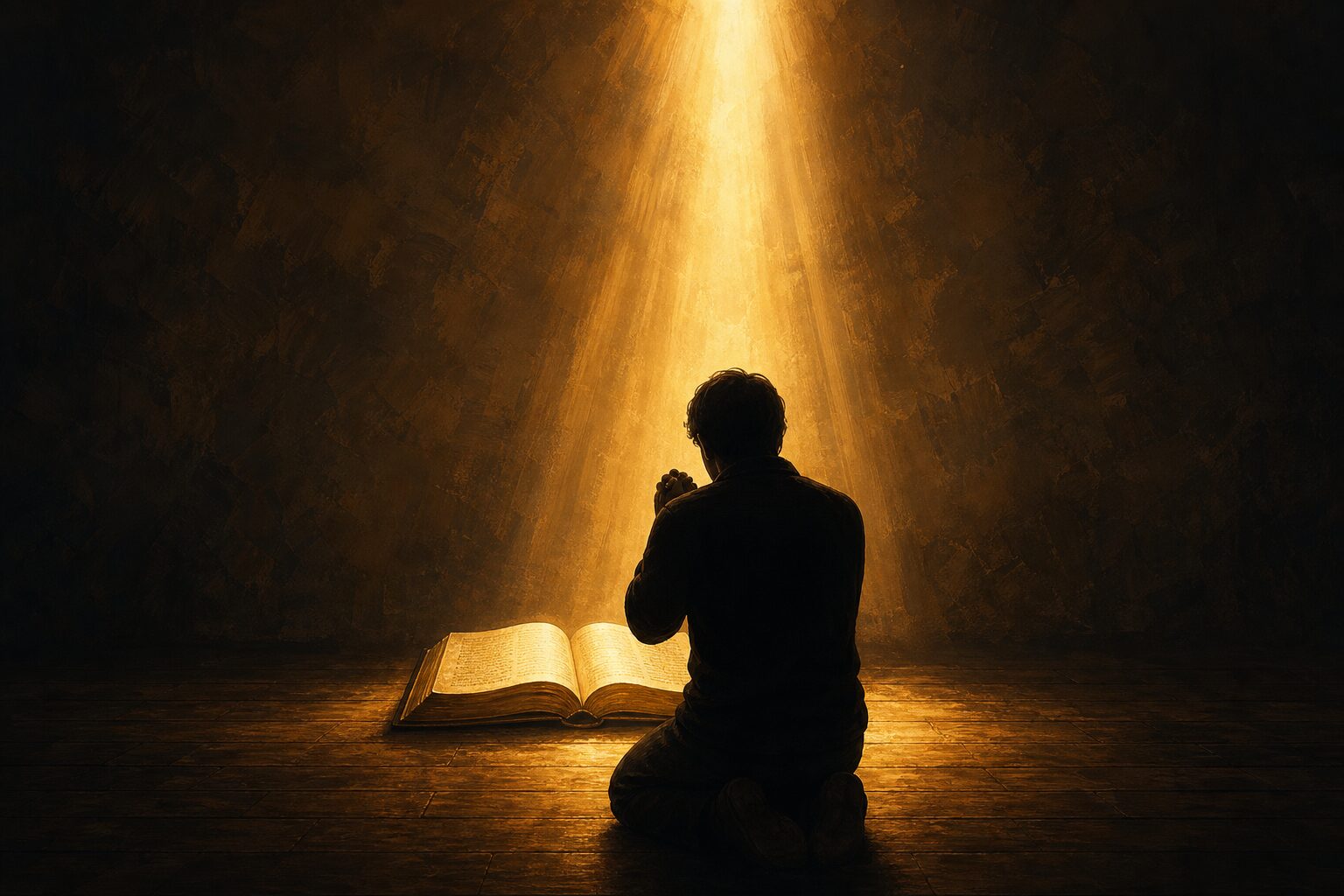
Recommended Readers, and Our Own Place
Honmono is a well-written novel, and one worth recommending to Christian readers too. Rather than simply consuming the world of shamanism as an exotic or romanticized subject, readers who also wrestle with the spiritual questions behind it will find a deeper reading experience. The fact that it has sold over 400,000 copies shows that people in this age are still drawn to this ancient form of belief — and, at the same time, still thirsty for an answer to the question, “what is real?” This is exactly why the Great Commission (Matthew 28:18-20) remains urgent. In a society where shamanistic belief has not disappeared, proclaiming Christ, who is the true truth, is not a task of the past — it is a task for today.
At the same time, this novel also turns its question toward us. Just as Munsu was shaken, our own faith can be shaken too. But the question to ask when we are shaken is not “is my faith strong, is it old enough,” but “is the One I believe in truly Him.” That is the very heart of discipleship — not the intensity of feeling or experience, but holding fast to the truth that stands firm on the Word.
By the end of the novel, Munsu does not prove whether he is real or fake — instead, he arrives at a strange release, letting go of the question itself. But that release is not built on any solid truth; it is closer to a weary resignation. We already have something far more solid than that. The One who is the way, the truth, and the life is calling us. Following that voice — that is what is real.
References
- Aladin — bibliographic details for Honmono (in Korean)
- Changbi Publishers — book page for Honmono (in Korean)
- Kyobo Book Centre — author profile, Seong Hae-na (in Korean)
- Kyunghyang Shinmun — “Is the shaman the god has left behind — fake? What is real?” (in Korean)
- Maeil Shinmun — review of Honmono (in Korean)
- Hankyung — analysis of Seong Hae-na’s prose style and Honmono (in Korean)
- Newsis — 43rd Sin Dong-yeop Literary Award announcement (in Korean)
- Asia Economy — sales and award summary for Honmono (in Korean)
- Nocut News — hardcover limited edition marking 400,000 copies sold (in Korean)