
In Genesis 6, God commanded Noah to build an ark and foretold that he would judge the whole earth with a flood. Chapter 7 is where that warning actually comes to pass. Yet this chapter of judgment is at the same time a chapter of salvation. The very water that swallows the world lifts the ark off the ground. Genesis 7 is the place where judgment and salvation part ways on a single tide.
And the LORD said unto Noah, Come thou and all thy house into the ark; for thee have I seen righteous before me in this generation. (Genesis 7:1, KJV)
The English Scripture quotations here are from the King James Version and the World English Bible (both public domain).
The flood account fixes its focus less on the judgment outside the ark than on the salvation inside it. Even as the text records in detail how the waters rose, all of that narration bends toward one sentence it saves for the end— “Noah only remained alive, and they that were with him in the ark” (Genesis 7:23). When we read this chapter in the light of Scripture’s own other passages, we see that Noah’s flood is not merely an ancient disaster but a picture of the gospel addressed to us today.
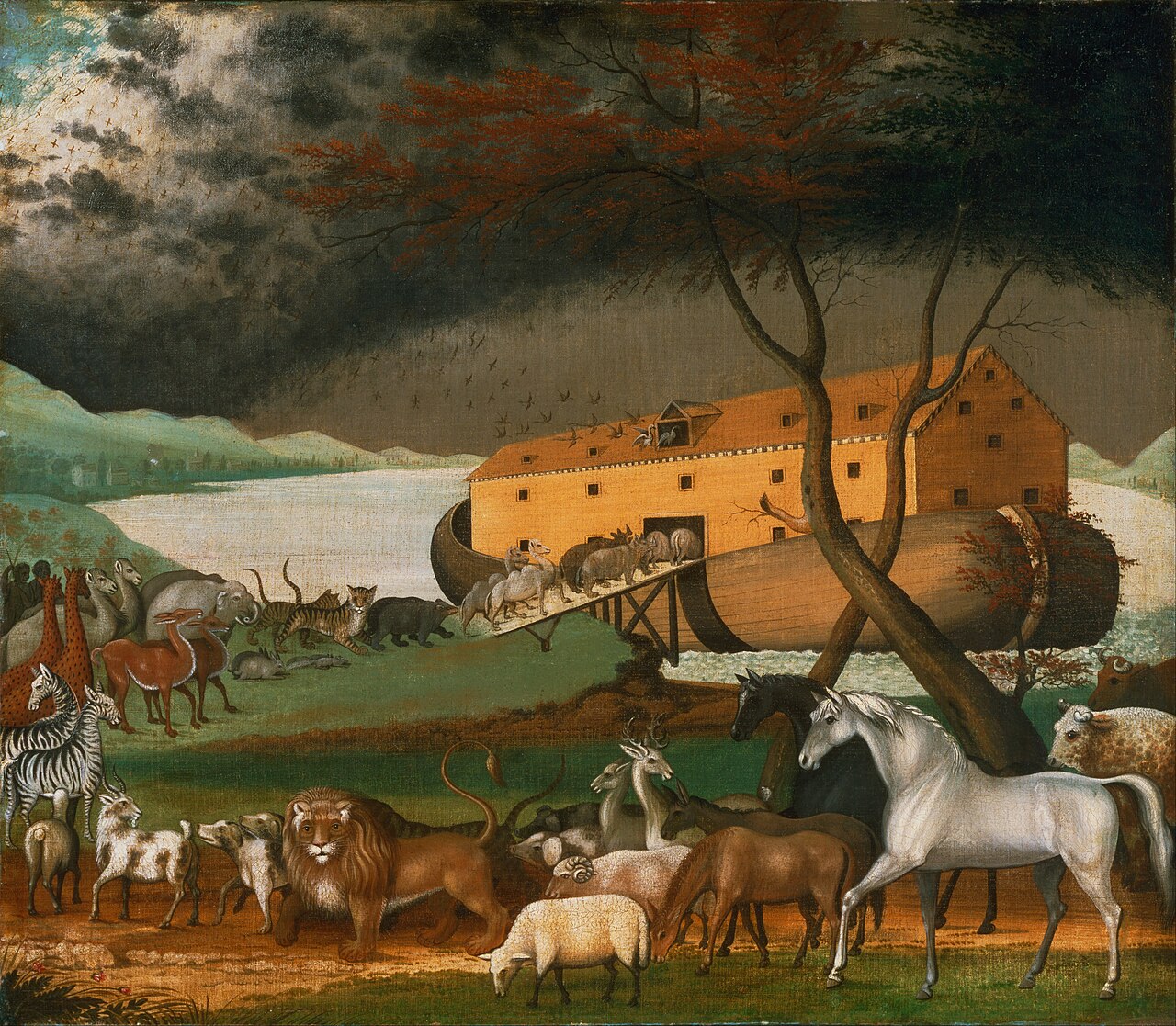
“Come Thou and All Thy House into the Ark” — Salvation by a Gracious Call
God called Noah into the ark, saying, “thee have I seen righteous before me in this generation” (7:1). Did Noah’s righteousness, then, save him? Scripture makes clear where that righteousness came from in the very chapter before. Just before announcing the flood, the text says:
But Noah found grace in the eyes of the LORD. (Genesis 6:8, KJV)
The verdict that Noah was “a just man and perfect in his generations” (Genesis 6:9) comes after the words “Noah found grace in the eyes of the LORD” (Genesis 6:8). Grace comes first, and the righteousness is rooted in that grace. Hebrews explains, from Scripture, that Noah’s righteousness was the righteousness of faith.
By faith Noah, being warned of God of things not seen as yet, moved with fear, prepared an ark to the saving of his house; by the which he condemned the world, and became heir of the righteousness which is by faith. (Hebrews 11:7, KJV)
On dry ground where not a drop of rain had yet fallen, Noah believed the warning of an unseen judgment and built the ark. His righteousness was not a moral achievement piled up by his own merit but “the righteousness which is by faith.” God first called in grace, and Noah took hold of that call by faith. Salvation always runs in this order—we did not climb up to find God; God first called us in grace.
“Noah Did According unto All That the LORD Commanded” — Faith Shown in Obedience
Faith does not stop at inner conviction; it moves the body in obedience. In Genesis 7 the same phrase returns like a refrain.
Noah did everything that Yahweh commanded him. (Genesis 7:5, WEB)
This sentence had already sounded once at the end of the previous chapter— “Thus did Noah; according to all that God commanded him, so did he” (Genesis 6:22). And within chapter 7 it repeats: the animals went in “as God had commanded Noah” (7:9), and the ark was sealed “as God had commanded him” (7:16). Scripture does not repeat this by accident. Noah’s faith was not an idea but concrete obedience—building the ark, gathering the animals, entering on the appointed day. It is exactly as Hebrews says, “moved with fear, prepared an ark” (Hebrews 11:7). True faith proves itself by obedience.
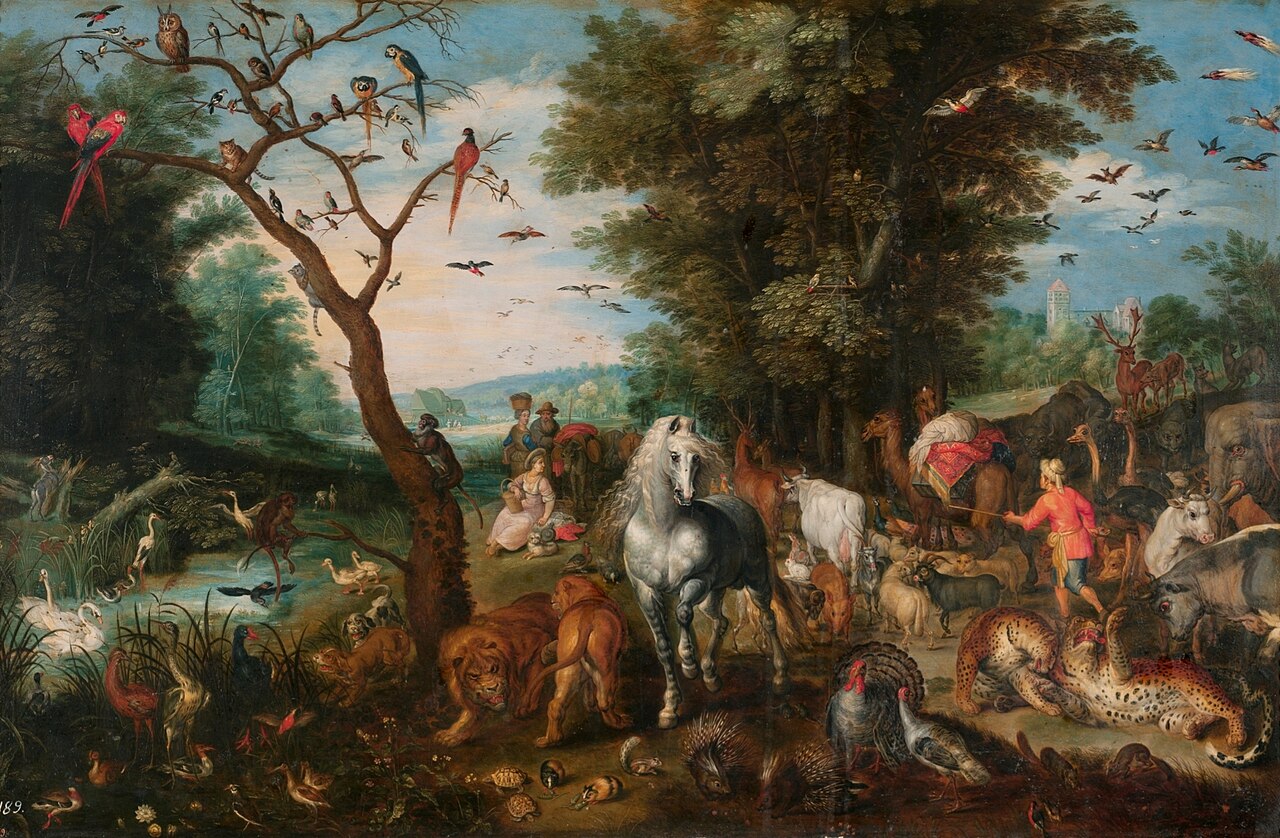
The Fountains of the Great Deep and the Windows of Heaven — the Scale of Judgment
The flood was not merely a heavy rain. The text says the waters poured from two directions.
In the six hundredth year of Noah’s life, in the second month, the seventeenth day of the month, the same day were all the fountains of the great deep broken up, and the windows of heaven were opened. (Genesis 7:11, KJV)
Setting this scene beside the creation account reveals the depth of the judgment. On the second day of creation, God divided the waters to make a place for the world to live.
God made the expanse, and divided the waters which were under the expanse from the waters which were above the expanse; and it was so. (Genesis 1:7, WEB)
The “waters above” and the “waters below” that God had divided and restrained at creation now burst out again at the flood as “the windows of heaven” and “the fountains of the great deep” (7:11). When God withdrew the boundary he had held in place for life, the waters covered the world like the chaos before creation. So it is written that “all the high hills, that were under the whole heaven, were covered” (7:19), and “Fifteen cubits upward did the waters prevail; and the mountains were covered” (7:20). Second Peter sums up this event: “the world that then was, being overflowed with water, perished” (2 Peter 3:6). God’s judgment on sin is neither partial nor merely formal.
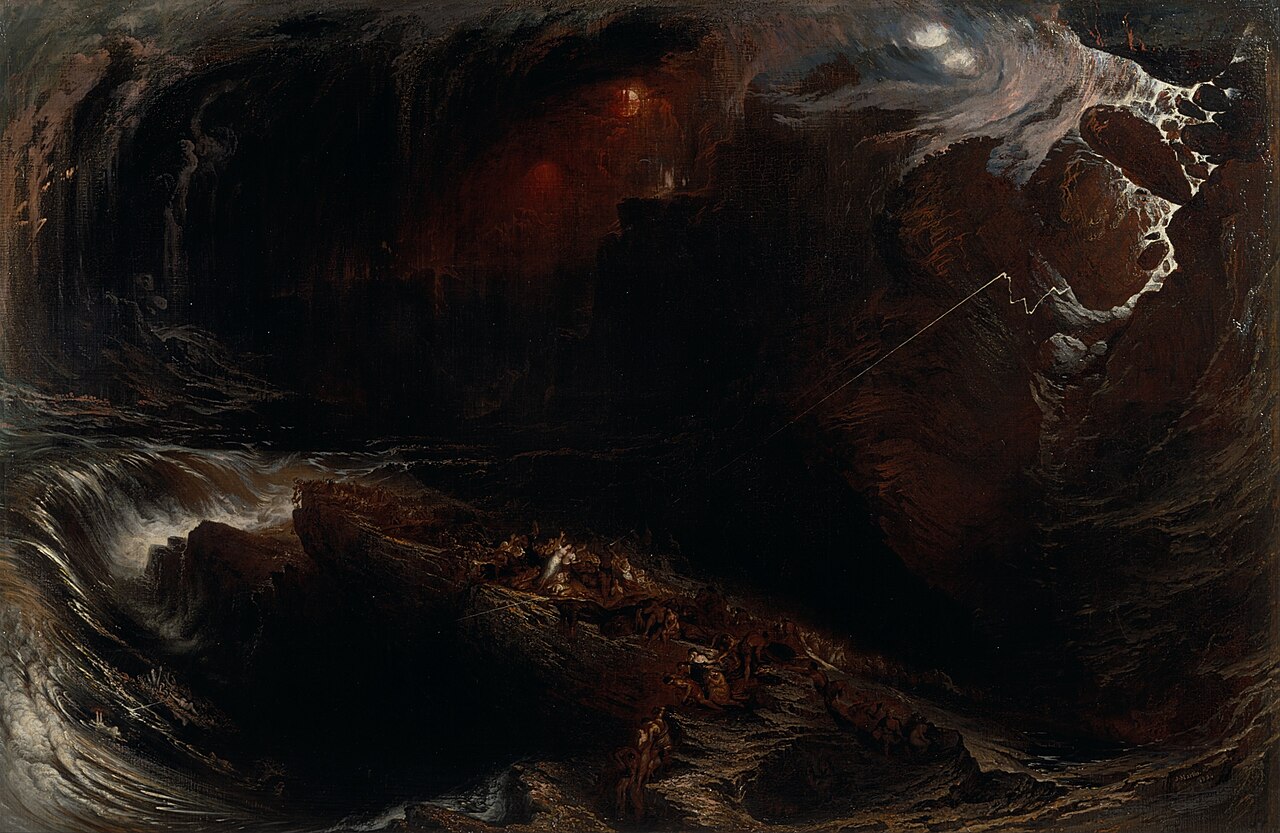
“The LORD Shut Him In” — Salvation Is in God’s Hand
Just before the waters lift the ark, the text leaves a small but decisive sentence.
And they that went in, went in male and female of all flesh, as God had commanded him: and the LORD shut him in. (Genesis 7:16, KJV)
The one who shut the door of the ark was not Noah but the LORD. Noah entered while God waited patiently in the days of Noah (1 Peter 3:20), and it was God who closed the door at last and secured his safety. The safety of salvation does not rest on the grip of the one inside the ark. Jesus spoke of the safety of his sheep in the same way.
And I give unto them eternal life; and they shall never perish, neither shall any man pluck them out of my hand. (John 10:28, KJV)
The same hand that shut Noah inside the ark holds those who belong to Christ today. The one who keeps us within salvation is not ourselves but the God who shut the door.
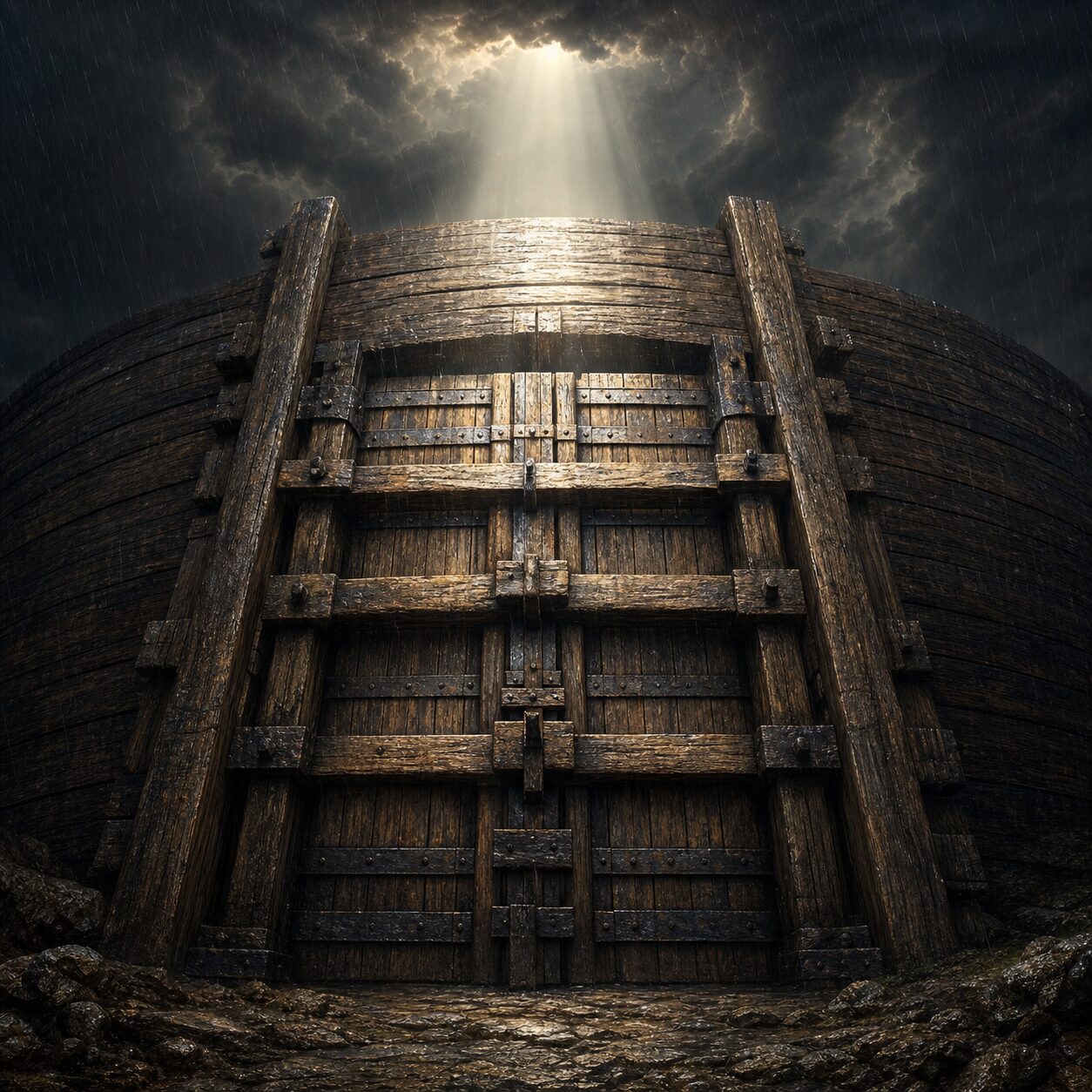
Only Noah and Those with Him in the Ark Remained — Salvation Through Water
After the waters had swallowed everything, the text records the survivors like this.
And every living substance was destroyed which was upon the face of the ground, both man, and cattle, and the creeping things, and the fowl of the heaven; and they were destroyed from the earth: and Noah only remained alive, and they that were with him in the ark. (Genesis 7:23, KJV)
Amid the judgment of the whole world, what remained was only a few people inside the ark. First Peter gives the number— “eight souls” (1 Peter 3:20). The judgment was wide and the door of salvation was narrow, yet the one who entered that narrow ark was kept perfectly safe. Second Peter calls Noah “a preacher of righteousness” (2 Peter 2:5). Because Noah knew the coming judgment, he did not keep silent. Whoever knows that there is only one ark of salvation cannot help but tell it.
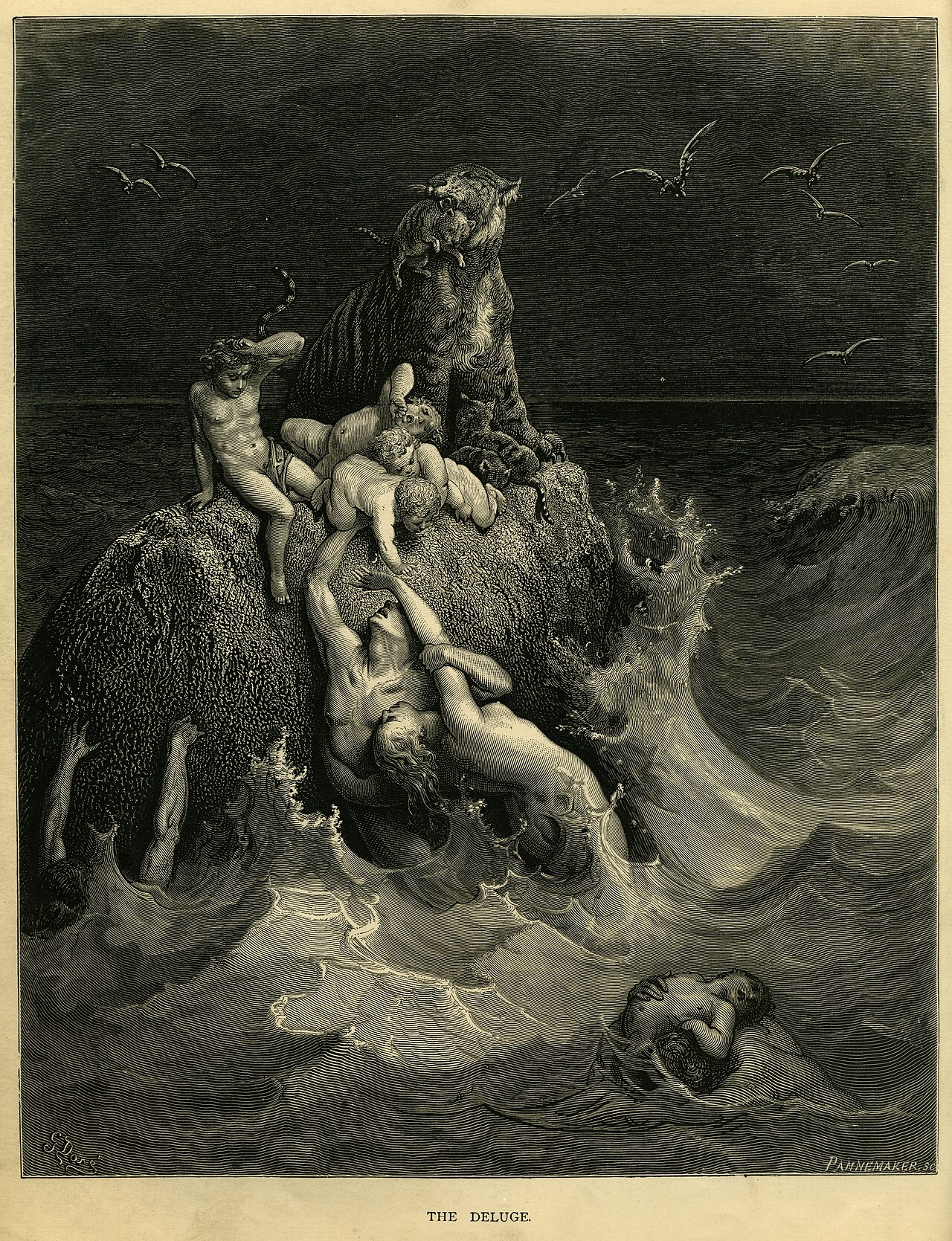
What the Flood Means in the Whole of Scripture — Baptism and the Final Judgment
To read Noah’s flood only as an old story is to miss the weight Scripture gives it. Scripture ties the flood to today in two directions. First, the water the ark passed through is a picture of baptism.
This is a symbol of baptism, which now saves you—not the putting away of the filth of the flesh, but the answer of a good conscience toward God, through the resurrection of Jesus Christ. (1 Peter 3:21, WEB)
Just as the flood waters judged the old world while lifting the ark, baptism points to the death of the old self and new life in Christ. This connection is not a theologian’s speculation but Scripture’s own word. On the other hand, the flood is a foreshadowing of the final judgment that has not yet come.
But as the days of Noe were, so shall also the coming of the Son of man be. (Matthew 24:37, KJV)
Jesus said that just as people were “eating and drinking, marrying and giving in marriage, until the day that Noe entered into the ark, And knew not until the flood came, and took them all away,” so also will be the coming of the Son of Man (Matthew 24:38-39; Luke 17:26-27). Second Peter makes the contrast sharper—the world then perished by water, but “the heavens that now exist, and the earth, by the same word have been stored up for fire, being reserved against the day of judgment” (2 Peter 3:7). Noah’s flood is a sign carved into history that the final judgment, which must surely come, is no empty word.
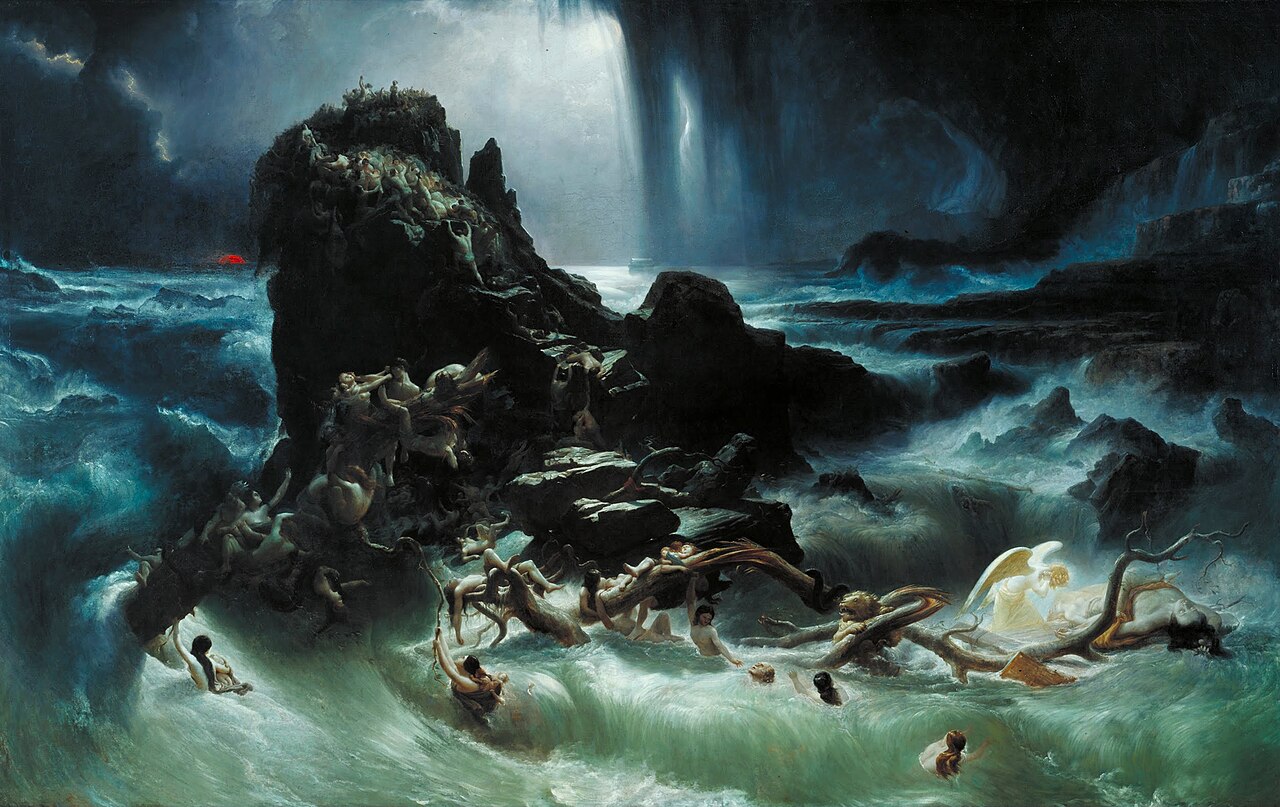
For Us Today — Into Christ, the True Ark
Genesis 7 sets us before one question. When the waters of judgment rise, where are you? Scripture says the only safe place was inside the ark. And Scripture also makes clear what that ark points to—just as the water that carried people through the flood “is a symbol of baptism” (1 Peter 3:21), the true ark that rescues us from judgment is the crucified and risen Christ. Salvation is not found in living a little more decently outside the ark, but in entering into the ark.
The way to live like Noah can be summed up in three things. First, to trust the God who calls in grace, by faith. Noah’s righteousness was the righteousness of faith (Hebrews 11:7). Second, to live out that faith in obedience—Noah “did everything that Yahweh commanded him” (7:5). Third, as one who knows the judgment, to proclaim it. Noah was “a preacher of righteousness” (2 Peter 2:5). If the final judgment is real and the ark of salvation is Christ alone, then telling that news to the one person beside us is a love that cannot be postponed. This is where Noah’s flood meets the Great Commission today (Matthew 28:19-20).
God swore to Noah that he would never again destroy the earth with a flood, and he reaffirmed that faithfulness through Isaiah— “as I have sworn that the waters of Noah will no more go over the earth” (Isaiah 54:9). The God who judges is also the God who keeps his promises. That same God still holds the door of the ark open today and calls us. “Come thou and all thy house into the ark” (Genesis 7:1).
The English Scripture quotations are from the King James Version and the World English Bible (both public domain). The Korean edition of this article quotes the public-domain Korean Revised Version (개역한글, 1961).
References
- “Is the Genesis flood account global or local?”, GotQuestions (Korean)
- “Questions about Noah’s Ark”, GotQuestions (Korean)
- “Does 1 Peter 3:21 teach that baptism is necessary for salvation?”, GotQuestions
- “The coming of the Son of Man will be as it was in the days of Noah (Matthew 24:37)”, GotQuestions
- “Genesis 7 — Resources”, Ligonier Ministries
- “Genesis 7 (The Great Flood)”, Bible Hub