
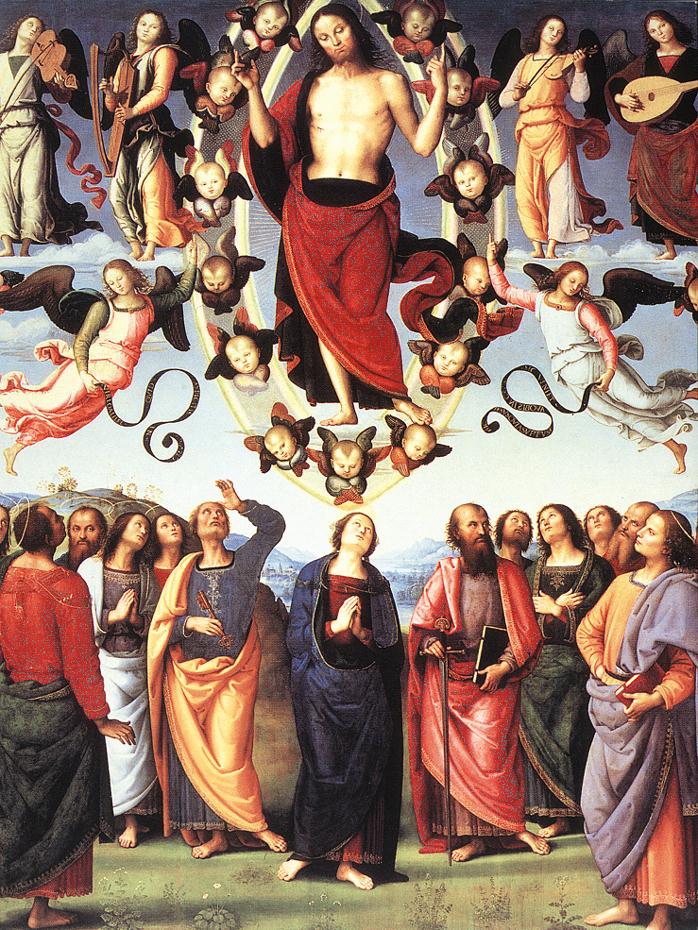
After his resurrection, Jesus called his disciples to a mountain and left them a final command—the words we call the “Great Commission.”
And Jesus came and spake unto them, saying, All power is given unto me in heaven and in earth. Go ye therefore, and teach all nations, baptizing them in the name of the Father, and of the Son, and of the Holy Ghost: teaching them to observe all things whatsoever I have commanded you: and, lo, I am with you alway, even unto the end of the world. Amen. (Matthew 28:18-20, KJV)
Scripture quotations here are from the King James Version and the World English Bible (both public domain).
Three astonishing declarations overlap in this short command. Jesus holds “all power…in heaven and in earth,” his command reaches “all nations,” and he is “with you alway, even unto the end of the world.” Why does he hold such authority? Why all nations, not one people? How is he always with us? The answer lies in what Jesus did just before giving the Commission: the new covenant he sealed with his own blood. The Great Commission is not a duty dropped from the sky, but a tide of the new covenant overflowing into the nations.
The New Covenant Jesus Sealed with His Blood
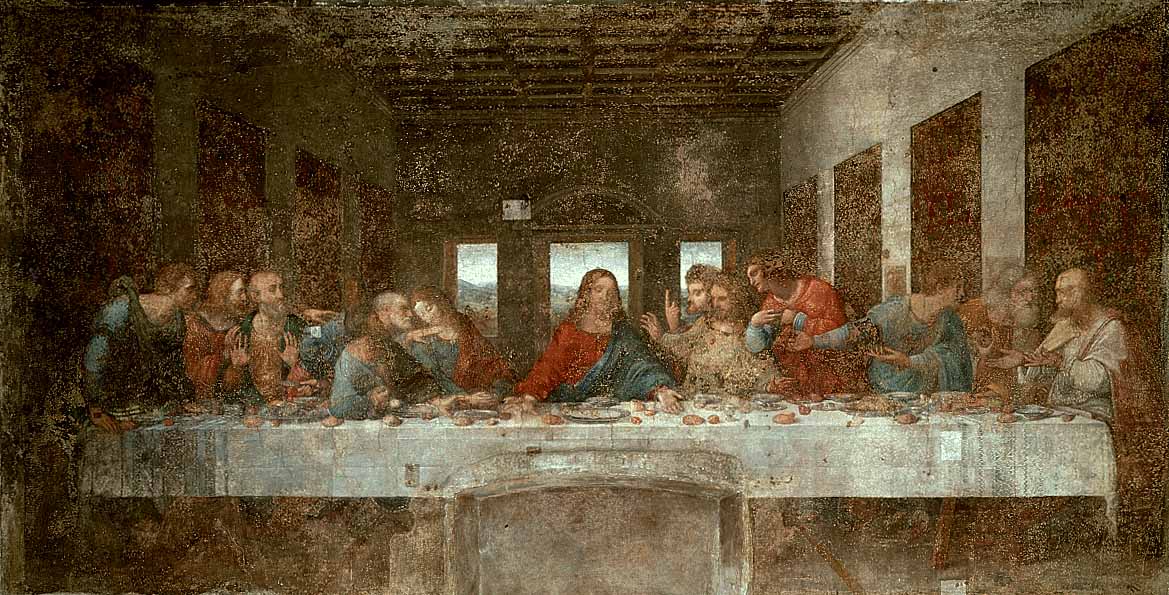
On the night before he took up the cross, Jesus sat at a final table with his disciples. Lifting the cup, he said:
This cup is the new covenant in my blood, which is poured out for you. (Luke 22:20, WEB)
“New covenant” was not a phrase Jesus coined on the spot. Centuries earlier, God had promised it through Jeremiah.
“But this is the covenant that I will make with the house of Israel after those days,” says Yahweh: “I will put my law in their inward parts, and I will write it in their heart. I will be their God, and they shall be my people.” (Jeremiah 31:33, WEB)
The new covenant has three marks. The law is engraved not on tablets of stone but on the heart; the people come to know God intimately, for “they will all know me, from their least to their greatest”; and they receive the forgiveness of sins—”I will forgive their iniquity, and I will remember their sin no more” (Jeremiah 31:34, WEB). Jesus actually established this very covenant with his blood (1 Corinthians 11:25). That is why the letter to the Hebrews quotes Jeremiah 31 directly and calls Jesus “the mediator of the new covenant” (Hebrews 8:6-13; 9:15). This is Scripture interpreting Scripture—the Bible itself declaring that the old prophecy of a “new covenant” is fulfilled in Christ.
The New Covenant Gives a “New Heart”
The law of the old covenant was given from outside. Carved on stone, it stood facing a person. But the law of the new covenant grows from within. Ezekiel foretold that inner change:
I will also give you a new heart, and I will put a new spirit within you. I will take away the stony heart out of your flesh, and I will give you a heart of flesh. I will put my Spirit within you, and cause you to walk in my statutes. You will keep my ordinances and do them. (Ezekiel 36:26-27, WEB)
Here lies the secret of the Commission’s “teaching them to observe all things whatsoever I have commanded you.” The obedience of new-covenant people is not a rule-keeping wrung out by force. God replaces the hard, stony heart with a heart of flesh (Ezekiel 11:19-20), writes his law on that heart himself (Jeremiah 31:33), and places his Spirit within to enable the walking. So “teach them to observe” is not a regime of external rules imposed on people, but the work of helping one another discover and live out the will of God already written on the heart.

A Covenant for One People Opens to All Nations
Yet one question remains. Jeremiah’s new covenant is explicitly made with “the house of Israel and the house of Judah” (Jeremiah 31:31). How, then, does it widen to “all nations”? The answer is not a vague generalization that “the covenant was always for everyone.” Its root reaches back much further, to the promise given to Abraham.
All the families of the earth will be blessed through you. (Genesis 12:3, WEB)
When God called Abraham, he already had “all the families of the earth” in view. Paul says this promise was fulfilled in Christ—”that the blessing of Abraham might come on the Gentiles through Jesus Christ” (Galatians 3:14), so that Gentiles who belong to Christ have become “Abraham’s seed” (Gal 3:29), and the blood of Christ made Jew and Gentile “both one” (Ephesians 2:13-14; 3:6). Paul pictures this as a wild olive branch grafted into a cultivated olive tree (Romans 11:17). The Gentiles did not replace Israel’s covenant; they were grafted into its root to share its sap. So the “all nations” of the Great Commission (Matthew 28:19) is no accidental expansion. It is the promise of “all the families of the earth” given to Abraham (Genesis 12:3), crystallized at last into a command within the new covenant.
The Spirit of the New Covenant Is the Power of the Commission
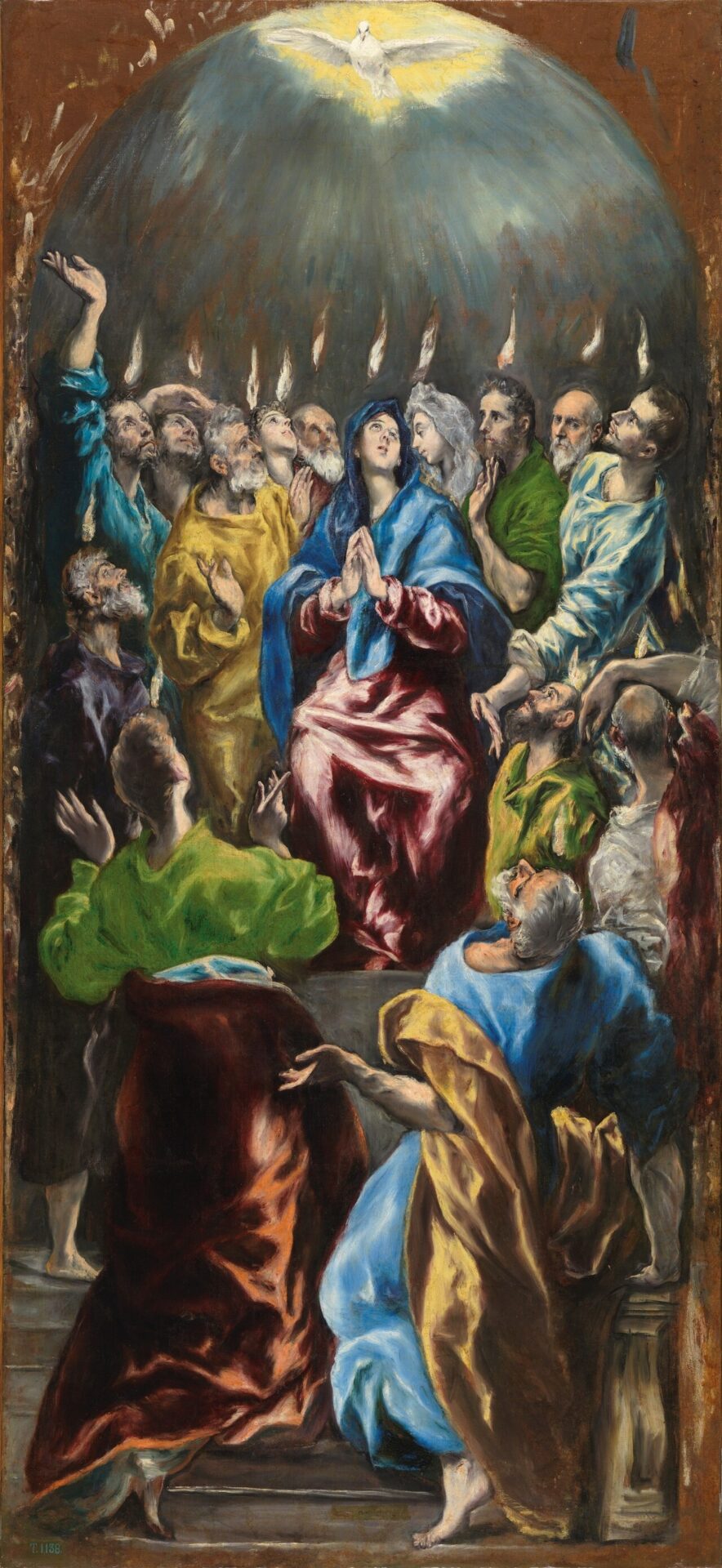
The new covenant was, from the start, a covenant of the Spirit. That is the promise “I will put my Spirit within you” (Ezekiel 36:27), and Joel foretold that this Spirit would be poured out “on all flesh” (Joel 2:28). So as Jesus ascended, he told the disciples not to rush out but first to wait.
But ye shall receive power, after that the Holy Ghost is come upon you: and ye shall be witnesses unto me both in Jerusalem, and in all Judaea, and in Samaria, and unto the uttermost part of the earth. (Acts 1:8, KJV)
When the Spirit came at Pentecost (Acts 2), disciples who had hidden in fear were turned into bold witnesses to the nations. Peter proclaimed that the scene was precisely the fulfillment of Joel’s prophecy (Acts 2:16-21). In the end, the Great Commission is not an enterprise pushed forward by our religious zeal. It is a life driven from within by the Spirit of the new covenant. Whoever has received that Spirit into the heart cannot help letting the grace poured into them flow out to others.
Living as New Covenant People Today
In the sentence of the Great Commission, the actual command is one: “make disciples.” “Go,” “baptize,” and “teach them to observe” are the ways that one command is carried out. Baptism is the sign that marks, before the world, that one has become a member of the new-covenant people; teaching them to observe is the training of living out together the law written on the heart; and that training does not stop with one generation.
The things which you have heard from me among many witnesses, commit the same to faithful men, who will be able to teach others also. (2 Timothy 2:2, WEB)
So we need not imagine the Great Commission only as a grand program. It usually begins with one person. To take one person beside you to heart, to share the gospel with them, to hold onto the Word and live it out together—the new covenant flowing from within me to that one person: this is the smallest and truest shape of making a disciple.
Scripture also gives a gentle warning. The church at Ephesus was commended for its labor and endurance, yet the Lord said:
Nevertheless I have somewhat against thee, because thou hast left thy first love. Remember therefore from whence thou art fallen, and repent, and do the first works; or else I will come unto thee quickly, and will remove thy candlestick out of his place, except thou repent. (Revelation 2:4-5, KJV)
Yet the church that received this letter was the very church Paul had planted by doing the work of the Great Commission. In Ephesus Paul baptized disciples in the name of the Lord Jesus (Acts 19:5) and reasoned daily in the school of Tyrannus for two years, until everyone living in Asia had heard the word of the Lord (Acts 19:8-10). “So the word of the Lord was growing and becoming mighty” (Acts 19:20, WEB). Making disciples, baptizing, teaching them the Word—the very method of the Great Commission we saw at the opening of this article (Matthew 28:19-20)—was the “first works” this church had held from the beginning.
So when the Lord calls them to “do the first works,” it is an invitation to return to what this church did from the start—making disciples, baptizing, teaching the Word, the Great Commission Jesus left as his final words. And those first works are bound together with the “first love,” because the love of God is carried to the nations along the channel of the Great Commission. When the first love for Christ grows cold, the first works through which that love flowed stop as well; and when one returns to the first works, the cooled first love flares up again. Love and works are not opposed.
This word is not a condemnation but an invitation—”do the first works.” You can come back.
The Great Commission is not a heavy burden laid upon us, but a channel through which the joy of the new covenant overflows. The One who sets us at the threshold of that command is the very One who sealed the new covenant with his own blood. And his final promise holds us fast—”lo, I am with you alway, even unto the end of the world” (Matthew 28:20). The One who established the covenant is with us, to the end, as we carry it to the nations.
Scripture quotations are from the King James Version and the World English Bible (both public domain). The Korean edition of this article quotes the public-domain Korean Revised Version (개역한글, 1961).
References
- “New Covenant,” GotQuestions
- “The Great Commission,” GotQuestions
- “The Day of Pentecost,” GotQuestions
- “The New Covenant,” Ligonier Ministries
- “New Covenant” (Korean), Wikipedia
- “The Great Commission” (Korean), Wikipedia