
An Italian restaurant, a dinner marking a twenty-fifth wedding anniversary. A man opening a tea bag stops on a single English sentence printed on the tag: “Love does not confuse everything, but mixes.” Signed: Goethe. Yet this man — a Germanist who has studied Goethe his whole life — cannot recall ever reading the line anywhere. That small discovery unspools into a search that retraces an entire scholarly life. This is the story of Goethe Said Everything (Japanese title: 『ゲーテはすべてを言った』, Korean edition trans. Lee Ji-su, Leaf Publishing, 2025) by Suzuki Yui (鈴木結生), winner of the 172nd Akutagawa Prize in 2025.
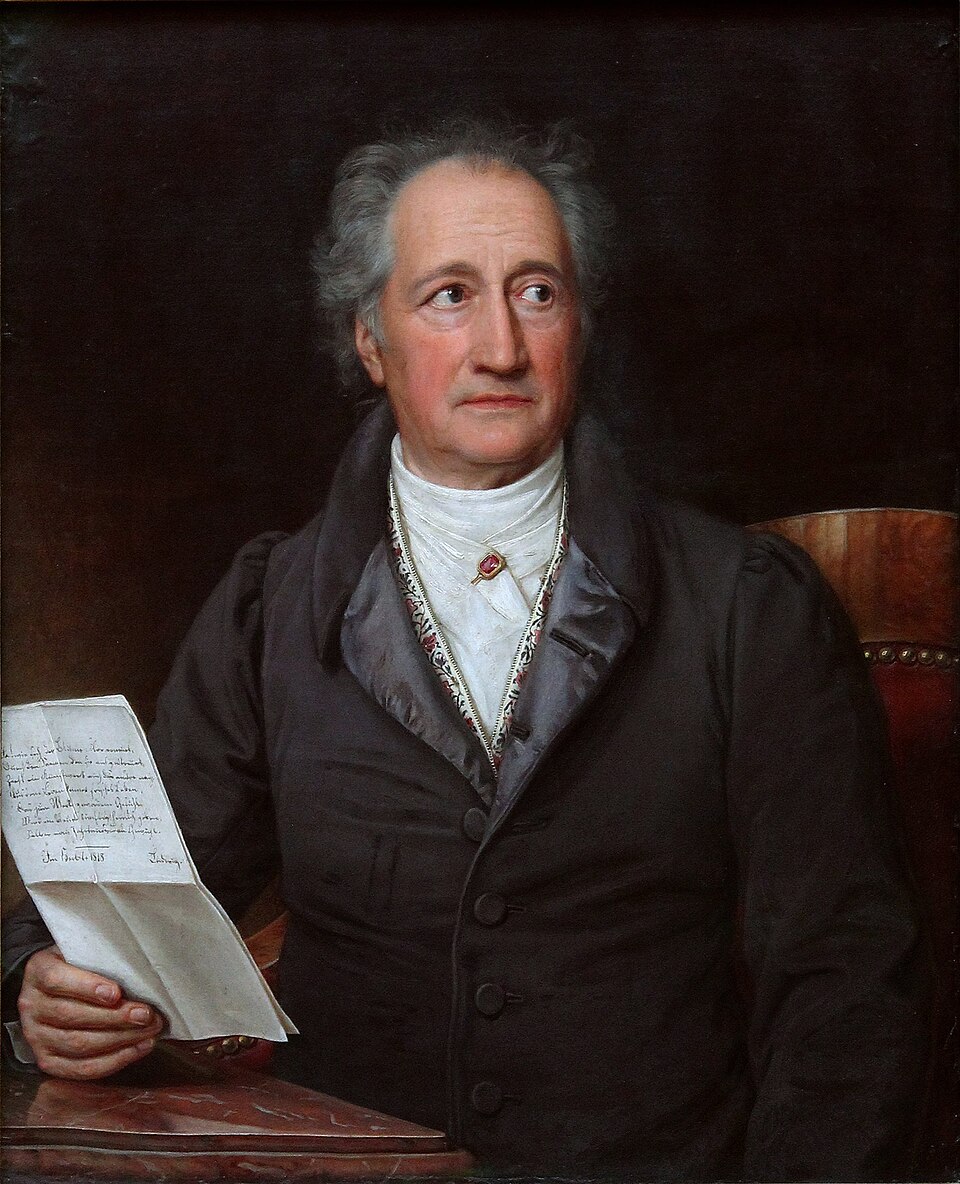
A novel about knowledge, quotation, and the boundary between truth and meaning might seem to have little to do with faith. But it reads differently once you know that its twenty-three-year-old author is a pastor’s daughter, and that the tea-bag episode at the novel’s seed actually happened to her and her father. This novel asks not whether words are authentic in origin, but what they produce in a life — let’s read it through Christian eyes.
Suzuki Yui and This Novel
Suzuki Yui (鈴木結生, Suzuki Yūi) was born in Fukuoka Prefecture in 2001, moved to Fukushima Prefecture at age one, and grew up there until she was eleven. After graduating from Fukuoka Prefectural Shūyūkan High School, she entered the Faculty of Foreign Languages at Seinan Gakuin University. As of a 2025 interview she was still enrolled in the university’s graduate program, majoring in English literature (age 23). She debuted in 2024 with the short story “How Many Books Does a Person Need?” (「人にはどれほどの本がいるか」), which won an honorable mention for the 10th Hayashi Fumiko Literary Prize. The following year, her first full-length novel, Goethe Said Everything, won the 172nd Akutagawa Prize (announced January 2025, shared with Ando Hose’s DTOPIA). She became the first Akutagawa Prize winner born in the 21st century.
What stands out is the author’s own testimony. In one interview she said, “I was born into a Christian family — my father is a pastor” (僕は父親が牧師というクリスチャン家庭に生まれました). She had read the Bible since she was old enough to understand it, and that naturally led her into classics like Dante’s Divine Comedy and Goethe’s Faust. She has also said that understanding “the basic framework of Faust is the Book of Job” helped her grasp the work — and indeed, it is a long-established literary fact that Goethe modeled the “Prologue in Heaven” of Faust on the dialogue between God and Satan concerning Job (Job 1–2). And the tea-bag incident that sparked the novel was no invention either. “The tea-bag episode really happened. My father showed me a Goethe quote he’d come across and asked, ‘What book is this line from?'” (ティーバッグのエピソードは実際にあった出来事。父が手にしたゲーテの名言を僕に見せて、「この言葉はどの本に書いてあるの?」と聞いてきた). The question the scholar and his son ask in the novel was, in fact, the very question the author’s own pastor father once asked her.

Suzuki has said she read some 500 books to write this one novel. Her reading history — beginning with Scripture and branching out across world literature — became the soil from which this intricately woven novel of knowledge and quotation grew.
The Plot — A Search Set Off by a Tea Bag
The protagonist, Hiroba Tōichi (博把統一), is a widely respected Goethe scholar in Japan, a professor nearing retirement who has taught at a university for many years. The unfamiliar quotation he encounters at his twenty-fifth wedding anniversary dinner wounds his pride. Together with his wife Akiko and their daughter Norika (徳歌 — a name that, read backward, becomes the Chinese characters for “Goethe,” 歌德), he sets out to trace the source of this single sentence. Digging through libraries and texts, and eventually traveling all the way to Germany, the search becomes more than a bibliographic investigation — it becomes a journey back through the scholarship and life he has devoted himself to. The whole story is narrated from the point of view of Tōichi’s son-in-law, Norika’s fiancé — and the fact that the narrator is Tōichi’s son-in-law is not a twist saved for the ending; it is established from the story’s opening.
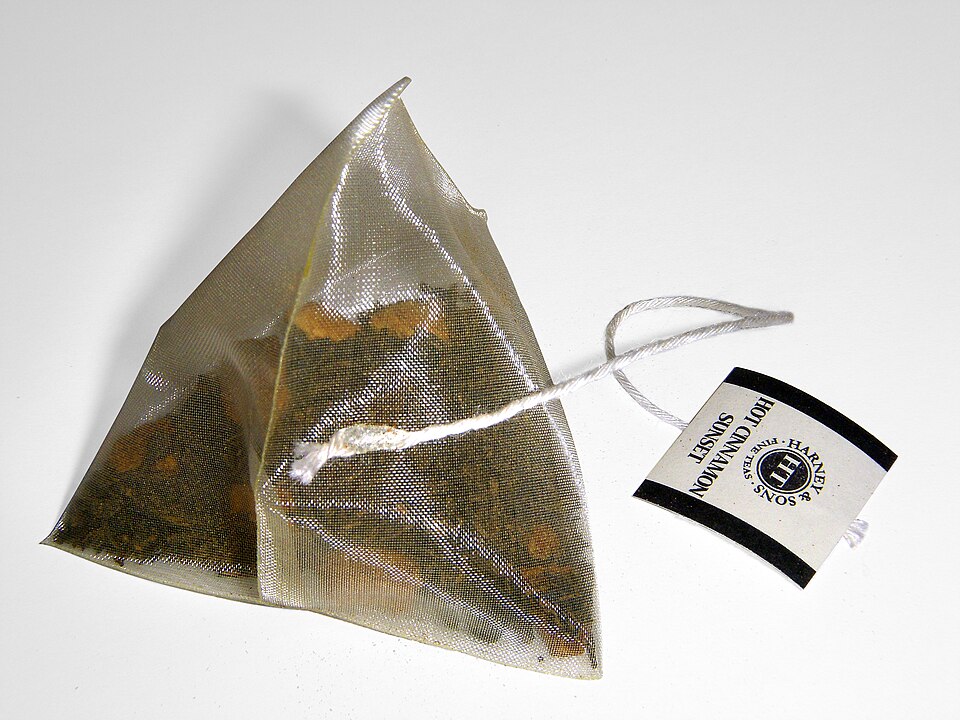
The frame of the novel is this: the son-in-law, who witnessed his father-in-law’s relentless investigation up close, sets the whole story down as fiction. And a twist awaits at the ending. The quotation in question turns out to have been lifted from a quote-collection website — and tracing it further back reveals, astonishingly, that it has nothing to do with Goethe at all: it originated in a letter sent to a gardening YouTuber whom Tōichi’s wife Akiko happened to be a fan of. The quotation’s authority turns out to have been illusory all along. Yet this deflating twist does not push the story toward cynicism. In the place where authenticity collapses, what remains is the fact that this long search itself has drawn a scattered family back together.
At the close of the novel’s prologue, Tōichi reflects to himself: “Even if every good word is just a performance, that does not mean it is without meaning. If, through repeated practice, it comes to feel natural on the tongue, its meaning will finally reveal itself. Every word is a prayer cast toward the future.” It is only his provisional interpretation at that point in the story, but this line compresses the question that runs through the whole novel. Just as the quotation’s authority did not, in the end, come from the name “Goethe,” the real question this novel asks is not “Is this really Goethe’s line?” but “How do we use these words, and how do we live by them?”
“Goethe Said Everything” — The Question the Story Asks
The reactions of the judges for the 172nd Akutagawa Prize reveal a great deal about this novel’s character. Novelist Yoshida Shuichi praised it, saying, “The most fundamental human joy — the joy of coming to know something, of wanting to know — fills this novel.” Hirano Keiichiro said that “pedantry, taken this far, becomes something admirable,” and added that he sensed the emergence of major talent in the young author’s encyclopedic erudition and a kind of precocious maturity; he also noted that the novel opened up a fresh perspective on the very contemporary problem of diversity and the authenticity of information. Kawakami Mieko said she was so struck by the construction and detail with which the novel treats the relationship between academia and literature that she decided on it as the winner immediately.
Not every judgment was purely favorable, though. Judge Okuizumi Hikaru, while acknowledging the novel’s intellectual playfulness, pointed out that the family of scholars at its center lacked shadow — a sense of lived darkness. Domestic readers, too, have often described the novel as an “encyclopedic novel” driven more by reflection than by plot, evoking the intellectual play of Umberto Eco or Borges. A novel this dense with knowledge and quotation can, depending on the reader, risk seeming intoxicated with knowledge for its own sake. Interestingly, though, this very risk is a target the novel takes aim at itself. It quietly needles the vanity of an intellectual society too easily persuaded by a prestigious name (Goethe), while at the same time portraying the blind spot of a scholar who nearly overlooks his own family’s loneliness while absorbed in mountains of text.

Reading in Faith (1): What the Novel Gets Right
The conclusion this novel arrives at — that the value of words lies not in the authority of their source but in how they live and move within a life — sits remarkably close to the insight of Scripture. Scripture, too, judges words not by their origin but by truthfulness and practice.
Lying lips are an abomination to Yahweh, but those who do the truth are his delight. (Proverbs 12:22, WEB)
And the line Tōichi leaves us with at the close of the prologue — “every word is a prayer cast toward the future” — unexpectedly overlaps, almost exactly, with a psalmist’s confession.
Let the words of my mouth, and the meditation of my heart, be acceptable in thy sight, O LORD, my strength, and my redeemer. (Psalm 19:14, KJV)
For the psalmist too, words do not end in themselves. The words of the mouth and the meditation of the heart together become a prayer “cast” before the Lord. What the novel groped toward in the language of literature, Scripture had already been singing in the language of prayer, long before. And this novel’s longing for truthful speech also touches Jesus’s own words:
But let your communication be, Yea, yea; Nay, nay: for whatsoever is more than these cometh of evil. (Matthew 5:37, KJV)
Words that do not hide behind dazzling citations and prestigious names, an honesty plain enough to say “yes, yes” and “no, no” — this is the place the novel arrives at in the end, and it is also the place Scripture has demanded from the beginning.
Reading in Faith (2): The Gospel Goes One Step Further
But it is precisely here that the gospel goes deeper than where the novel stops. The novel concludes that the authority of words lies not in their source (who said it) but in their use (how it was used). That is a true insight. But Scripture goes one step further still, asking where the source of all words originates in the first place.
In the beginning was the Word, and the Word was with God, and the Word was God. (John 1:1, KJV)
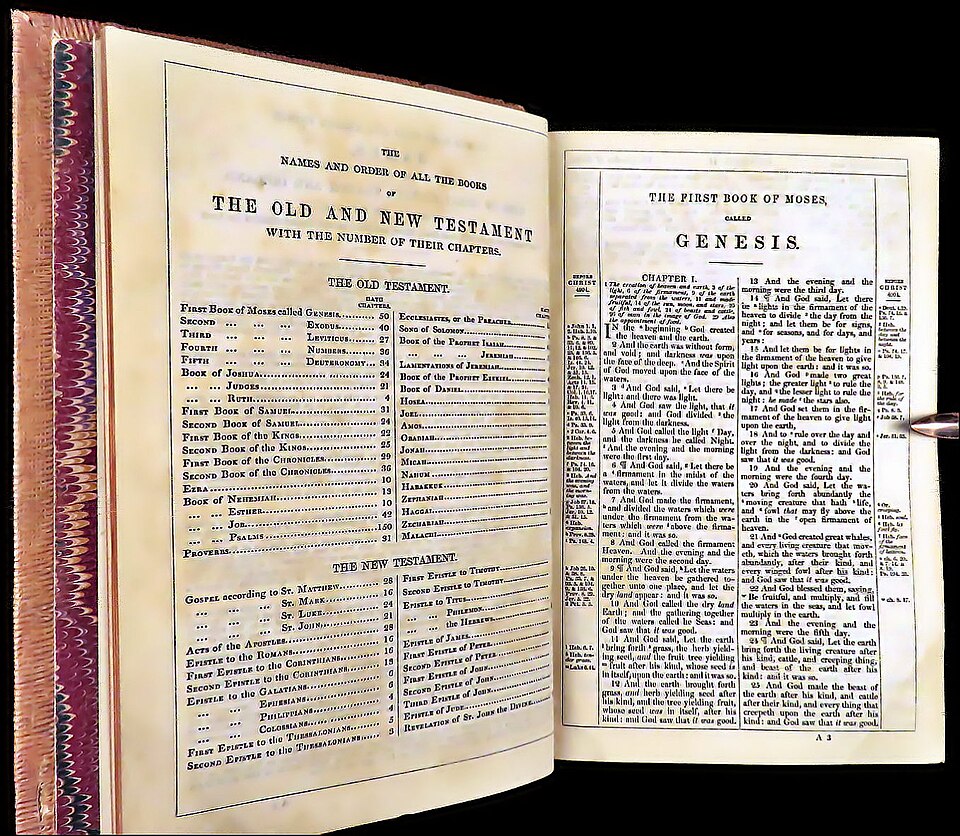
The quotation at the center of the novel turns out, in the end, not to be Goethe’s at all — a source that looked splendid turns out to have been an anonymous letter. But the “Word” to which Scripture points has a source that can never be shaken. That Word is God himself. The reason our words carry weight and seriousness, as Christians, is that our words come from a being made in the image of this foundational Word. That is why Scripture never allows us to treat speech lightly.
For we all stumble in many things. Anyone who doesn’t stumble in word is a perfect person, able to bridle the whole body also. … With it we bless our God and Father, and with it we curse men who are made in the image of God. Out of the same mouth comes blessing and cursing. My brothers, these things ought not to be so. (James 3:2, 9–10, WEB)
James’s warning overlaps with the portrait the novel paints of its scholar. Tōichi spent his whole life studying Goethe’s “words,” but the novel’s quiet self-criticism is that he may have neglected the “words” spoken to the family right beside him. The scholarship of words (knowledge) and the living-out of words (relationship) are two different matters. Scripture strikes precisely at the gap between them — the contradiction of blessing God with the same mouth we use to speak carelessly or sharply to the very people closest to us who bear his image.
Here, another weight is added to Christian speech that the novel never reaches: covenantal faithfulness. The theologian J. I. Packer has emphasized the Christian’s duty to preserve and promote truth — the responsibility to keep the words and vows we make before God and neighbor — because God takes seriously not only his own Word but our words as well. This principle connects directly to the language of the Great Commission. After his resurrection, Jesus commanded his disciples:
Go ye therefore, and teach all nations, baptizing them in the name of the Father, and of the Son, and of the Holy Ghost: Teaching them to observe all things whatsoever I have commanded you: and, lo, I am with you alway, even unto the end of the world. Amen. (Matthew 28:19-20, KJV)
The language of the Great Commission never separates “teaching” (word) from “to observe” (life). Discipleship is, in the end, a journey walked together until words are confirmed by a life. If the novel said “every word is a prayer cast toward the future,” the gospel tells us toward whom that prayer is cast, and by whose power it is answered — our words come to rest in love, not unraveled, not merely through “practice” and “naturalness” as in the novel’s tea-bag phrase, but because it is the fruit the Holy Spirit produces within us.

Who Should Read This, and How
Goethe Said Everything is a novel of great intellectual pleasure. It suits readers who love literature, quotation, and the world of scholarship, as well as readers looking for an unexpected kind of warmth in a family story. Because it is so dense with knowledge and citation, the first chapters may feel somewhat unfamiliar and heavy. It’s best suited to readers who have the patience to read slowly and turn things over in their minds.
For Christian readers, I’d suggest going one step further — receive this novel as a question, and receive the answer from the gospel. The novel asks a good question: that the authority of words lies not in their source but in the life around them. But the ultimate source that sustains that life, the place our words flow from, and the power by which those words are finally perfected into love — none of that is something we manufacture ourselves. It is received from Christ, who is the Word. To the question the author Suzuki Yui received from her father as a child — “What book is this line from?” — a Christian can answer this way: the ultimate source is that Word who has existed since the beginning.
Scripture quotations in this article are from the King James Version and the World English Bible (both public domain).
References
- Suzuki Yui, trans. Lee Ji-su, Goethe Said Everything, Leaf Publishing, 2025. — Aladin Book Info
- 172nd Akutagawa Prize Judges’ Comments (選評) — prizesworld.com
- 172nd Akutagawa Prize Winner Profile (鈴木結生) — prizesworld.com
- Author interview (family background, writing process) — goetheweb.jp
- [Book Review] Goethe Said Everything — Brunch
- J. I. Packer, “Christians Must Be Truthful” — Crossway
- James 3, Korean Revised Version (KRV) text — bible.com (KRV)