
The English Scripture quotations here are from the King James Version and the World English Bible (both public domain).
Siddhartha is not a Christian book. It is a novel of spiritual seeking set in the India of Gotama Buddha’s time, and its author, Hermann Hesse, drew deep inspiration from Hindu and Buddhist thought to write it. And yet tgc.kr has a reason to take it up. Trace the author’s roots and you find, unexpectedly, a family of missionaries to India — and the kind of enlightenment the novel portrays stands in sharp contrast to what Matthew 28 commands. Enlightenment attained by one’s own power, and salvation received by grace — this book is a mirror that reflects that difference with unusual clarity.
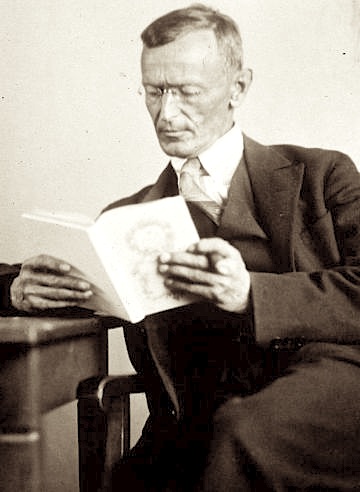
A Seeker’s Novel, Written by a Missionary’s Grandson
Hermann Hesse (1877–1962) was born into a Swabian Pietist family in Calw, in southern Germany. His maternal grandfather, Hermann Gundert, served nearly twenty years in Kerala, India, with the Basel Mission, compiling a Malayalam grammar and dictionary and translating the Bible into Malayalam. Hesse’s mother, Marie, was herself born on the mission field in India in 1842 and sent to Europe as a small child, as was customary for missionary children at the time.
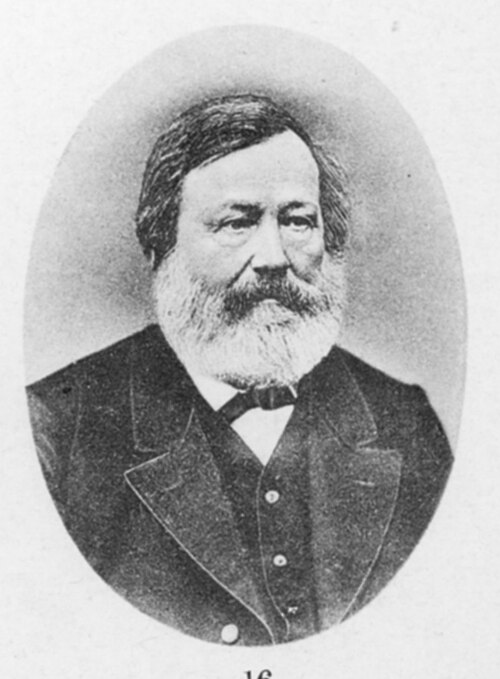
Hesse himself later recalled that “my parents’ Christianity — not preached, but lived — was among the strongest forces that shaped me.” He had not turned his back on the faith. Yet at the same time he believed that “for others, there are different paths to God,” and he grew drawn to Schopenhauer and theosophy, immersing himself in Eastern thought. A 1911 journey to Ceylon (Sri Lanka) and Indonesia fanned this interest into flame, and the fruit of it was Siddhartha, published in 1922. Hesse received the Nobel Prize in Literature in 1946.
A grandfather who spent his life carrying the gospel into Malayalam, and a grandson who used the religious thought of that same land to write a novel of spiritual seeking — the contrast alone tells a story. A spiritual inheritance is not passed down automatically. Each generation must meet Christ for itself.

The Story — From a Brahmin’s Son to a Ferryman
The protagonist, Siddhartha, is a Brahmin’s son beloved by everyone in his village. Yet he feels an inner emptiness that rituals and meditation alone cannot fill, and he sets out with his friend Govinda to follow a band of ascetics, the Samanas. The two eventually meet Gotama, the Buddha, who has attained enlightenment. Govinda becomes the Buddha’s disciple on the spot, but Siddhartha, even while acknowledging that Gotama’s teaching is flawless and complete, declines to become his disciple. The reason he gives opens onto a theme that runs through the whole novel: knowledge can be taught and learned in words, but the experiential wisdom of enlightenment cannot be transmitted through teaching — each person must live it for themselves (this distinction becomes especially clear in the novel’s final chapter, in the reunion scene with Govinda).

Siddhartha now takes the opposite path. He learns the art of love from the courtesan Kamala and grows immersed in worldly life, amassing wealth under the merchant Kamaswami. As gambling and greed wear his soul dry, he abandons everything and, contemplating death by the river, hears the sacred syllable “Om” and awakens again. He then stays with the ferryman Vasudeva, learning to listen to the voice of the river. In time Kamala dies, and the son she bore him comes to Siddhartha, only to reject his father and run off to the city. Abandoned in the very way he himself once left his own father as a young man, Siddhartha, in the depths of that suffering, arrives at the river’s revelation — that all things flow together as one, and that time is not real. In the final chapter, when the aged Govinda comes to him and kisses his forehead, Govinda too sees, in Siddhartha’s face, the same smile of enlightenment.

Three Claims Siddhartha Makes
The claims this novel returns to again and again can be summed up in roughly three points.
First, experiential wisdom cannot be taught. This is the reason Siddhartha refuses to become the Buddha’s disciple, and the starting point of the whole novel. He believes that Gotama’s teaching itself is flawless and complete, yet holds that there is an experiential enlightenment that cannot be conveyed through knowledge or doctrine.
Second, enlightenment must pass through the world. Siddhartha’s eyes are opened not through asceticism but only after he has fully lived out the depths of the world — love, wealth, greed. Even attachment and wandering are portrayed as a necessary stage on the way to enlightenment.
Third, the ultimate truth is the oneness of all things. Within the enlightenment the river symbolizes, the distinctions between good and evil, past and future, the deluded and the awakened, all blur, and everything finally converges into one (an ending akin to the non-dual (advaita) union of Brahman and Atman in Hindu Vedanta thought).
Siddhartha Through the Eyes of Faith — The Path of Self-Effort and the Path of Grace
All three claims point in a direction squarely opposed to what Scripture says.
Consider first the claim that “experiential wisdom cannot be taught.” Immediately after His resurrection, Jesus commanded His disciples the exact opposite: “Go ye therefore, and teach all nations, baptizing them in the name of the Father, and of the Son, and of the Holy Ghost: Teaching them to observe all things whatsoever I have commanded you: and, lo, I am with you alway, even unto the end of the world. Amen” (Matthew 28:19–20, KJV). In the Greek text, the Great Commission’s central verb is “make disciples” (μαθητεύσατε), and “teaching them to observe” names the essential means by which that disciple-making is actually carried out. The gospel is not a private experience each person discovers on their own; it is good news that must be handed down and proclaimed through teaching. Hesse’s own grandfather spent his life translating Scripture into Malayalam in obedience to that very command. What he sought to convey was not merely transmissible knowledge, but the grace that, through that word, actually brings people to life — “So faith comes by hearing, and hearing by the word of God” (Romans 10:17, WEB).
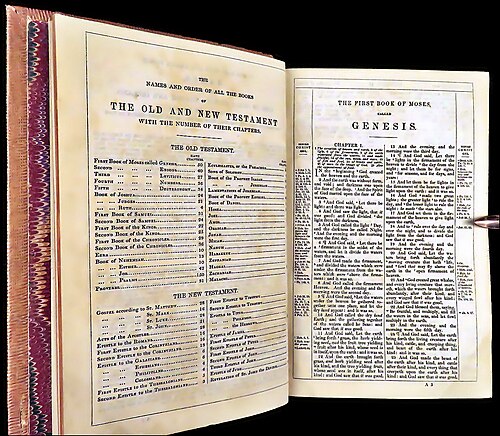
Second, the enlightenment Siddhartha reaches is attained entirely by his own power. No one ever gives it to him. But the salvation Scripture describes is the opposite: “For by grace are ye saved through faith; and that not of yourselves: it is the gift of God: Not of works, lest any man should boast” (Ephesians 2:8–9, KJV). In the novel’s world, each person must cross their own river; in the gospel, another has already crossed the river on our behalf. Jesus Himself declared, “I am the way, the truth, and the life: no man cometh unto the Father, but by me” (John 14:6, KJV) — unlike the novel’s Advaita-like ending, in which every path finally converges into the oneness of Brahman and Atman (梵我一如), this is an exclusive declaration of salvation through one alone.
Third, the river’s oneness — in which even the distinction between delusion and enlightenment blurs (an Advaita-like, non-dual union) — is compelling, but Scripture speaks of sin as something real, and of God as a personal being distinct from His creation. If sin is not truly the problem, the cross is not necessary either. That the novel’s ending is a beautiful literary achievement, and that it is true, are two different questions.
What Hesse Got Right — A Question That Remains
Even so, there is a reason this book cannot be dismissed lightly. The moment when Siddhartha feels an emptiness that ritual and rule alone cannot fill is an honest insight into the limits of merely formal religion. Jesus Himself pointed to the same problem in confronting religious form kept without a living relationship (as in His rebuke of the hypocritical scribes and Pharisees in Matthew 23). And the novel’s underlying premise — that human beings long for something beyond what is visible — overlaps with Scripture’s own insight: “He has made everything beautiful in its time. He has also set eternity in their hearts, yet so that man can’t find out the work that God has done from the beginning even to the end” (Ecclesiastes 3:11, WEB). What Hesse diagnosed accurately was the human longing itself; where he answered wrongly was in how that longing is to be satisfied.
Who Should Read This Book
This is not a suggestion to read the novel as if it were a devotional book. If anything, it is closer to the opposite invitation. In an age when meditation, mindfulness, and a self-help spirituality of “find the answer within” have grown increasingly familiar both inside and outside the church, Siddhartha shows the literary archetype of that current in some of the most beautiful prose ever written. Anyone in discipleship ministry who must bring the gospel to neighbors and children, or any Christian who must speak with those drawn to Eastern spirituality, can read this book and gain a discerning eye for where its appeal comes from and how it differs from the gospel. It is also worth recommending to readers who simply want to enjoy its literary craftsmanship — though rather than accepting the answer the novel offers, the better way to read it is to keep asking, “And what, then, does Scripture say to this question?”
References
- Siddhartha (Minumsa World Literature 58, tr. Park Byeong-deok, 2002) — Aladin bibliographic listing
- Hermann Hesse — Wikipedia
- Hermann Gundert (maternal grandfather, Basel Mission missionary) — Wikipedia
- Siddhartha (novel) — plot and characters — Namu Wiki
- Matthew 28 — Bible.com
- Ephesians 2 — Bible.com
- John 14 — Bible.com
- Romans 10 — Bible.com
- Ecclesiastes 3 — Bible.com