
When we hear the word discipleship, we often picture textbooks, a curriculum, and a fixed syllabus. Yet when we look at the moment Jesus appointed his twelve disciples, the starting point was not a program but being with him. Mark 3:14 shows in a single verse where Jesus’ discipleship begins. In this article we read that verse alongside other passages of Scripture, relearn the first principle of discipleship, and look at ways to live it out today. English Scripture quotations are from the World English Bible (WEB).
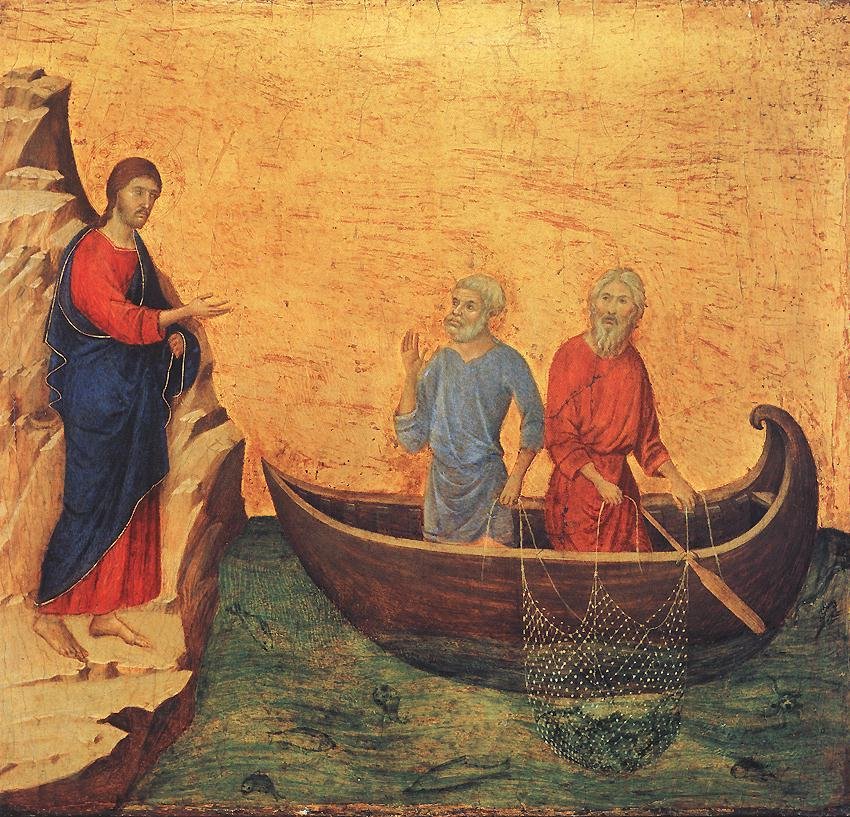
Called on the Mountain: The Order in Mark 3
Early in his Galilean ministry, Jesus went up on a mountain and personally called those he wanted. From among them he appointed twelve. Mark records his purpose plainly.
He went up into the mountain and called to himself those whom he wanted, and they went to him. He appointed twelve, that they might be with him, and that he might send them out to preach and to have authority to heal sicknesses and to cast out demons
Mark 3:13-15, WEB
Jesus’ purpose in appointing the twelve can be summed up in three aims: that they might be with him, that he might send them out to preach, and that they might have authority over demons. The manuscripts followed by the WEB and the KJV also mention authority to heal sicknesses, while the Korean Revised Version does not. Whichever manuscripts we follow, the first purpose Mark writes down is being with Jesus. The power for ministry and the mission of being sent both come afterward.

The Greek text makes this order even clearer. In Mark 3:14 the preposition for with is meta, and the verb for send is apostellō. The New Testament name for the twelve, apostle (apostolos), comes from this very verb. An apostle is first someone who was with Jesus, and then someone he sent.
That They Might Be With Him: The First Principle of Discipleship
Discipleship begins with being before doing. From the moment he first called the fishermen, Jesus said, “Come after me” (Mark 1:17, WEB). To follow someone is to be with him on the same road.
Before Jesus sent out the twelve in pairs, he first kept them at his side, letting them eat, walk, and stay with him, sharing everyday life. Jesus prayed early in a deserted place (Mark 1:35) and stretched out his hand to touch a man with leprosy (Mark 1:41). The disciples learned beside such a Lord, and his life, recorded in the Gospels, remains a living textbook for us today.
Robert E. Coleman’s The Master Plan of Evangelism (1963), a 20th-century evangelical classic, organizes Jesus’ discipleship method into eight principles. The second of these is Association, that is, being together. Coleman explains that after calling his men, Jesus made a practice of being with them, and that this was the essence of his training. Jesus had no formal school and no course of study; drawing the disciples close to himself was his teaching. Coleman even placed Matthew 28:20 at the head of this chapter, a sign that being with Jesus does not end with his earthly ministry.
This insight raises a question for us today. We often ask first what we should teach, but Jesus began with whom he would live alongside. Discipleship is usually passed on when one life is shared up close with another.
The Fruit of Being With Him in Scripture
Scripture shows in several places what fruit the training that began in Mark 3:14 actually bore.
First, there is a rhythm of being sent and returning. In Mark 6:7 Jesus sends out the twelve in pairs. Those who had been with him now become those who are sent. In Mark 6:30 the apostles gather to Jesus again and report what they had done and taught.
Then Jesus said to them, “Come away into a deserted place, and rest awhile” (Mark 6:31, WEB). Being sent does not end being with him. Disciples are sent out, and then they return to be with him again.
Second, those who have been with Jesus bear a mark. After Jesus’ resurrection and ascension, Peter and John boldly proclaimed the gospel before the council. The council saw that they had no formal training, yet something else explained their boldness.
Now when they saw the boldness of Peter and John, and had perceived that they were unlearned and ignorant men, they marveled. They recognized that they had been with Jesus.
Acts 4:13, WEB
That day Peter spoke filled with the Holy Spirit (Acts 4:8). And the council also recognized that the two men had been with Jesus (Acts 4:13). The training that began in Mark 3:14 became fruit that others could see.

Third, being with Jesus does not end with the ascension. As the risen Jesus commanded his disciples to make disciples of all nations, he promised, “Behold, I am with you always, even to the end of the age” (Matthew 28:20, WEB).
The with of Mark 3:14 and the with of Matthew 28:20 are the same Greek preposition, meta. The Lord who first kept his disciples at his side is still with them at the very moment he sends them. Discipleship is not a technique for imitating Jesus but a life of staying near the Lord who is with us now.
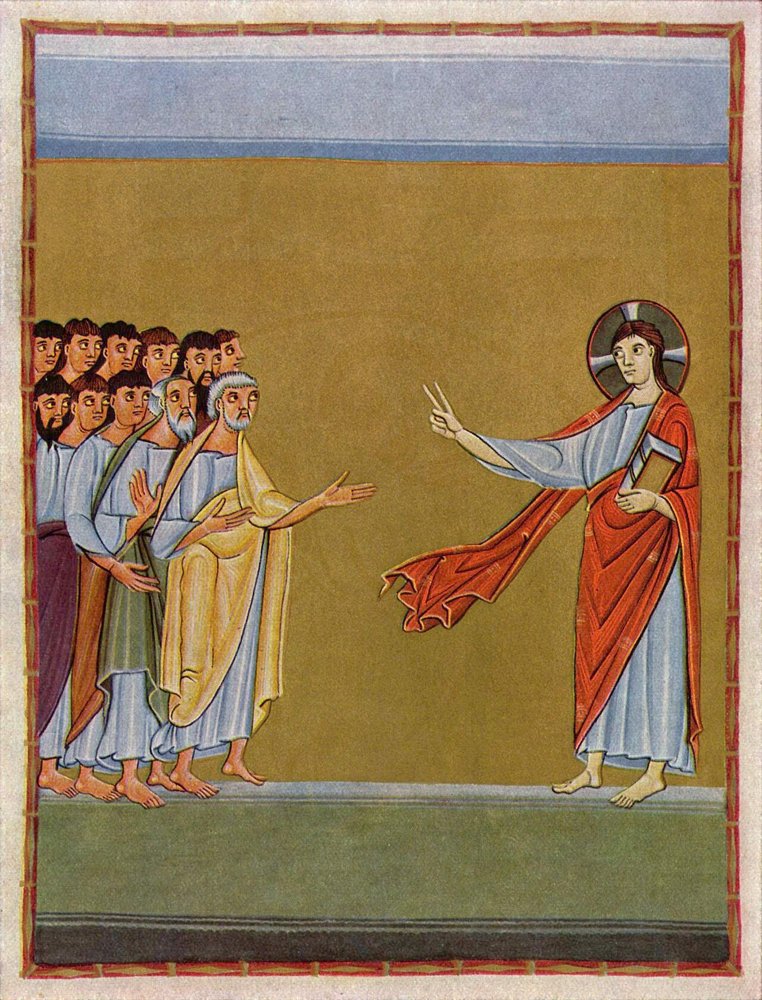
From Calling to Sending: What the Order Tells Us
The text does not stop at being with him. The same sentence goes on to say that he would send them out to preach. Being with him is not the end but the beginning, and it opens toward being sent. First we see and learn his life in a close relationship with Jesus; then we go into the world carrying what we have learned. When the order is reversed, ministry easily runs dry. It is the same truth Jesus taught in John 15:5 with the picture of the vine and the branches: apart from him we can do nothing.
The number twelve also carries meaning. Evoking the twelve tribes of Israel, it shows that Jesus is forming a new people of God around himself (see Matthew 19:28). Discipleship does not stop at personal growth; it leads to building the church and sending the gospel into the world.

Three Ways to Practice Shared-Life Discipleship Today
So how can we carry on Jesus’ way of being with his disciples beyond the lecture hall? Here are three paths the church has practiced for a long time. Whatever the method, the heart of it is not the material but time spent at someone’s side.
One-to-One: Growing Together with One Person
One-to-one discipling is a lay ministry in which one Christian meets another person personally, reads the Word together, shares life, and helps that person grow as a disciple. Duranno’s One-to-One Discipling Bible Study is a course that aims to form Christians who are centered on Jesus rather than on themselves. Yet the heart of it is not the book itself but making time for one person and simply being at their side.

Small Groups and Discipleship Classes: Being Near in a Little Community
Jesus too lived with a small company of twelve. A group small enough for members to know one another’s lives is well suited to sharing the Word, fellowship, and care. In the Korean church, Pastor Han-heum Oak planted Gangnam Eunpyeong Church (today’s SaRang Church) in 1978 and devoted himself to training lay people as disciples. In 1986 he began a discipleship leadership seminar for pastors, the CAL Seminar, which Disciple Making Ministries International still holds today. Discipleship classes and small groups are places where the principle of being with is lived out as a community.
Life-Sharing Companionship: Walking the Everyday Together
The Navigators is a ministry that took shape in 1933 as Dawson Trotman prayed, studied the Bible, and memorized Scripture with sailors in the U.S. Navy. The organization still emphasizes Life-to-Life Discipleship. As a mentor and a disciple walk through daily life together, faith is passed on through example, questions, and imitation. It is a present-day form of the way Jesus kept his disciples with him. Discipleship grows not in grand settings but in ordinary days of sharing a meal and walking a road together.

This Week, Beside One Person
Jesus’ discipleship began not with a perfect curriculum but with a love that makes room beside us. Before planning a grand program, bring one name to mind. This week, share a meal with that person, read Mark 3 together, and pray briefly for each other. And above all, make time to stay near the Lord yourself first. Those who stay with the Lord can stay beside others for the long haul.
The invitation Mark 3:14 extends to us is simple: first be with Jesus and learn from him. The love we learn from him then takes shape in a life shared with others. And on that small road of companionship walks the Lord who promised to be with us to the end of the age.
References
- YouVersion (bible.com) — Mark 3 in the Korean Revised Version
- BibleHub — Mark 3:14 parallel translations and Greek (Strong’s)
- Robert E. Coleman, The Master Plan of Evangelism — the Association chapter (free edition PDF)
- 9Marks — review of The Master Plan of Evangelism (the eight principles)
- The Navigators — history and Life-to-Life discipleship
- Duranno — One-to-One Discipling overview (Korean)
- SaRang Church — church history (founded in 1978 as Gangnam Eunpyeong Church, Korean)
- Kidok Shinmun — article on the CAL Seminar’s 40th anniversary (begun in 1986, Korean)