
The Great Commission is often boiled down to a single word: "Go." But in Romans 10 Paul pushes that command one step further back. Before anyone can go, someone has to send. He stacks up four questions that bind salvation to sending in a single chain, and he drives the last link home like a nail: "…how shall they preach, except they be sent?" (Romans 10:15, KJV).
The English Scripture quotations here are from the King James Version and the World English Bible, both in the public domain, and each quotation is labeled. The Korean original of this article quotes the Korean Revised Version of 1961, which is likewise public domain; copyrighted Korean versions are cited by reference number only. You can compare the Korean text at the Korean Bible Society.
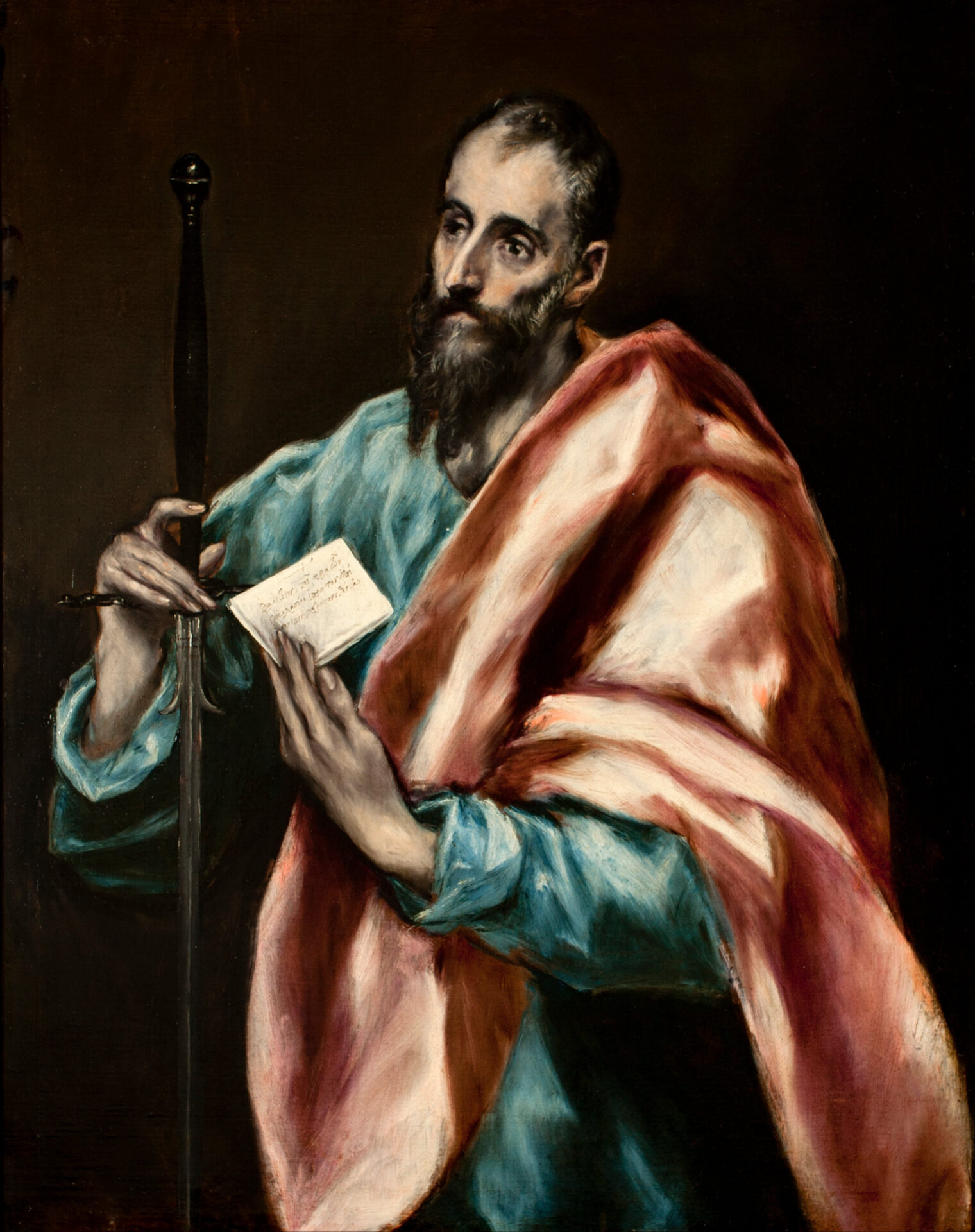
The Text — Romans 10:13-15
For whosoever shall call upon the name of the Lord shall be saved. How then shall they call on him in whom they have not believed? and how shall they believe in him of whom they have not heard? and how shall they hear without a preacher? And how shall they preach, except they be sent? as it is written, How beautiful are the feet of them that preach the gospel of peace, and bring glad tidings of good things!
— Romans 10:13-15, King James Version
This passage sits in the middle of Romans 9–11, Paul’s long anguished plea for Israel, his own kinsmen. Just before it he tears down the wall of distinction: "For there is no distinction between Jew and Greek; for the same Lord is Lord of all, and is rich to all who call on him" (Romans 10:12, WEB). So the problem is not eligibility — it is delivery. The door stands wide open for anyone to call; but who will carry the news that it is open? That is where the questions of verse 14 begin.

A Chain Built Backwards — Five Links
The four questions of verses 14-15 run in reverse. Paul starts at the outcome and works back to the cause, each question catching the last word of the one before it and pulling on it. There are four questions, but because each one links two things together, the result is a chain of five links.
- "How then shall they call on him in whom they have not believed?" — calling depends on believing;
- "how shall they believe in him of whom they have not heard?" — believing depends on hearing;
- "how shall they hear without a preacher?" — hearing depends on preaching;
- "how shall they preach, except they be sent?" — preaching depends on being sent.
Turn the questions the right way round and you get the actual order of events: sending → preaching → hearing → believing → calling → salvation. Break any one of the five links and the promise of verse 13 — "For whosoever shall call upon the name of the Lord shall be saved" — never reaches that person.
Paul compresses the whole chain into one sentence a moment later: "So faith comes by hearing, and hearing by the word of God" (Romans 10:17, WEB). (The Korean Revised Version reads "the word of Christ" here, following the reading of the critical Greek text; the King James Version and the World English Bible follow manuscripts that read "of God.") And what that word contains has already been settled a few verses earlier, where Paul quotes Deuteronomy 30:14 and then names it outright: "…that is, the word of faith, which we preach" (Romans 10:8, WEB). The cargo the chain carries was defined before the chain was described.

Of the Five Links, Only One Is Something You Receive
English preserves a distinction that matters enormously here, and so does the Korean. Calling, believing, hearing and preaching are all written as things people do; only the last one is written the other way round — "except they be sent." The Greek is exactly the same. Look at an interlinear and the first four verbs are active or middle, while the verb for sending (ἀποσταλῶσιν) alone is passive. And this passive carries no phrase naming who does the sending.
Scripture fills that empty slot from elsewhere. It is the voice Isaiah heard: "…Whom shall I send, and who will go for us? Then said I, Here am I; send me" (Isaiah 6:8, KJV). God is the one who sends; the person stands in the place of the one who answers. The risen Lord speaks with the same structure: "…As the Father has sent me, even so I send you" (John 20:21, WEB). Sending always runs from above downward, and the authority of the one sent lies not in himself but in the one who sent him.
That is why the Great Commission — "Go, and make disciples of all nations" (Matthew 28:19, WEB) — does not rest on personal resolve alone. Immediately before it stands this: "…All authority has been given to me in heaven and on earth" (Matthew 28:18, WEB). The authority to send belongs to the sender; the one who goes moves under a commission he has been given.
"How beautiful upon the mountains are the feet" — Isaiah 52:7
Paul does not close his argument in his own words. He reaches for the Old Testament. The second half of verse 15, "How beautiful are the feet of them that preach the gospel of peace," is a quotation of Isaiah 52:7. Isaiah’s own sentence first pictures a man publishing good tidings, peace and salvation, and then ends like this: "How beautiful upon the mountains are the feet of him that bringeth good tidings… that saith unto Zion, Thy God reigneth!" (Isaiah 52:7, KJV).
What Isaiah paints is a runner carrying news of victory over the mountains to Zion after a battle. What the runner shouts is not "we have won" but "Thy God reigneth." The hero of the news is not the messenger but God — and what is called beautiful is not the messenger’s face but his feet, the distance those feet covered to get there. A similar scene appears again in Nahum 1:15.
Paul then turns that single runner into many. He writes "the feet of them that preach" — plural. Where one herald once ran to Zion, countless carriers now scatter across the whole earth. Here too you can see why the Great Commission reaches toward "all nations."

"Whosoever" — Joel’s Promise at the End of the Chain
Verse 13, the destination of the chain, is not Paul’s own composition either. It is a quotation, and its source is the book of Joel: "It will happen that whoever will call on the name of Yahweh shall be saved…" (Joel 2:32, WEB). Paul reads "Yahweh" here as "the Lord" and applies it directly to Jesus Christ. Verse 9, just above, is the warrant: "that if you will confess with your mouth that Jesus is Lord, and believe in your heart that God raised him from the dead, you will be saved" (Romans 10:9, WEB).
Strikingly, this same promise from Joel is quoted in the church’s very first sermon. On the morning of Pentecost Peter cites Joel and closes that section this way: "It will be, that whoever will call on the name of the Lord will be saved" (Acts 2:21, WEB). In the Korean Revised Version the two sentences are identical to the letter apart from the closing citation particle in Acts. The first sermon preached in Jerusalem and the letter sent to Rome rest on the same promise.
But Not All Obeyed
A completed chain does not guarantee a result, and Paul admits it at once: "But they didn’t all listen to the glad news. For Isaiah says, ‘Lord, who has believed our report?’" (Romans 10:16, WEB). The Isaiah 53:1 he quotes reads: "Who has believed our message? To whom has the arm of Yahweh been revealed?" (Isaiah 53:1, WEB).
Notice that Paul does not write "they did not all hear" but that they did not all obey the good news. The chain worked; the news actually arrived. Verse 18 nails it down: "…Their sound went out into all the earth, their words to the ends of the world" (Romans 10:18, WEB — quoting Psalm 19:4). That means Israel of that day had no excuse left of the form "we never heard" — it is not a declaration that preaching to the whole world is finished. So the share the preacher carries reaches as far as delivery; the fruit belongs to God. It was so for Isaiah and it was so for Paul. A small response does not mean the sending was a mistake.

Three Layers of "Sending" in Scripture
First, sending begins in prayer
Jesus did not tell his disciples to recruit workers. He told them to pray that workers be sent. And the setting of that command is worth noticing: "But when he saw the multitudes, he was moved with compassion for them, because they were harassed and scattered, like sheep without a shepherd" (Matthew 9:36, WEB). Compassion comes first, then prayer: "The harvest indeed is plentiful, but the laborers are few… Pray therefore that the Lord of the harvest will send out laborers into his harvest" (Matthew 9:37-38, WEB).
That prayer leads straight into the scene of its own answer. In Luke 10 Jesus repeats the same words, and the scene opens like this: "Now after these things, the Lord also appointed seventy others, and sent them two by two ahead of him into every city and place, where he was about to come" (Luke 10:1, WEB). The one who prays to have workers sent becomes the one who is sent.
Second, the church confirms it in worship and sends with the laying on of hands
The first missionary sending did not happen in a boardroom. It happened during worship: "As they served the Lord and fasted, the Holy Spirit said, ‘Separate Barnabas and Saul for me, for the work to which I have called them’" (Acts 13:2, WEB). Then comes the church’s action: "Then, when they had fasted and prayed and laid their hands on them, they sent them away" (Acts 13:3, WEB).
Here Scripture divides its wording very carefully. In verse 3 the church is the subject that sends them off — but the very next verse reads: "So, being sent out by the Holy Spirit, they went down to Seleucia…" (Acts 13:4, WEB). The Greek uses two different verbs in the two verses. What the church does is confirm and release; the one who actually sends is the Holy Spirit. The agentless passive of Romans 10:15 finally gets a name here.

Third, responsibility does not end once someone has been sent
Laying out his plans to the church at Rome, Paul says he will stop there on his way to Spain, and asks this of them: "…to be helped on my way there by you…" (Romans 15:24, WEB). This is not a request to be waved off at the door; it is a request for the funds and companions needed to reach the next field. He means to make the Roman church the base for what comes next. And the reason he insists on pressing further out is written in the verse just before: "…making it my aim to preach the Good News, not where Christ was already named, that I might not build on another’s foundation" (Romans 15:20, WEB). His principle is to go not where the chain is already joined but where it is still broken.
What that support actually looked like, Philippians shows us: "…in the beginning of the Good News, when I departed from Macedonia, no assembly shared with me in the matter of giving and receiving but you only" (Philippians 4:15, WEB). Paul reads that support not as money but as worship: "…a sweet-smelling fragrance, an acceptable and well-pleasing sacrifice to God" (Philippians 4:18, WEB). In 2 Corinthians he says the same thing more bluntly: "…the brothers, when they came from Macedonia, supplied the measure of my need…" (2 Corinthians 11:9, WEB).
Today, Which Link of the Chain Are You Standing On?
Paul’s chain does not end as a story about Israel two thousand years ago. There are still places today where that chain has never been joined, and the numbers are larger than most people assume.
According to the figures compiled by Joshua Project (accessed 24 August 2026), of 16,426 people groups worldwide 7,162 — 43.6% — are unreached, and their combined population of about 3.62 billion is 44.0% of the world. Bible translation tells a similar story. Statistics from Wycliffe Bible Translators UK (as of 3 August 2026) report that of 7,396 living languages, 805 have a full Bible, while 3,229 still have no Scripture at all.
And what about the sending done by the Korean church? According to "Korean Mission Status 2024," surveyed jointly by the Korea World Missions Association (KWMA) and the Korea Research Institute for Mission and released in March 2025, as of the end of 2024 there were 21,621 long-term Korean missionaries serving in 171 countries. That is 296 fewer than the 21,917 of the previous year, continuing a decline that began in 2020. The same survey puts the average age of long-term missionaries at 53.9, up from 52.1 in 2020, and among respondents 69.25% were in their fifties or older while only 6.05% were in their thirties and 0.46% in their twenties. Sending has not stopped — but strikingly few new senders are coming from the next generation.
Romans 10:14-15 leaves us with a very simple question in the face of all this. Which link of this chain am I standing on? Start with what you can do this week.
- The place of prayer — the command of Matthew 9:38 still stands. Pick one unreached people group, write its name down, and pray once a day that someone be sent to them.
- The place of sending — support that "shares in the matter of giving and receiving," as the Philippian church did, is partnership, not charity. Consistency matters more than amount: set a figure, begin one regular commitment, and write back to a missionary letter.
- The place of going — if no one answers as Isaiah did, "Here am I; send me," then the finest plan has no feet. If you cannot leave where you are, at least find out this month whether your church has a short-term sending or training track.
- The place of telling — the ends of the earth are not always far away. Write down the name of one person who has not yet heard, pray for them, and make a plan to meet. That one person is where the chain is broken.
The sentence Paul quoted from Isaiah calls the feet beautiful. Not the face, not the eloquence, not the results — the feet. The walk that carried the news that far, or the hand that sent someone else that far: God calls that beautiful.
Pray something like this today: "Lord of the harvest, send out laborers into this harvest. And show me which link you want me to stand on. If it is the place of sending, let me not hold back; if it is the place of going, let me answer as Isaiah did — Here am I; send me." When that prayer is answered, one more link of the chain in Romans 10:15 will be joined through us.

References
- Korean Revised Version, Romans 10 (Korean Bible Society 1961, YouVersion) — the Korean text of the passage
- Korean Revised Version, Isaiah 52 — the original context of "the feet upon the mountains" (52:7) quoted in Romans 10:15
- Korean Revised Version, Acts 13 — cross-reference for the sending from the church at Antioch (13:1-4)
- BibleHub — Romans 10:15 Greek interlinear — confirming that ἀποσταλῶσιν, the verb for "being sent," is passive (V-ASP-3P)
- BibleHub — Strong's Greek 649 (ἀποστέλλω) — the etymological link between "to send" and "apostle"
- Joshua Project — Global Progress — unreached people group counts and population (accessed 24 August 2026)
- Wycliffe Bible Translators UK — Scripture access statistics — Bible translation status by language (as of 3 August 2026)
- Mission News — KWMA and the Korea Research Institute for Mission release "Korean Mission Status 2024" — Korean missionary sending figures as of the end of 2024