
Memorizing Scripture is not only about getting a sentence into your memory. It is also about where that sentence carries your day. Romans 12:1-2 is unusual in exactly that way: these two verses are the hinge that turns "believe" into "live".
In this article we read Romans 12:1-2 as it stands, break it into six phrases for memorization, and open each phrase with other passages of Scripture. The ground of every interpretation here is the biblical text itself, not human opinion. The English Scripture quotations are from the King James Version and the World English Bible, both in the public domain.

The Text — Romans 12:1-2
I beseech you therefore, brethren, by the mercies of God, that ye present your bodies a living sacrifice, holy, acceptable unto God, which is your reasonable service.
And be not conformed to this world: but be ye transformed by the renewing of your mind, that ye may prove what is that good, and acceptable, and perfect, will of God.
— Romans 12:1-2, King James Version
Breaking it into six phrases makes it far easier to hold. ① I beseech you therefore, brethren … ② that ye present your bodies a living sacrifice ③ which is your reasonable service ④ be not conformed to this world ⑤ be ye transformed by the renewing of your mind ⑥ that ye may prove what is that good, and acceptable, and perfect, will of God. The meditations below follow that same order.
What "Therefore" Picks Up — Eleven Chapters
The word most often dropped when people memorize this passage is the very first one. Yet "therefore" is the pillar that carries the weight of the command. Look at what stands immediately before it. Romans 11 ends like this:
O the depth of the riches both of the wisdom and knowledge of God! how unsearchable are his judgments, and his ways past finding out! … For of him, and through him, and to him, are all things: to whom be glory for ever. Amen.
— Romans 11:33, 36, King James Version
So the appeal in 12:1 is not a demand but a response. The verse names its own ground: Paul pleads "by the mercies of God." If the first eleven chapters told us what God has done, chapter 12 onward tells us how a person who has received it lives. This passage does not say "try harder"; it says "answer the mercy you received, with your body."
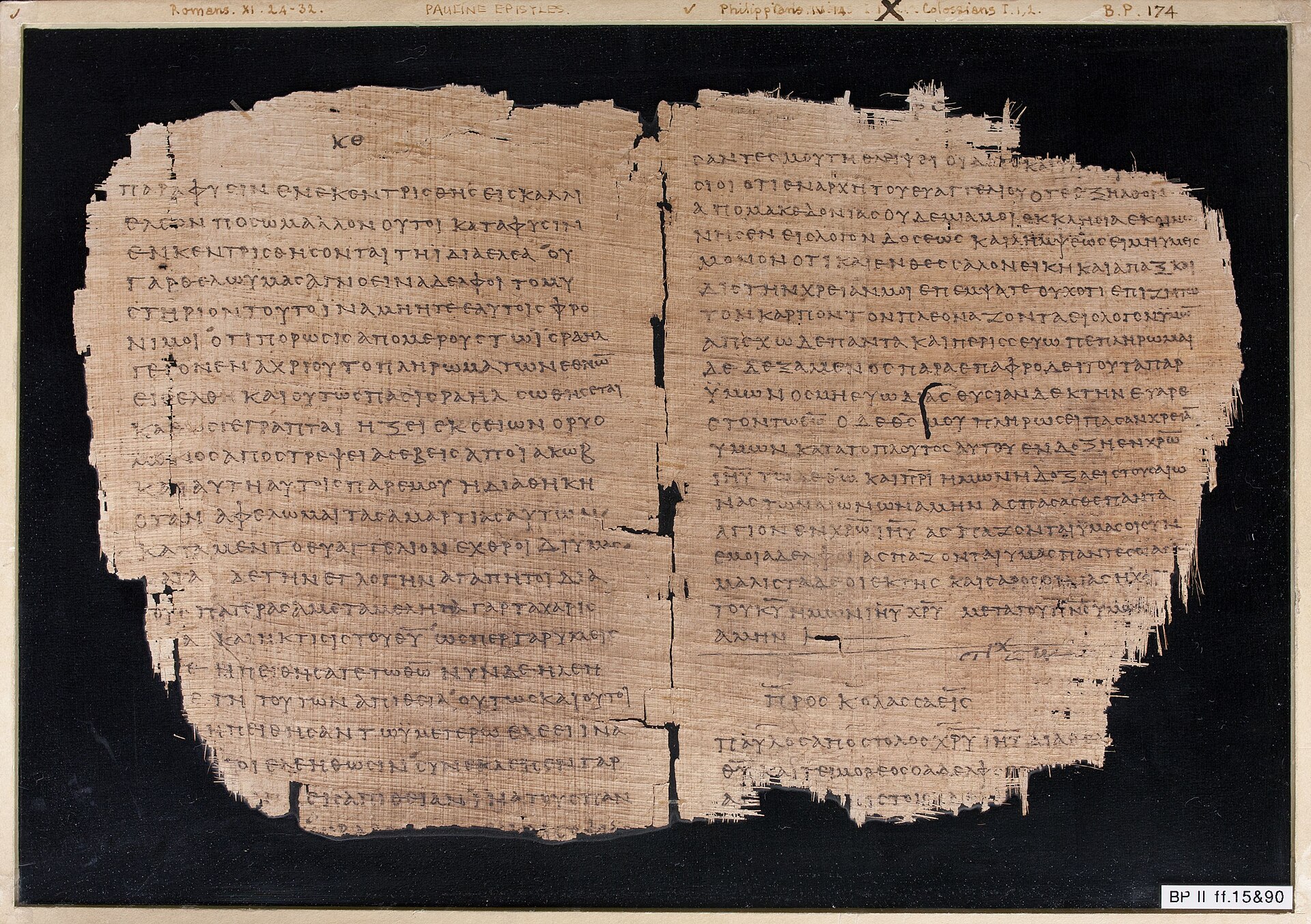
First Meditation — A "Living Sacrifice" Is the Opposite of a Dead Victim
Why the phrase sounds strange becomes clear the moment you open the Old Testament. A burnt offering was, by definition, offered by killing. "… The priest shall burn the whole on the altar, for a burnt offering, an offering made by fire, of a pleasant aroma to Yahweh" (Leviticus 1:9, WEB). The victim ended on the altar.
But the offering in Romans 12:1 is a victim that walks away alive. Scripture itself explains what that means, because chapter 6 of the same letter had already said it: "Neither present your members to sin as instruments of unrighteousness, but present yourselves to God, as alive from the dead, and your members as instruments of righteousness to God" (Romans 6:13, WEB). Both the verb "present" and the phrase "alive from the dead" were already there in chapter 6. Romans 12:1 restates that command in the language of sacrifice.
Scripture also names what the offering is. It is the body. "Or don’t you know that your body is a temple of the Holy Spirit which is in you, which you have from God? You are not your own, … Therefore glorify God in your body and in your spirit, which are God’s" (1 Corinthians 6:19-20, WEB). And Hebrews and 1 Peter go on to say what shape this sacrifice takes. "Through him, then, let us offer up a sacrifice of praise to God continually … But don’t forget to be doing good and sharing, for with such sacrifices God is well pleased" (Hebrews 13:15-16, WEB). "You also, as living stones, are built up as a spiritual house, to be a holy priesthood, to offer up spiritual sacrifices, acceptable to God through Jesus Christ" (1 Peter 2:5, WEB).
Scripture also settles that this sacrifice is not a matter of expensive offerings. "The sacrifices of God are a broken spirit. A broken and contrite heart, O God, you will not despise" (Psalm 51:17, WEB).

Second Meditation — "Reasonable Service" Runs Out Past the Sanctuary Door
The Greek phrase behind "your reasonable service" (λογικὴ λατρεία) is two words. The first appears only twice in the New Testament, and English versions render it so differently in each place that the link is easy to miss: here the King James Version has "reasonable service," while in the other occurrence the World English Bible has "as newborn babies, long for the pure milk of the Word …" (1 Peter 2:2, WEB). The second word is used in the New Testament for worship and service rendered to God, including the ordered worship of the tabernacle (Hebrews 9:1, 6).
So the phrase does not mean "worship offered only on the inside." It is closer to a declaration that the worship once offered by prescribed rite has now moved into the believer’s whole body. It runs in the same direction as 1 Peter 2:5, read above, which calls believers themselves "a holy priesthood." What Jesus said to the Samaritan woman points the same way: "But the hour comes, and now is, when the true worshippers will worship the Father in spirit and truth …" (John 4:23, WEB).
Romans then shows immediately what this worship contains, because the rest of chapter 12 is the list. "Let love be without hypocrisy. Abhor that which is evil. Cling to that which is good" (Romans 12:9), "In love of the brothers be tenderly affectionate one to another; in honor preferring one another" (Romans 12:10), "rejoicing in hope; enduring in troubles; continuing steadfastly in prayer" (Romans 12:12), and finally "Don’t be overcome by evil, but overcome evil with good" (Romans 12:21) — all WEB. Whoever memorizes verse 1 has to live out verse 9 and what follows.

Third Meditation — "Be Not Conformed to This World"
This is the first command of verse 2. The Greek verb used here (συσχηματίζω) occurs only twice in the New Testament, and the other place is 1 Peter: "as children of obedience, not conforming yourselves according to your former lusts …" (1 Peter 1:14, WEB). Both passages forbid the same thing — fitting yourself to an outward pattern.
Scripture also defines what "this world" is: "who gave himself for our sins, that he might deliver us out of this present evil age, according to the will of our God and Father" (Galatians 1:4, WEB). So "be not conformed" is not a matter of cultural taste. It says: having already been delivered, do not go back into the old mould.
1 John sorts the contents of that mould into three: "For all that is in the world, the lust of the flesh, the lust of the eyes, and the pride of life, isn’t the Father’s, but is the world’s" (1 John 2:16, WEB). And Colossians supplies the alternative: "Set your mind on the things that are above, not on the things that are on the earth" (Colossians 3:2, WEB).
Fourth Meditation — "Be Ye Transformed by the Renewing of Your Mind"
What is easiest to miss here is that "be ye transformed" is passive. This is not a change you manufacture; it is one you receive. The verb (μεταμορφόω) occurs four times in the New Testament, and two of those describe the transfiguration: "He was transfigured before them. His face shone like the sun, and his garments became as white as the light" (Matthew 17:2, WEB). The remaining occurrence is in 2 Corinthians: "But we all, with unveiled face beholding as in a mirror the glory of the Lord, are transformed into the same image from glory to glory, even as from the Lord, the Spirit" (2 Corinthians 3:18, WEB).
2 Corinthians also names who does the transforming: "even as from the Lord, the Spirit." The same holds for the noun "renewing." The only other place that word appears says this: "… according to his mercy, he saved us, through the washing of regeneration and renewing by the Holy Spirit" (Titus 3:5, WEB).
Then what is left for me to do? Ephesians assigns the place: "that you put away, as concerning your former way of life, the old man, that grows corrupt after the lusts of deceit; and that you be renewed in the spirit of your mind, and put on the new man, who in the likeness of God has been created in righteousness and holiness of truth" (Ephesians 4:22-24, WEB). Putting off and putting on are mine; the renewing is God’s. Romans had already named the destination of that change: "For whom he foreknew, he also predestined to be conformed to the image of his Son …" (Romans 8:29, WEB).

Fifth Meditation — "That Ye May Prove" Comes Last
Many people read this passage as a method for finding God’s will and reach straight for the end of it. But the order of the text runs the other way. Present (v. 1) → be renewed (middle of v. 2) → and only then prove (end of v. 2). Discernment is not the starting point; it is the destination.
Other letters keep the same order. "proving what is well pleasing to the Lord" (Ephesians 5:10, WEB) and "Therefore don’t be foolish, but understand what the will of the Lord is" (Ephesians 5:17, WEB) both stand after the call to put off the old man and put on the new. Philippians says discernment grows out of love: "This I pray, that your love may abound yet more and more in knowledge and all discernment; so that you may approve the things that are excellent …" (Philippians 1:9-10, WEB). Hebrews insists it is the fruit of training: "But solid food is for those who are full grown, who by reason of use have their senses exercised to discern good and evil" (Hebrews 5:14, WEB).
So when God’s will is hard to see, the first question may not be "what is God’s will?" but "have I presented myself?"

Background That Helps You Memorize — Where It Was Written, and to Whom
The letter names its readers: "to all who are in Rome, beloved of God, called to be saints" (Romans 1:7, WEB). Paul had not yet been to this church, and yet its faith was already known: "… your faith is proclaimed throughout the whole world" (Romans 1:8, WEB).
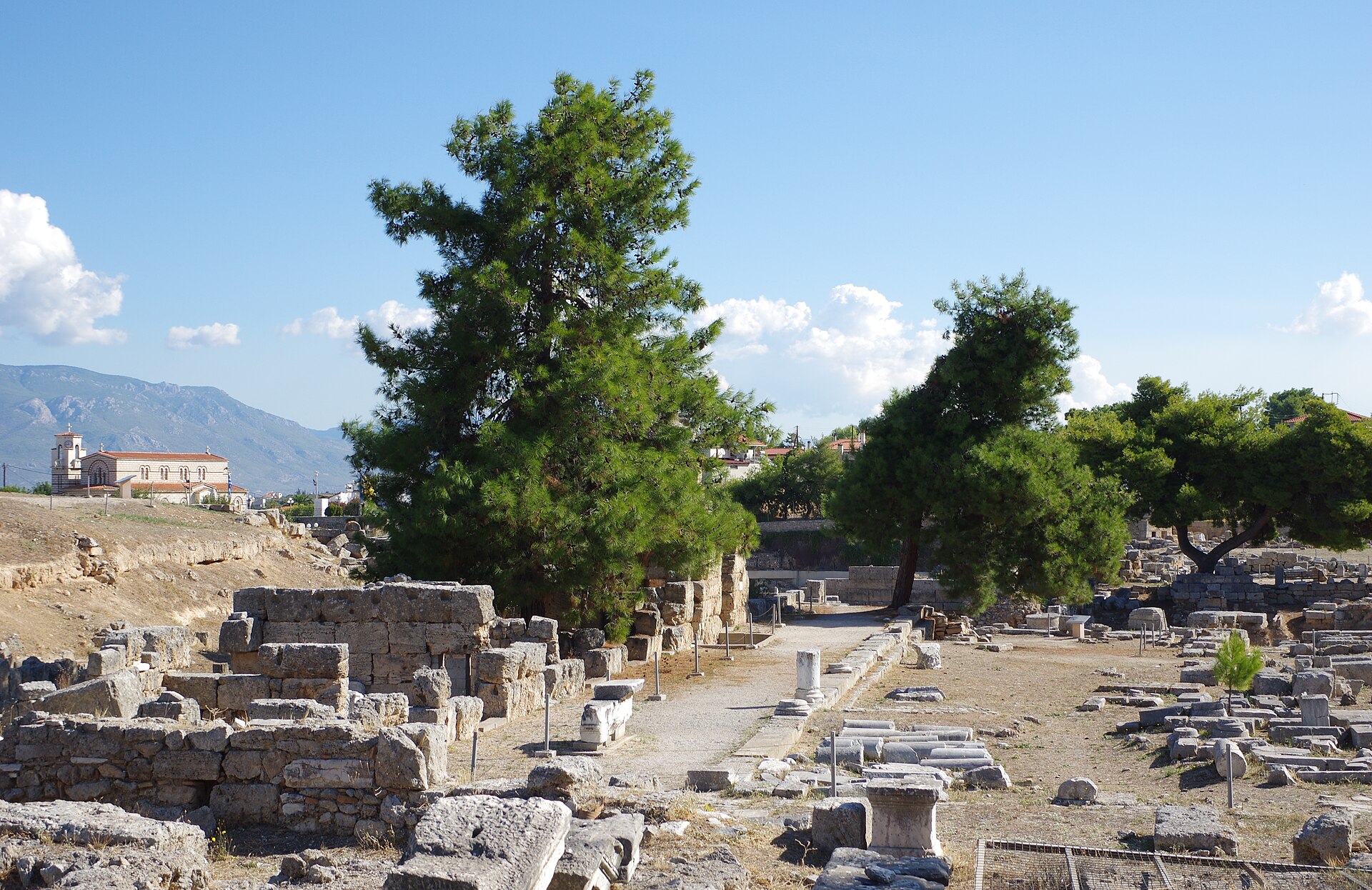
The circumstances of writing can be gathered from the closing chapters. Paul commends "Phoebe, our sister, who is a servant of the assembly that is at Cenchreae" (Romans 16:1, WEB), and writes, "Gaius, my host and host of the whole assembly, greets you. Erastus, the treasurer of the city, greets you, as does Quartus, the brother" (Romans 16:23, WEB). Cenchreae was Corinth’s eastern harbour, and Gaius is also the name Paul identifies in his letter to the Corinthians as someone he baptized (1 Corinthians 1:14). Paul was, at that moment, about to leave: "But now, I say, I am going to Jerusalem, serving the saints" (Romans 15:25, WEB), carrying the collection gathered in Macedonia and Achaia. Put those clues together and the picture that emerges is a letter written around the time Paul was staying in Corinth.
The structure helps too. Romans 1-11 treats what God has done; from chapter 12 on, the life of the person who has received it (the exhortation runs through the first part of chapter 15, and what follows is travel plans and greetings). Romans 12:1 is the hinge between the two parts — which is why it begins with "therefore."
How to Memorize It — A Seven-Day Plan
Begin with a verse in which Scripture itself speaks about how to handle the word: "This book of the law shall not depart out of your mouth, but you shall meditate on it day and night, that you may observe to do according to all that is written therein …" (Joshua 1:8, WEB). This verse is not a rule about memorization technique; it is a command given to Joshua. Still, its three directions — keep it in your mouth, meditate day and night, and do what is written — shape the plan below.
- Day 1 — Verse 1 only, and only as far as "I beseech you therefore, brethren … " Read Romans 11:33-36 alongside it to see why "therefore."
- Day 2 — Add "that ye present your bodies a living sacrifice, holy, acceptable unto God." Read Romans 6:13 with it.
- Day 3 — All of verse 1, through "which is your reasonable service." Say it aloud five times.
- Day 4 — The opening of verse 2: "And be not conformed to this world." Read 1 Peter 1:14 with it.
- Day 5 — Add "but be ye transformed by the renewing of your mind." Read Ephesians 4:22-24 with it.
- Day 6 — All of verse 2, to the end. Then both verses together in one go.
- Day 7 — Both verses from memory, without looking. Then write them out once by hand.
Three habits will make it last much longer. First, say it aloud rather than reading it silently. Second, go over it briefly three times a day — morning, midday, and before sleep — rather than once in a block. Third, check the phrase you learned three days ago. Without going back, the opening tends to blur by day seven.
One thing to settle first. This article memorizes the wording of a public-domain text. If your church uses a different version, compare the passage with it before you begin, so that you and your congregation are not memorizing different words.

Questions for Today
- Can you say in one sentence what stands before the word "therefore"? Write down one specific mercy you have received.
- When today did you offer worship "with your body"? Name one moment from the hours outside any service.
- Where are you unconsciously fitting yourself to a mould — in how you spend time, how you spend money, how you speak, or what you aim at?
- If "be ye transformed" is passive, what do you have to put off and put on today (Ephesians 4:22-24)?
- If there is a matter where God’s will feels unclear, move it from the seat of "proving" to the seat of "presenting," and ask again.
Once you have both verses by heart, what remains is living the sentence. For the next passage to memorize, we suggest Romans 6:13, which this article read twice. And to see where worship offered with the body finally points, read on in the Great Commission — five texts in the Gospels and Acts and its memorization guide.
The Scripture quotations in this article are taken from the King James Version (1611) and the World English Bible, both in the public domain. The Korean original of this article quotes the Korean Revised Version published by the Korean Bible Society in 1961; according to the Korean Bible Society, the copyright term of that edition expired on 31 December 2011. Korean translations still under copyright — the Society’s 1998 and 2001 revisions — are not quoted directly here; their text can be read at the Korean Bible Society’s Bible reader.
References
- Korean Revised Version, Romans 12 (Korean Bible Society 1961, YouVersion) — the Korean text this article works from
- Korean Revised Version, Romans 11 — the doxology (11:33-36) that "therefore" picks up
- Korean Revised Version, Romans 6 — cross-reference for "present … as instruments of righteousness to God" (6:13)
- Korean Bible Society — Copyright in the Bible — expiry of the 1961 edition’s term (31 December 2011) and the status of the 1998 and 2001 revisions
- Korean Bible Society — Copyright FAQ no. 5 — conditions of use for the 1961 edition (attribution and integrity)
- BibleHub — Romans 12:1 Greek interlinear — παραστῆσαι, θυσίαν ζῶσαν, λογικὴν λατρείαν
- BibleHub — Romans 12:2 Greek interlinear — συσχηματίζεσθε and μεταμορφοῦσθε share the same grammatical form
- BibleHub — Strong’s Greek 3339 (μεταμορφόω) — the four New Testament occurrences of this verb