
After a Bible study, our notes may be full of new insights. Yet we may be less clear about how that passage should change our words and actions this week. Anyone who teaches the Bible faces the same question. Once we have explained the passage accurately, how can we help another person follow Jesus?
The Great Commission in Matthew 28:18-20 gives us direction. Jesus commanded his followers to make disciples of all nations, baptizing them in the name of the Father and of the Son and of the Holy Spirit, and teaching them to obey everything he had commanded. Teaching that makes disciples includes both understanding Scripture rightly and helping one another obey it. This article explores that connection between teaching and obedience.

The Passage: Jesus Joins Teaching and His Presence in One Verse
Direct Scripture quotations in this article are from the King James Version (KJV). Explanations of other passages and practical suggestions are presented separately from quotations.
Teaching them to observe all things whatsoever I have commanded you: and, lo, I am with you alway, even unto the end of the world. Amen.
Matthew 28:20, KJV
These words conclude the commission that the risen Jesus gave to the eleven disciples in Galilee. Matthew 28:16-18 records both worship and doubt among the disciples, followed by Jesus’ declaration that all authority in heaven and on earth has been given to him. Their mission does not begin with their perfect preparation or certainty. It begins with the authority of the risen Lord.

In Matthew 28:19, the call to make disciples extends to all nations. The command to baptize makes clear whom these people believe in and follow. The teacher is called to help form disciples who are baptized in the name of the Father and of the Son and of the Holy Spirit, rather than build a wider personal following. The teaching in Matthew 28:20 continues to lead these people to Jesus’ words. Separating baptism from teaching, or turning teaching into conformity to a teacher’s preferences, obscures this connection.

Knowing the Word and Putting It into Practice
At the end of the Sermon on the Mount, Jesus used the picture of two houses to describe those who hear his words and act on them and those who hear without acting (Matthew 7:24-27). Both people heard his words. Both houses faced rain and wind. The difference lies in whether they put what they heard into practice. We therefore cannot read this parable as a promise that learning Scripture well will make difficulties disappear. It asks what foundation supports a life that follows Jesus’ words even through hardship.
This perspective deepens the questions we ask in Bible study. Explaining what a passage means is essential. Alongside that, we ask where we will follow it in our relationships and choices this week. When our understanding of the passage is unclear, application can drift toward our own ideas. When we never ask about application, what we understand can easily become detached from daily life. Teachers need to hold both questions together.
James 1:22-25 also compares someone who hears the word without acting on it to a person who looks in a mirror and soon forgets what they saw. Scripture has not been given merely as material for identifying other people’s problems. It is the word in which I must first examine myself and to which I must respond. A conversation about one another’s practice can therefore begin with an honest account of how we ourselves have received the word, before we evaluate someone else.

Everything Jesus Commanded Sets the Standard for Teaching
Matthew 28:20 identifies the content of this teaching as everything Jesus commanded. Teachers need to watch that they do not keep returning only to favorite topics or give rules for a community’s convenience the same weight as Jesus’ commands. Study methods and meeting schedules are useful tools, but following those tools exactly is not the whole of obedience to Jesus.
Teaching everything he commanded does not mean explaining everything in a single meeting. It means studying one passage faithfully while continuing to read the Gospels and facing teachings we have overlooked. We keep learning how Jesus guides our relationships and lives, rather than stopping with topics that are convenient to put into practice. One application is a starting point for today; it does not define the full scope of discipleship.

Jesus Showed His Disciples How to Serve and Taught Them to Act
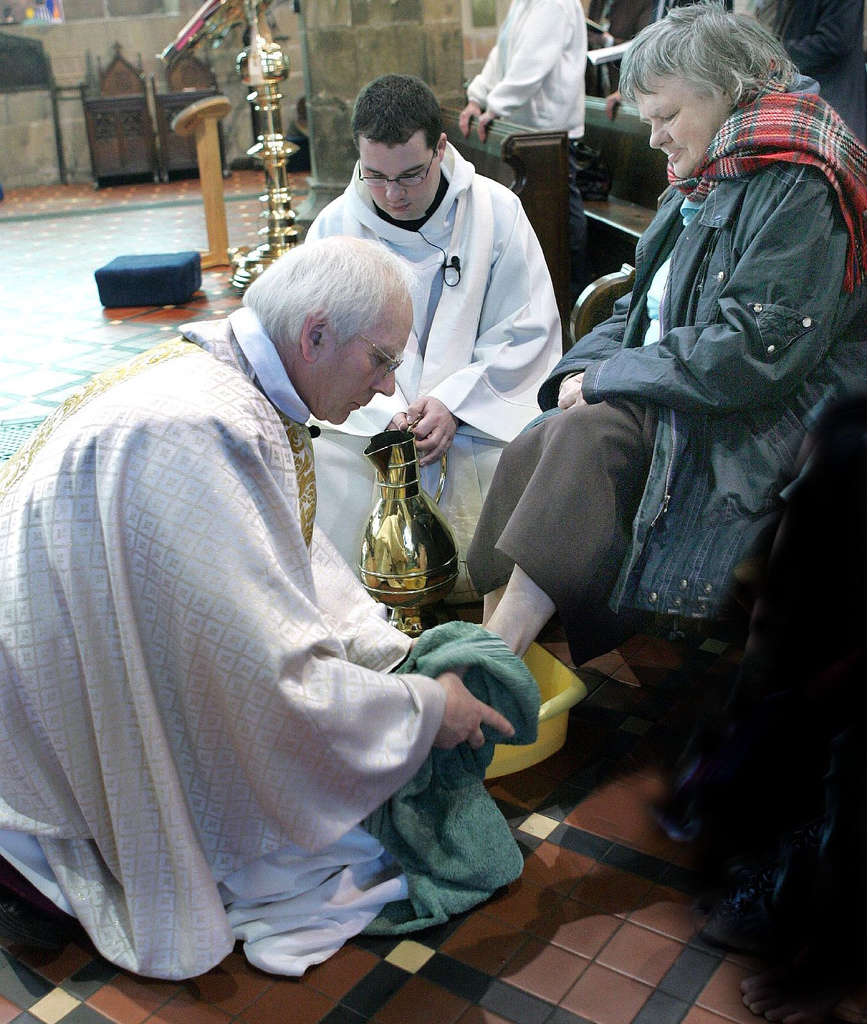
John 13:12-17 gives us a concrete scene in which teaching leads to action. After washing the disciples’ feet, Jesus identified himself as their Lord and Teacher and taught them to wash one another’s feet. The scene does not end with an explanation of what Jesus had done. He leads the disciples to follow his example in what they do.
If we study this passage together, we first examine what actually happened. We consider who washed whose feet and what the actions of their Lord and Teacher require of the disciples in their relationships. Then we look for a way to humble ourselves and serve today. For example, we might help with the cleanup that the same person has always handled after a church gathering. This is a suggested application for practicing service, not a new command stated in the passage or a report of an actual event.
The teacher can take part as well, without telling everyone else to serve while making an exception for themselves. This does not mean teachers must provide a perfect example in every situation before they can teach. A willingness to acknowledge their shortcomings and keep learning is part of helping one another stand before Jesus’ example. A disciple’s attention belongs on the Lord, rather than on a teacher’s perfection.
Learning and Life Together Continue after Baptism
Acts 2:41-47 records that those who received the word and were baptized devoted themselves to the apostles’ teaching, fellowship, the breaking of bread, and prayer. They also continued to meet together and share according to one another’s needs. As we read Matthew 28:19-20, this account helps us consider baptism alongside the learning that follows it. Connecting new believers with a church community and helping them learn Scripture continues beyond their initial response of faith.
We cannot require churches in every age to follow an identical schedule or way of disposing of property. Yet the learning of Scripture, prayer, and sharing placed together in this passage invite us to examine our gatherings today. As we worked through a set curriculum, did we know the actual needs of those learning alongside us? We can also consider whether we have explained the gospel and the meaning of baptism sufficiently to those preparing for it, and connected them with the church’s responsible care.
Helping One Person Connect Scripture with Life This Week
The following is one way to shape a meeting in keeping with the direction of Matthew 28:20. It is a small framework for helping learning lead to obedience, not the only training sequence prescribed by Scripture or a program that guarantees growth. Adapt it to the circumstances of a one-to-one meeting or small group.
- Read the same passage and clarify its meaning. This time, try reading John 13:12-17. Each person explains what Jesus did and what he called the disciples to do. Where your understandings differ, return to the surrounding context and examine it together.
- Describe the obedience that applies to you. Think of one person you could serve and that person’s needs, rather than the ways someone else ought to change. If you have only assumed what they need, you might choose asking and listening as your first application.
- Make the action and its timing specific. Choose something small: helping with cleanup after this week’s gathering, or asking a colleague who has been carrying a task alone where you could help. Respond to actual needs without insisting on help the other person does not want.
- Reflect and pray together at the next meeting. Share what you did, what was difficult, and whether you came to understand the passage more deeply. If you did not act, examine the reason and look for a way to obey again, rather than covering over excuses or causing shame.
The purpose of sharing what we have put into practice is to keep learning Jesus’ words without forgetting them in daily life, rather than to score one another’s performance. When we keep making grand commitments only in words, we can make the action more specific. When only the activity remains and we have forgotten the meaning of the passage, we return to Scripture. In this way, teaching and obedience stay connected.

Teaching in Dependence on the Lord’s Presence
Matthew 28:20 brings together the command to teach obedience and the promise that Jesus will remain with his disciples to the end of the world. The Lord did not present himself as someone who hands over all the work and then checks the results from a distance. The one who sends his disciples is with them. Remembering this promise helps teachers let go of the anxious sense that they must produce every change themselves and faithfully carry out the work entrusted to them.
John 14:15-17 likewise places a life of loving Jesus and keeping his commandments alongside the promise of the Comforter whom the Father will give. Obedience grows within our relationship with the Lord. Before pressing someone to grow faster, read Scripture with that person, ask for the Holy Spirit’s help, and respond to the same word yourself. The Lord’s promise gives us hope to keep learning and teaching over time, rather than a reason to leave teaching aside.
Think of one person with whom you can share Scripture today. As you prepare what to explain, consider how you will put it into practice together and reflect on it afterward. The Great Commission, which reaches toward all nations, also gives direction to this nearby encounter. We help people who confess their faith through baptism and learn within the church community to keep following Jesus.
Prayer Lord, help us learn and teach your word rightly. Keep us from being satisfied with knowing, and help us respond through our relationships and actions today. Instead of trying to shape those who learn with us according to our own wishes, help us stand together before your word. Teach us to serve one person faithfully, trusting you who remain with us to the end. Amen.
References
- Matthew 28 — Korean Revised Version (KRV): the Great Commission and its resurrection context
- Matthew 7 — Korean Revised Version (KRV): the two houses and hearing and doing the word
- John 13 — Korean Revised Version (KRV): Jesus’ example and command in washing feet
- John 14 — Korean Revised Version (KRV): love, commandments, and the promise of the Comforter
- James 1 — Korean Revised Version (KRV): hearing the word and putting it into practice
- Acts 2 — Korean Revised Version (KRV): baptism and learning in community
- Matthew 28:20 in parallel translations — KJV used for the English quotation