
The English Scripture quotations here are from the King James Version and the World English Bible (both public domain).
A layperson is not a support worker who assists the pastor — they are a co-laborer who builds the kingdom of God together. In 1984, the pastor of a church plant in Gangnam, Seoul, poured this message into a single book. According to Aladin’s book listing, that book has gone through 150 printings over 35 years, becoming the very book that coined the term “discipleship training” (제자훈련) in the Korean church. It is Pastor Ok Han-heum’s Awakening the Laity (평신도를 깨운다) — Principles and Practice of Discipleship Training.
The reason this book is still worth reading on tgc.kr today is clear. Jesus’s Great Commission (Matthew 28:18-20) is a command to make disciples of all nations — not a command for pastors alone to evangelize. If laypeople do not awaken as disciples, the Great Commission is left to a handful of professional ministers. This book is the record of one pastor’s lifelong pursuit of that very question — how do you awaken the laity?
The author, Pastor Ok Han-heum — a man who staked his ministry on one person
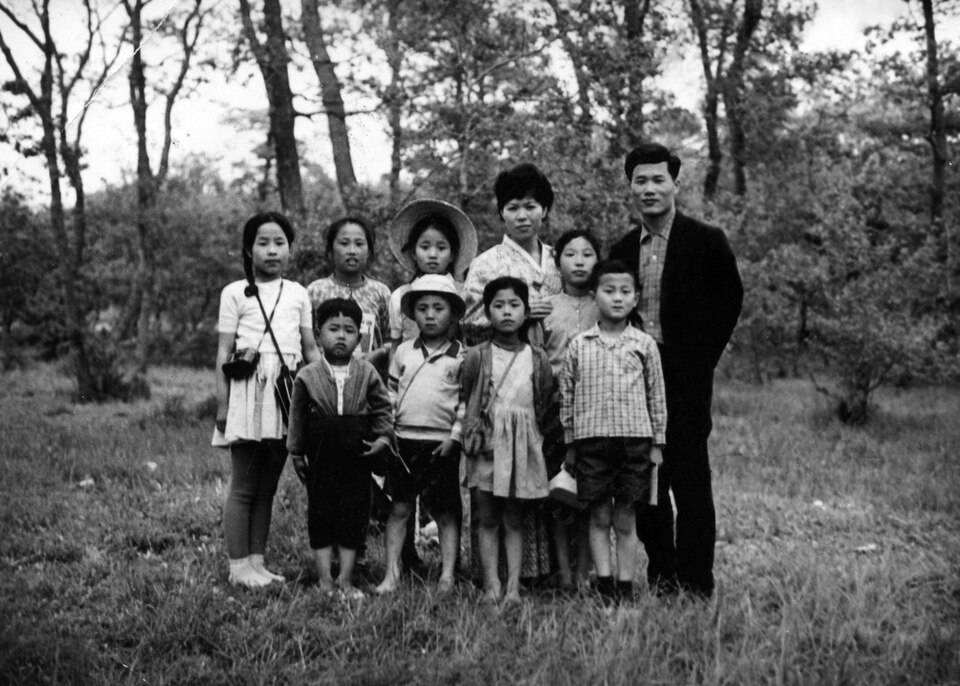
Pastor Ok Han-heum was born in 1938 in Geoje, South Gyeongsang Province. He studied English literature at Sungkyunkwan University and earned an M.Div. from Chongshin University’s seminary, then went on to earn a Th.M. from Calvin Theological Seminary in the United States and pursue a D.Min. at Westminster Theological Seminary. He was ordained in 1972, and in July 1978 he planted “Gangnam Eunpyeong Church” in Gangnam, Seoul. In September 1981, he renamed the church “Sarang Community Church.” It is said that he wanted the church’s identity to be rooted in the love of the cross conveyed in “God is love” (1 John 4:8, WEB).
Pastor Ok Han-heum served as senior pastor of Sarang Community Church for 25 years, from 1978 to 2003, after which he stepped down of his own accord and was honored as pastor emeritus. The ministry philosophy he held to throughout his life was simple — placing “raising one person as a disciple of Jesus” above large-scale revival or numerical growth as the highest priority of ministry, what is known as the “one person” philosophy.
Where did the “one person” philosophy come from?
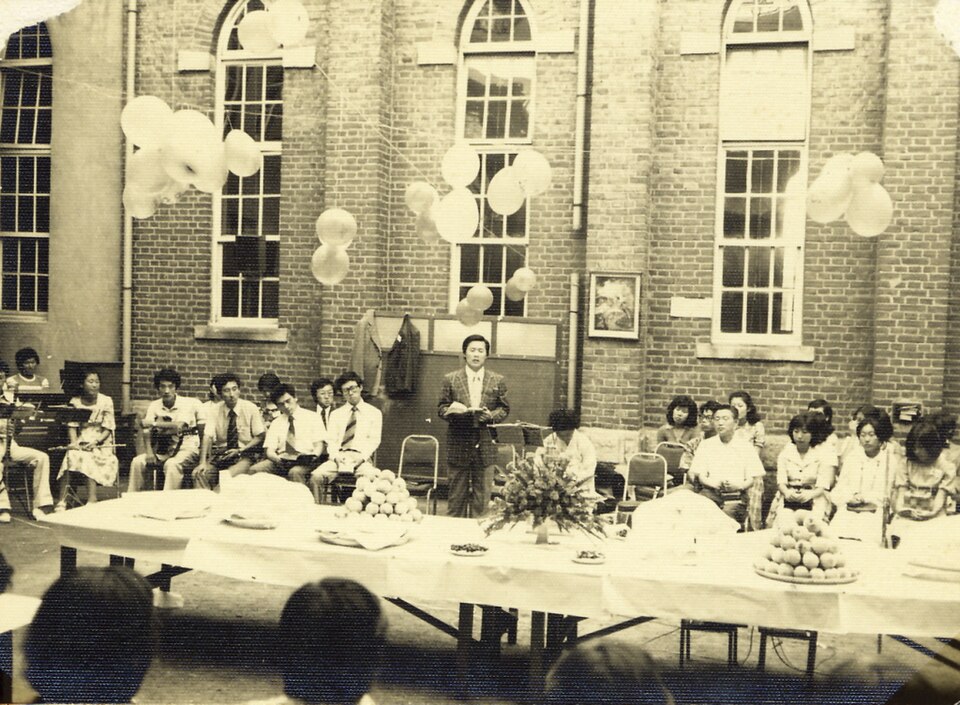
This philosophy was not a conviction he arrived at overnight. Around 1970, while serving as an evangelist at Seongdo Church, Ok Han-heum observed an interesting phenomenon. The college ministries of established churches were steadily declining, while parachurch organizations like The Navigators were, by contrast, thriving. Prompted by a college student’s request to be trained by a parachurch organization, he began analyzing why such organizations succeeded. The answer was a person-centered small-group model built around the gospel, discipling, and vision.
His theological conviction is said to have come during his studies in the United States. While at Westminster Theological Seminary, he encountered theologian Hans Küng’s work on the doctrine of the church, in which Küng explained that every layperson, as heir to the apostolic office, is without exception a disciple of Christ and one called and sent into the world. Pastor Ok Han-heum is reported to have later recalled this encounter as the moment he was born again as a seminary student. A practical intuition gained through observation was thus solidified into a firm conviction through theological study.

What kind of book is Awakening the Laity?
Awakening the Laity: Principles and Practice of Discipleship Training was first published in 1984 by the International Disciple Training Institute (Guk-je-jeja-hullyeon-won) (then a seminar room affiliated with Sarang Community Church), and a fully revised edition was released in August 2019 (International Disciple Training Institute · ISBN 9788957317846 · 380 pages).
The book’s structure moves from a first half that lays the theological groundwork for rediscovering the laity, into a second half that addresses how to apply discipleship training in actual pastoral practice.

Two years after this book’s publication, in March 1986, Pastor Ok Han-heum opened a seminar room affiliated with Sarang Community Church and began the first cohort of the “Awakening the Laity Discipleship Training Leaders’ Seminar (CAL Seminar).” This seminar room later changed its name to the “International Disciple Training Institute” and continues to this day. This intensive five-day seminar — which laypeople cannot enroll in directly, open only to senior pastors, missionaries, and full-time ministers — has spread to the point of graduating some 27,000 people cumulatively at home and abroad, with successive senior pastors of Sarang Community Church serving as its director.
Three core claims this book makes
The book’s argument can be organized broadly into three strands.
First, laypeople are not objects of care but co-laborers. The author directly challenges the conventional notion that treats laypeople merely as objects for the pastor to look after and manage. The theme running through the entire book is that laypeople must be rediscovered as co-laborers who serve the kingdom of God together with the pastor.
Second, rediscovering the laity is not a trend but biblical ecclesiology. The author argues that this is not a device for church growth or a passing theological fashion, but a fundamental task already embedded in the essential nature of the New Testament church.
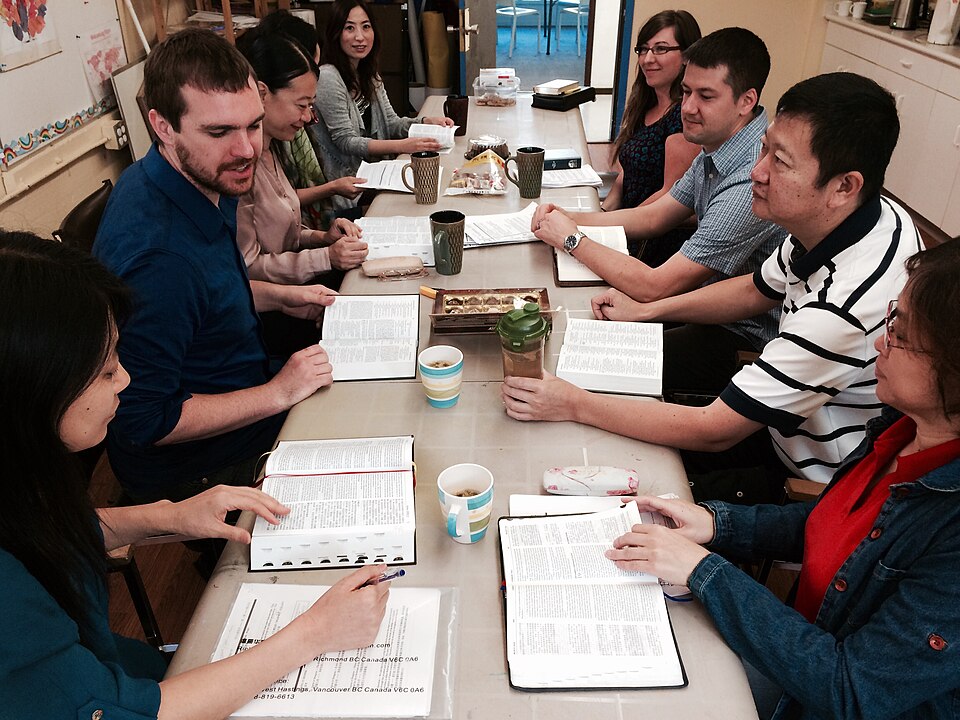
Third, to awaken the laity, the pastor himself must awaken first. This is the point that distinguishes this book from a mere program manual. The author states that awakening the laity is not a matter of adopting a new ministry methodology, but a door that opens only on the premise of the pastor’s own thoroughgoing reform. The change in the leader must come before the change in the church.
How does Scripture support this argument?
The book’s argument connects with a number of biblical passages. Jesus’s Great Commission itself is the starting point.
“Go ye therefore, and teach all nations, baptizing them in the name of the Father, and of the Son, and of the Holy Ghost: teaching them to observe all things whatsoever I have commanded you” (Matthew 28:19-20, KJV)
The Great Commission was not given only to a handful of apostles or full-time ministers, but to every person who is a disciple. Paul’s exhortation to Timothy points in the same direction.
“The things which you have heard from me among many witnesses, commit the same to faithful men, who will be able to teach others also.” (2 Timothy 2:2, WEB)
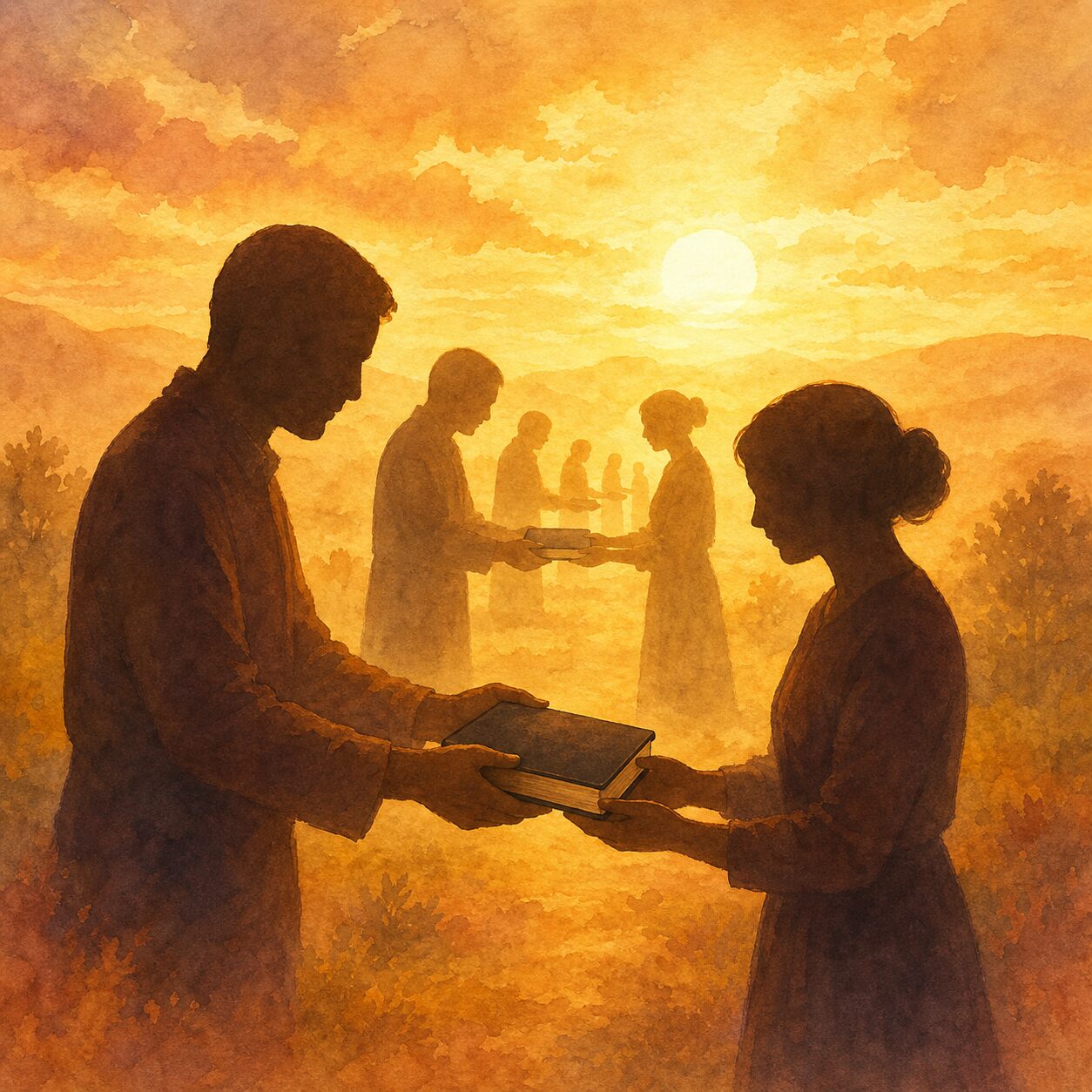
This chain — from Paul to Timothy to faithful men to yet other people — is precisely the biblical prototype of discipleship training. It is a reproducing structure in which one person raises up another, and that person raises up still another. Ephesians tells us why this structure is necessary.
“For the perfecting of the saints, to the work of serving, to the building up of the body of Christ.” (Ephesians 4:12, WEB)
The purpose for which apostles, prophets, evangelists, pastors, and teachers were established was not for them to monopolize ministry, but to equip the saints for the work of serving. The pastor’s place is not the terminus of ministry but a channel through which the saints are raised up as ministers. The picture of the early church that Acts paints is no different.
“They continued steadfastly in the apostles’ teaching and fellowship, in the breaking of bread, and prayer.” (Acts 2:42, WEB)
This community was built together not by a handful of leaders, but by the whole body of believers.
Critical assessment
This book’s strength lies in time-tested proof. It is not merely a theological claim — it is backed by the fact that the author himself practiced and refined the methodology directly at Sarang Community Church, and by the practical trace of some 27,000 seminar graduates at home and abroad. A book verified by both theory and practice together is rare.

There are, however, considerations to keep in mind beforehand. The CAL Seminar that grew out of this book is structured for senior pastors, missionaries, and full-time ministers, and individual laypeople cannot enroll directly. In other words, this book was never intended as a self-help book for laypeople to read and practice on their own, but is closer to a ministry leadership textbook that helps pastors implant discipleship training in their own churches. If a lay reader picks up this book, it would be more accurate to read it not as a guide speaking directly to them, but as a book that helps them understand “how the pastor of the church I attend ought to view me.”
Who should read this book?
This book is recommended for senior pastors and associate pastors, for laypeople serving as small-group (soon-jang/darakbang) leaders, and for any believer who has ever asked, “Why do I feel like a spectator at church?” In particular, for a pastor introducing discipleship training into his church for the first time, it remains one of the first books to open. Through this book, a lay reader will come to confirm that they are not called to be an assistant helping the pastor’s ministry, but a co-laborer called to build the kingdom of God together.
Conclusion
The Great Commission is a command to go and make disciples of all nations — not a command for pastors alone to labor at evangelism. The question Pastor Ok Han-heum posed more than 40 years ago — how do you awaken the laity? — remains valid for each of us today as well. At the church you attend, are you someone who only receives care, or are you living as a co-laborer who raises up one person as a disciple?
References
- Ok Han-heum – Wikipedia (Korean)
- Sarang Community Church – Wikipedia (Korean)
- Awakening the Laity: Principles and Practice of Discipleship Training (Ok Han-heum, International Disciple Training Institute) – Aladin
- Introduction to the International Disciple Training Institute (DMI)
- Report on cumulative CAL Seminar graduates – Christian Weekly Reunion
- Report on the format of the CAL Seminar (Discipleship Training Leaders’ Seminar) – Coram Deo
- Report on the March 1986 launch of the CAL Seminar – 365Qt
- History of Sarang Community Church
- 1966 photo of Ok Han-heum – Wikimedia Commons (license information)
- 1975 photo of the Seongdo Church farewell service – Wikimedia Commons (license information)
- Background on the formation of Pastor Ok Han-heum’s “one person” philosophy – Newsnjoy
- Matthew 28 (Korean Revised Version) – Korean Bible Society
- 2 Timothy 2 (Korean Revised Version) – Korean Bible Society
- Ephesians 4 (Korean Revised Version) – Korean Bible Society
- Acts 2 (Korean Revised Version) – Korean Bible Society