
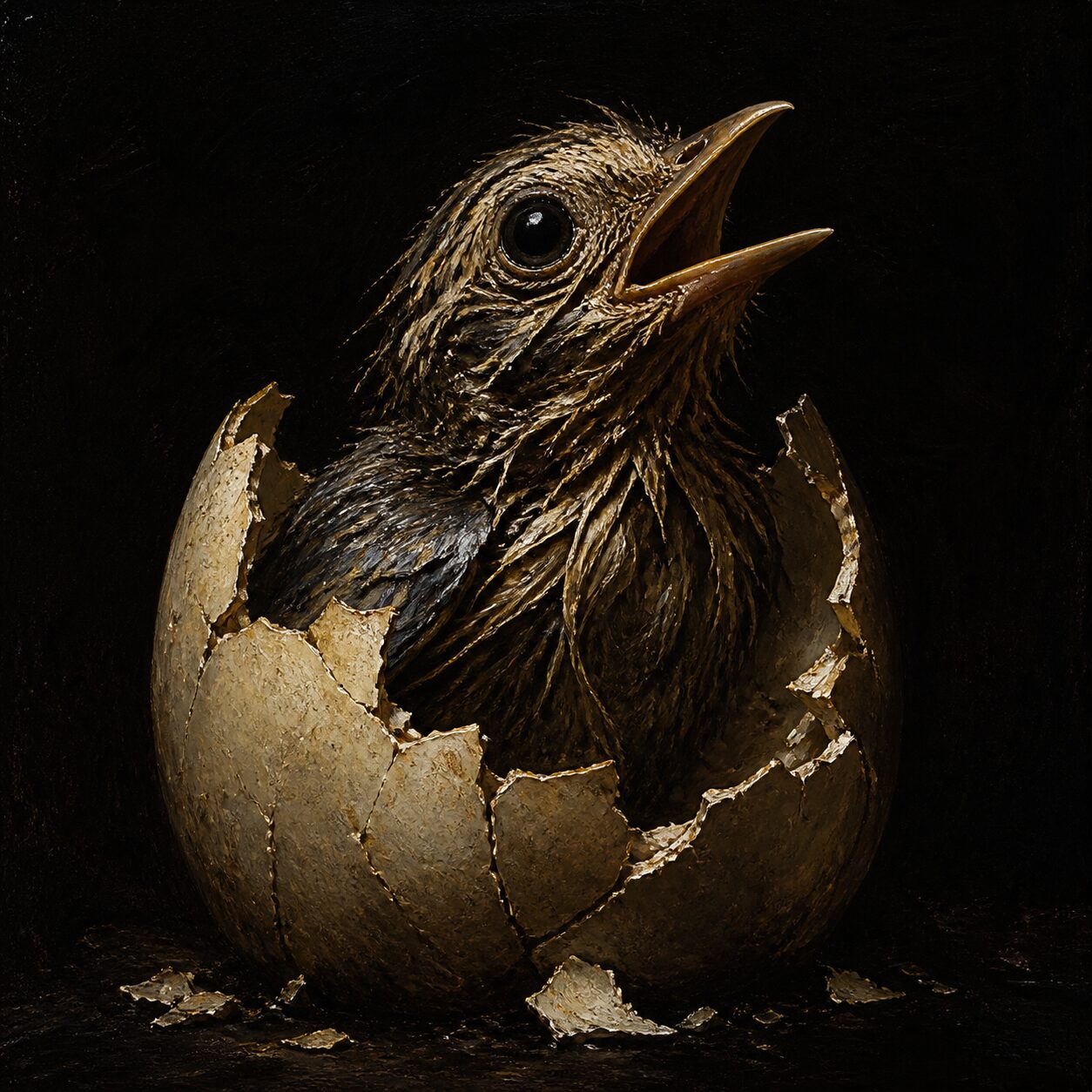
“The bird fights its way out of the egg. The egg is the world. Whoever wants to be born must first destroy a world. The bird flies to God. That God’s name is Abraxas.”(translated from Hermann Hesse’s German original) — anyone who has opened Hermann Hesse’s Demian has paused before this sentence. Few novels have painted the wandering and self-discovery of youth in images this striking. But precisely because of that intensity, Christian readers need to read this book with care. Does the bird really fly “to God” — or to its own shadow?
Who Was Hermann Hesse?
Hermann Hesse (1877–1962) was born in Calw, in the German state of Württemberg. Both of his parents were Protestant missionaries with the Basel Mission who had served in India, and his maternal grandfather, Hermann Gundert, was a missionary-scholar who compiled a Malayalam-language dictionary. Hesse grew up in a household where devout faith coexisted with intellectual openness toward unfamiliar cultures.
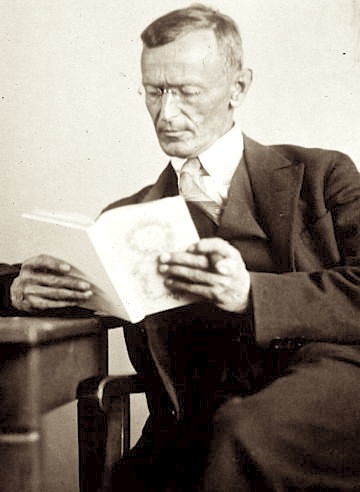
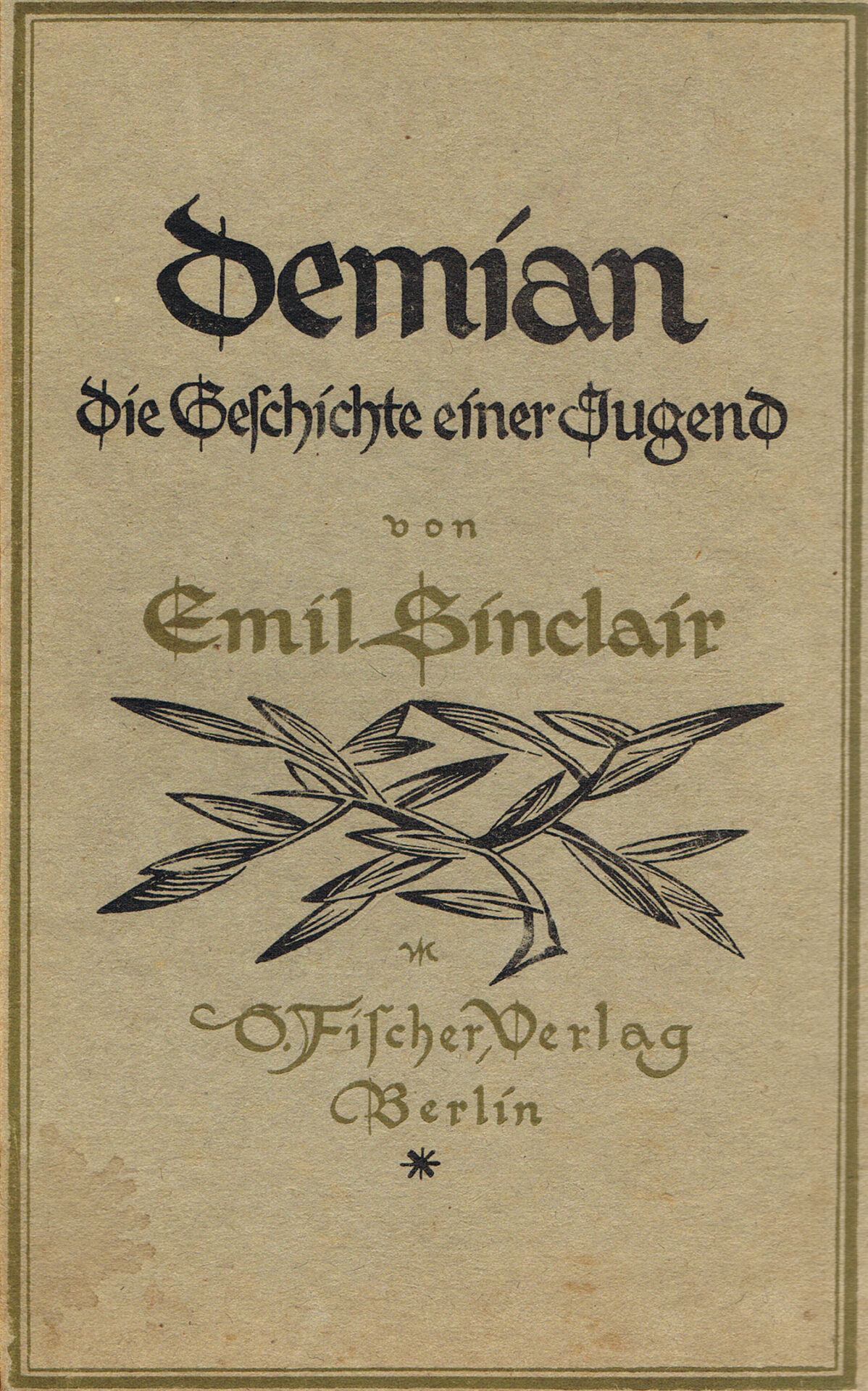
Demian was written in about three weeks, in September–October 1917. The year before, in 1916, Hesse had gone through a personal crisis — his father’s death, his son’s serious illness, and the onset of his wife’s schizophrenia — and it was around this time that he began analysis with Josef Bernhard Lang, a psychoanalyst working in the Jungian tradition. Demian was written in the aftermath of that crisis. The novel was first published in 1919 under the pseudonym “Emil Sinclair,” the narrator’s own name, and won the Fontane Prize for new writers — but in 1920, Otto Flake and Eduard Korrodi identified Hesse as the true author through stylistic analysis, forcing him to return the prize. Later editions credited him by his real name.
Hesse won the Nobel Prize in Literature in 1946. In Korea, the novel is available in several translations, including editions from Minumsa (translated by Jeon Young-ae) and Munye Publishing (translated by Gu Gi-seong); the wording differs slightly between translations, but the central images remain the same.
Plot and Key Symbols
Two Worlds, and Kromer’s Blackmail
The protagonist, Emil Sinclair, grows up in the “world of light” of a devout, middle-class household. Yet through servants and tradesmen he becomes dimly aware of a “world of darkness” — drink, crime, vagrancy. Around age ten, a local boy named Franz Kromer blackmails him over a boastful lie (that Sinclair had stolen apples), dragging him into that dark world for the first time. A transfer student, Max Demian, rescues him by resolving the Kromer affair, and from then on Demian becomes Sinclair’s spiritual guide throughout the novel.
Max Demian and the Reinterpretation of Cain
The first intellectual shock Demian gives Sinclair is a reinterpretation of the story of Cain and Abel in Genesis. Demian argues that the “mark” on Cain’s forehead was not the brand of a murderer but an aura given off by someone of unusual courage and intelligence — and that the fearful majority, unable to understand such superiority, simply invented the story of “the murderer’s mark.” It is a bold literary move, but it is not what the biblical text itself says. (The English Scripture quotations here are from the King James Version and the World English Bible, both public domain.)
And the LORD said unto him, Therefore whosoever slayeth Cain, vengeance shall be taken on him sevenfold. And the LORD set a mark upon Cain, lest any finding him should kill him. (Genesis 4:15, KJV)
The mark the text describes is not a badge of superiority, but God’s mercy — protecting the life of a man who had murdered his own brother. Demian’s reinterpretation erases that mercy and replaces it with “the privilege of the strong.”
Abraxas, and the Bird Breaking Out of the Egg
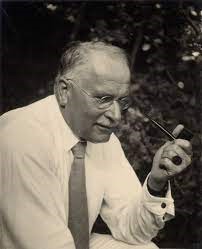
During his boarding-school years, Sinclair falls into dissipation, then meets Pistorius, an organist, who teaches him the language of inner exploration. At the center of that language stands Abraxas — a Gnostic deity said to embrace both the divine and the demonic, both good and evil, at once. As if answering Sinclair’s own drawing of “a bird breaking out of an egg” (inspired by a sparrowhawk crest above his family’s old gateway), Demian sends him a note bearing that famous line. Carl Jung likewise understood Abraxas as a being in whom “all opposites are united into one,” and under the influence of psychoanalysis, Hesse made this non-dualistic conception of God the novel’s central symbol.
Later, Sinclair breaks even with Pistorius, dismissing him as “musty” and outdated. This process of surpassing one teacher after another is itself the growth this novel portrays — until, in the end, one leans on no one and follows only the voice within.
Frau Eva, and War
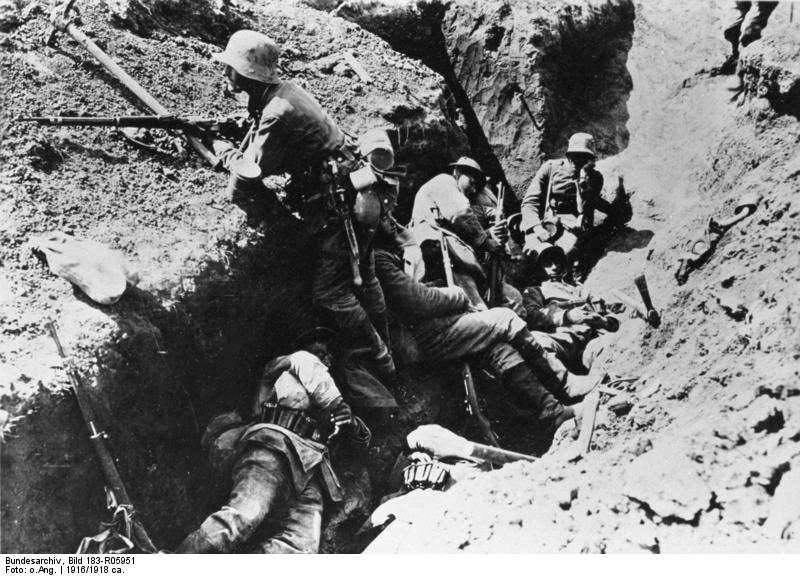
After entering university, Sinclair meets Demian’s mother, Frau Eva. She overlaps with the goddess-like figure he has long seen in his dreams, occupying a double role as spiritual mother and object of romantic longing. Yet the novel does not end in romantic fulfillment, but in war. When the First World War breaks out, Demian and Sinclair enlist together; the wounded Sinclair wakes in a field hospital to find the wounded Demian lying beside him. Demian dies after leaving him a farewell kiss on behalf of both himself and Frau Eva — and now Sinclair must stand alone, without a teacher.
Reading It Again Through the Eyes of Faith
Demian‘s journey carries one truth within it — that a human being holds real conflict inside, and does not grow simply by swallowing an inherited answer whole. Scripture, too, does not look away from this inner division.
O wretched man that I am! who shall deliver me from the body of this death? (Romans 7:24, KJV)
But Paul’s question ends in exactly the opposite place from Hesse’s conclusion.
I thank God through Jesus Christ our Lord. So then with the mind I myself serve the law of God; but with the flesh the law of sin. (Romans 7:25, KJV)
Sinclair finds the answer to his inner conflict in “following the daimon within.” Abraxas is the name given to that daimon — a self-fashioned god, without judgment, who fuses good and evil into a single being. But Scripture’s diagnosis of the human heart is not that it holds two halves waiting to be unified; it is that the heart itself is sick.
The heart is deceitful above all things, and desperately wicked: who can know it? (Jeremiah 17:9, KJV)
This is why some Korean Christian reviews read Abraxas alongside the serpent of Genesis 3 — the attempt to fuse good and evil, they argue, is no different from the logic of the temptation that promised, “you will know good and evil.” The call to seek God within oneself runs in the opposite direction from the salvation Scripture describes.
I am crucified with Christ: nevertheless I live; yet not I, but Christ liveth in me. (Galatians 2:20, KJV)
Therefore if any man be in Christ, he is a new creature: old things are passed away; behold, all things are become new. (2 Corinthians 5:17, KJV)
Sinclair’s journey and Paul’s confession begin at the same point — “it is no longer I who live” — and then split into opposite conclusions. Sinclair breaks out of his old self to advance toward a deeper self; Paul confesses that his old self died on the cross, and that Christ now lives in its place. One is self-discovery. The other is self-denial.
Interestingly, Korean Christian media itself is divided on this book. For instance, one review published in Christianity Daily reads “breaking the egg” only favorably, as a metaphor for conversion or calling, without addressing Abraxas and the novel’s core device of merging good and evil. That alone shows how easily this book can be misread, without discernment, as speaking in the language of faith while carrying the opposite message.
Don’t be conformed to this world, but be transformed by the renewing of your mind, so that you may prove what is the good, well-pleasing, and perfect will of God. (Romans 12:2, WEB)
What This Book Still Offers, and Who Should Read It
There is no reason to avoid recommending Demian. Few novels portray as honestly the hypocrisy and double life of adolescence, or the fractures that appear when an inherited faith has not yet become one’s own. But readers must discern where that honesty leads. Hesse himself later settled in Montagnola, Switzerland, for the rest of his life, continuing the lineage of self-exploration in works like Siddhartha and Steppenwolf — and at the end of that road, too, the answer remained “within the self.”

For those who lead discipleship training or minister to young people, this book can actually open a valuable door for conversation — a way to understand where the powerful modern call to “just be yourself” comes from, and why so many young people are drawn to this novel. But one question must always accompany it: is what I need to find a deeper version of myself — or Christ, who died in my place and now lives within me? Demian answers the first question. The gospel answers the second.
References
- Hermann Hesse — Wikipedia
- Demian — Wikipedia
- UCSB Hermann Hesse Project — Life
- Hermann Hesse — New World Encyclopedia
- Demian (tr. Jeon Young-ae, Minumsa) — Aladin
- Demian (tr. Gu Gi-seong, Munye Publishing) — Aladin
- Abraxas and Genesis 3 — Christian Life review
- “Establishing Biblical Values: Setting Down My Own Thinking Comes First” — Christianity Daily