
How far can one person’s faithful obedience reach? Paul writes his last letter from a Roman prison. “For I am already being offered, and the time of my departure has come” (2 Timothy 4:6, WEB). Those who had stood beside him were scattered. “Only Luke is with me” (2 Timothy 4:11, WEB). Among the charges Paul left Timothy in those final days is 2 Timothy 2:2. This one verse holds the principle of discipleship: entrust the gospel to the next person, and let that person teach others in turn.

The Text — 2 Timothy 2:1-2 (WEB)
1 You therefore, my child, be strengthened in the grace that is in Christ Jesus.
2 The things which you have heard from me among many witnesses, commit the same to faithful men, who will be able to teach others also.
(2 Timothy 2:1-2, WEB)
The command of 2 Timothy 2:2 stands on 2 Timothy 2:1. Paul first says, “…be strengthened in the grace that is in Christ Jesus” (2 Timothy 2:1, WEB), and only then tells Timothy to entrust. Making disciples does not begin with a technique or a program. It is the work of someone who has first been gripped by grace passing that grace on to the next person.
Context — What Paul Held On To When He Was Left Alone
2 Timothy 4 does not hide Paul’s situation. Demas loved this present world and left, and other co-workers had gone to their own fields (2 Timothy 4:10). Paul confesses, “At my first defense, no one came to help me, but all left me…” (2 Timothy 4:16, WEB). Yet he goes on: “But the Lord stood by me, and strengthened me, that through me the message might be fully proclaimed, and that all the Gentiles might hear…” (2 Timothy 4:17, WEB).
People left, but the Lord stood beside him. And to the very end, Paul’s concern was that the message would reach the Gentiles. So he entrusts Timothy with a way for the word to keep going after he himself is gone. 2 Timothy 2:2 is not the resignation of an imprisoned apostle but a final commission meant to keep the word from stopping.
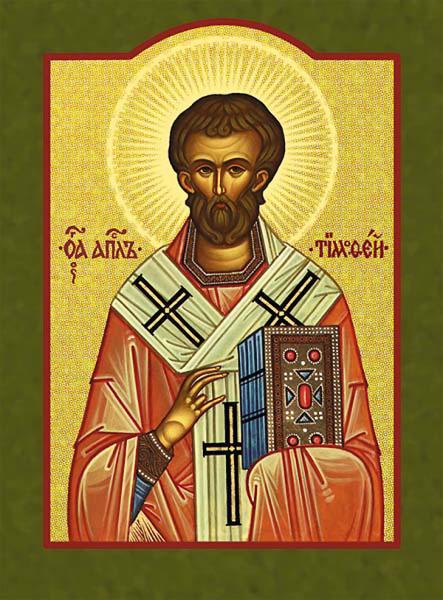
How Timothy Became Timothy
Timothy, too, was someone who had received from others. Acts introduces him when Paul reached Lystra: “…behold, a certain disciple was there, named Timothy…” (Acts 16:1, WEB). It then adds, “The brothers who were at Lystra and Iconium gave a good testimony about him” (Acts 16:2, WEB).
Yet Timothy’s faith had been passed down before he ever met Paul. Paul writes of the faith “…which lived first in your grandmother Lois, and your mother Eunice, and, I am persuaded, in you also” (2 Timothy 1:5, WEB). He also reminds him, “From infancy, you have known the holy Scriptures…” (2 Timothy 3:15, WEB). The word first flowed from grandmother to mother and from mother to son, and Paul added to it a life of walking together.

Paul calls Timothy “…my beloved and faithful child in the Lord…” (1 Corinthians 4:17, WEB), and he tells the church at Philippi, “…as a child serves a father, so he served with me in furtherance of the Good News” (Philippians 2:22, WEB). The Timothy who received 2 Timothy 2:2 was himself already the fruit of a word entrusted to him.
Four Generations in One Verse
Read 2 Timothy 2:2 slowly and four generations appear. Paul (generation 1) passed the word to Timothy (generation 2); Timothy entrusts it to faithful men (generation 3); and they teach others (generation 4). One sentence holds four generations.
What is to be entrusted is what the verse calls “The things which you have heard from me among many witnesses…” (2 Timothy 2:2, WEB). It is not special knowledge Timothy received in secret, but the same gospel taught openly before many people. Paul had already urged, “Hold the pattern of sound words which you have heard from me…” (2 Timothy 1:13, WEB). Generations change, but the content must not. Reproduction is not inventing something new; it is passing on what was received without changing it.
Commit — A Treasure Entrusted
The Greek word translated commit is παράθου (parathou), the imperative of the verb παρατίθημι (paratithēmi). In the New Testament this verb is used for setting food before people (Luke 9:16; 11:6), and also for entrusting something precious to someone trustworthy. On the cross Jesus prayed, “Father, into your hands I commit my spirit!” (Luke 23:46, WEB). Paul told the Ephesian elders, “Now, brothers, I entrust you to God, and to the word of his grace…” (Acts 20:32, WEB). In these verses where the same verb appears, the one who entrusts is handing over what is most precious.
The related noun παραθήκη (parathēkē) means what has been entrusted, a deposit. Twice Paul tells Timothy to guard it: “Timothy, guard that which is committed to you…” (1 Timothy 6:20, WEB), and “That good thing which was committed to you, guard through the Holy Spirit who dwells in us” (2 Timothy 1:14, WEB). The Korean Revised Version renders all of these with the same Korean word, butak, and in the World English Bible the link shows up in the verbs commit and entrust, so readers in either language can follow the connection.
So the gospel is a treasure to guard and also a treasure to entrust again. Guard it without entrusting it, and it becomes treasure buried in the ground; entrust it without guarding it, and its content changes. The guard of 2 Timothy 1:14 and the commit of 2 Timothy 2:2 belong together. Jesus himself said, “…to whom much was entrusted, of him more will be asked” (Luke 12:48, WEB).

Faithful Men — What to Look For
The ones to be entrusted are faithful men (πιστοῖς ἀνθρώποις). The adjective used here, πιστός (pistos), is the same word Paul uses when he writes to the Corinthians, “Here, moreover, it is required of stewards, that they be found faithful” (1 Corinthians 4:2, WEB). What is first required of a steward is not dazzling talent but faithfulness. The same word appears when Paul calls Timothy his faithful child (1 Corinthians 4:17). The Paul who tells Timothy to look for faithful people had already seen that faithfulness in Timothy.
The second mark is that they are men “…who will be able to teach others also” (2 Timothy 2:2, WEB). Someone able to teach is not merely someone who speaks well. 2 Timothy 2:24 describes the Lord’s servant as one who must “…be gentle towards all, able to teach, patient,” (2 Timothy 2:24, WEB). It is a person who, with gentleness and patience, opens up to others the word he has received. The original (ἱκανοὶ ἔσονται) is in the future tense: they will become able to teach. Paul is not saying to look for finished teachers from the start. There is an expectation that faithful people, once entrusted with the word, will grow into people who can teach.

Addition and Multiplication — A Road That Starts Slowly and Goes Far
A simple hypothetical calculation shows why reproduction matters. The numbers below are a simple illustration, not statistics from actual ministry.
- Addition: If one person shares the gospel with one new person every day, that is 365 people in 1 year, 3,650 in 10 years, and 7,300 in 20 years.
- Multiplication: If one person spends 1 year deeply discipling one other person, and from the next year on each of the two disciples one more person, the number doubles every year: 1,024 after 10 years and 1,048,576 after 20 years.
The point to notice in this calculation is that for the first twelve years addition looks larger. Through year 12, multiplication reaches only 4,096, still short of addition’s 4,380; in year 13 it overtakes it at 8,192. Reproduction is slow at first and hard to see. That is why it takes patience. Of course people are not numbers, and discipleship never proceeds this mechanically. What the calculation shows is the direction.
Scripture records scenes where this principle actually unfolded. In Ephesus Paul “…separated the disciples, reasoning daily in the school of Tyrannus” (Acts 19:9, WEB), and Acts testifies, “This continued for two years, so that all those who lived in Asia heard the word of the Lord Jesus, both Jews and Greeks” (Acts 19:10, WEB). The church in Thessalonica became imitators of Paul and of the Lord, and an example to all the believers in Macedonia and Achaia (1 Thessalonians 1:6-7). Paul rejoices: “For from you the word of the Lord has been declared, not only in Macedonia and Achaia, but also in every place your faith toward God has gone out…” (1 Thessalonians 1:8, WEB).
Discipleship Passed On Through Life
What Paul entrusted to Timothy was not knowledge alone. Paul tells him, “But you did follow my teaching, conduct, purpose, faith, patience, love, steadfastness,” (2 Timothy 3:10, WEB) and goes on to the persecutions and sufferings he endured, “…those things that happened to me at Antioch, Iconium, and Lystra…” (2 Timothy 3:11, WEB). Lystra was Timothy’s hometown (Acts 16:1). Timothy saw up close not only the teaching but a life that endured suffering in keeping with that teaching.
That is why Paul could say, “Be imitators of me, even as I also am of Christ” (1 Corinthians 11:1, WEB). This was also Jesus’ way. When he appointed the twelve, it was first “…that they might be with him, and that he might send them out to preach,” (Mark 3:14, WEB) (see Mark 3:14, the First Principle of Discipleship). Being with him comes before being sent. As Jesus said, “…everyone when he is fully trained will be like his teacher” (Luke 6:40, WEB); a disciple grows to resemble not only what he heard from his teacher but what he saw.

There are modern examples of people who took hold of this principle. According to the official history of The Navigators, in 1933 Dawson Trotman spent time with U.S. Navy sailor Les Spencer, praying, studying the Bible, and memorizing Scripture together. When one of Spencer’s shipmates asked the secret of his changed life, Spencer brought him to Trotman and asked him to teach the man what he had taught Spencer, and Trotman answered that Spencer should teach him himself. Later, on their ship, the battleship West Virginia, 125 men were growing in Christ and sharing their faith, and by 1945, as the world war ended, thousands of men on ships and bases around the world were learning the word person to person, the organization records. They describe this as the vision of 2 Timothy 2:2.
Practice — Starting Today with One Person
1. First, be strengthened in grace
2 Timothy 2:2 comes after 2 Timothy 2:1. I must first be someone who keeps learning the word and remains in grace. As it is written, “…knowing from whom you have learned them” (2 Timothy 3:14, WEB), keep learning from the one who entrusted the word to you.
2. Pray for and look for one or two faithful people
Jesus prayed all night before he chose the twelve (Luke 6:12-13). Look not for the most noticeable person but for someone who faithfully keeps what is entrusted (1 Corinthians 4:2). Consider too whether they can make time to be together and whether they have a heart to learn.
3. Be with them and show them your life
Read Scripture together, pray together, and let them see what it looks like to live by the word in ordinary life. Paul told the Thessalonians that they were “…well pleased to impart to you, not the Good News of God only, but also our own souls…” (1 Thessalonians 2:8, WEB). Discipleship is not finishing a workbook; it is sharing a life.
4. Talk about the next person from the beginning
The goal of 2 Timothy 2:2 is others also. From the start, ask whom they will share this word with. When you raise up small-group leaders, include raising up the next leader as part of that role. When the one who learned begins to teach, the word goes deeper in that person too.

Four Questions to Ask Myself Today
Follow the four generations of 2 Timothy 2:2 and ask yourself:
- Who is my Paul, the one who entrusted the word to me? Am I still learning from him?
- Who is my Timothy, the one I am walking with now?
- Am I entrusting the word to that person so that he can teach others, or am I making him depend only on me?
- Am I praying together for the others that person will raise up?
One Verse That Carries the Great Commission Forward
Jesus gave his command as the one to whom all authority in heaven and on earth has been given. “Go, and make disciples of all nations, baptizing them in the name of the Father and of the Son and of the Holy Spirit, teaching them to observe all things that I commanded you” (Matthew 28:19-20, WEB). Making disciples of all nations does not end in one generation. The command continues into the next generation when those who were taught become people who teach others to observe (see Teaching Them to Obey). 2 Timothy 2:2 shows how that command actually carried forward in the days of Paul and Timothy.
And the command comes with a promise: “Behold, I am with you always, even to the end of the age” (Matthew 28:20, WEB). Just as Paul, in a prison where everyone had left, confessed, “But the Lord stood by me, and strengthened me…” (2 Timothy 4:17, WEB), we are not alone on the long road of raising up one person.
Paul did not see generation 4 with his own eyes. But he entrusted. When I faithfully entrust the word to one person today, it is a seed sown toward a next generation I will never fully see.
To whom will you entrust it?
References
- YouVersion — 2 Timothy 2 (Korean Revised Version, in Korean)
- YouVersion — 2 Timothy 1 (Korean Revised Version, in Korean)
- YouVersion — 2 Timothy 4 (Korean Revised Version, in Korean)
- BibleHub — 2 Timothy 2:2 Interlinear
- BibleHub — Strong’s Greek 3908 (paratithēmi, to entrust)
- BibleHub — Strong’s Greek 3866 (parathēkē, a deposit)
- BibleHub — 2 Timothy 2:2 Parallel Verses
- The Navigators — History