
Have you ever noticed how hard it has become to read a whole chapter of the Bible through to the end, interrupted again and again by the buzz of your smartphone? Nicholas Carr’s The Shallows: What the Internet Is Doing to Our Brains gives that uncomfortable feeling a scientific vocabulary. The internet, he argues, is not merely stealing our time; it is changing the very way we think, read, and remember.
In the book’s first chapter, Carr opens up about his own experience. He confesses that he was once a scuba diver deep in a sea of words, but now he zips along the surface like a man on a Jet Ski. That confession is anything but a stranger’s problem for the Christian who stands under the call to meditate deeply on God’s Word. In this review we will look at the book’s central claims together with the main criticisms of them, and then ask from Scripture what the diagnosis means for the life of a disciple.

The Author and the Book
Nicholas Carr is an American journalist who writes about the human consequences of technology. He was educated at Dartmouth College and Harvard University and served as executive editor of the Harvard Business Review. His writing has appeared in The Atlantic, The Wall Street Journal, The New York Times, and elsewhere, and his books have been translated into more than 25 languages.
The Shallows expands the argument of his 2008 Atlantic cover essay, Is Google Making Us Stupid? Published by W. W. Norton in 2010, it became a New York Times bestseller and was a finalist for the 2011 Pulitzer Prize in General Nonfiction. In 2020 an expanded 10th-anniversary edition appeared, with a long new afterword on how smartphones and social media are influencing our thoughts and emotions. The Korean edition was published by Chungrim, translated by Choi Ji-hyang, and in the same year a revised and expanded 10th-anniversary Korean edition came out, subtitled The Internet Is Changing the Structure of Our Brains.

The Book’s Central Argument
Carr’s case can be summed up in one sentence: a medium is not a neutral tool but a hand that reshapes our brain.
1. Neuroplasticity — the brain rewires itself to the tools we use
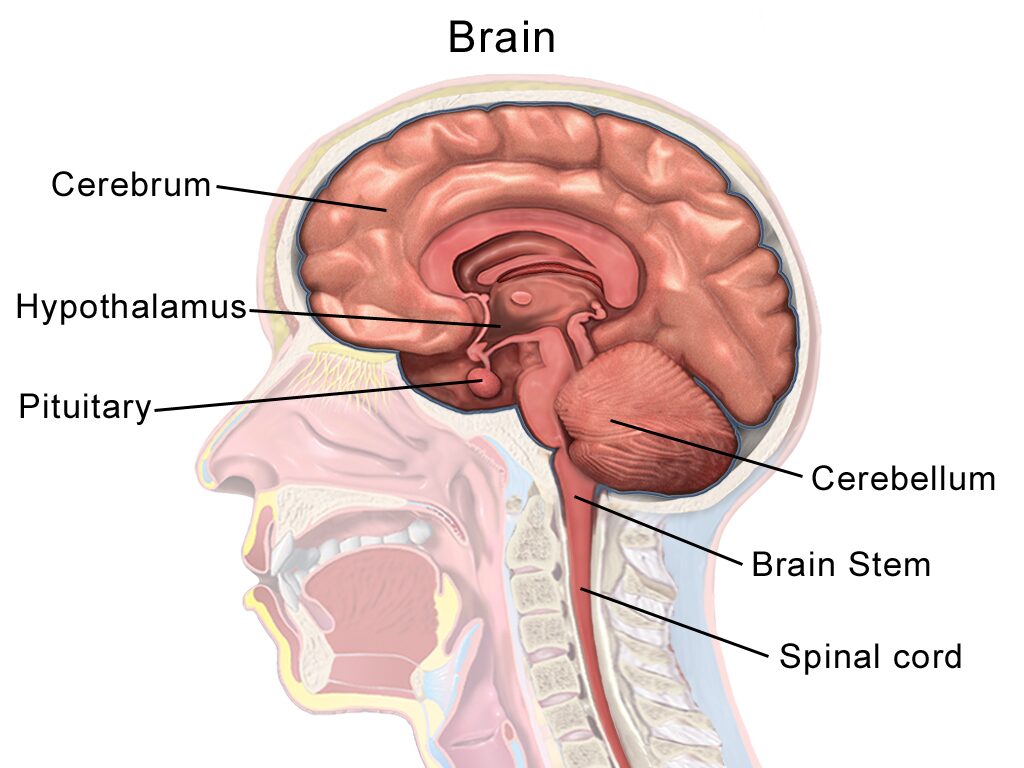
Drawing on the work of scholars such as the neuroscientist Michael Merzenich and the reading researcher Maryanne Wolf, Carr explains neuroplasticity — the fact that the human brain changes physically across a lifetime. Wolf’s research shows that human beings are not born able to read; the very process of learning to read forges new circuits in the brain. Circuits we use often grow stronger, and those we neglect grow weaker. If so, what we read each day, and how we read it, shapes the brain we end up with.
2. The intellectual ethic of the book and of the internet
Carr holds that every intellectual technology carries an intellectual ethic that trains the thinking habits of those who use it. The printed book cultivated an attention that lingers on one object and follows an argument or a story to its end, making deep and contemplative thought possible. The internet, by contrast, trains us to pick up small fragments of information quickly from many sources. The same person, in other words, becomes a different kind of reader depending on the medium in which he spends his time.

3. The price of becoming good at skimming
As a result, we grow ever more skilled at skimming, while losing the ability to sink deeply into one thing and reflect. The studies Carr cites suggest that hyperlinks hinder comprehension more than they help: the constant judgment of whether to click a link adds a cognitive load that eats away the attention we need for the text itself. The scuba diver and the Jet Ski from the opening describe exactly this change. The surface is wide and fast, but what lies in the depths cannot be seen.

4. The cost of interruption and the outsourcing of memory
Frequent interruptions and task-switching overload working memory and rob information of the chance to move into long-term memory. Carr goes further, arguing that the internet tempts us to hand even our memory over to something outside us. Since everything can be searched, we stop feeling any need to store things in our hearts. Yet according to Carr, this does not free up space in the brain for other work. Because our powers of thought grow rather than shrink as we build memories, once we start using the Web as a substitute for personal memory rather than a supplement to it, we risk emptying the storehouse of our minds.

Reading Critically
The book’s influence is clear. Among the reviews Carr’s official site gathers, The New York Times Book Review called it essential reading for our internet age, and Slate called it a Silent Spring for the literary mind. But a fair reading also listens seriously to the objections.
First, the criticism that the science is one-sided. In his New York Times review, the science writer Jonah Lehrer granted that the internet changes our brains, but pointed out that every experience changes our brains. Citing studies Carr did not mention, such as research finding that video games improved visual attention and the speed of information processing, he argued that the weight of the scientific evidence actually suggests the internet and related technologies are good for the mind.
Second, the criticism that this is one more moral panic over a new medium. In his New York Times essay Mind Over Mass Media, the psychologist Steven Pinker reminded readers that the printing press, newspapers, paperbacks, and television were each once denounced as threats to people’s brainpower and moral fiber. Over the decades in which television and radio spread, he noted, IQ scores rose continuously.
Third, the question of whether we ever really read more deeply. The technology policy analyst Adam Thierer praised the book highly, yet asked whether people before the internet were not in fact spending their evenings in front of the television rather than in deep reading. He also regretted that Carr offered a diagnosis with almost no practical way of managing distraction. Thierer himself describes keeping a technology Sabbath, setting aside a day or at least an evening away from his devices.
Interestingly, even Pinker, the sharpest of the critics, says that habits of deep reflection never come naturally to people; they must be deliberately acquired and constantly maintained. His own prescription was not to blame technology but to practice strategies of self-control, such as turning off e-mail while working and putting the phone away at dinner. In the end, the critics and the author meet at one point: the capacity for deep reading does not preserve itself, and what we repeatedly give our attention to determines the shape of our minds. It is right here that this book meets discipleship.
For Christians — What Wears Away Is the Muscle of Meditation
Translated into the language of faith, Carr’s central thesis runs like this: if media erode our capacity for deep reading through neuroplasticity, the first thing to wear away may be our capacity to meditate deeply on God’s Word. For of all books, the Bible is the one given to be read slowly, repeatedly, and thoughtfully.
The blessed person in Scripture is not the distracted person but the one who lingers. Psalm 1:2 portrays him this way: “but his delight is in Yahweh’s law. On his law he meditates day and night.” (Psalm 1:2, WEB). God’s command to Joshua is the same: “This book of the law shall not depart out of your mouth, but you shall meditate on it day and night, that you may observe to do according to all that is written therein…” (Joshua 1:8, WEB). To meditate day and night stands at the opposite pole from skimming. It is a kind of reading that does not end with a single click, but lingers long over one text, chewing on it until it finally issues in doing what is written.
Several Christian writers have already taken up Carr’s diagnosis in spiritual terms. In 12 Ways Your Phone Is Changing You, Tony Reinke treats twelve ways smartphones change us, titling his first chapter We Are Addicted to Distraction and his fourth We Lose Our Literacy. David Mathis, referring to Carr’s book, says that what matters more than paper or screen is not the medium but meditation. His counsel is to learn to read the Bible differently from the way we read our phones, to slow down and chew, and to enjoy God himself in his word. A review in the Reformed magazine Modern Reformation warns that because the life of discipleship grows through practices that require concentration, such as listening, reading, meditating, and praying, a person who lives in a perpetually distracted state will have difficulty growing into a mature follower of Jesus.
Yet Carr’s neuroplasticity thesis can become a ground for hope rather than despair. If repetition hardens circuits, holy repetition can engrave holy habits. The apostle Paul’s exhortation points to exactly that renewal: “Don’t be conformed to this world, but be transformed by the renewing of your mind…” (Romans 12:2, WEB). The renewing of the mind is the work of the Holy Spirit, but he does that work where we linger before the Word. The training that withdraws our attention from the infinite scroll and settles it again on one text — that is discipleship in the digital age.
Five Practices for Lingering in the Word Again
If Carr’s diagnosis has left you heavy-hearted, respond with small practices rather than guilt. Scripture already shows the way.
- Read one passage many times. Rather than skimming many chapters a day, reread one short passage morning and evening. The day-and-night meditation of Psalm 1:2 is a matter of lingering, not of quantity.
- Make a place without notifications. While you read the Word, leave your phone in another room. “…Be still, and know that I am God…” (Psalm 46:10, WEB). Setting aside one evening a week to put your devices down is also a good start.
- Store it in your heart instead of searching. In an age that outsources memory, memorization becomes a form of resistance. “I have hidden your word in my heart, that I might not sin against you.” (Psalm 119:11, WEB). Choose one verse this week and learn it by heart.
- Sit at the Lord’s feet. Beside busy Martha, Mary “…sat at Jesus’ feet, and heard his word” (Luke 10:39, WEB), and Jesus said, “…Mary has chosen the good part, which will not be taken away from her” (Luke 10:42, WEB). Hold on to the word you have read, pause, and answer it in prayer.
- Read together, and teach one another to obey. The Lord commanded his disciples, “teaching them to observe all things that I commanded you…” (Matthew 28:20, WEB). The disciple-making of the Great Commission does not end with passing on information; it means staying together with the Word until it is obeyed in life. In your small group, read one passage slowly together and share what each of you will put into practice.

Who Should Read It
This book is worth recommending to Christians who want to guard the depth of their faith in a digital age. It will be a good guide especially for those who have found it harder to read Scripture through to the end, for leaders of small groups and discipleship who wonder why people cannot stay with the text, and for parents thinking about their children’s media habits in terms of spiritual formation. This is not a Christian book, however, and some of its scientific claims remain disputed. Read it alongside the criticisms above, and rather than accepting a secular diagnosis as destiny, read it as a mirror that invites us into the deeper waters of meditating on the Word. As Thierer put it, this book is best read slowly.
References
- Nicholas Carr official site — About the author
- The Shallows — Nicholas Carr official site (awards, review excerpts, 10th-anniversary edition)
- The Shallows, revised and expanded 10th-anniversary Korean edition — Aladin (in Korean)
- Our Cluttered Minds — Jonah Lehrer, The New York Times
- Mind Over Mass Media — Steven Pinker, The New York Times
- Book Review: Nicholas Carr’s The Shallows — Adam Thierer, Technology Liberation Front
- Review of The Shallows — Andy Wilson, Modern Reformation
- Are Paper Bibles Better? — David Mathis, Desiring God
- 12 Ways Your Phone Is Changing You — Tony Reinke, Crossway