
In our previous study we followed Genesis 1 and met the Creator who made the heavens and the earth by His word and rested on the seventh day. If chapter 1 is the wide-angle picture of the whole universe, Genesis 2 is the scene in which that camera narrows to a single garden, to a single man. The question of chapter 1—”Who is the God who made the world?”—now becomes a nearer one: “How did that God form me, and where did He place me?”
The principle of this exposition is unchanged: interpreting Scripture by Scripture. Rather than being pulled along by human opinion or the controversies of the age, we follow how other passages of the Bible unfold what Genesis 2 says. That is why several Scriptures that illuminate Genesis 2 appear alongside it. The Korean original cites the public-domain 개역한글 (Korean Revised Version, 1961) for its direct quotations; the English Scripture quotations here are from the King James Version and the World English Bible (both public domain), with the version noted at each quotation.
“This Is the History of the Generations” — the Narrowing Camera (Genesis 2:4)
From the place where the heavens and the earth were finished and even the rest of the seventh day was complete (Genesis 2:1-3, which we considered together in the study of chapter 1), the text opens a new heading.
This is the history of the generations of the heavens and of the earth when they were created, in the day that Yahweh God made the earth and the heavens. (Genesis 2:4, WEB)
“The history of the generations”—this phrase is the first appearance of a structural marker that runs through the whole of Genesis. Called toledoth in Hebrew (“generations, account”), it divides Genesis into sections and narrows the focus each time. Here the camera moves from the creation of the universe to the story of the man made within that universe.
Another thing worth noticing is the name of God. If chapter 1 calls Him the mighty Creator “God (Elohim),” chapter 2 calls Him by the covenant name “Yahweh God (the LORD God).” The transcendent Creator of chapter 1 now comes near in chapter 2 as the personal God who Himself handles the dust and speaks with man. The two chapters are not two contradictory accounts but one painting that joins the same creation as a wide picture and a close one.
Formed from Dust, Filled with the Breath of Life — Man Becomes a Living Soul (Genesis 2:7)
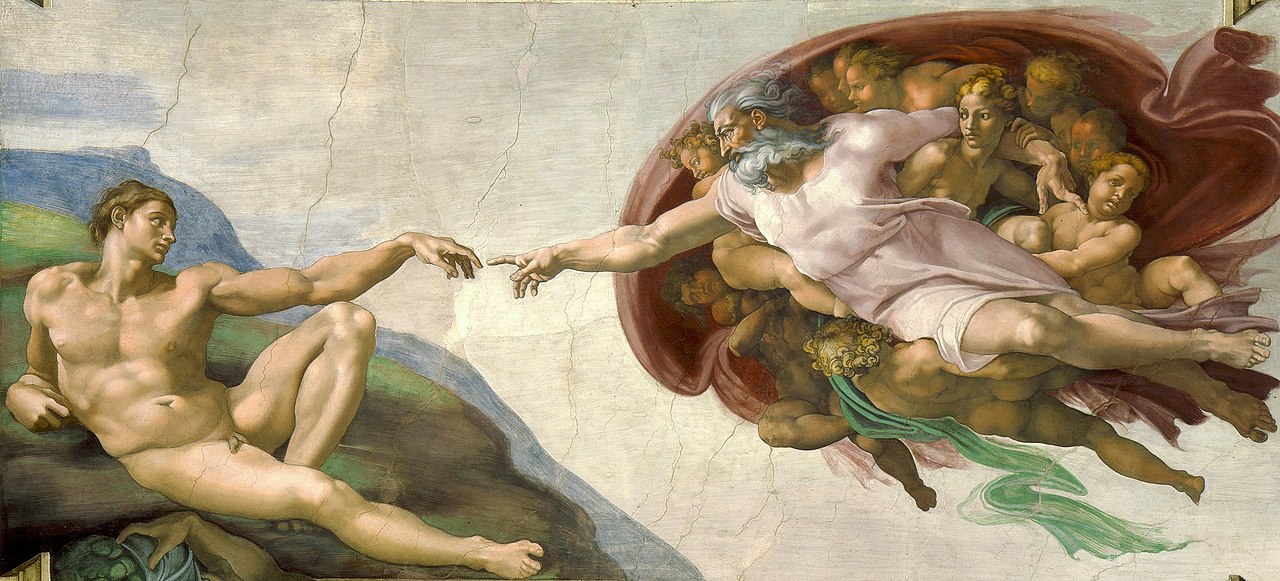
The first thing the narrowed camera shows is the making of man.
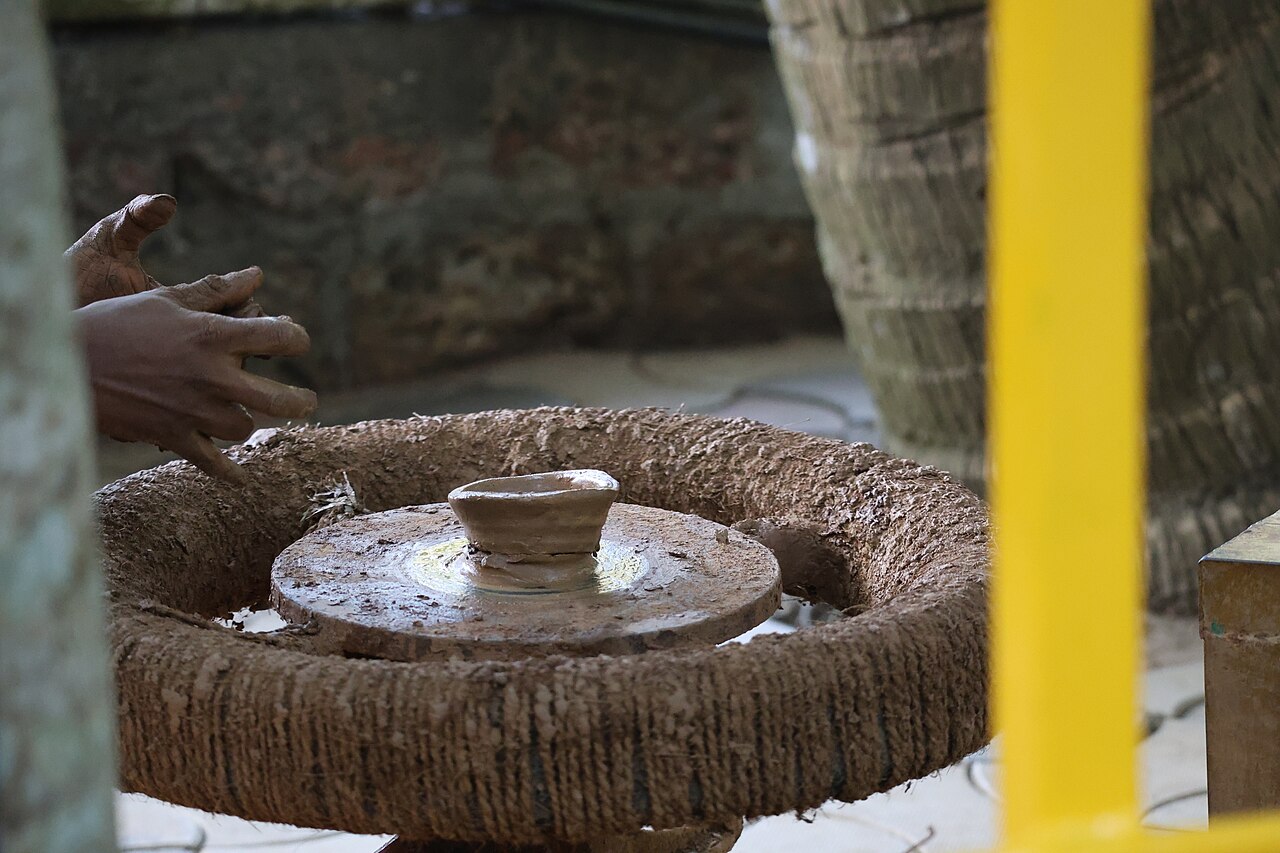
And the LORD God formed man of the dust of the ground, and breathed into his nostrils the breath of life; and man became a living soul. (Genesis 2:7, KJV)
Man was made of two materials. One is dust; the other is the breath of God. That he came from dust reminds us that we are creatures, not self-existent beings. The Preacher says of death that the dust returns to the earth and the spirit returns to God who gave it (Ecclesiastes 12:7). Yet that lump of clay became a living soul only because God Himself breathed life into it. As Job confessed, the Spirit of God made man and the breath of the Almighty gives him life (Job 33:4). The psalmist too sings that every life hangs on God’s breath: when He takes it away they die and return to dust, and when He sends forth His Spirit they live again (Psalm 104:29-30).
So man is as lowly as dust and yet a being made honorable by the breath of God. Humility and dignity rest together in one body. Paul calls this first man the first Adam who became a living being (1 Corinthians 15:45), and from that living first Adam he leads us to look toward the last Adam, Christ. We will return to that connection later.
The Garden of Eden and the Two Trees (Genesis 2:8-9)
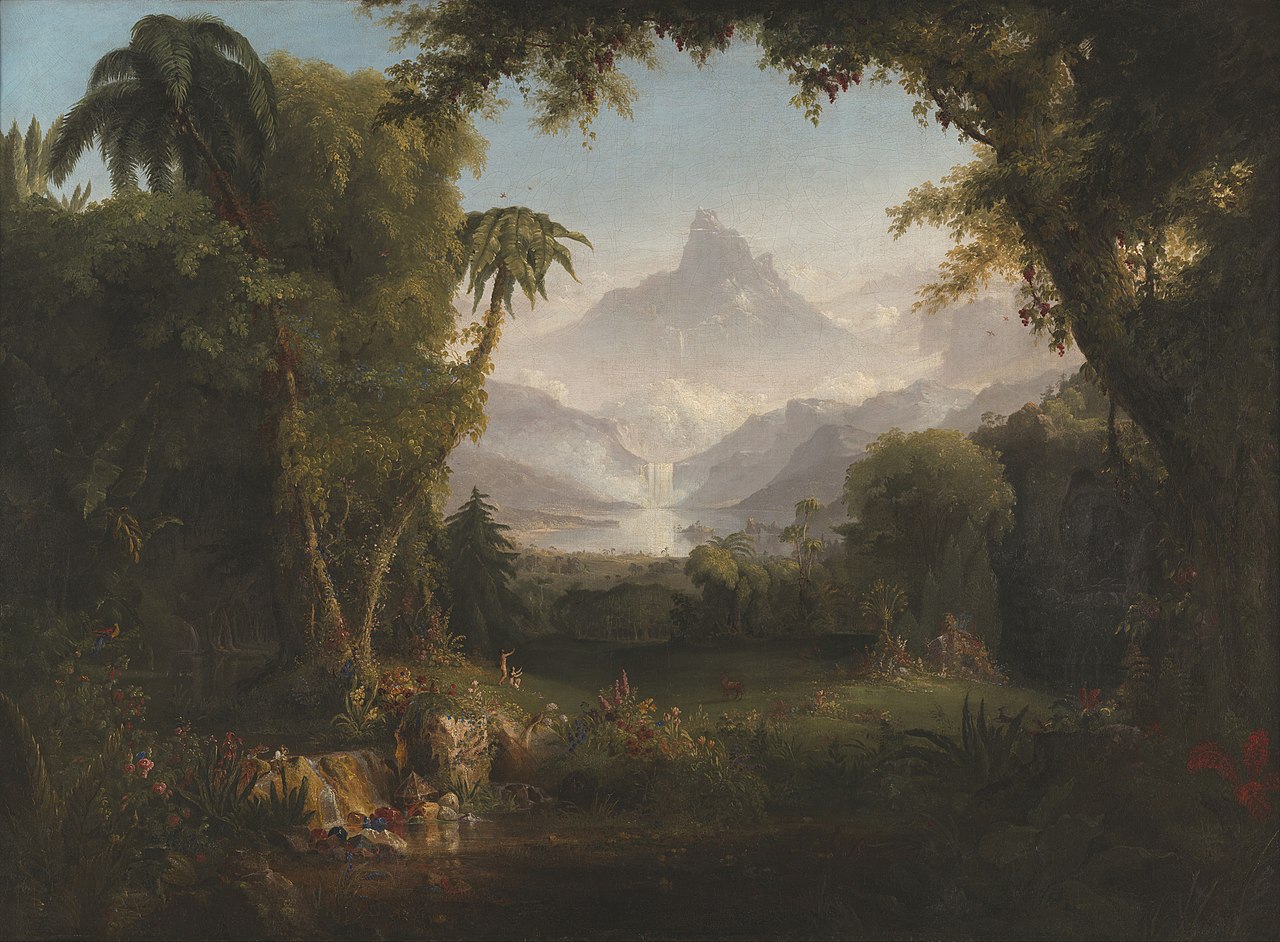
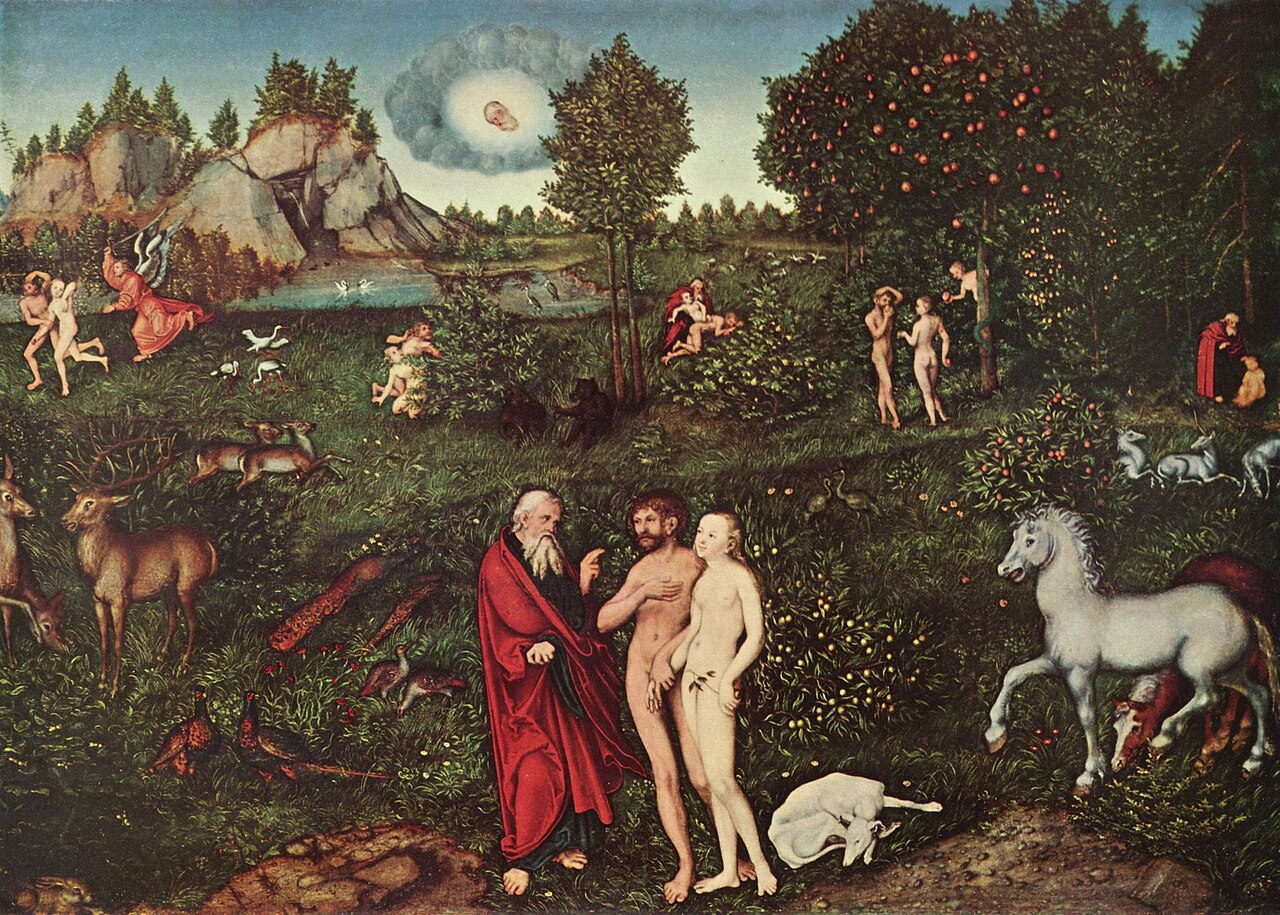
God did not place the man He had formed just anywhere, but in a garden He Himself had prepared.
Yahweh God planted a garden eastward, in Eden, and there he put the man whom he had formed. … including the tree of life in the middle of the garden, and the tree of the knowledge of good and evil. (Genesis 2:8-9, WEB)
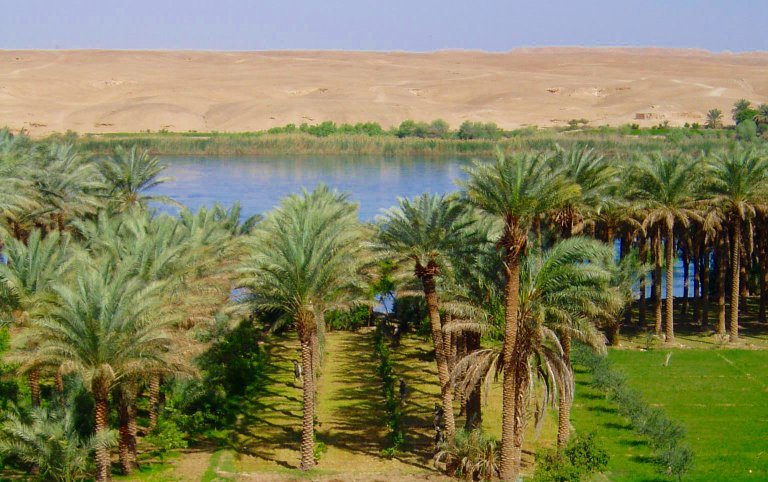
Eden is the place where God walks with man, a place full of abundance and fellowship. The text says a river flowed out of that garden and parted into four headwaters, naming the Pishon, the Gihon, the Hiddekel (Tigris), and the Euphrates (Genesis 2:10-14). Because the Hiddekel and the Euphrates still flow today, they show that Eden is no vague myth but a story rooted in real geography (the locations of the Pishon and the Gihon can no longer be fixed today).
The two trees standing in the middle of the garden carry the tension of this story. The tree of life symbolizes the life God gives; the tree of the knowledge of good and evil symbolizes the test of whether man will obey God. Strikingly, the Bible takes up the lost tree of life again in its very last book. John hears the promise that to the one who overcomes will be given to eat of the tree of life in the paradise of God (Revelation 2:7), and he sees the tree of life on both sides of the river of the New Jerusalem, bearing fruit every month (Revelation 22:1-2). The right to enter that city and come to the tree of life is given to those who wash their robes (Revelation 22:14). The tree of life lost in Eden is restored in Christ. When Proverbs calls wisdom a tree of life to those who lay hold of her (Proverbs 3:18), it stands in the same light.
To Cultivate and Keep It — Work and the Command (Genesis 2:15-17)
God placed the man in the garden not as an idle spectator but as a working steward.
Yahweh God took the man, and put him into the garden of Eden to cultivate and keep it. (Genesis 2:15, WEB)
Notice that work is not the result of the fall but a good design God gave before the fall. Labor is not a curse but a calling. That is why the New Testament teaches us to do whatever we do heartily, as to the Lord (Colossians 3:23), lifting work up into a place of worship before God. The command to “keep” the garden is the first picture of the stewardship of caring responsibly for what God has entrusted.
Then God sets one boundary within that freedom.
Of every tree of the garden thou mayest freely eat: but of the tree of the knowledge of good and evil, thou shalt not eat of it: for in the day that thou eatest thereof thou shalt surely die. (Genesis 2:16-17, KJV)
The freedom God gives is overwhelmingly wide—to eat freely of every tree of the garden. What He forbids is only one thing: that man should stand in God’s place and decide the standard of good and evil for himself. And to crossing that boundary is attached the solemn warning that he will surely die. The New Testament unfolds that this warning was no empty word. Through one man sin entered the world, and death through sin (Romans 5:12); the wages of sin is death, but the gift of God is eternal life in Christ Jesus our Lord (Romans 6:23). James traces the same course: desire conceives and gives birth to sin, and sin when full-grown brings forth death (James 1:15). This command in the middle of the garden was a crossroads on which the destiny of humankind hung.
“It Is Not Good for the Man to Be Alone” — A Helper (Genesis 2:18-23)
In Genesis 1 God said of each thing He made that it was good. But in chapter 2, for the first time, the word “not good” appears.
Yahweh God said, “It is not good for the man to be alone. I will make him a helper comparable to him.” (Genesis 2:18, WEB)
The phrase “a helper” must not be misread as an inferior assistant. The Hebrew word here, ezer, is a strong word used even of God when He helps people, and the phrase joined to it means “corresponding to him, face to face.” In other words, the woman is an equal partner who fills what the man cannot supply on his own. Paul too, following this order of creation, says that the woman was made for the man (1 Corinthians 11:9).
God first brings the animals and the birds to the man to be named (Genesis 2:19-20). Naming all things is one expression of the dominion entrusted to man, yet among all those creatures the lack—that there was “no helper” for him—becomes all the clearer. Only then does God cause a deep sleep to fall on the man, make a woman from his rib, and bring her to him (Genesis 2:21-22). And man’s first poem bursts out here.
And Adam said, This is now bone of my bones, and flesh of my flesh: she shall be called Woman, because she was taken out of Man. (Genesis 2:23, KJV)
That she was taken not from the dust beneath his feet nor from above his head but from his side shows, as in a picture, that the woman is one who stands together at the man’s side. “Bone of my bones, flesh of my flesh”—this is a confession of deep union and likeness.
The Marriage That Becomes One Flesh (Genesis 2:24-25)
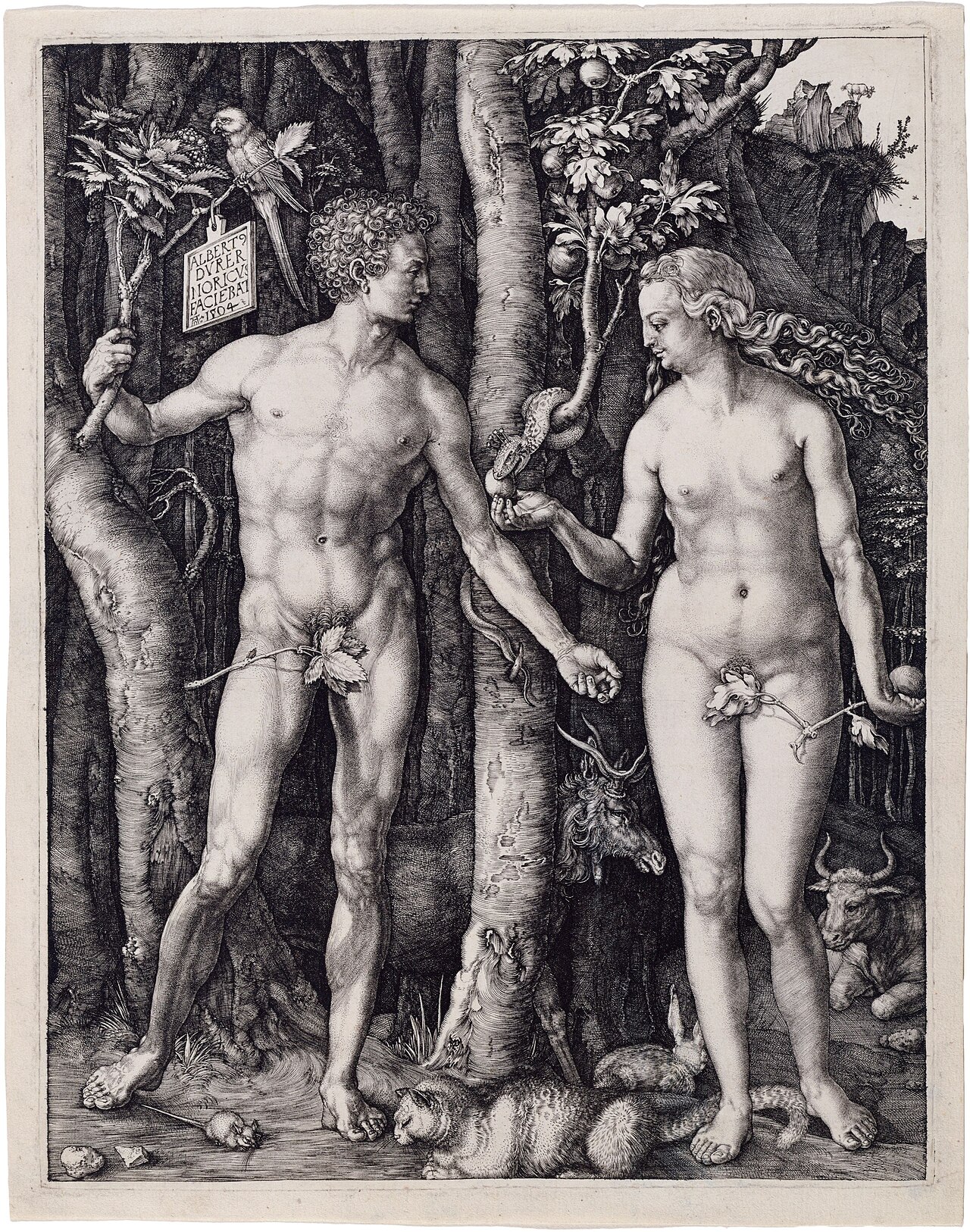
From this first meeting the text at once draws out the principle of every marriage.
Therefore shall a man leave his father and his mother, and shall cleave unto his wife: and they shall be one flesh. (Genesis 2:24, KJV)
This verse is the charter of marriage. “Leaving” (independence), “cleaving” (covenant union), and “one flesh” (complete oneness) are the three pillars of marriage. Remarkably, when Jesus was questioned about divorce, He cited this very Genesis 2:24, answering that marriage is not an institution made by man but one established upon the order of creation (Matthew 19:4-6; Mark 10:6-8). The ground on which He binds marriage so that no one may part it is precisely this text. Paul goes a step further, revealing that this saying about two becoming one flesh in fact points to a great mystery concerning Christ and the church (Ephesians 5:31-32). The union of husband and wife is a mirror reflecting the love of Christ, who gave Himself for the church, His bride.
The man and his wife were both naked, and they were not ashamed. (Genesis 2:25, WEB)
Before sin entered, between person and person there was perfect intimacy and transparency, with nothing to hide and nothing to be ashamed of. This one peaceful verse shines all the more painfully because it is a picture soon to be shattered.
The First Adam, the Last Adam
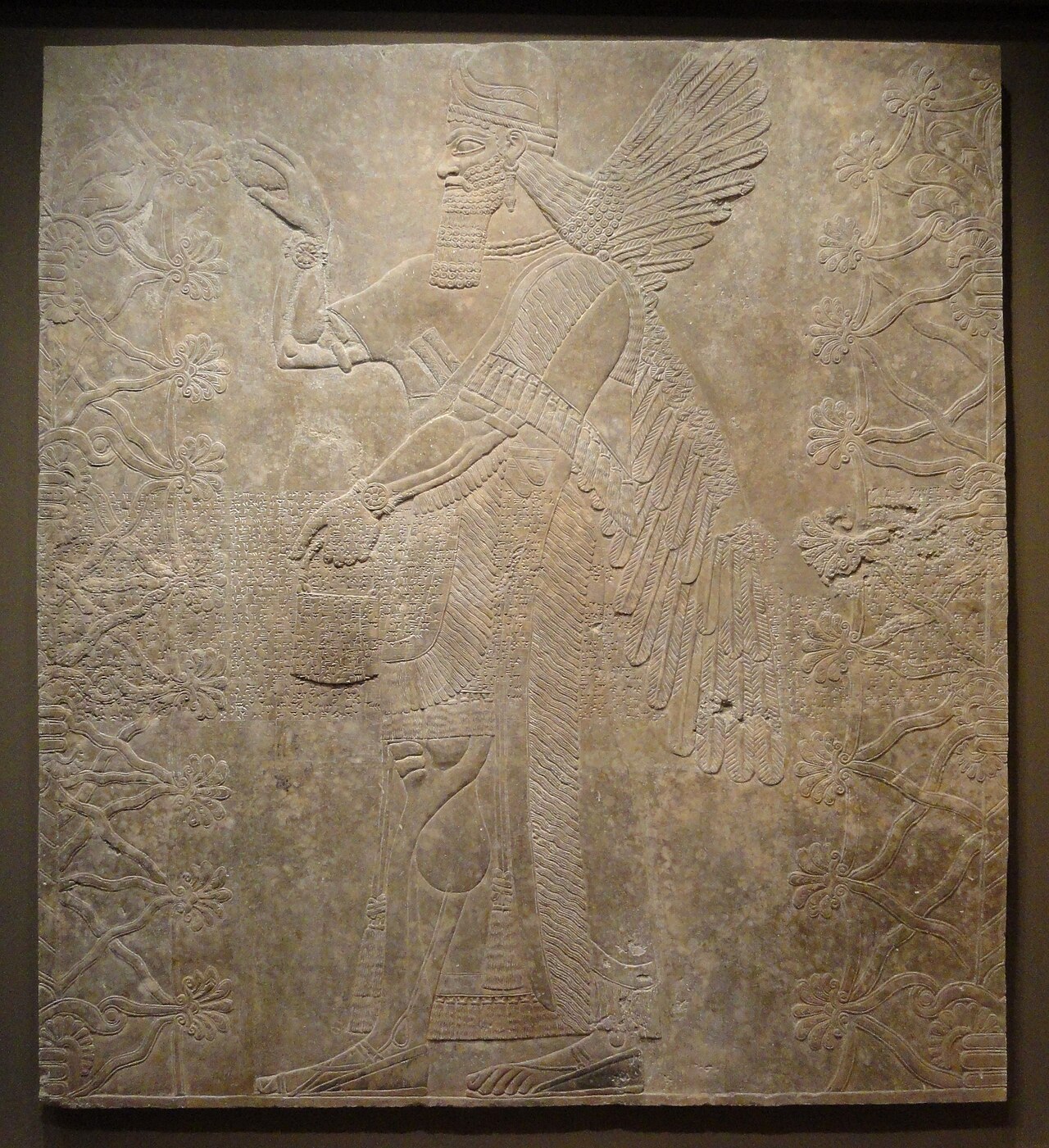
The Adam of Genesis 2 is both an individual and the head who represents all humankind. So the New Testament reads Adam not merely as the hero of an old story but as a pattern of the One to come. Paul plainly calls Adam a figure of him that was to come (Romans 5:14).
Paul sets the two men face to face: as in Adam all die, so in Christ all will be made alive (1 Corinthians 15:22). If the disobedience of the one man Adam brought sin and death to all, the obedience of the one man Christ brings righteousness and life to all who believe in Him. So the first Adam is a living being, but the last Adam, Christ, is a life-giving spirit; the first man belongs to the dust of the earth, but the second man belongs to heaven (1 Corinthians 15:45-49). It is no accident that the tree of life the dust-formed first Adam lost in the garden stands again in the New Jerusalem in the last Adam (Revelation 22:1-2). In this way Genesis 2 is already reaching out toward the gospel.
The Life of a Disciple Formed from Dust
Genesis 2 calls us at once to deep humility and deep dignity. We are not self-made but beings formed from dust (humility), and at the same time living souls carrying the breath of God (dignity). When we hold these two together, we become neither proud nor self-despising.
This chapter also teaches the holiness of ordinary life. Because the work given before the fall is a calling, all honest labor can become worship offered to the Lord (Colossians 3:23). Marriage and relationships, established upon the order of creation, are not to be treated lightly but are a holy place reflecting Christ and the church (Ephesians 5:31-32). And the one boundary in the middle of the garden teaches that true freedom lies in trusting God’s word—enjoying a wide freedom while never trespassing on God’s place.
The peace of the garden, where there was no shame (Genesis 2:25), will soon be broken. In the next study we will continue into Genesis 3 and consider together how that tragedy began, and how, in that very place, God promised salvation. The God who formed us from dust is the God who, in the last Adam, raises us—dust-bound as we are—to life again.
References
- Korean Revised Version (개역한글) — Genesis — Wikisource (public-domain text)
- Korean Bible Society — for the 개역개정 and 새번역 texts
- Genesis 2:7 Cross References — BibleHub
- Genesis 2:24 Cross References — marriage and one flesh — BibleHub
- Do Genesis 1 and 2 give contradictory accounts of creation? — GotQuestions (Korean)
- Where was the Garden of Eden located? — GotQuestions (Korean)
- The Hebrew word ezer (“helper”) — Strong’s 5828, BibleHub