


As the day grows cool, footsteps sound in the garden. Once that sound would have been welcome; now two people slip in among the trees to hide. They heard Yahweh God’s voice walking in the garden in the cool of the day, and the man and his wife hid themselves from the presence of Yahweh God among the trees of the garden
(Genesis 3:8, WEB). Genesis 1 closed with God seeing everything He had made, and it was very good
(Genesis 1:31, WEB), and chapter 2 ended with the man and the woman who were both naked, and they were not ashamed
(Genesis 2:25, WEB). Yet as chapter 3 unfolds, the people who knew no shame cover themselves with leaves, and the people who lived with God hide from Him.
In our Genesis 2 exposition we saw God place the man He had formed from the dust in Eden and give him one command. Genesis 3 records how that command was broken, and what God promised in the very place where it was broken. This chapter explains where sin and death came from, and at the same time it is the chapter where a promise of salvation is heard for the first time in the Bible.
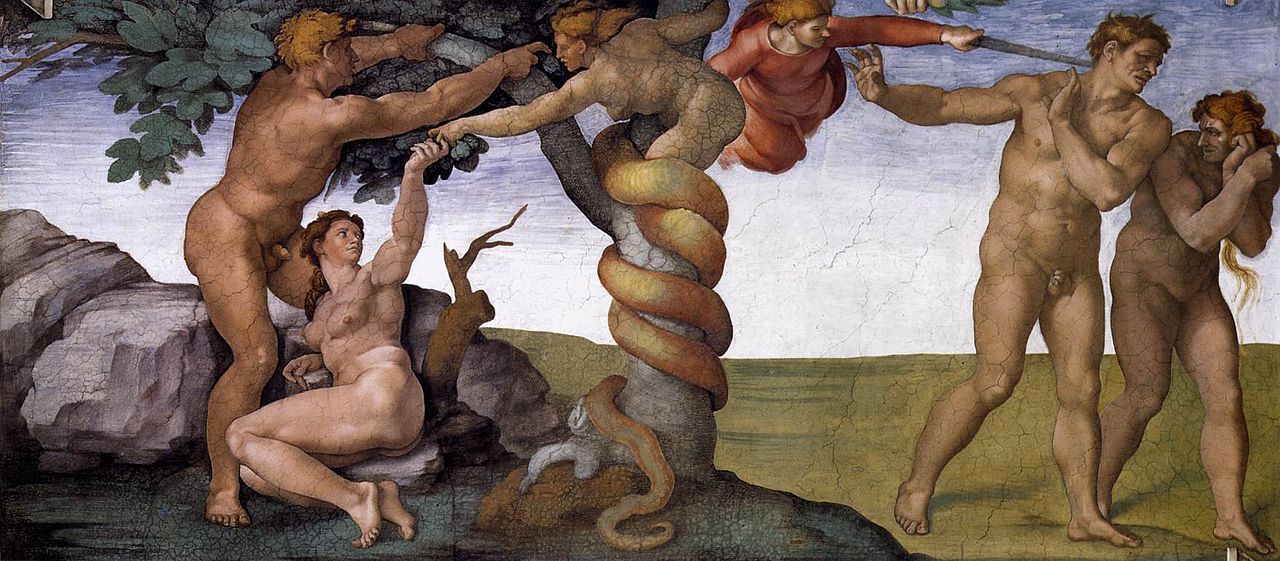
The principle of this exposition is to interpret Scripture by Scripture. Rather than lining up human opinions, we follow how other passages of the Bible unfold what Genesis 3 says. The English Scripture quotations are from the public-domain World English Bible (WEB), with a few key verses from the King James Version (KJV), and every quotation is marked with its chapter and verse.
The Question of the Most Subtle Serpent (Genesis 3:1-5)
The text introduces the serpent this way.
Now the serpent was more subtle than any animal of the field which Yahweh God had made. He said to the woman, “Has God really said, ‘You shall not eat of any tree of the garden’?” (Genesis 3:1, WEB)
The serpent’s first words are not a command but a question. It does not deny God’s word head-on; it unsettles it by asking whether God has really said so. God’s first word had been a generous permission: You may freely eat of every tree of the garden
(Genesis 2:16, WEB). The serpent twists that permission into a question that makes it sound as if God had forbidden every tree. Temptation begins by making us suspect that God is not the One who gives but the One who takes away.
The woman’s answer also shows a subtle shift. She says that God told them about the tree in the middle of the garden, You shall not eat of it. You shall not touch it
(Genesis 3:3, WEB). The command recorded in Genesis 2:16-17 says nothing about touching, and the word freely from God’s permission does not appear in her words. The text does not explain why this difference arose. It is worth noticing, though, that in the conversation with the serpent, God’s word is no longer being passed on exactly as it was first given.
Then the serpent moves to an open lie.
The serpent said to the woman, “You won’t really die, for God knows that in the day you eat it, your eyes will be opened, and you will be like God, knowing good and evil.” (Genesis 3:4-5, WEB)
God had said, in the day that you eat of it, you will surely die
(Genesis 2:17, WEB), but the serpent says they will not die. It is a direct reversal of God’s word. Scripture makes clear who this serpent is. Jesus said of the devil, for he is a liar, and the father of lies
(John 8:44, WEB), and Revelation speaks of the old serpent, he who is called the devil and Satan
(Revelation 12:9, WEB). Paul, too, feared that the church’s minds might be led away from Christ, as the serpent deceived Eve in his craftiness
(2 Corinthians 11:3, WEB). The temptation in Eden does not end as the words of one wild animal; the whole Bible remembers it as the first attack of the one who sets himself against God.
Good for Food, a Delight to the Eyes, Desired to Make One Wise (Genesis 3:6-7)
Once doubt enters the heart, the eyes begin to see the tree differently.
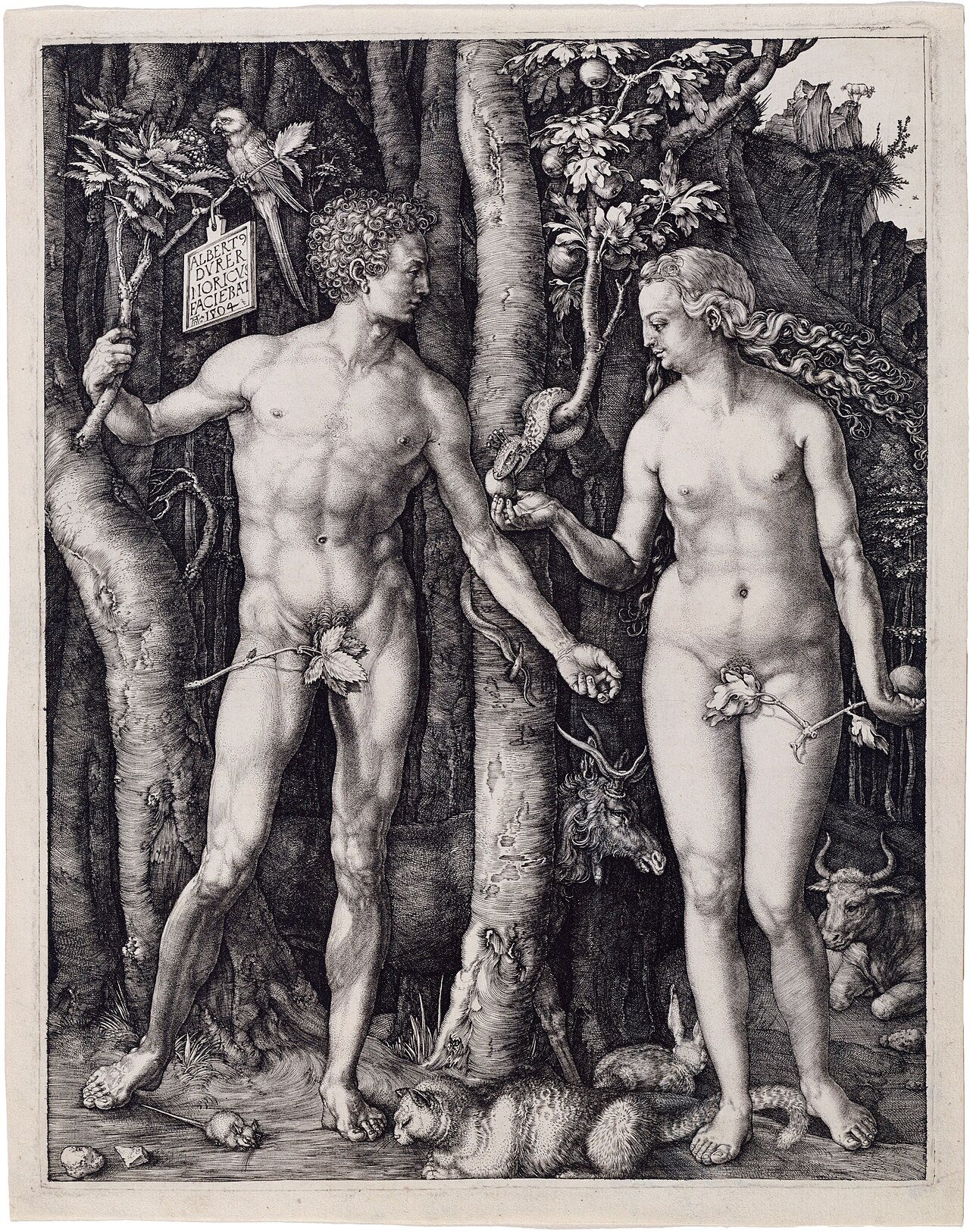
When the woman saw that the tree was good for food, and that it was a delight to the eyes, and that the tree was to be desired to make one wise, she took some of its fruit, and ate. Then she gave some to her husband with her, and he ate it, too. (Genesis 3:6, WEB)
The text says her husband was with her. Adam was not far away. And the tree the woman saw touched three things at once: the body’s appetite (good for food), the pull of the eyes (a delight to the eyes), and the heart’s wish to raise itself up (desired to make one wise). The apostle John’s three-part summary of what belongs to the world closely resembles this scene.
For all that is in the world—the lust of the flesh, the lust of the eyes, and the pride of life—isn’t the Father’s, but is the world’s. (1 John 2:16, WEB)
Later, Jesus too was tempted in the wilderness (Matthew 4:1-11). The first man fell in a garden with plenty to eat, but Jesus, hungry in the wilderness after forty days of fasting, overcame by the word. It is written, ‘Man shall not live by bread alone, but by every word that proceeds out of God’s mouth.’
(Matthew 4:4, WEB). The very word the serpent had shaken became the weapon that defeats temptation.
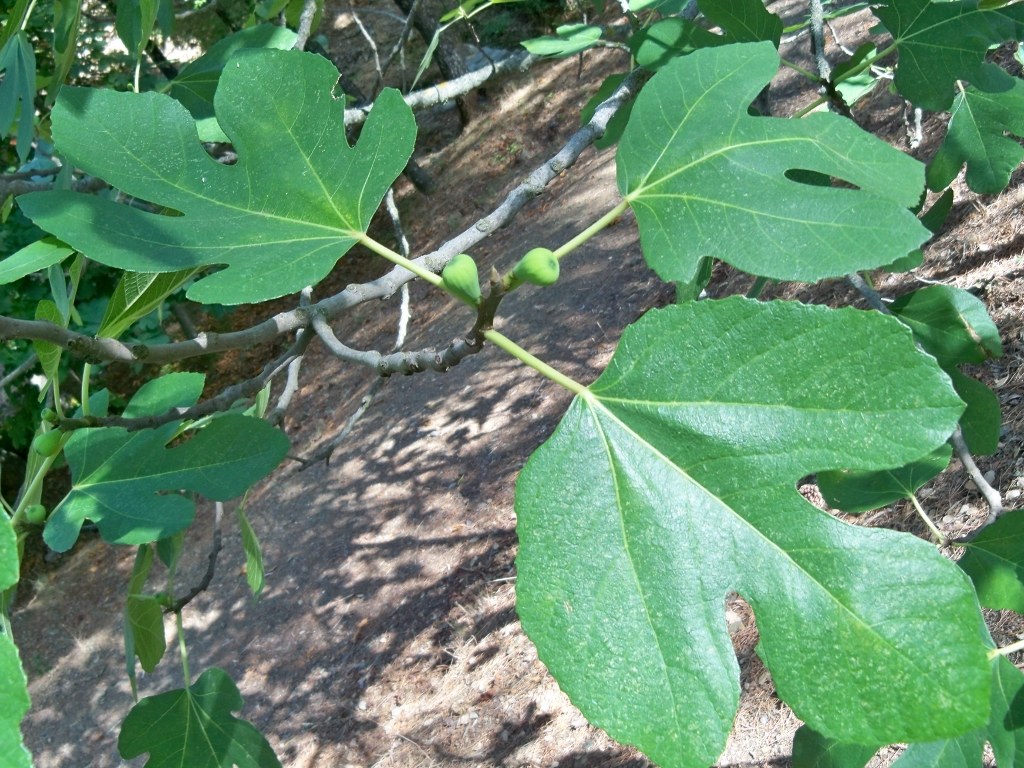
Their eyes were opened, and they both knew that they were naked. They sewed fig leaves together, and made coverings for themselves. (Genesis 3:7, WEB)
It is true that their eyes were opened, as the serpent had said. Later God Himself says, the man has become like one of us, knowing good and evil
(Genesis 3:22, WEB). But the serpent did not tell them what that knowledge would bring. The first thing their opened eyes saw was their own nakedness, that is, shame; after it came fear and hiding, and then the sentence of death. At once they try to cover that shame themselves. The coverings of sewn fig leaves are humanity’s first attempt to cover the shame of sin with its own hands. How inadequate those leaf coverings were becomes clear at the end of the chapter, when they are set beside the garments God Himself makes and puts on them.
Where Are You? The God Who Seeks the Hidden (Genesis 3:8-13)
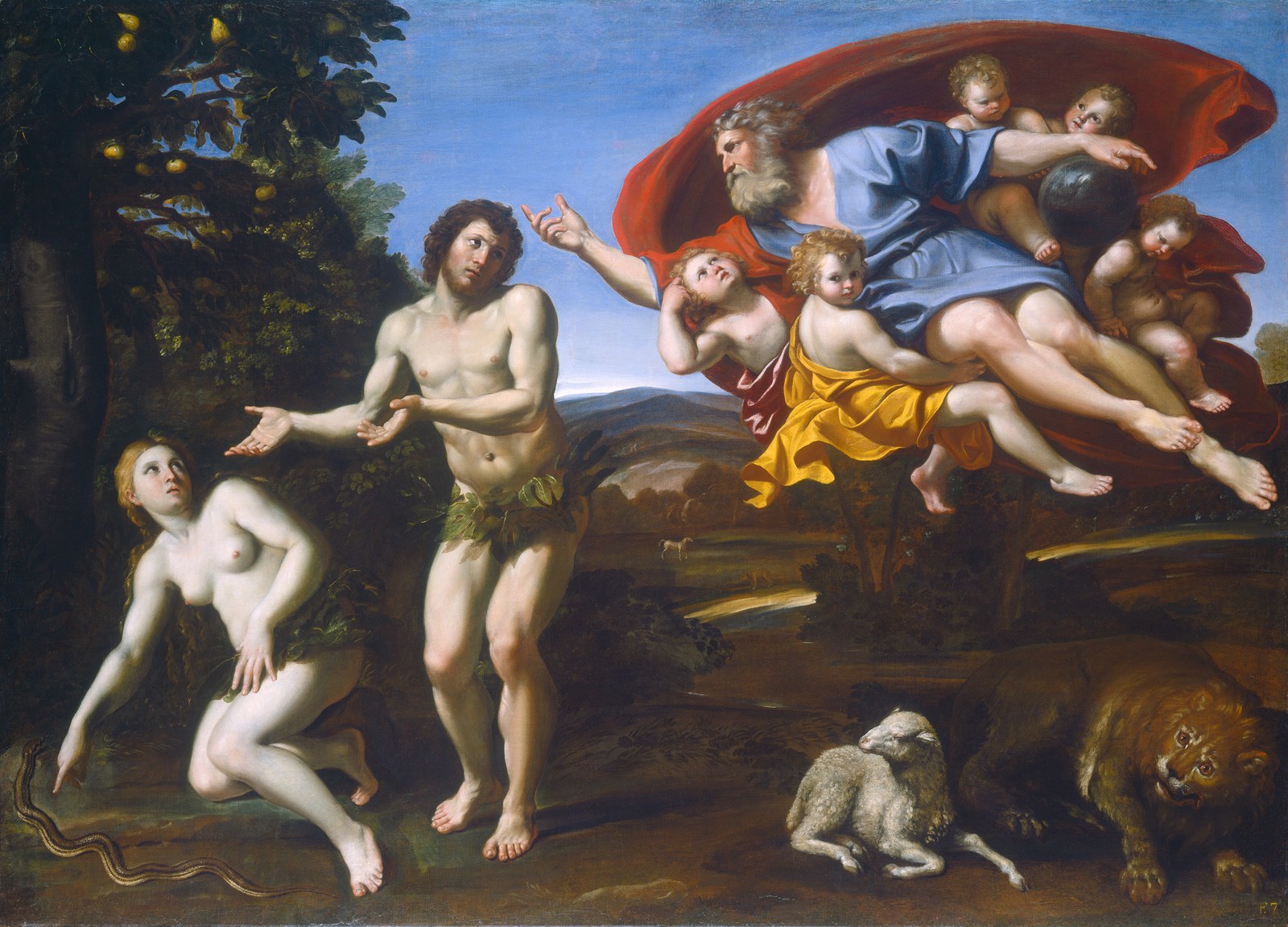
Back to the scene we began with: the two hid when they heard God’s voice, and it is God who comes to them first.
And the LORD God called unto Adam, and said unto him, Where art thou? (Genesis 3:9, KJV)
God, who knows all things, did not ask because He did not know where Adam was. The question is a call that draws the hidden man out so that he can see for himself where he stands. That God’s first act after sin entered was not a sentence of judgment but a call sets the tone of the whole chapter. Adam answers, I was afraid, because I was naked; so I hid myself
(Genesis 3:10, WEB). God asks again, Who told you that you were naked?
(Genesis 3:11, WEB).
Both admit that they ate. But each shifts the blame to someone else. Adam says, The woman whom you gave to be with me, she gave me fruit from the tree, and I ate it
(Genesis 3:12, WEB), blaming his wife and God together, and the woman says, The serpent deceived me, and I ate
(Genesis 3:13, WEB), passing it on to the serpent. Sin broke not only the relationship with God but also the bond between people. The husband who had welcomed her as bone of his bones and flesh of his flesh, the two becoming one flesh (Genesis 2:23-24), now points at his wife. Even so, God asks and asks again. These questions, which give the hiding ones a chance to speak, point ahead to the way of confession that Scripture later promises: If we confess our sins, he is faithful and righteous to forgive us the sins
(1 John 1:9, WEB).
The Seed of the Woman: The First Gospel Heard in the Middle of the Curse (Genesis 3:14-15)
God judges the serpent first. He does not question the serpent; He pronounces the sentence at once: you are cursed above all livestock, and above every animal of the field. You shall go on your belly and you shall eat dust all the days of your life
(Genesis 3:14, WEB). Yet in the middle of this word of judgment, a promise that will run through the whole Bible is heard for the first time.
And I will put enmity between thee and the woman, and between thy seed and her seed; it shall bruise thy head, and thou shalt bruise his heel. (Genesis 3:15, KJV)
This verse is often called the protoevangelium, the first gospel. Before God speaks of the humans’ punishment, He first pronounces the serpent’s defeat. God Himself sets enmity between the woman and the serpent, and between her seed and the serpent’s seed. And He tells in advance how that conflict will end. The seed of the woman will bruise the serpent’s head, and the serpent will bruise the seed’s heel. Both are wounded, but the difference between a head and a heel shows who wins.
In whom this promise is fulfilled becomes clear as we keep reading the Bible. The New Testament does not quote Genesis 3:15 directly, but it speaks of the coming of the Son of God in words that call it to mind. Paul writes:
But when the fullness of the time came, God sent out his Son, born to a woman, born under the law, (Galatians 4:4, WEB)
The Son was born of a woman; He is, quite literally, the seed of the woman. Hebrews does not use the words head or heel, but it tells what the Son accomplished. The Son shared in our flesh and blood that through death he might bring to nothing him who had the power of death, that is, the devil
(Hebrews 2:14, WEB), and might set free those who through fear of death were held in slavery (Hebrews 2:15). When these words are set beside Genesis 3:15, the suffering of the bruised heel and the defeat of the bruised head meet in one event. Christ went through death, and by that very death the devil’s power was broken. John says the same: To this end the Son of God was revealed: that he might destroy the works of the devil
(1 John 3:8, WEB).
This victory does not stop with Christ; it extends to those who belong to Him.
And the God of peace shall bruise Satan under your feet shortly. (Romans 16:20, KJV)
The promise of Genesis 3:15 that the seed shall bruise thy head sounds again in Romans 16:20 as God shall bruise Satan under your feet. And the last book of the Bible shows that serpent finally seized: the old serpent, who is the devil and Satan
(Revelation 20:2, WEB). The promise of one verse heard in Eden runs to the very end of the Bible.
Pain in Childbirth and Toil by the Sweat of the Face (Genesis 3:16-19)
The judgment reaches the humans too. God speaks first to the woman.
To the woman he said, “I will greatly multiply your pain in childbirth. You will bear children in pain. Your desire will be for your husband, and he will rule over you.” (Genesis 3:16, WEB)
Pain is added to the bearing of new life, and even her bond with the husband she had been one flesh with begins to strain. Then God speaks to Adam about the ground and toil.
And unto Adam he said, Because thou hast hearkened unto the voice of thy wife, and hast eaten of the tree, of which I commanded thee, saying, Thou shalt not eat of it: cursed is the ground for thy sake; in sorrow shalt thou eat of it all the days of thy life; … In the sweat of thy face shalt thou eat bread, till thou return unto the ground; for out of it wast thou taken: for dust thou art, and unto dust shalt thou return. (Genesis 3:17-19, KJV)
God does not curse the man himself; He says that the ground is cursed because of the man. The man formed from the dust (Genesis 2:7) must now work that ground with sweat, and in the end he returns to it. The death warned of in Genesis 2:17 is pronounced here. Paul sums up the root of this death, the wages of sin is death
(Romans 6:23, WEB), and says that it began with one man: sin entered into the world through one man, and death through sin
(Romans 5:12, WEB). Not only humanity but the whole created world bears that weight: For we know that the whole creation groans and travails in pain together until now
(Romans 8:22, WEB). But Scripture promises that this curse is not forever. In the New Jerusalem, There will be no curse any more
(Revelation 22:3, WEB).
Eve and the Garments of Skin (Genesis 3:20-21)
Right after hearing that he will return to the dust, Adam gives his wife a name.
The man called his wife Eve because she would be the mother of all the living. (Genesis 3:20, WEB)
The text does not explain why Adam gave this name at this moment. But the order stands out. A man who has just heard the sentence of death calls his wife the mother of all the living. After the word that promised the seed of the woman (Genesis 3:15) comes a name that looks ahead to life going on. And then God does something unexpected.
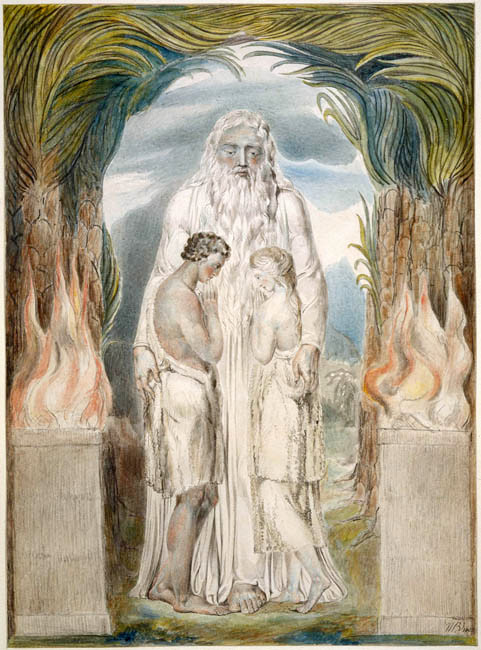
Yahweh God made garments of animal skins for Adam and for his wife, and clothed them. (Genesis 3:21, WEB)
The humans had covered themselves with fig leaves (Genesis 3:7), but now God Himself makes garments of skin and clothes them. The leaf coverings were made by the humans themselves; the garments of skin were given by God. Leaves come from a tree, but skins come from an animal. The text explains neither what happened to that animal nor what meaning these garments carry. What Genesis 3:21 states is that God Himself covered the humans’ shame. Yet as we keep reading Scripture, life and blood appear again and again in God’s way of dealing with human sin. In Genesis 4 Abel offered the firstborn of his flock (Genesis 4:4); Hebrews sums up the principle of the law, apart from shedding of blood there is no remission
(Hebrews 9:22, WEB); and that way finally reaches the blood of Christ. The text does not say outright that the garments of skin are the start of that way, but this scene, in which God covers the humans with clothing taken from an animal, is quietly set before that stream, for readers to see as Scripture unfolds.
The righteousness people make for themselves is like a withering leaf. Isaiah confessed, all our righteousness is like a polluted garment
(Isaiah 64:6, WEB). Only the clothing God puts on us covers our shame. That is why the New Testament tells believers, put on the Lord Jesus Christ
(Romans 13:14, WEB). As God clothed the humans with His own hands in Eden, believers put on Christ like a garment.
Guarding the Way to the Tree of Life (Genesis 3:22-24)
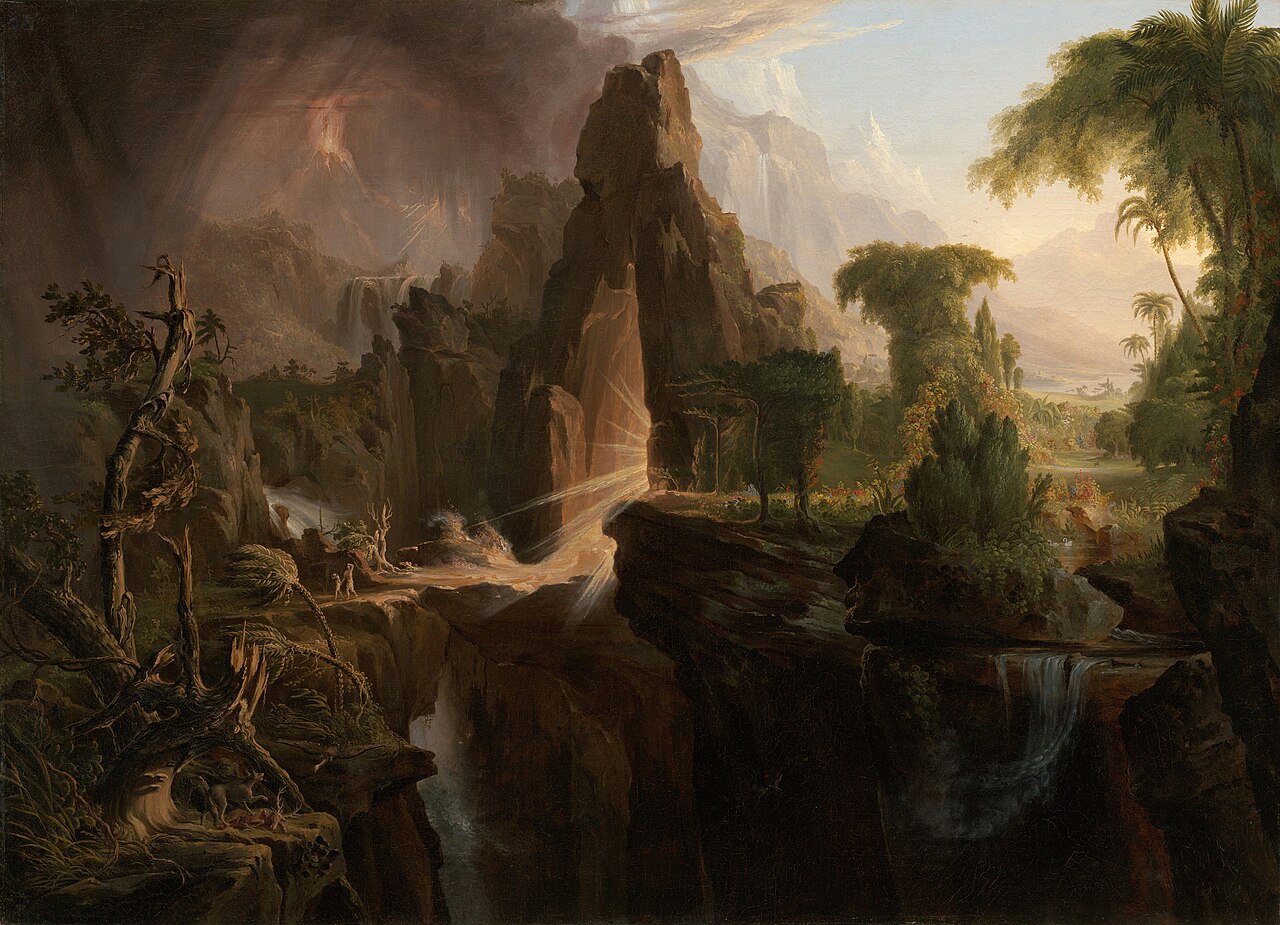
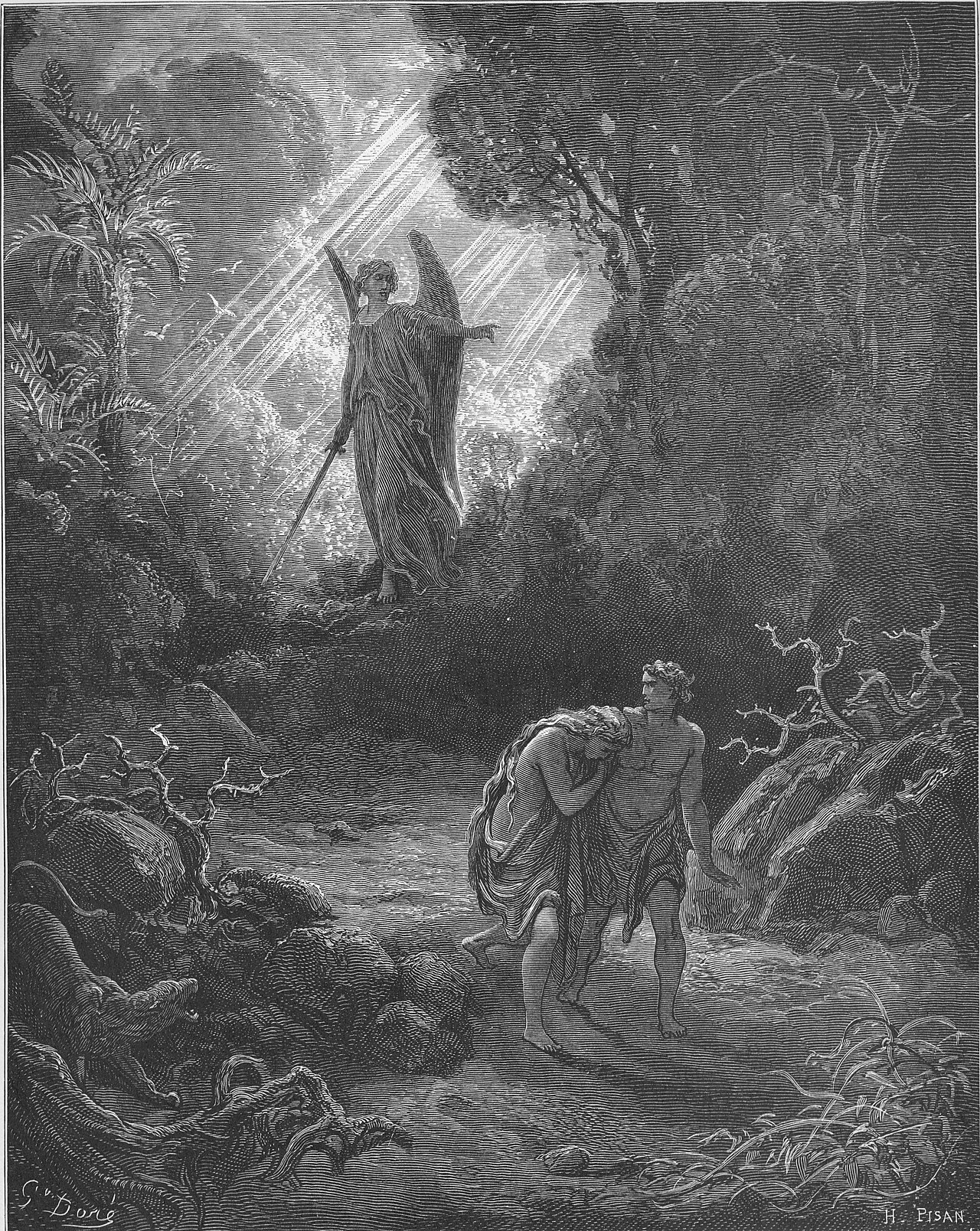
Finally, God sends the man out of the garden. The text states the reason this way: lest he reach out his hand, and also take of the tree of life, and eat, and live forever
(Genesis 3:22, WEB). So God sent him out of the garden of Eden to till the ground from which he was taken
(Genesis 3:23, WEB).
So he drove out the man; and he placed cherubim at the east of the garden of Eden, and a flaming sword which turned every way, to guard the way to the tree of life. (Genesis 3:24, WEB)
The reason the text gives is clear. The man who had become like God in knowing good and evil was not to eat from the tree of life as well and live forever. So God set cherubim and a flaming sword to guard the way. But a way that is guarded is not a way that has disappeared. In the last chapter of the Bible that tree appears again. On this side of the river and on that was the tree of life
(Revelation 22:2, WEB), bearing fruit, and Blessed are those who do his commandments, that they may have the right to the tree of life
(Revelation 22:14, WEB). Here the WEB follows manuscripts that read do his commandments, while the Korean Revised Version (1961) quoted in the Korean edition of this article follows other ancient manuscripts that read blessed are those who wash their robes. On that reading, the way barred east of Eden opens again in the New Jerusalem to those whose robes have been washed through the Lamb.
The First Adam and the Last Adam
Genesis 3 is the story of one man’s disobedience. But Scripture sets this story beside the obedience of another man. Paul says that Adam is a foreshadowing of him who was to come
(Romans 5:14, WEB). Just as Adam’s act reached all who belong to him, what Christ has done reaches all who belong to Him.
For as through the one man’s disobedience many were made sinners, even so through the obedience of the one, many will be made righteous. (Romans 5:19, WEB)
If Adam’s disobedience brought in sin and death, Christ’s obedience brought righteousness and life. The sentence that the man would return to the dust (Genesis 3:19) finds its answer in the resurrection.
For as in Adam all die, so also in Christ all will be made alive. (1 Corinthians 15:22, WEB)
And so it is written, The first man Adam was made a living soul; the last Adam was made a quickening spirit. (1 Corinthians 15:45, KJV)
The first Adam was a man who received life, but Christ, the last Adam, is the One who gives life; a quickening spirit is a life-giving spirit. What was shut in Genesis 3 is opened again in Christ. So Genesis 3 records humanity’s fall and, at the same time, becomes a finger pointing to the seed of the woman who would raise humanity up from that fall.
Disciples Who Come Out of Hiding and Put On Christ
Genesis 3 is a story of a garden long ago, and it is also our own story. We too are shaken by doubt about whether God’s word is really so, we reach for what looks good for food and a delight to the eyes, and when our sin is exposed we cover it with leaves or hide behind blaming others. To people like us, this chapter teaches four things.
First, hold on to God’s word as it is, without adding to it or taking from it. The temptation in Eden began by twisting and blurring the word. As Jesus overcame temptation in the wilderness with the written word (Matthew 4:1-11), the disciple’s first weapon is the word just as it stands.
Second, do not hide; come out toward the voice that calls you. After we sin, our instinct is to hide and to blame others. But God is still the One who seeks first and calls. Confessing our sin and coming into the light is the way of restoration (1 John 1:9).
Third, instead of the leaf coverings you have sewn, wear the clothing God puts on you. Religious effort stitched together by our own hands withers like fig leaves. Only the garment of righteousness God has prepared in Christ covers our shame (Romans 13:14).
Fourth, look to the seed of the woman. The deepest news of Genesis 3 does not stop at the fact that we are sinners; it promises a seed who will come for those sinners. The Great Commission to make disciples of all nations (Matthew 28:18-20) stands on the gospel in which this very promise is fulfilled. The gospel we proclaim is the story of the seed of the woman: promised in Eden, accomplished at the cross, and completed in the New Jerusalem.
As you read Genesis 3 again this week, reflect on the following.
- Ask whether there is a place where your heart is set on the one thing God has forbidden rather than on all He has generously allowed, and consider what kind of God you take Him to be in that moment.
- If you have recently blamed someone else or your circumstances for a wrong, confess it to God just as it is.
- Write down the leaf covering of your own that you hold on to in order to hide your shame (reputation, achievements, religious zeal), and take hold of the word that calls us to put on Christ.
- Think of one person who does not yet know the victory of Christ, the seed of the woman, and ask for an opportunity this week to share this news with them.
The story of the people driven out east of Eden continues in the next chapter with a brother’s blood. In our next exposition, Genesis 4 exposition, we look together at the two offerings of Cain and Abel. The God who first called the hidden man is the God who still calls us today and clothes us in Christ.
References
- Genesis 3, Korean Revised Version text (quoted in the Korean edition) — YouVersion (bible.com)
- Genesis 3:15 cross references (the seed of the woman) — BibleHub
- Genesis 3:21 cross references (the garments of skin) — BibleHub
- Genesis 3:24 cross references (the way to the tree of life) — BibleHub
- Romans 5:12 cross references (sin entering through one man) — BibleHub
- Genesis 3 (World English Bible) — BibleHub