
Many readers pause when their journey through the Bible reaches Genesis 5. Strange names and staggering numbers are poured into the same repeating sentence: “So-and-so lived so many years and became the father of a son, and after that lived so many years and had other children, and all his days were so many years, and he died.” Repeated nearly ten times, this refrain looks like a tedious roster. Yet it is one of the heaviest — and one of the most hopeful — chapters in all of Scripture. This genealogy testifies to how death came to reign over all humanity, and at the same time it unrolls before our eyes a single thread of life running straight through the procession of the dead. In this exposition of Genesis 5 we will read those two faces together — the tolling bell of death and the gospel hidden beneath it.
The Scripture quotations in this article are taken from two public-domain English translations — the King James Version (KJV) and the World English Bible (WEB); each quotation is labeled. Korean translations may be consulted at the Korean Bible Society.
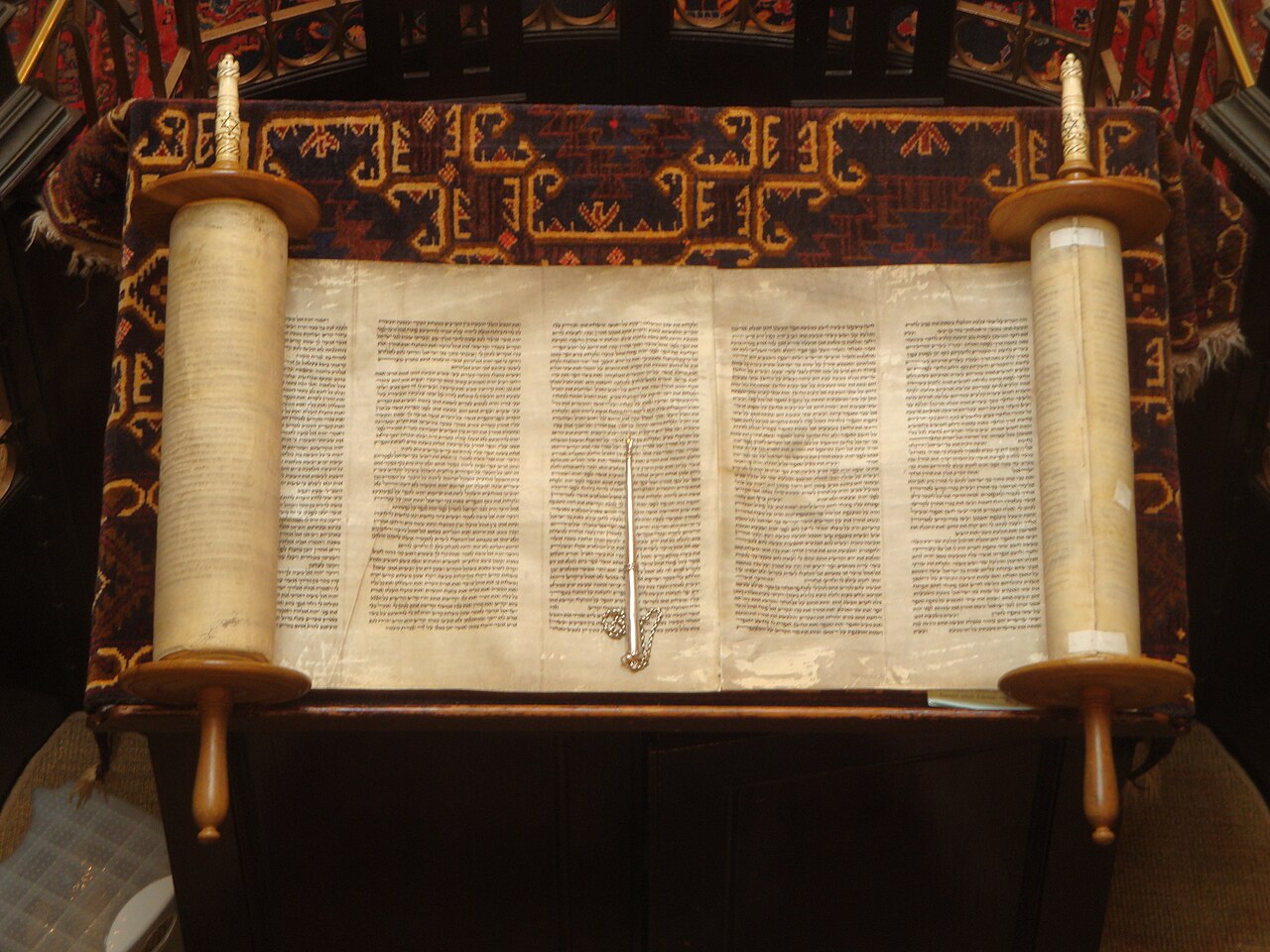
Photo: Lawrie Cate · CC BY 2.0 · Wikimedia Commons
“This is the book of the generations of Adam” — a new door opens
Genesis 5 begins like this:
“This is the book of the generations of Adam. In the day that God created man, he made him in God’s likeness. He created them male and female, and blessed them. On the day they were created, he named them ‘Adam’.”— Genesis 5:1-2 (WEB)
The phrase rendered “this is the book of the generations” is a literary marker that stitches the whole of Genesis into ten sections. In Hebrew it is toledot (generations, genealogy, account), and Genesis uses this formula to open each new story — “the generations of the heavens and of the earth” (Gen 2:4), “the generations of Noah” (Gen 6:9). So chapter 5 is not a mere list of names but the opening of a new section that shows how God carries forward the history of humanity that began with Adam.
Notice that this genealogy opens with the language of creation. The writer nails it down once more: the origin of humanity is “in God’s likeness” (5:1). Right before listing a roll call of death, he first reminds us what humanity was made to be. Without these first two verses, chapter 5 would be nothing but a catalog of graves.
Between two genealogies — the line of Cain and the line of Seth
To read chapter 5 rightly we must read it alongside chapter 4. Genesis 4 gives the genealogy of Cain, and chapter 5 the genealogy of Seth, setting the two paths side by side. Scripture explains the contrast for us. When Seth was born, Eve confessed:
“…named him Seth, saying, ‘for God has given me another child instead of Abel, for Cain killed him.’”— Genesis 4:25 (WEB)
Seth is the “other seed” who replaces Abel — the one who carries on the line of the “seed of the woman” promised in Genesis 3:15. And because “at that time men began to call on the LORD’s name” (Gen 4:26), the line of Seth is the line of worshipers.
The character of these two genealogies is thrown into sharp relief by men who share the same names. Cain’s line has a Lamech, and so does Seth’s line. Cain’s Lamech boasts of vengeance: “I have slain a man for wounding me, a young man for bruising me… truly Lamech seventy-seven times” (Gen 4:23-24, WEB). Seth’s Lamech, by contrast, names his son while acknowledging the LORD and hoping for rest (Gen 5:29). Cain’s line also has an Enoch, after whom a city was named (Gen 4:17); but Seth’s Enoch built no city — he walked with God (Gen 5:24). The same names, opposite roads.
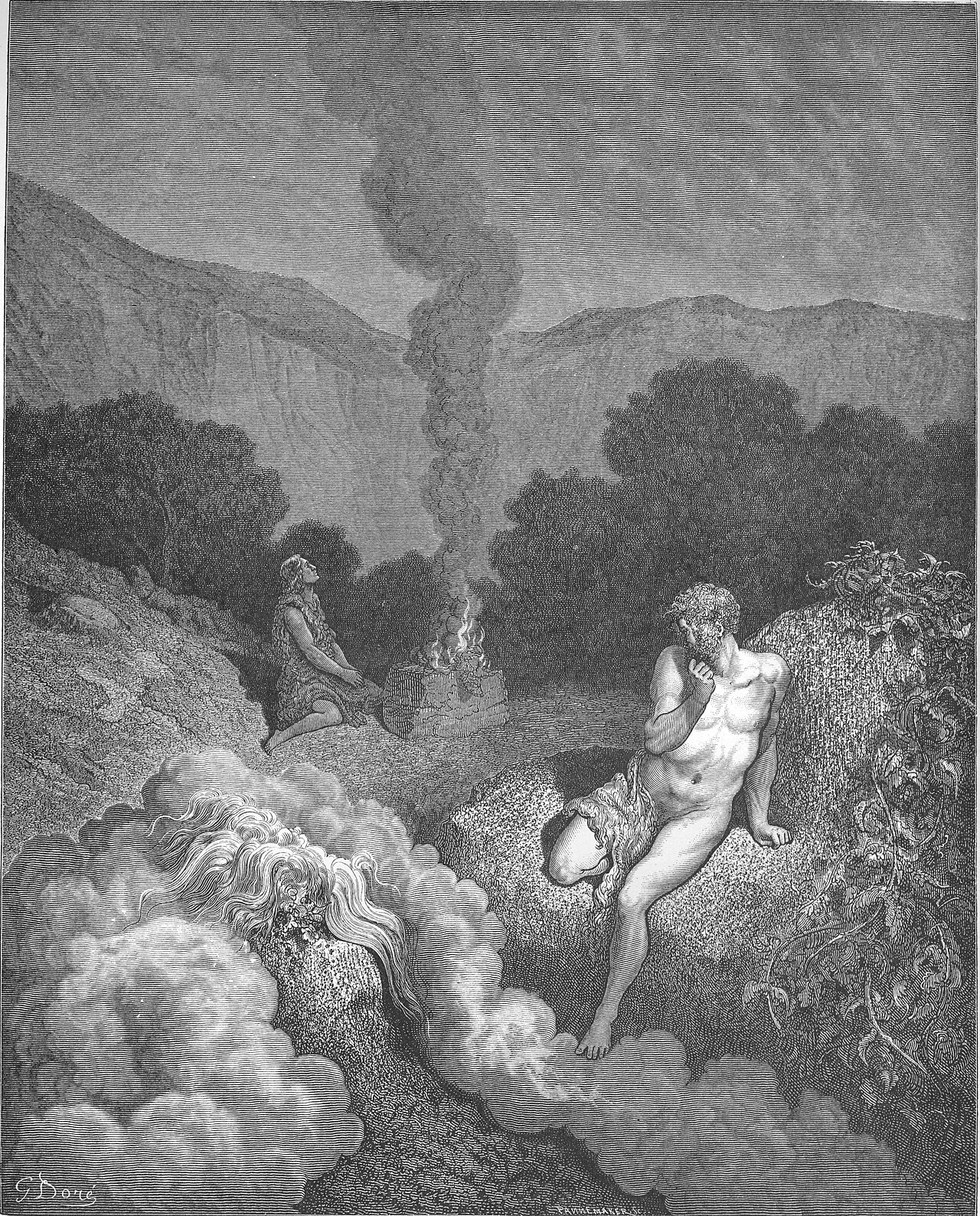
Engraving: Gustave Doré · Public domain · Wikimedia Commons
The image of God, passed on to Seth
At the first link of the genealogy, Scripture uses a weighty expression:
“Adam lived one hundred thirty years, and became the father of a son in his own likeness, after his image, and named him Seth.”— Genesis 5:3 (WEB)
“In his own likeness, after his image” is no accident. It is the very language God used in Genesis 1 when he made humanity:
“So God created man in his own image, in the image of God created he him; male and female created he them.”— Genesis 1:27 (KJV)
Scripture interprets Scripture. The “image” God gave Adam in 1:27 is handed down, through Adam, to Seth in 5:3. Here lies a sobering truth: what Adam passed on was not only the image of God but also his own image, stained with sin and death. That is why every one of Seth’s descendants ends with “he died.” And yet, at the same time, the image of God was not erased by the fall. Even after the judgment of the flood, God forbids murder and grounds the prohibition in that image: “for God made man in his own image” (Gen 9:6, WEB). The image was marred, but never obliterated. The genealogy of chapter 5 is the channel through which that damaged — yet still honored — image flows from generation to generation.
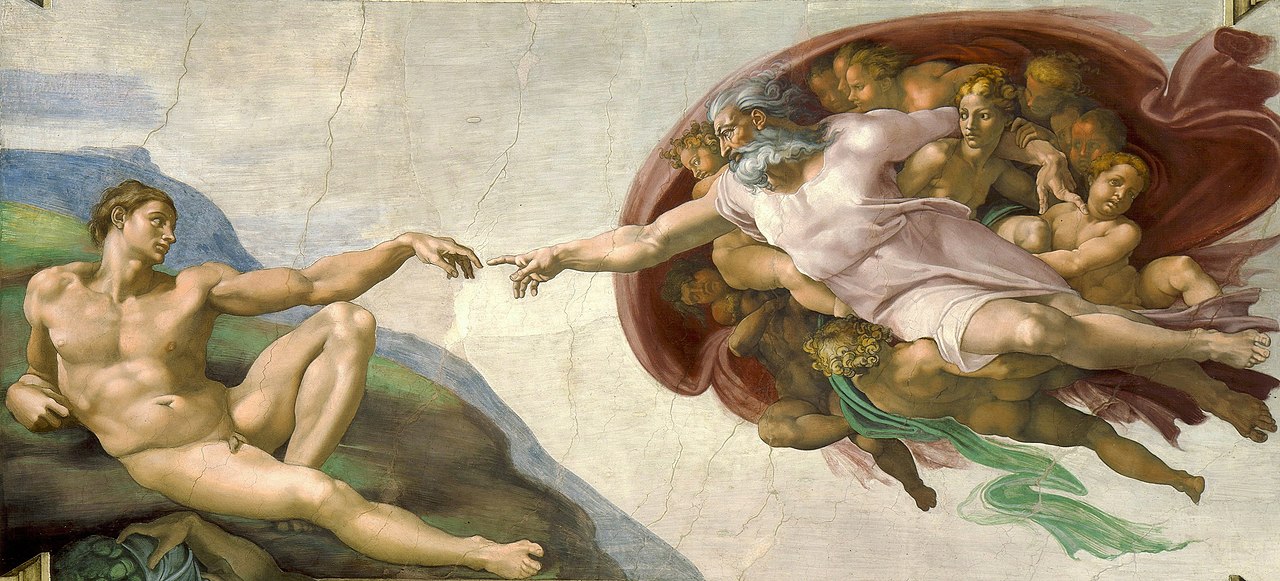
Painting: Michelangelo, ‘The Creation of Adam’ · Public domain · Wikimedia Commons
“And he died” — a bell tolled eight times
Read through chapter 5 and one phrase lodges in your ears: “he died.” Adam lived “nine hundred and thirty years: and he died” (5:5, KJV); so did Seth, Enosh, Kenan, Mahalalel, Jared, Methuselah, and Lamech — eight times this refrain tolls like a funeral bell. No chapter in the Bible says “he died” more often. However long they lived — well past nine centuries — the conclusion is unfailingly the same. Death.
Why do people who lived so long finally die? Scripture planted the answer within Genesis itself. Over the tree of the knowledge of good and evil God warned, “thou shalt surely die” (Gen 2:17, KJV). The repeated deaths of chapter 5 testify that the warning was not empty — that it was fulfilled exactly as spoken. The apostle Paul unfolds this fact of Genesis in the New Testament:
“Therefore as sin entered into the world through one man, and death through sin; and so death passed to all men, because all sinned.”— Romans 5:12 (WEB)
“For the wages of sin is death; but the gift of God is eternal life through Jesus Christ our Lord.”— Romans 6:23 (KJV)
People die not because they were made of dust, but because they are sinners. The eight “he died” refrains of Genesis 5 stamp the truth “the wages of sin is death” eight times over. And it is precisely because of this heavy repetition that the single exception which follows shines so brightly.
Painting: Franciscus Gijsbrechts · Public domain · Wikimedia Commons
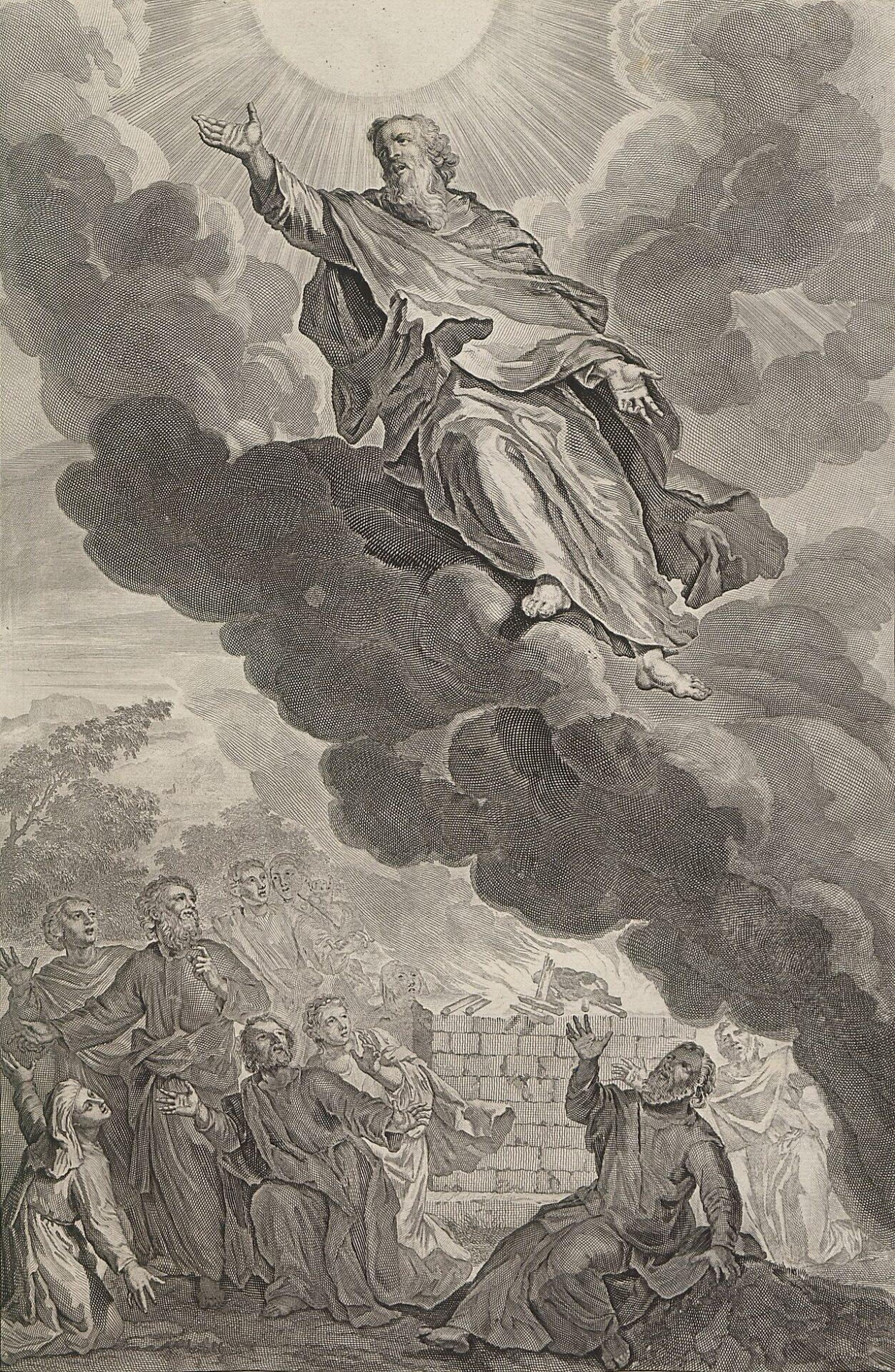
Enoch, the walk that broke the procession of death
At the seventh man the tolling bell suddenly falls silent:
“And Enoch walked with God after he begat Methuselah three hundred years, and begat sons and daughters:… And Enoch walked with God: and he was not; for God took him.”— Genesis 5:22, 24 (KJV)
Enoch has no “he died.” Instead, “God took him.” In the very middle of a genealogy where death reigns, there was one man who did not see death but was carried over to God. The New Testament interprets the heart of this event as faith:
“By faith, Enoch was taken away, so that he wouldn’t see death, and he was not found, because God translated him. For he has had testimony given to him that before his translation he had been well pleasing to God.”— Hebrews 11:5 (WEB)
What Genesis calls “walking with God,” Hebrews explains as the faith that “pleases God,” adding at once that “without faith it is impossible to be well pleasing to him” (Heb 11:6, WEB). Enoch’s distinction was not superhuman power but a life of faith that walked with God every day. “Walking” was not one dramatic experience but a direction held steady for three hundred years — day after day. As the prophet Amos put it, “Do two walk together, unless they have agreed?” (Amos 3:3, WEB). Walking together begins with agreeing on the way.
Enoch’s walk was not his alone. Scripture uses the same expression of his great-grandson Noah: “Noah walked with God” (Gen 6:9, WEB). Later Elijah, too, did not see death but was taken up to heaven in a whirlwind (2 Kings 2:11). In a world where the reign of death looks absolute, God gave, through a few such men, an advance sign that “death is not the end.” The New Testament also remembers Enoch as a prophet: Jude reports that “Enoch, the seventh from Adam,” prophesied of the Lord’s judgment (Jude 14-15) — and indeed, counting from Adam, Enoch is exactly the seventh generation.
Engraving: Gerard Hoet · Public domain · Wikimedia Commons
Even the longest life still ends in “he died”
Enoch’s son is Methuselah, the longest-lived person in the Bible: “all the days of Methuselah were nine hundred sixty and nine years: and he died” (Gen 5:27, KJV). 969 years — the record for a human lifespan. Some traditional readings link Methuselah’s name to the later judgment of the flood, but since the text does not say so directly, we cannot be dogmatic about it. What the text does clearly emphasize is this: however long one lives — even 969 years — it still ends in “he died.” Only Enoch, who walked with God, escaped that refrain. Methuselah’s long life testifies to God’s patience, but it also quietly tells us that living long is not, in itself, salvation.
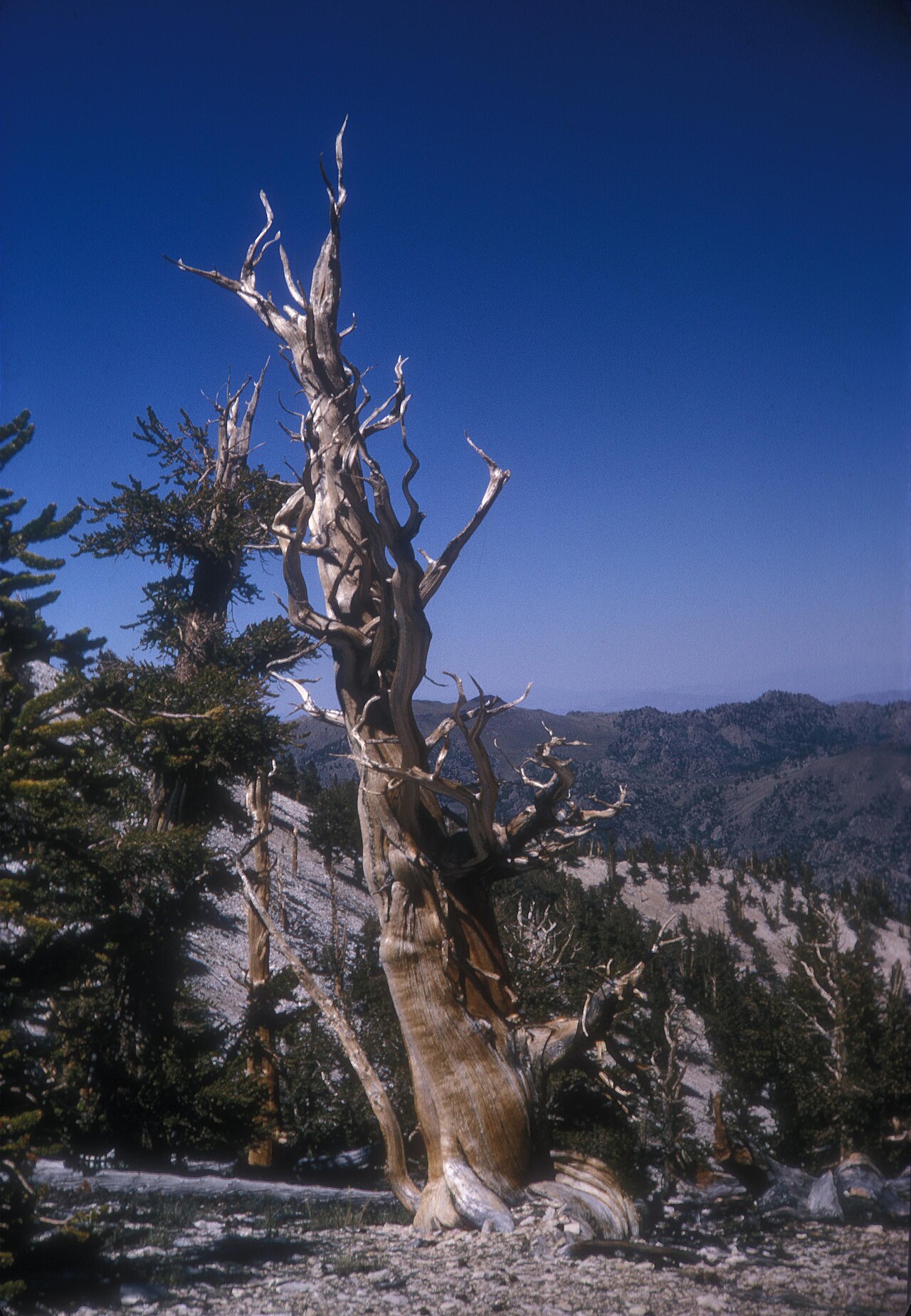
Photo: Jerrye and Roy Klotz MD · CC BY-SA 3.0 · Wikimedia Commons
Lamech’s lament and a name that means “comfort”
At the end of the genealogy, Seth’s Lamech has a son and pours into the child’s name both the lament and the hope of his age:
“And he called his name Noah, saying, This same shall comfort us concerning our work and toil of our hands, because of the ground which the LORD hath cursed.”— Genesis 5:29 (KJV)
The “cursed ground” and “toil” Lamech speaks of are no vague complaint. They point back to the very curse God pronounced upon Adam in Genesis 3: “the ground is cursed for your sake… in much labor” (Gen 3:17, WEB). Feeling in his own body the weight of the curse inherited through the generations, Lamech hoped for rest and comfort in his son. The name “Noah” itself is tied to a word for “rest” and “comfort.”
Of course, Noah alone did not fully lift the curse. Yet Lamech’s hope was not in vain, for through Noah God rescued one family and one promise even through the judgment of the flood (Genesis 6), and through that line the One who would give true rest would finally come. Chapter 5 closes with “Noah… became the father of Shem, Ham, and Japheth” (Gen 5:32) and carries us straight into the flood narrative that follows. The genealogy of death leaves behind one name of hope and flows on into the next chapter.
The gospel hidden in a genealogy — from Adam to Christ
The names of Genesis 5 do not stay in the past. The New Testament joins this very genealogy to Jesus Christ. Luke traces Jesus’ family line backward and ends like this:
“…the son of Methuselah, the son of Enoch, the son of Jared, the son of Mahalaleel, the son of Cainan, the son of Enos, the son of Seth, the son of Adam, the son of God.”— Luke 3:37-38 (WEB)
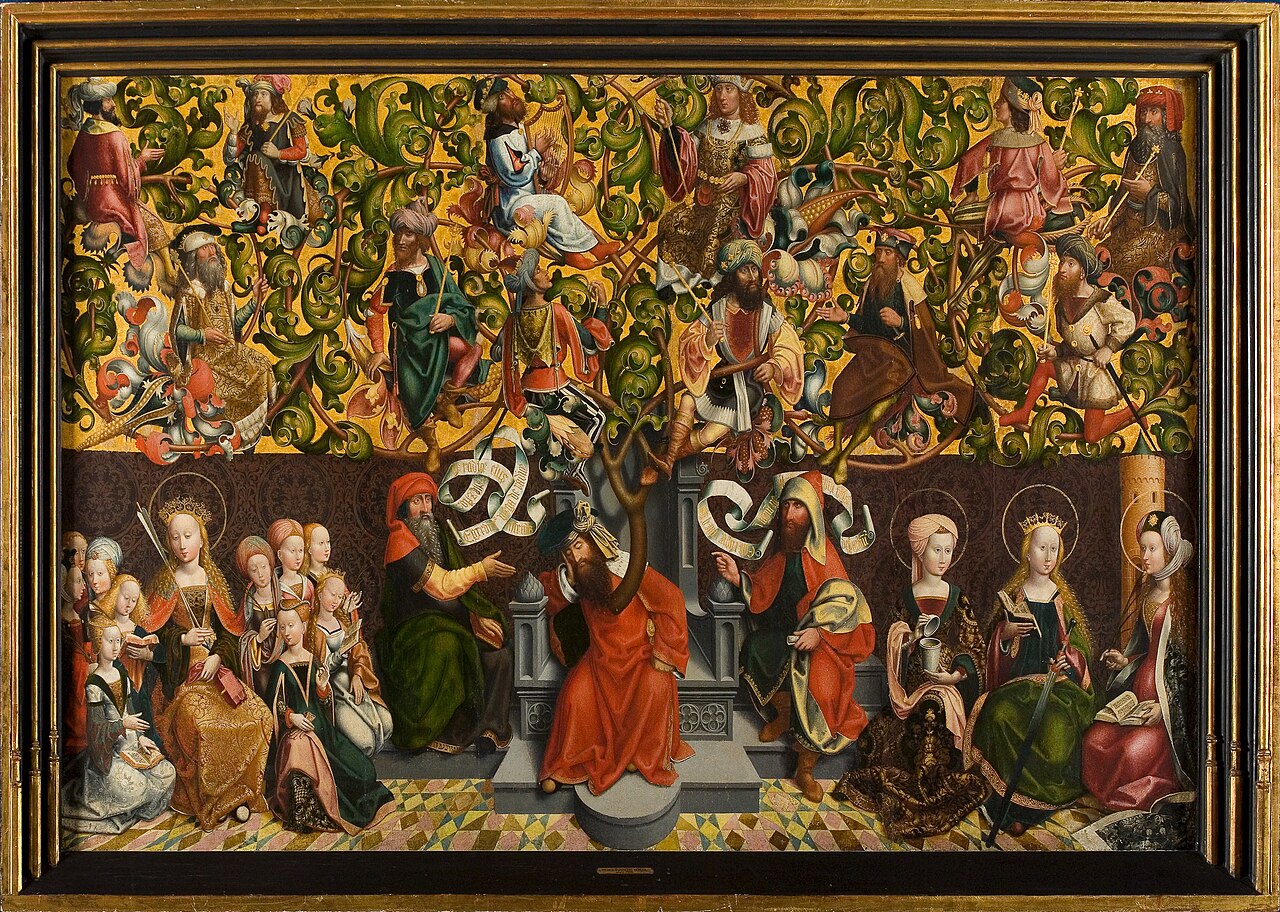
The names from Genesis 5 — Seth, Enosh, Kenan, Mahalalel, Jared, Enoch, Methuselah — stand right there in the genealogy of Jesus. First Chronicles 1:1-4 also records the same line from Adam, Seth, and Enosh down to Noah, Shem, Ham, and Japheth. In other words, the procession of “he died” in chapter 5 was the very channel that preserved, even through death, the road by which the seed of the woman (Gen 3:15) would come. At the moment when sin and death seemed to swallow all humanity, God never let go of the thread of life that ran from Seth to Noah, from Noah to Abraham, and at last to Christ. When Luke calls Adam “the son of God” and returns the genealogy to God, he declares that the beginning and the end of all these generations rest in God. On its surface Genesis 5 is a roster of death; but beneath it flows an unshakable promise of the gospel.
Painting: anonymous, Rijksmuseum Twenthe · Public domain · Wikimedia Commons
Today, with whom are we walking?
Genesis 5 leaves us with two questions.
First, are we facing death honestly? The eight “he died” refrains are a sentence that will one day be attached behind each of our own names. The world tries hard to look away from death, but Scripture makes us look it in the eye and see its root — sin. And then it invites us with the good news that “the wages of sin is death, but the gift of God is… eternal life” (Rom 6:23). Only those who know death come to long for the gift of life.
Second, are we walking with God as Enoch did? Enoch’s walk was no special endowment but a road built up from three hundred years of ordinary obedience. A choice today to please God, and another such choice tomorrow — holding to the same direction is what walking means. Whether we take the road of Cain’s Enoch, who built a city, or the road of Seth’s Enoch, who walked with God, is decided not by some grand resolution but in the steps of each day. The Great Commission flows out of that walk, for the one who walks with God invites his neighbors onto the same road.
In the middle of a genealogy of death there was one man who walked with God, and at the end of that line came One who conquered death for us. Genesis 5 asks us today: “With whom are you walking now?”
References
- Genesis, Korean Revised Version (Gaeyeok Hangeul) — Wikisource (public-domain Bible text)
- Genesis 5 — Bible Hub (text and parallel translations)
- Genesis 5:24, ‘Enoch walked with God’ — BibleRef commentary
- Genesis 5:3 commentary (the image of God and Seth) — Bible Hub Commentaries
- Genesis 5:29 commentary (Noah and ‘comfort’) — Bible Hub Commentaries
- Genesis 5 — Enduring Word commentary
- On the traditional reading linking Methuselah’s name to the flood — Answers in Genesis
- Korean Bible Society — for Korean Bible translations