


Revelation 17 contains one of the most striking visions in all of Scripture: a woman riding a scarlet beast, clothed in purple, holding a golden cup, with the name Babylon the Great written on her forehead. The picture is strange and frightening, yet this is also a chapter in which the text itself hands us the keys to its meaning. The angel promises, “… I will tell you the mystery of the woman, and of the beast that carries her, which has the seven heads and the ten horns.” (Revelation 17:7, WEB), and the passage goes on to explain what the waters are (Revelation 17:15), what the ten horns are (Revelation 17:12), and who the woman is (Revelation 17:18). This article centers on the sermon The Judgment of the Harlot (Revelation 17:15-18), preached by Pastor Moonsoo Son in 2024, and expounds the whole of Revelation 17 by letting Scripture interpret Scripture. The Korean original quotes the Korean Revised Version (1961); the English Scripture quotations here are from the World English Bible, which calls her the great prostitute; the traditional English name is the great harlot.
The Text — Revelation 17:15-18 (WEB)
15 He said to me, The waters which you saw, where the prostitute sits, are peoples, multitudes, nations, and languages.
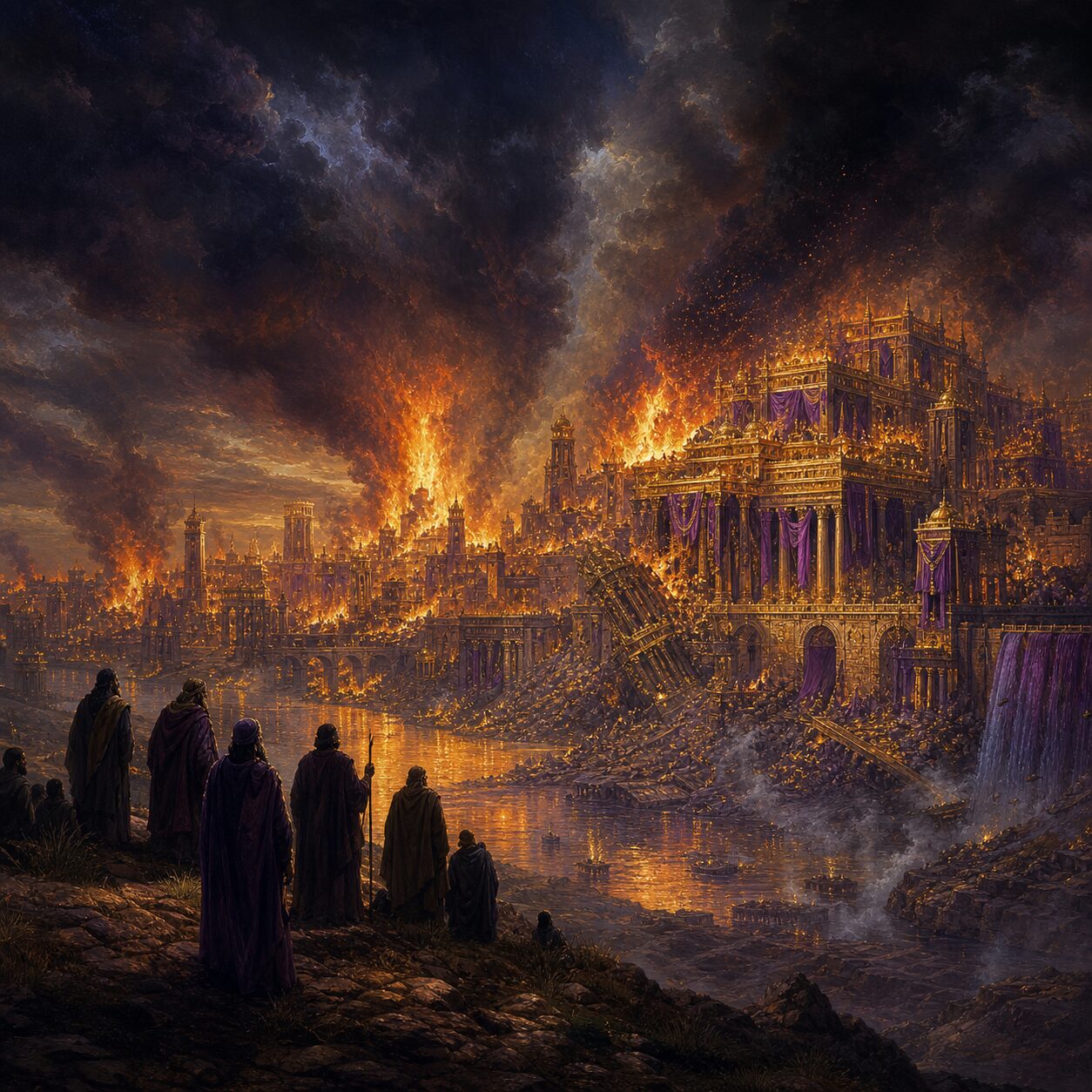
16 The ten horns which you saw, and the beast, these will hate the prostitute, and will make her desolate, and will make her naked, and will eat her flesh, and will burn her utterly with fire.
17 For God has put in their hearts to do what he has in mind, and to be of one mind, and to give their kingdom to the beast, until the words of God should be accomplished.
18 The woman whom you saw is the great city, which reigns over the kings of the earth.
(Revelation 17:15-18, WEB)
Context — Two Women, Two Cities
The fall of Babylon is not a new theme in Revelation 17. A second angel had already cried out, “… Babylon the great has fallen …” (Revelation 14:8, WEB), and when the seventh bowl was poured out it was declared in a single sentence: “… Babylon the great was remembered in the sight of God, to give to her the cup of the wine of the fierceness of his wrath.” (Revelation 16:19, WEB). Revelation 17 and Revelation 18 unfold that declaration in full.
The closing section of Revelation is built with deliberate symmetry. In Revelation 17:1, “One of the seven angels who had the seven bowls” (Revelation 17:1, WEB) comes to John and says, “Come here. I will show you the judgment of the great prostitute who sits on many waters,” (Revelation 17:1, WEB), and carries him away in the Spirit into a wilderness (Revelation 17:3). In Revelation 21:9-10, one of the seven angels who had the seven bowls comes again and says, “Come here. I will show you the wife, the Lamb’s bride.” (Revelation 21:9, WEB), and this time carries him to a great and high mountain to show him the New Jerusalem. The prostitute and the Bride, the wilderness and the high mountain, Babylon and the New Jerusalem: Revelation asks its readers, To which woman do you belong, and of which city are you a citizen?
Exposition 1 — The Identity of the Harlot: The Great City That Makes the World Drunk (Revelation 17:1-6)
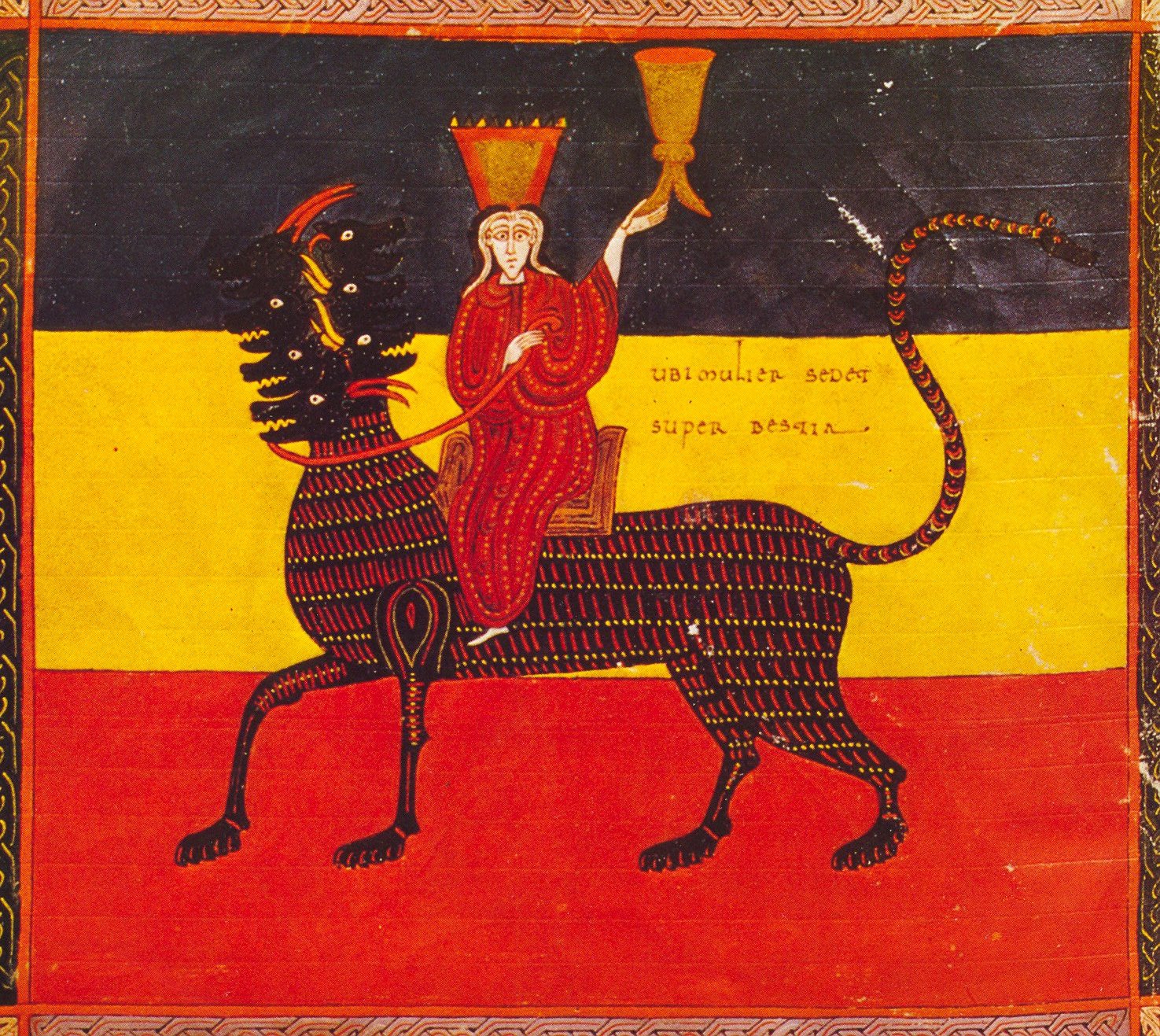
The woman John saw is the great prostitute who sits on many waters (Revelation 17:1), and on her forehead was written, “MYSTERY, BABYLON THE GREAT, THE MOTHER OF THE PROSTITUTES AND OF THE ABOMINATIONS OF THE EARTH.” (Revelation 17:5, WEB). Why is she called a prostitute? Scripture calls it prostitution when God’s people leave him to serve something else. Jeremiah said of unfaithful Israel and Judah, “It happened through the lightness of her prostitution, that the land was polluted, and she committed adultery with stones and with stocks.” (Jeremiah 3:9, WEB), and James warned believers, “You adulterers and adulteresses, don’t you know that friendship with the world is enmity with God? …” (James 4:4, WEB). Prostitution in this sense is not only a sin of the body; it is giving to anything else the love and trust that belong to God.
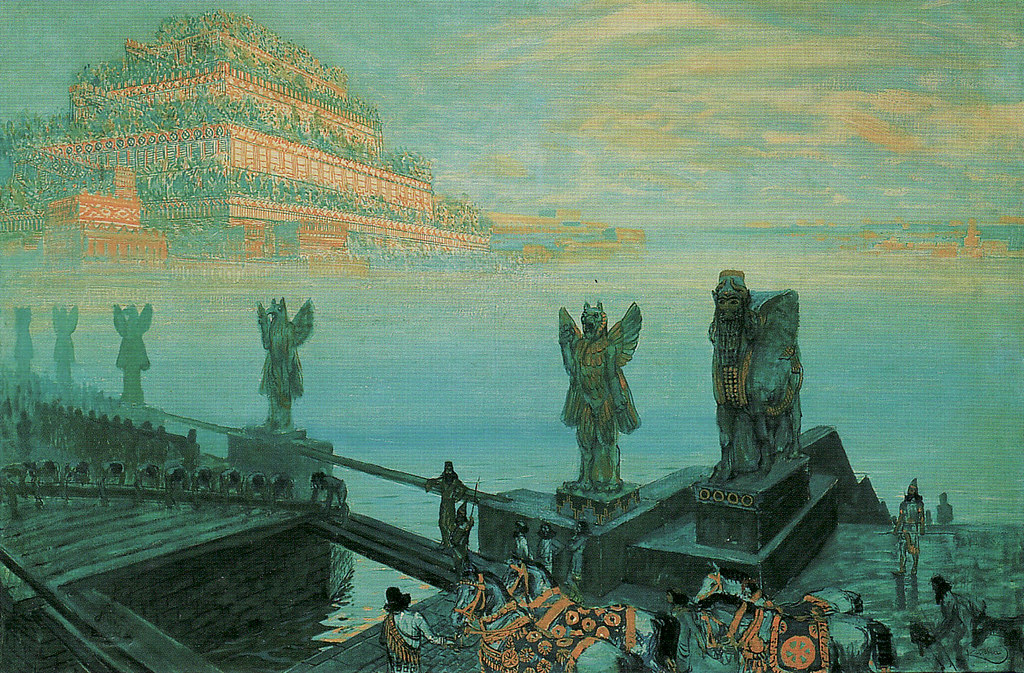
The roots of this picture lie in the Old Testament oracles of judgment against Babylon: “Babylon has been a golden cup in Yahweh’s hand, who made all the earth drunken: the nations have drunk of her wine; therefore the nations are mad.” (Jeremiah 51:7, WEB). “You who dwell on many waters, abundant in treasures, your end has come, the measure of your covetousness.” (Jeremiah 51:13, WEB). The language also overlaps with Nahum’s words about Nineveh: “… who sells nations through her prostitution …” (Nahum 3:4, WEB). Many waters, a golden cup, and wine that makes the nations drunk all reappear in Revelation 17. That is why the angel says of her, “with whom the kings of the earth committed sexual immorality, and those who dwell in the earth were made drunken with the wine of her sexual immorality.” (Revelation 17:2, WEB).
The text itself tells us that this woman is not a single individual. Revelation 17:18 explains her as the great city which reigns over the kings of the earth. Revelation 18 goes on to show what kind of city it is: “… the kings of the earth committed sexual immorality with her, and the merchants of the earth grew rich from the abundance of her luxury.” (Revelation 18:3, WEB). Power, commerce, and luxury woven together, whispering that life is possible without God: that is Babylon the great. Her purple and scarlet clothing, her gold, precious stones, and pearls (Revelation 17:4) are that world’s dazzling exterior, while the contents of her golden cup reveal what lies within: “… a golden cup full of abominations and the impurities of the sexual immorality of the earth.” (Revelation 17:4, WEB). Then Revelation 17:6 settles her identity: “I saw the woman drunken with the blood of the saints, and with the blood of the martyrs of Jesus. …” (Revelation 17:6, WEB). Behind the splendor lies the blood of the martyrs.
Exposition 2 — The Mystery of the Beast: Seven Heads and Ten Horns (Revelation 17:7-14)
When John marvels at the woman, the angel begins by explaining the mystery of the beast that carries her (Revelation 17:6-7). This beast is not appearing for the first time. The beast of Revelation 17:3 is full of blasphemous names and has seven heads and ten horns. Earlier John had seen this: “… I saw a beast coming up out of the sea, having ten horns and seven heads. …” (Revelation 13:1, WEB), and that beast too bore blasphemous names on its heads (Revelation 13:1). Of that beast it is written, “… The dragon gave him his power, his throne, and great authority.” (Revelation 13:2, WEB). And the dragon is “… the old serpent, he who is called the devil and Satan, the deceiver of the whole world. …” (Revelation 12:9, WEB). The prostitute sits on the back of a beast that Satan has empowered. Scripture shows us what the world’s splendor is riding on.
The description of the beast stands in sharp contrast with the name by which God is called. God says he is the one “… who is and who was and who is to come, the Almighty.” (Revelation 1:8, WEB), but the beast is the one who “… was, and is not; and is about to come up out of the abyss and to go into destruction. …” (Revelation 17:8, WEB). God is eternal; the beast appears for a while, vanishes, and finally goes into destruction. Those who dwell on the earth whose names are not written in the book of life marvel at this beast (Revelation 17:8; Revelation 13:8), but of the New Jerusalem it is said that there will enter “… only those who are written in the Lamb’s book of life.” (Revelation 21:27, WEB).
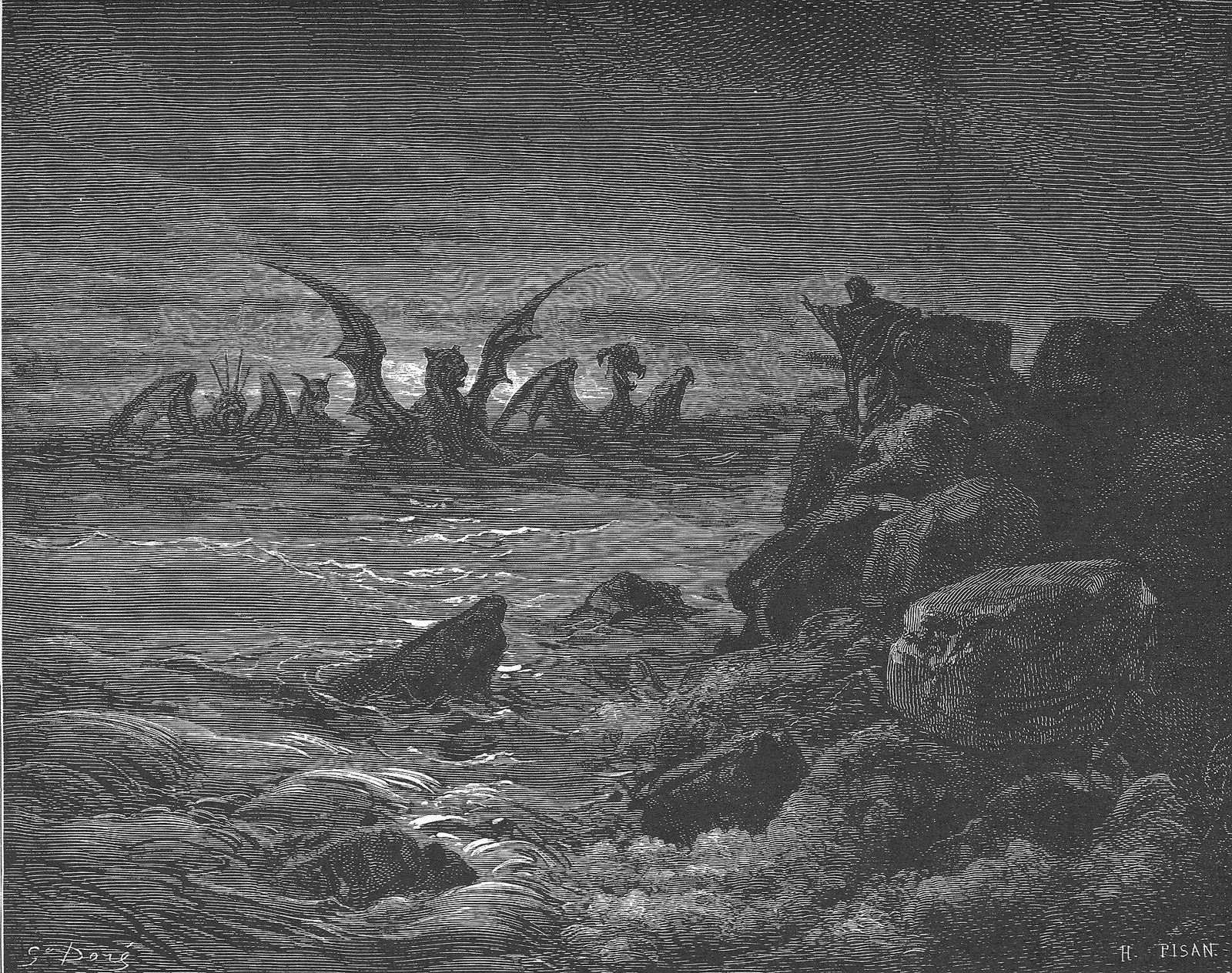
The angel continues, “Here is the mind that has wisdom. The seven heads are seven mountains, on which the woman sits.” (Revelation 17:9, WEB), and explains that the heads are also seven kings (Revelation 17:10). Reading beasts as kings and kingdoms is already familiar from the book of Daniel: “These great animals, which are four, are four kings, who shall arise out of the earth.” (Daniel 7:17, WEB). Revelation does not name these kings. Instead, it stresses the same ending twice. The beast is about to go into destruction (Revelation 17:8), and “… he goes to destruction.” (Revelation 17:11, WEB). The wisdom this text asks of its readers lies less in calculating a timeline than in knowing that, however strong the beast looks, its end is already fixed.
The ten horns also come from the language of Daniel: “As for the ten horns, out of this kingdom shall ten kings arise: …” (Daniel 7:24, WEB). Revelation explains them in the same way: “The ten horns that you saw are ten kings who have received no kingdom as yet, but they receive authority as kings, with the beast, for one hour.” (Revelation 17:12, WEB). Their authority lasts for one hour. This matches the way Revelation 18 repeats that Babylon’s judgment came “in one hour” (Revelation 18:10, WEB; Revelation 18:17; Revelation 18:19). The ten kings “have one mind, and they give their power and authority to the beast.” (Revelation 17:13, WEB). Whose purpose that one mind finally served, Revelation 17:17 will reveal.
And at the center of this chapter stands a declaration of victory: “These will war against the Lamb, and the Lamb will overcome them, for he is Lord of lords, and King of kings. They also will overcome who are with him, called and chosen and faithful.” (Revelation 17:14, WEB). However united the beast and the ten kings may be, the outcome of the battle is already settled.
Exposition 3 — The Waters Where the Harlot Sits (Revelation 17:15)
The angel explains the symbol himself: “The waters which you saw, where the prostitute sits, are peoples, multitudes, nations, and languages.” (Revelation 17:15, WEB). The many waters on which the prostitute sits are the peoples of the whole world. Deception does not stop at borders. We feel the reality of this word today as well. Through screens, advertisements, and algorithms, the wine of sexual immorality and greed flows out to peoples, nations, and languages. The way believers overcome this deception is not by envying Babylon’s splendor but by seeing its end in advance. A voice from heaven commands: “… Come out of her, my people, that you have no participation in her sins, and that you don’t receive of her plagues,” (Revelation 18:4, WEB).
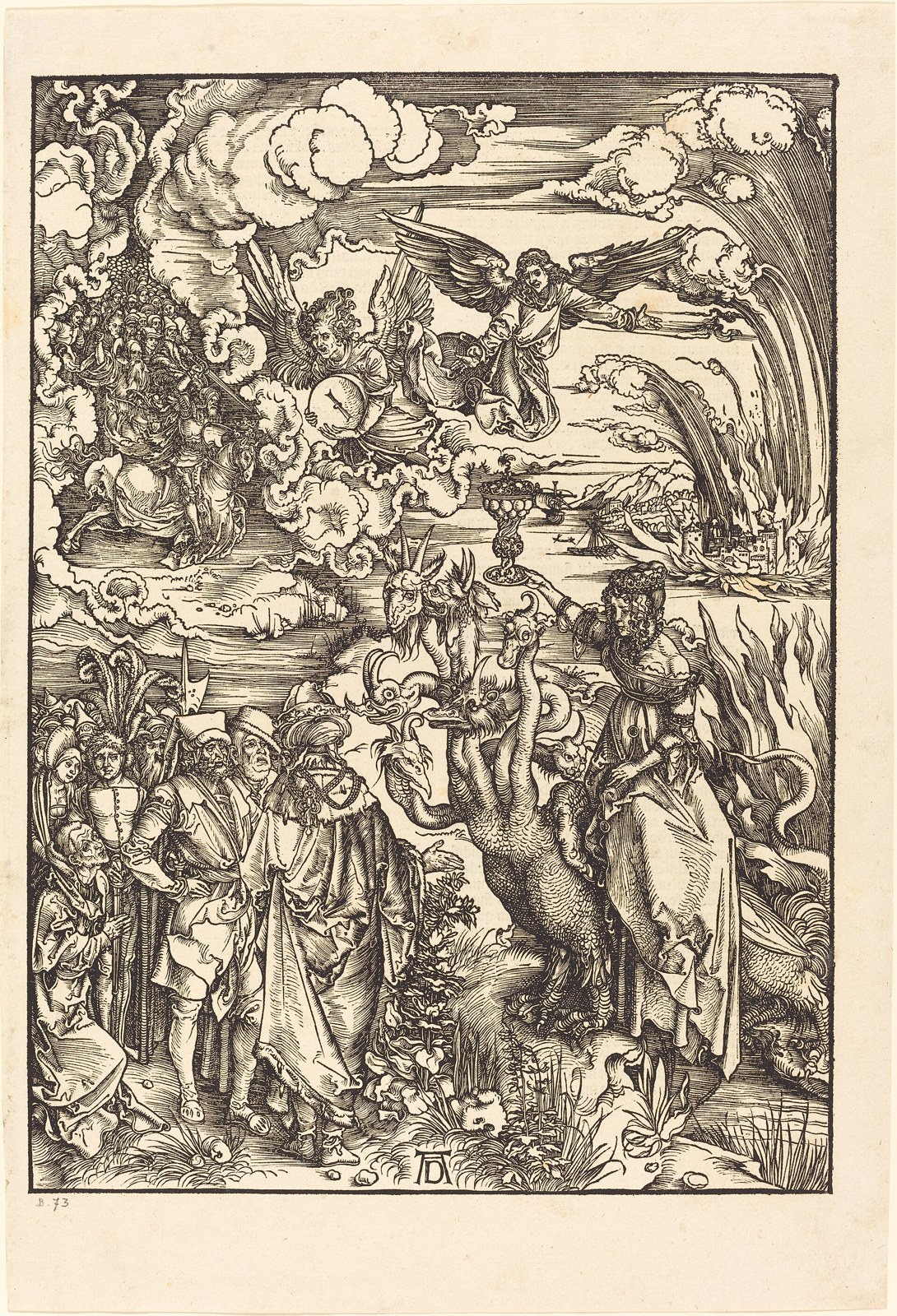
Exposition 4 — The Harlot Devoured by Her Own Allies (Revelation 17:16)
Revelation 17:16 brings the most shocking reversal in the chapter. The ones who destroy the prostitute are not God’s people but the very beast and ten horns that carried her: “The ten horns which you saw, and the beast, these will hate the prostitute, and will make her desolate, and will make her naked, and will eat her flesh, and will burn her utterly with fire.” (Revelation 17:16, WEB).
This scene, too, has a precedent in Scripture. Concerning unfaithful Jerusalem, God said through Ezekiel: “… I will gather all your lovers, with whom you have taken pleasure, and all those who you have loved, with all those who you have hated; I will even gather them against you on every side …” (Ezekiel 16:37, WEB). “… they shall strip you of your clothes, and take your beautiful jewels; and they shall leave you naked and bare.” (Ezekiel 16:39, WEB). “They shall burn your houses with fire …” (Ezekiel 16:41, WEB). Lovers turning against the one who relied on them, stripping her, and burning with fire: in Ezekiel 16 this was the way God carried out his judgment. Evil eventually devours its own side. The alliances of sin are bound together not by love but by use, and when usefulness ends they tear one another apart. The end of a life that leans on the world’s splendor is pictured in this one verse.
Exposition 5 — Until the Words of God Are Accomplished (Revelation 17:17-18)
Yet Revelation 17:17 places a remarkable sentence over all this chaos: “For God has put in their hearts to do what he has in mind, and to be of one mind, and to give their kingdom to the beast, until the words of God should be accomplished.” (Revelation 17:17, WEB). The ten kings were said to “have one mind” as they gave their authority to the beast (Revelation 17:13, WEB), yet it was God who brought that one mind about. It is just as in Ezekiel 16:37, where it was God who gathered the lovers against her. Even the betrayal of the beast and the ten horns does not lie outside God’s sovereignty. Even in the moment when evil devours evil, the reins of history remain in the hand of the One seated on the throne. This is the comfort Revelation gives to a persecuted church: however violently the world shakes, what is finally being fulfilled is the word of God.
The chapter’s last verse fixes once more who the woman is: “The woman whom you saw is the great city, which reigns over the kings of the earth.” (Revelation 17:18, WEB). The city that seemed to reign over the kings of the earth falls in one hour, and heaven sings: “… Hallelujah! … For he has judged the great prostitute, who corrupted the earth with her sexual immorality, and he has avenged the blood of his servants at her hand.” (Revelation 19:1-2, WEB).
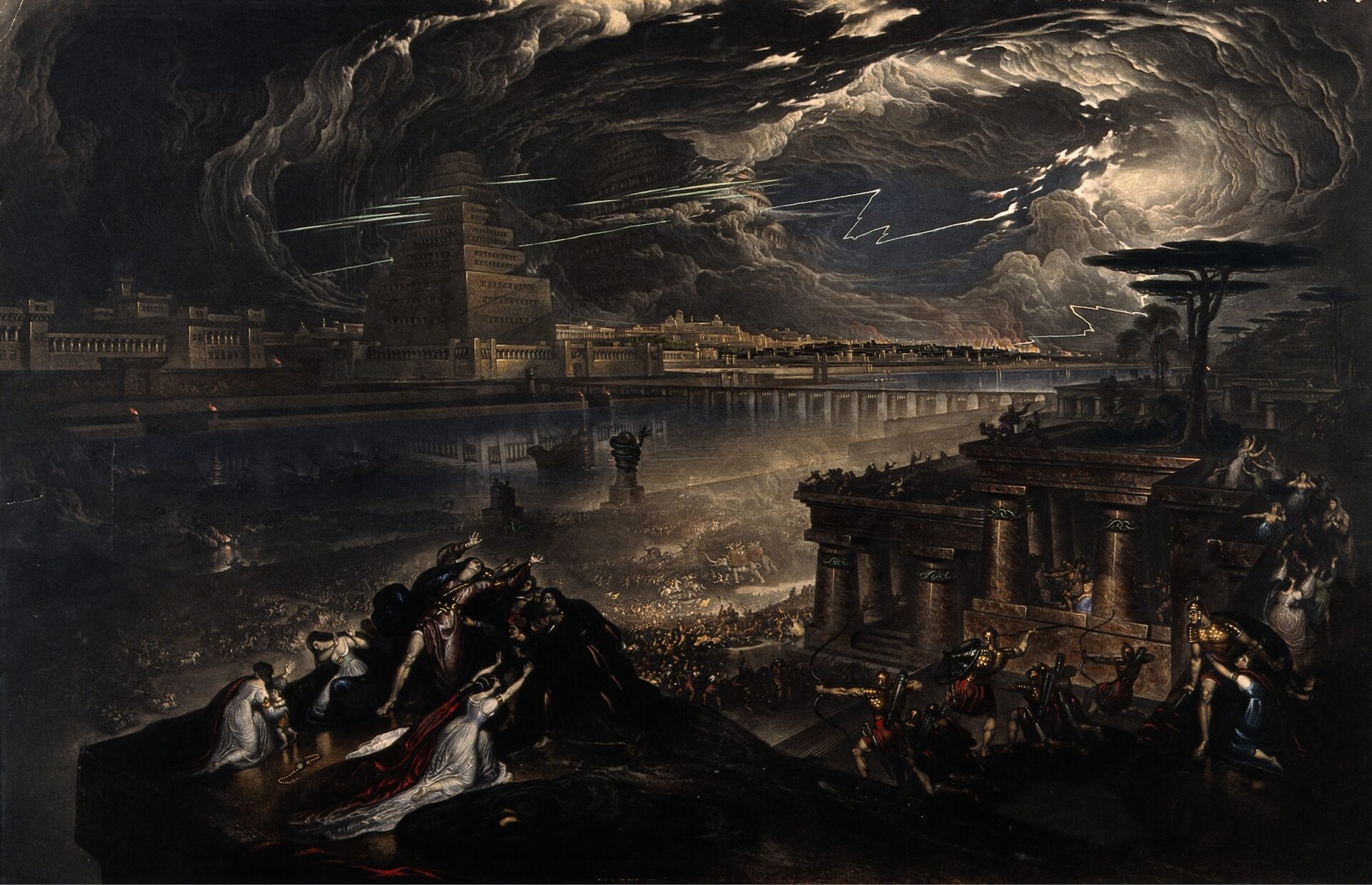
Theme — Out of Babylon and to the Lamb
Revelation 17 was not given so that we could fill in a timetable of future events, but so that we would decide now where we stand. What the text itself makes clear is plain: the prostitute is the great city that deceives the whole world (Revelation 17:15; Revelation 17:18), the authority of the beast she rides and of the ten kings lasts only one hour (Revelation 17:12), her end is self-destruction (Revelation 17:16), sovereignty over history belongs to God (Revelation 17:17), and the final victory belongs to the Lamb (Revelation 17:14).
The two women are dressed differently as well. The prostitute is clothed in purple and scarlet and decked with gold, precious stones, and pearls (Revelation 17:4), but of the Lamb’s wife it is written, “It was given to her that she would array herself in bright, pure, fine linen: for the fine linen is the righteous acts of the saints.” (Revelation 19:8, WEB). The believer’s place is not at the prostitute’s cup but at the Lamb’s marriage supper, and the believer’s strength lies not in personal resolve but in the promise: “… They also will overcome who are with him, called and chosen and faithful.” (Revelation 17:14, WEB).
Application — Living as Those Who Do Not Get Drunk
- Where in my everyday life does the wine of sexual immorality (Revelation 17:2) flow in? Before screens, spending, relationships, and ambition, am I awake or intoxicated?
- When Babylon’s splendor (Revelation 17:4) looks desirable, do I also see its end (Revelation 17:16)?
- Before powers that look as strong as the beast, do I remember that their authority lasts one hour and that the Lamb overcomes (Revelation 17:12-14)?
- In response to the call, “… Come out of her, my people …” (Revelation 18:4, WEB), what must I concretely cut off right now?
- Before the news of a confusing age, do I live trusting the sovereignty that guides history until the words of God are accomplished (Revelation 17:17)?
Sermon Videos
References
- Korean Revised Version, Revelation 17 — bible.com
- Korean Revised Version, Revelation 18 — bible.com
- Korean Revised Version, Revelation 13 — bible.com
- Korean Revised Version, Daniel 7 — bible.com
- Korean Revised Version, Ezekiel 16 — bible.com
- Korean Revised Version, Jeremiah 51 — bible.com
- BibleHub — Revelation 17 (World English Bible)
- BibleHub Parallel — Revelation 17:8, translations compared