
Every June, Koreans remember a war. Yet how we remember it differs from person to person. “The Korean War Kim Il-sung Started” (co-authored by Kang Gyu-hyung and four others, Guiparang) is a popular history book that aims to point clearly to the war’s beginning and its responsibility. This essay does not set out to judge the book by a political yardstick. Rather, over the war’s documentary record, it seeks to read another story the Korean church passed through alongside it—the gospel of martyrdom and forgiveness.
What kind of book is “The Korean War Kim Il-sung Started”?
This book is a joint work by five writers, including Kang Gyu-hyung (professor at Myongji University), together with Kim Yong-sam, Nam Jeong-uk, Jeong Gyeong-hee, and Joo Ik-jong. It was published by Guiparang; first released in 2019, it was later carried on in a revised edition. The main text runs to about 136 pages in 26 short sections, each only about five pages of concise narration accompanied by archival photographs, documents, and charts. It is designed as a primer that lets young and general readers quickly grasp the main thread of the war.
One point must be made clear first. The book’s authors are historians and writers of a conservative bent, and a distinct interpretive viewpoint runs throughout the work. A Christian reader is therefore honest to read it while distinguishing the well-established “facts” from the authors’ “interpretations.” This essay, too, seeks to keep that posture of discernment.
The book in one sentence — “June 25 was a planned invasion from the North”
The book’s boldest claim is exactly its title. The Korean War was not an accidental clash but a meticulously prepared invasion from the North, launched by Kim Il-sung with the prior approval and support of Stalin in the Soviet Union and Mao Zedong in China. The book’s first two sections deal with “why Kim Il-sung and Pak Heon-yeong went to Moscow” and “the war planned by Kim Il-sung, Stalin, and Mao Zedong.”
This core fact is not the claim of one camp but today’s scholarly consensus. After the collapse of the Soviet Union, declassified Soviet archives—the correspondence among Stalin, Shtykov (the Soviet ambassador in North Korea), and Kim Il-sung—clearly proved that the war of June 25, 1950 was a pre-arranged invasion, effectively ending more than forty years of debate over the war’s origins. In early 1950 Stalin approved the invasion plan on the condition of Mao Zedong’s consent, and provided weapons and military advisers.
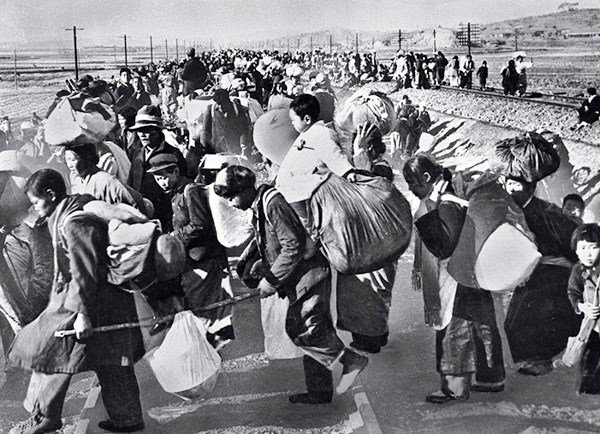
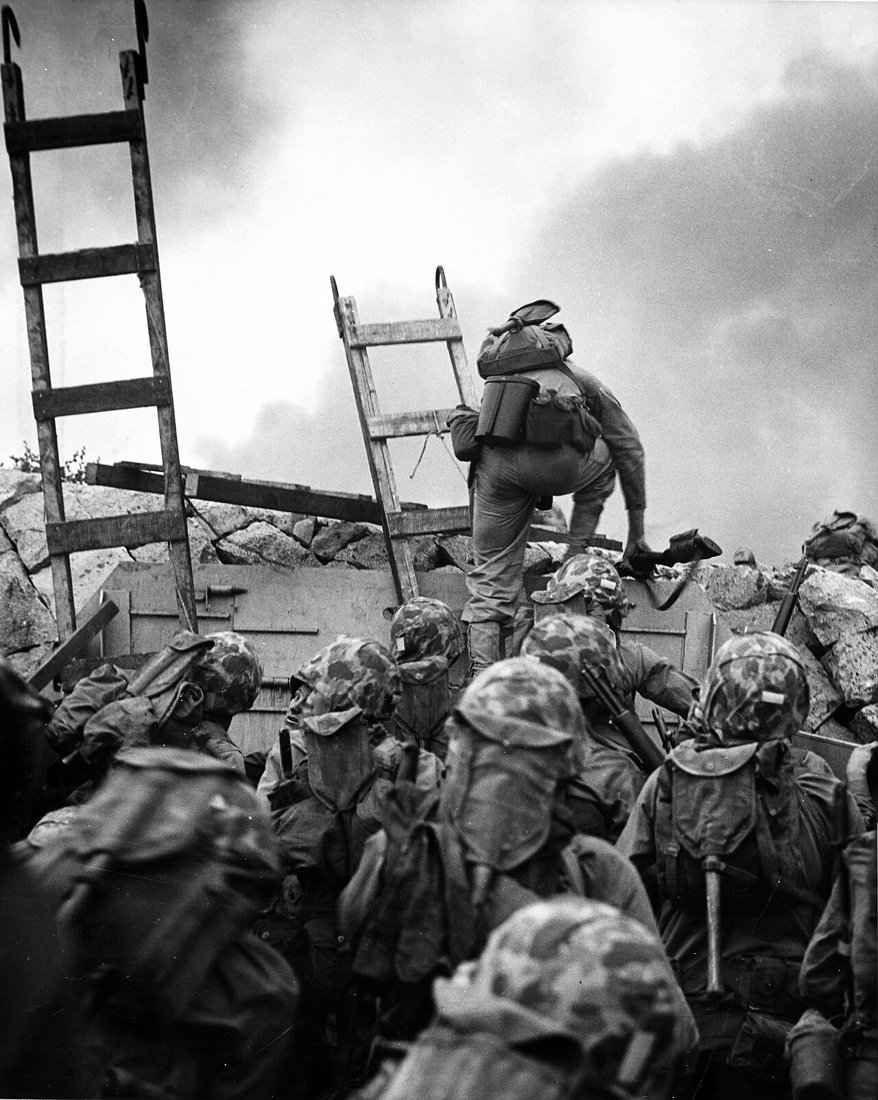
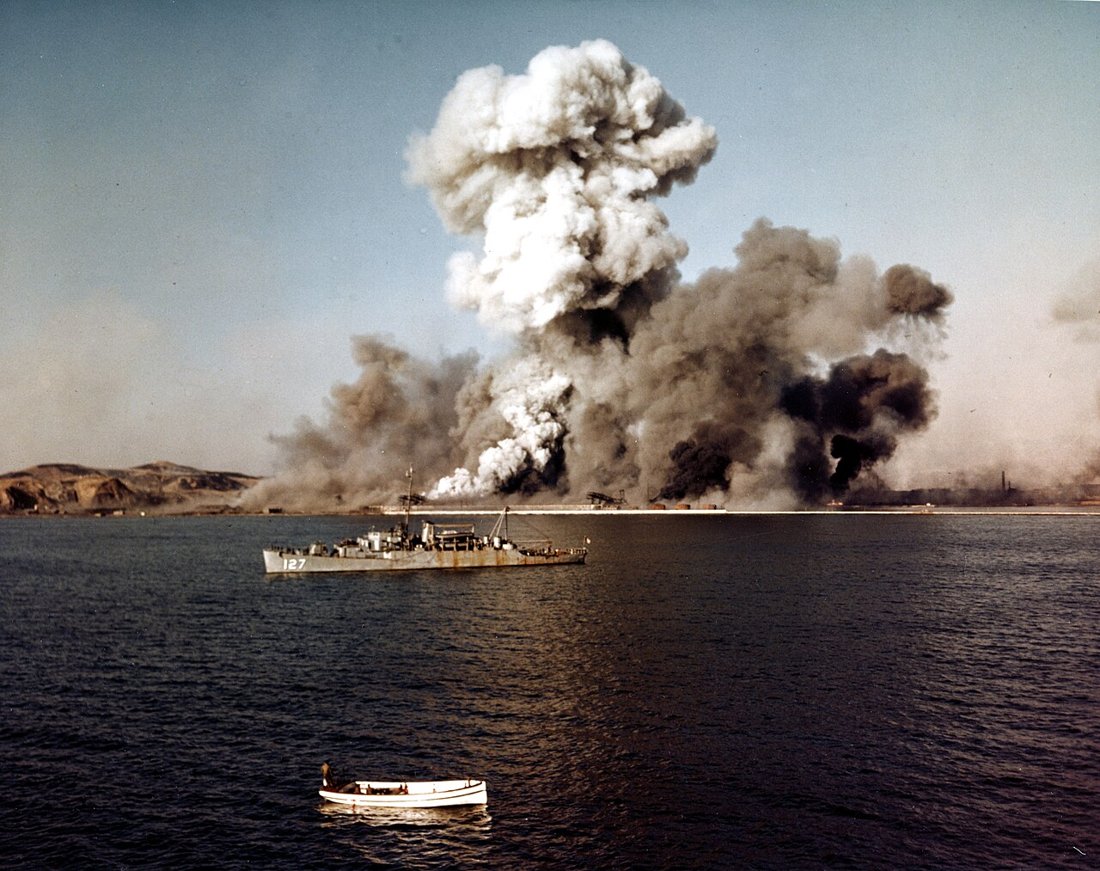
After the initial invasion the war passed through the desperate stand at the Nakdong River defense line, the Incheon landing of September 15, 1950, the drive toward the Yalu River, the entry of Chinese forces that November, and the January 4 retreat, before halting at the armistice of July 27, 1953. In that span roughly a million soldiers lost their lives, and civilian deaths are estimated, depending on the source, at between 1.6 and 3 million. The Encyclopaedia Britannica puts the war’s dead at at least 2.5 million, more than half of them civilians. The book moves through people’s tribunals and the massacre of civilians, the bitter cold of Jangjin (Chosin), and the urgency of the Hungnam evacuation, before arriving at its final chapter, “Freedom Is Not Free.” That message about the price of freedom is no light thing for a person of faith to receive.
Where the history book stops — June 25 was also a war aimed at the church
Yet there is another front this book scarcely touches: the suffering of the Korean church. Communism professed a state atheism built on the premise that “religion is the opium of the people,” and the North Korean regime marked Christianity as something to be torn down. So the tragedy of June 25 was a military and political event, and at the same time a persecution aimed at faith.
In April 2025, the Truth and Reconciliation Commission officially confirmed 600 religious figures killed during the Korean War (533 Protestants, 64 Catholics, 3 of Daejonggyo), noting that many were massacred during the September 1950 retreat of the People’s Army and that a number were victims abducted to the North. There are church statistics that estimate the number of martyred ministers still higher, but because the counting criteria differ, it is hard to settle on a single figure. What is clear is that the persecution was no accident; it was aimed at faith itself.
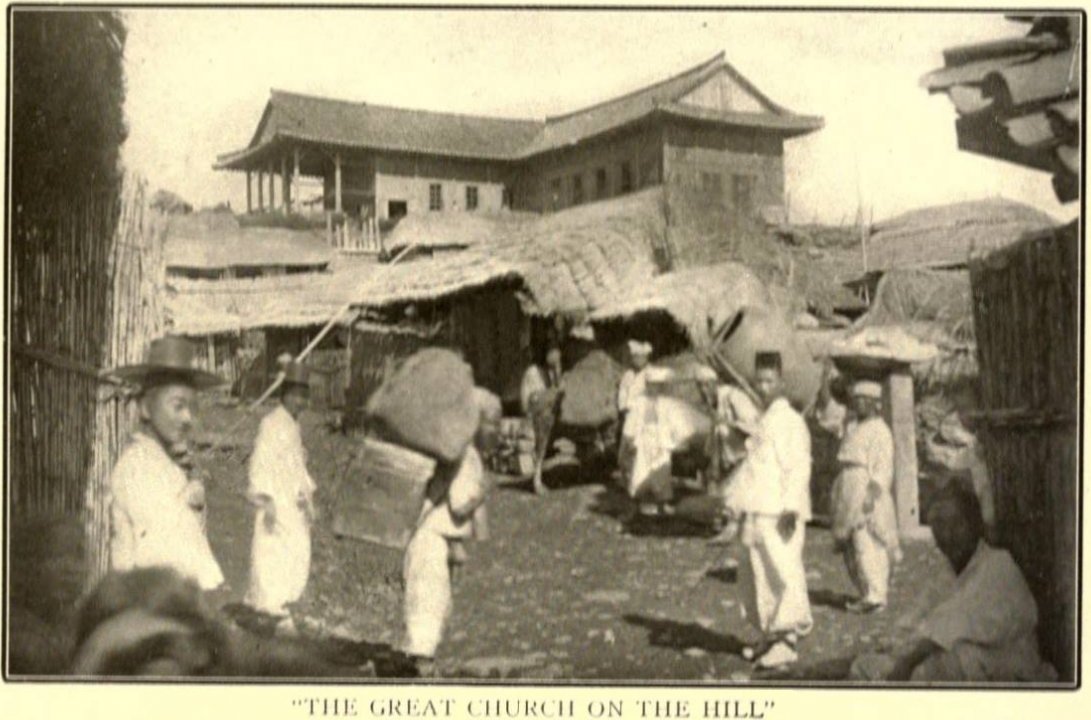
Especially painful is the “lost church.” Through the Pyongyang Revival of 1907 (sparked by the public repentance of elder Gil Seon-ju of Jangdaehyeon Church), Pyongyang became the very heart of Korean Christianity, called “the Jerusalem of the East.” Before liberation, thousands of churches are thought to have stood in the northern land. But through June 25 and the purges that followed, the organized church in North Korea was all but wiped out. Jangdaehyeon’s sister congregation, Sanjeonghyeon Church in Pyongyang—home of Pastor Ju Gi-cheol, who was martyred in 1944 under Japanese rule for refusing shrine worship—remains a symbol of the suffering of Pyongyang’s churches, before and after.
Martyrdom and forgiveness — the gospel Pastor Son Yang-won showed
There is one man who shows most vividly how this war passed through the church: Pastor Son Yang-won (1902–1950). He was a pastor who personally embraced and served leprosy patients at the Aeyangwon community in Yeosu, South Jeolla Province.
His story holds a deep sorrow first. During the Yeosu–Suncheon incident of October 1948, leftist forces killed his two sons, Dong-in and Dong-sin, because they were Christians (this was before the outbreak of June 25). Yet when An Jae-seon, the man who had killed his sons, was captured and faced execution, Pastor Son forgave him, pleaded for his life, and at last took him in as his own adopted son. Korean church history calls this “the atomic bomb of love.” That love toward an enemy was not a feeling he manufactured, but obedience seized by one word.
“But I say unto you, Love your enemies, bless them that curse you, do good to them that hate you, and pray for them which despitefully use you, and persecute you.”
— Matthew 5:44 (KJV, public domain)
Two years later, at the height of the Korean War on September 28, 1950, Pastor Son himself did not flee but stayed beside his patients, and was shot and martyred by retreating communist forces. He lost two sons, embraced their killer as a son, and in the end walked the same road himself. His life shows, like a single painting, how the gospel breaks the vicious cycle of hatred.
“Be not overcome of evil, but overcome evil with good.”
— Romans 12:21 (KJV, public domain)
Reading the cross over the record of war — a critical evaluation
So what is this book worth? “The Korean War Kim Il-sung Started” sets out one fact clearly: the war’s beginning and its responsibility. Thanks to its rich archival photographs and its short, brisk structure, it is a good introduction for a next generation unfamiliar with June 25 to grasp the main thread. The message that “freedom is not given for free” honestly awakens those of us prone to take peace for granted.
Its limits, however, are also clear. This book is, after all, a secular work of politics and history. The spiritual dimension of the war—the church’s martyrdom, forgiveness toward enemies, reconciliation across division—is not this book’s concern. And as noted, in still-contested areas such as the evaluation of Syngman Rhee or the critique of history textbooks, the authors’ particular viewpoint shows through strongly. A person of faith should therefore read it gratefully receiving the established facts, while discerning the political assertions. Where a history book stops at “who started the war,” the gospel sets before us a deeper question: “with what shall we overcome that hatred?”
“Blessed are they which are persecuted for righteousness’ sake: for theirs is the kingdom of heaven.”
— Matthew 5:10 (KJV, public domain)
Scripture does not romanticize tribulation. Yet even in the midst of it, the word that “all that will live godly in Christ Jesus shall suffer persecution” (2 Timothy 3:12, KJV) testifies that the road walked by the martyrs of June 25 was not in vain.
Through the eyes of the Great Commission — across division, toward the gospel of reconciliation
June 25 is not a war that ended but a war that paused. More than seventy years after the armistice, division remains, and the churches of the North are still closed. It is precisely there that the book’s theme of “freedom” comes to a Christian as a deeper calling. For the freedom we enjoy is not merely a system to be defended, but also a debt to be passed on to the compatriots of the North who have not yet heard the gospel.
“Go ye therefore, and teach all nations, baptizing them in the name of the Father, and of the Son, and of the Holy Ghost: Teaching them to observe all things whatsoever I have commanded you: and, lo, I am with you alway, even unto the end of the world.”
— Matthew 28:19-20 (KJV, public domain)
The Great Commission does not stop at the truce line. Just as Pastor Son embraced his enemy as a son, our calling, too, is not to hate but to overcome with love. The most Christian way to remember the history of June 25 is to pray without forgetting the persecuted church, to ask that the gospel may flow across division, and to live out a faith that is faithful unto death, here in my own place today.
“Be thou faithful unto death, and I will give thee a crown of life.”
— Revelation 2:10 (KJV, public domain)
Who is this book for?
I recommend this book to believers who want to set the historical facts of June 25 in order, to parents and teachers who would teach the meaning of war and freedom to their children and the youth, and to the saints who would together remember the season of suffering the Korean church passed through. Read the political interpretations within it with discernment, and over that history, read also the gospel of martyrdom and forgiveness. For history teaches facts, but the One who teaches us how to live while embracing those facts is the Word alone.
References
- Kyobo Book Centre — “The Korean War Kim Il-sung Started” (Kang Gyu-hyung et al., Guiparang) book information
- Aladin — “The Korean War Kim Il-sung Started,” bibliographic and contents information
- NewDaily — introduction to “The Korean War Kim Il-sung Started” (based on the 2019 first edition)
- Korea.kr Policy Briefing — Soviet archives proving the June 25 invasion from the North
- Wilson Center — Korean War primary-source collections (Stalin–Kim Il-sung correspondence and Soviet documents)
- Wikipedia (Korean) — the Korean War (course of the war, casualties)
- Jayu Ilbo — Truth and Reconciliation Commission officially confirms 600 religious victims of the Korean War (2025)
- Wikipedia (Korean) — Son Yang-won (martyrdom of his sons, forgiveness, his own martyrdom)
- Encyclopedia of Korean Culture — Son Yang-won
- Wikipedia (Korean) — the Pyongyang Revival of 1907
- Korean Revised Version (Gaeyeok Hangeul), Matthew — Wikisource (public domain text)
- Korean Bible Society — Scripture text and translation copyright guidance